Women, Peace, and Diplomacy: Rethinking India’s Role in Global Peacebuilding Initiatives
The United Nations Peacekeeping operates in order to help to hold the countries torn apart by conflict and distress together and creates necessary conditions required for ensuring lasting peace in those regions. Under the United Nations, it...
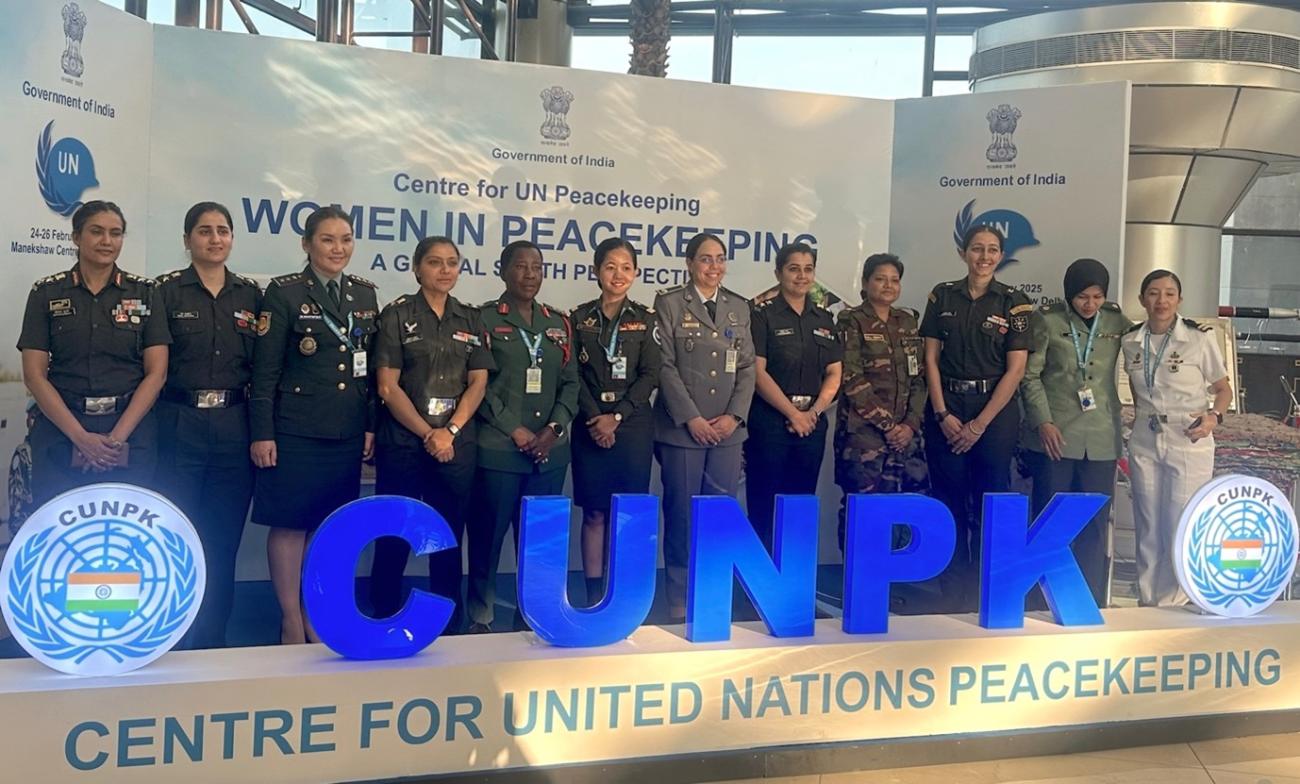
To understand India’s Foreign Policy, it is very essential to address the core principles that it adheres to as being very essential to the process of peacekeeping: Meaningful Dialogue Exchange and Cooperation ensured at every diplomatic level. This has fundamentally been ensured almost since the 1950s, when India had contributed to sending over 2,90,000 approximate Peacekeepers at almost 50 different critical UN Missions. This underscored India’s commitment which was also reflected on 24th February when the ‘Centre of United Nations Peacekeeping’ (CUNPK) hosted their Conference on Women Peacekeepers which prioritized focusing on the Global South at the Manekshaw Centre in New Delhi from 24th to the 25th February 2025. This two-day conference brought in women peacekeepers from 35 nations or rather Troops Contributing Countries (TCC) to bring about a healthy deliberation over the evolving and changing role of women in different peacekeeping operations in this century and tried to craft creative strategies in order to enhance their active role and participation in these operations. This conference highlighted India's utmost commitment to achieving gender equality under SDG 5 and simultaneously focused on increasing their leadership in promoting gender inclusive and effective peacekeeping operations. This stems from the importance of UN Security Resolution 1325 which brought a very important factor to the front which was essentially about women’s greater participation and their significant role in both dispute mitigation and participation in negotiations and mediation processes with regards to ensuring peace in a conflict-ridden area. In 2022 data reflected women’s increased role in around uniformed personnel deployed at various field missions. This further involved data reflecting around women involvement in military contingents, police forces, and in justice as well as correction roles. Amongst the civilian personnel, women constituted about and around above 20% to be specific with a large figure heading various leadership positions, thus reflecting gender parity at a higher level within Heads and Deputy Heads of Missions. Therefore, identifying this need for gender sensitization and inclusionary measures has led the UN to draw up ambitious plans and goals under its Uniformed Gender Parity Inclusion Strategy which aims for increasing the number of women that shall be deployed in military contingencies and in police units, all by the year 2028.
India has played a significant role in the several fronts to not only promote but also equally advocate for women’s increasing participation in different Peacekeeping areas. Whether it be military, police, or even civilian roles, Indian women peacekeepers have shown both solidarity and resilience when it comes to engaging with the grassroot people in local communities, protecting vulnerable populations, and fostering healthy dialogue. Global South plays a meaningful role in formulating the backbone of the UN peacekeeping missions and India has undoubtedly succeeded in leading its way to the top as the largest troop contributing nation. From the 1960s, India enriched a historic legacy of sending women in police, military, combatants or civilian roles, extending to even sending medical officers to places such as, for example, the Democratic Republic of Congo. In 2007, India deployed its first ever female led troop in the form of a proper Formed Police Unit (FPU) to Liberia under the UN Mission in Liberia (UNMIL). This not only resulted in ensuring proper local security but also empowered the women in Liberia to actively contribute to their own nation’s security agenda. Till 2025, an approximation of 150 Indian women peacekeepers have been deployed across 6 critical UN Missions extending to places such as the Golan Heights, the Democratic Republic of Congo, Lebanon, South Sudan, and the Western Sahara region along with in Abyei. This underscored India’s unwavering commitment to achieving gender parity and global governance at multitude levels of conflict resolution. This further would make the process more diverse and inherently inclusive in nature. India’s External Affairs Minister, S. Jaishankar on February 24th, 2025 highlighted women’s representation and participation not only as a matter of quantity but equally a matter of quality as well.
A defining trait of contemporary armed conflicts includes the factor of internalization and the escalating number of mass or civilian casualties that have been recorded. Civilians are mostly targeted and are affected through ethnic cleansing, mass genocide, brutal torture, illegal abduction, and rape. This becomes more predominant in case of women and girls given their status in a patriarchal society. According to the Beijing Platform for Action, 1995, the aggrieved concern was when the entire community suffer the extreme consequences of armed conflicts and terrorism, women and girls suffer due to their status in the society and exaggerating this factor, lies the problem of sex, especially in situations where women live under foreign occupation. Therefore, their position before a crisis, during and after it worsens with every passing stage. If women's decision-making body is not empowered and properly structured into the society, their role in both the process of peace-making, peacebuilding, and peacekeeping comes to a standstill. Following the Secretary General’s Report on Women, Peace, and Security (2002), the United Nations has been actively responding to the impact of the armed conflicts on women and girls and understands the fact that Gender based violence is more of a contemporary weapon of warfare. Thus, women engage in both military and non-military roles wherein they get to choose the role of either a combatant or a supporting role that directly supports the combatants. Women are often involved in political, socio-economic activities and measures that aim to restructure a society post conflict. Yet the most imperative issue that still continues to persist is that women are often excluded from the important processes of negotiation, and agreements aimed at reconstruction in a post conflict geopolitical arena.
This ability to take in socio-economic, political, cultural measures highlight the role of women in advocating soft power diplomacy. UNCSW in 1969 took into consideration special protection of women during the time of crisis and UN Conference on Women in Mexico (1975) recognized the need for women’s involvement in the matters of peace. This was further followed by the UN Decade for Women (1976). During the Cold War, threats were usually perceived beyond borders, making them more traditional and state centric. Since the 1990s, the concept of human security has come to the forefront where intra-state conflicts are as important as inter-state conflicts. When the Cold War arrangements came to an end, these intra-state conflicts started emerging, a part of it lies in the fact that Cold War arrangements often suppressed these intra state conflicts. Ethnocentrism has managed to create an image of self-versus them, wherein ethnic conflict or even armed conflict have continued to shape the geopolitical domain affecting the larger process of decision making and shifting from chaos to build in solutions based on mutual consensus. The 1995 UN Women 2000 publication by the Division for the Advancement of Women focused on capturing, documenting, and interpreting women’s role in UN Peacekeeping missions and the challenges that they have faced upon till then. This 1995 report highlighted the historical underrepresentation of women in peacekeeping missions especially in military and police operations which were mostly male-dominated and largely shaped by cultural and institutional stereotypes. This report upheld some unique responsibilities or distinct skills that women can offer such as community outreach, interpersonal interactions, and an inherent ability to communicate and connect with the local population especially children and women who were most vulnerable to these conflict-ridden situations compared to their male counterparts. This report set the setting of the most important resolution under UNSC 1325 in 2000 which highlighted the importance of women’s full participation in peacekeeping, peace-making, and post-conflict reconstruction.
India’s subtle projection of itself as a responsible, and humanitarian global leader stems from the fact of how women’s participation in these critical peacekeeping missions have underscored India’s soft power diplomacy to an extraordinary length. This further reinstates a viable narrative around India’s propensity towards upholding progressive values, furthering its philosophy of ‘Vasudhara Kutumbakam’ (The World is one family) which shapes it foreign policy, and manages to successfully establish India’s stance on significant matters such as Gender Equality and Security in order to promote a more inclusive approach to any conflict. This inadvertently shapes India’s Strategic and Diplomatic outreach wherein India’s Peacekeeping philosophy aligns with the principle of soft power, where a particular nation has the ability to attract other nations on the basis of cultural approaches, political values and beliefs, and a legitimate, secured foreign policy instead of resorting to military help or using the instruments of force or coercion. Unlike other countries, India’s motives are non-aligned and are solely dedicated to upholding the humanitarian values at its highest degree which makes peacekeeping, a more pragmatic approach in the Global South. This bridges the long-lasting gap or the divide between Global North and Global South by integrating shared developmental interests. This not only furthers the importance of South-South Cooperation but also promotes Global South solidarity and provides means for capacity building. This increases opportunities for India to expand and stand its ground for gaining a permanent seat at the UN Security Council. India has deployed female troops all across Africa, Middle East, and South Asia reflects India’s foreign policy’s approach towards enhancing regional stability and enhances more chances for securing national objectives by fostering health relations, one based on mutual respect and the recognition of their humanitarian duties towards the contemporary human rights and security domain.
India has pioneered the process of Gender Diplomacy and has successfully transformed the security image by deploying women all across the globe in order to have an impact on women, children, and the local population of any conflict-ridden area. This acts as a catalyst in inspiring local women to even take part in peace enforcement and the process of rebuilding any society from scratch. However, the women population in these peacekeeping forces are often disproportionate to the vulnerable masses wherein the gendered structures constrain the interaction between male soldiers and the local women. Therefore, deploying women in these critical zones are not just symbols for cooperation and peacebuilding but also acts as a practical and viable solution in bringing about benefits to these local people where women soldiers happen to become role models for the local women, encouraging their active participation in the restructuring process and ensuring long term of peace that would necessarily follow. In 2019, Major Suman Gawani was felicitated with the UN Military General Advocate Award for her immense contribution in training military personnel on Gender Sensitive peacekeeping in South Sudan. In 2024, Major Radhika Sen was also awarded the UN Military General Advocate Award for her contributions in the Democratic Republic of Congo (DRC) in operating engagement patrols that were used to build Community Alert Networks which were on the other hand, run by local women and youth of the nation. Most of India’s women peacekeeping missions have been successful in reinforcing long term impacts and this successfully demonstrated that gender inclusion is a necessity for securing lasting peace and stability in any region.
Therefore, the two days Conference on Women in Peacekeeping highlighted a fresh Global South perspective. It not only worked on exploring chances to examine women’s evolving role in peacekeeping, but also worked together to draft new ways of increasing their presence and visibility across difficult regions. It addressed pertinent issues such as sexual exploitation, abuse in peacekeeping and the resort to use digital modern technology to increase operational effectiveness in several capacity building programmes. This discussion offered valuable insights on women peacekeeping problems and proposed a suitable optimistic agenda on reforming or modifying the future peacekeeping policies and programmes that will stabilize the presence of women as an extension to global peace force building efforts that will again ensure women’s active participation and leadership across different coordinated multidimensional and strategic levels. Dr Kiran Bedi served as the first woman UN Police Advisor, whereas Seema Dhundia successfully led the first all women Formed Police Unit in Liberia are examples of India’s approach towards championing the very cause of Gender Diplomacy. Despite these undeniable contributions, Indian Women Peacekeepers face several mounting challenges such as deep-rooted gender biases to security and life-threatening risks and logistical barriers. Overcoming these mounting challenges requires resilience, strong support systems and policies that would not only ensure their security and safety but will also improve their effectiveness in functioning in these turbulent conflict-ridden regions. This underscores the necessity of breaking the typical cultural male dominated stereotypes by empowering women and girls in conflict zones to take up leadership roles and Indian women peacekeepers would ensure this by building trust. This would inspire changes and this change would be transformative which will make the global Peacekeeping scenario more transformative, diverse, and inclusive.
References:
1. Sommer, S. (2014). Female leadership in conflict prevention, diplomacy and UN peacekeeping initiatives. In Master in Contemporary Diplomacy. https://www.diplomacy.edu/wp-content/uploads/2021/06/11031016115012_Sommer_28Library29.pdf
2. United Nations peacekeeping. (n.d.). United Nations Peacekeeping. https://peacekeeping.un.org/en
3. India’s legacy in UN peacekeeping: leadership, commitment, and sacrifice. (n.d.). https://www.pib.gov.in/PressReleasePage.aspx?PRID=2109587®=3&lang=2
4. India. (n.d.). United Nations Peacekeeping. https://peacekeeping.un.org/en/india
5. https://brill.com/view/journals/joup/19/3-4/article-p227_2.xml
6. Women in peacekeeping: India’s soft power in global diplomacy. (2025, March 10). Diplomatist. https://diplomatist.com/2025/03/10/women-in-peacekeeping-indias-soft-power-in-global-diplomacy/
7. EAM’s remarks during the Inaugural session of the Conference for Women Peacekeepers from the Global South?: Women in Peacekeeping - A Global South Perspective (February 24, 2025). (n.d.). Ministry of External Affairs, Government of India. https://www.mea.gov.in/Speeches-Statements.htm?dtl/39099/EAMs_remarks_during_the_Inaugural_session_of_the_Conference_for_Women_Peacekeepers_from_the_Global_South__Women_in_Peacekeeping__A_Global_South_Perspe
8. Singh, S. K., & Raj, R. S. (2025). Gender diplomacy in United Nations Peacekeeping missions: A case study of India. India Quarterly Journal of International Affairs, 81(3), 323–344. https://doi.org/10.1177/09749284251348576
(The views expressed are those of the author and do not represent the views of CESCUBE)
Image Source: United Nations India
Aakansha Sengupta is currently pursuing her undergraduate degree in Political Science from the Department of International Relations at Jadavpur University. Her academic interests span across Gender and Politics, Peace and Conflict Resolution, International Politics, and Global Diplomacy. She also maintains a strong engagement with Public Policy, Administration, and key debates in Political Theory. In addition, Aakansha has a keen interest in Middle Eastern Politics, reflecting her broader focus on global affairs. Alongside her major in Political Science, she is also pursuing a minor in Sociology at Jadavpur University.