Post-Gaza Conflict Regional Realignments: What They Mean for India’s West Asia Policy
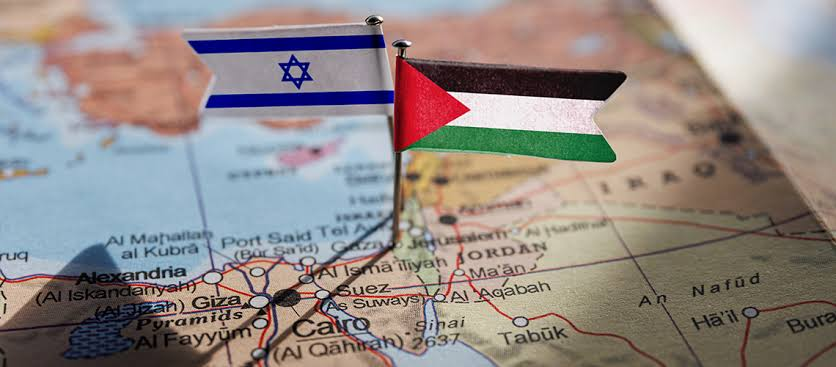
The Gaza conflict, triggered after the October 7th attacks and the prolonged military response that followed, has proven to be a critical inflection point in the West Asian Geopolitics. What had begun as a localized conflict, soon engulfed the entire region, drawing in Hezbollah in Lebanon, Houthis in Yemen and even direct confrontation between Israel and Iran. However, by early October, a fragile ceasefire was brokered under US President Donald Trump’s Comprehensive Plan to End the Gaza Conflict. This rupture has led to a VUCA (Vulnerable, Uncertain, Complex and Ambiguous) environment that directly impacts India. India’s stakes in the Gulf are high and transcend simple economic interests; they involve maintenance of macro-economic stability and the Indo-Pacific vision through regional connectivity. This conflict will test India’s diplomatic ability to maintain simultaneous ties with Israel, Arab World, and Iran.
End of Gaza War and Immediate Aftermath
The ceasefire clearly represented a confluence of US pressure, Egyptian mediation and Qatari diplomacy. Trump’s plan proposed a transitional governance body for Gaza and unlike previous frameworks this one aligned with Saudi and UAE visions for a post-militant Gaza. The Sharm El-Sheikh Summit on October 13, co-hosted by Trump and Egyptian President Abdel Fattah el-Sisi, formalized these terms, drawing endorsements from the Arab League and Organization of Islamic Cooperation (OIC). Implementation, however, has been fitful: the reported Israeli strikes on Hamas leaders in Doha on September 9 elicited OIC outrage, leading calls for a review of ties with Tel Aviv. Hezbollah's degradation after having lost key arsenals and leadership has altered Lebanon's dynamic and has further led to shrinking of Iran’s "axis of resistance."
Humanitarian fallout remains acute: the infrastructure in Gaza has been destroyed, and famine risks have increased as a consequence of blockades. The European Union, through Special Representative Luigi Di Maio, has pledged a sum of €500 million for rehabilitation, linking this assistance to a two-state solution under the Global Alliance launched in 2024. The Arab states, led by Saudi Arabia, make reconstruction conditional upon the disarming of Hamas and propose a model led by the PA with Jerusalem as the capital. This sentiment has also been reflected in the Arab League's July 2025 declaration, signaling a collective Arab drive for de-escalation.
On a regional level, this end of the war accelerated de-hyphenation: Yemen's Houthis, Iran's last viable proxy, are being isolated while Oman mediates truces; Iranian logistical corridors are severed in Iraq and Syria, to which Damascus is forced to pivot toward Saudi reconstruction aid. Trump's "maximum pressure" on Iran-revived sanctions without outright war-forced Tehran toward diplomacy, extended through Riyadh for U.S. talks. This presages a "post-resistance" era in which economic imperatives-most notably China's Second Silk Road in August 2024, extended to Egypt in July 2025-eclipse proxy conflicts.
For India, the immediate spill-over brings out vulnerabilities: Exports to Israel fell as much as 63.5% in early 2024, spilling into 2025 amidst disturbances in the Red Sea. However, New Delhi's participation in the Sharm El-Sheikh Summit and India-Egypt Strategic Dialogue marked a full circle of its role-nothing beyond applauding Cairo's peace efforts and reiterating the call for ceasefire. That positions India as a neutral convener, but long instability could threaten its Gulf remittances of 18 million.

Image Source: CBC
Key Regional Realignments
Post-Conflict West Asia has also seen some fundamental realignments. The Abraham Accords have proved resilient despite Gaza strains. Further normalized ties with UAE, Bahrain, Morocco, and others expedited intelligence sharing against Iranian threats. U.S. efforts under Trump aimed at expansion, targeting Azerbaijan and Central Asians for deeper cooperation, though major Arab additions lag. Saudi Arabia, the prized target, delinks security pacts with the U.S. - including possible F-35 sales - from normalization with Israel, making irreversible Palestinian statehood progress a non-negotiable "red line" that post-Gaza has hardened.
Saudi-Iranian relations, revived through Chinese mediation in 2023, have continued to intensify. High-level visits, including that of the Saudi Defence Minister to Tehran, where he met Khamenei, underline resilience. Trade is on an upward trajectory, consular channels are busy facilitating Iranian pilgrimages, and the two states are on the same page regarding the de-escalation of the Yemen conflict. This rapprochement insulates the stability of the Gulf, affording Riyadh strategic autonomy as Washington readjusts its priorities.
In Lebanon and Syria, Iranian influence recedes: Hezbollah rebuilds its forces only gradually in the face of ceasefire pressures, while Damascus adjusts its orientation toward Arab assistance. The wider Arab realism takes hold-publicly deploring the actions in Gaza but working behind the scenes with Israel on security. China's BRI extensions compete with revived IMEC talks and foster multipolarity. Trump's vision of economic integration clashes with Palestinian exclusion risks. These shifts prioritize pragmatism over ideology: de-escalation, diversification, and economic hubs.
The Threat to Economic Connectivity: IMEC and Red Sea Security
The fragile truce in Gaza, which has held since October 2025 despite occasional violations and continuous targeted strikes, has not only heightened India's vulnerabilities in West Asia but also opened avenues for strategic advancement. India's heavy dependence on imported crude oil, nearly 89% of its requirements as of late 2025, exposes its economy to acute risks that may arise from any escalation or renewed instability in the region. Although there has been a considerable shift via diversification efforts that have reduced reliance on Gulf suppliers (from around 63% pre-2022 to roughly 46% in recent years, with Russia now accounting for 35-40% of imports), the Persian Gulf continues to be an indispensable source. Disruptions in the Strait of Hormuz, through which a large chunk of Gulf oil flows, could trigger immediate price spikes, inflation, and supply-chain pressures, as witnessed during the June 2025 Iran-Israel tensions when India increased imports from Russia and the U.S. to offset these risks. Remittances from over 8 million Indian nationals in the Gulf which exceeds $100 billion annually also depends on regional stability and any form of prolonged uncertainty or conflict could lead to job losses, repatriation pressures, and economic hardships back home.
Amid these risks, the India-Middle East-Europe Economic Corridor (IMEC) announced at the 2023 G20 Summit in New Delhi has experienced a significant revival. This project integrating rail, maritime, energy, and digital transport infrastructure is meant to connect India with the Gulf and Europe (hugging the Suez Canal risks exposed by Red Sea incidents) had been sidetracked by the spillover effects of the conflict. The revival of this project after the ceasefire includes diplomatic efforts, with visits by both Greek and Egyptian foreign ministers to Delhi in early 2025 emphasizing the significant role that IMEC can play in regional connectivity. Feasibility studies are progressing, focusing on UAE-India digital corridors, European terminal expressions of interest (notably from France, Greece, and Italy), and Saudi Arabia rail connectivity. Risk premiums reduced by de-escalation efforts open the way for more private investment, while the possible inclusion of Palestinian economic actors in reconstruction efforts could align IMEC with regional stability objectives. Trump administration U.S. leadership, with summits with partners and specific initiatives by fall 2025, further improves prospects, situating IMEC as a rival to China’s Belt and Road Initiative (BRI).

Source: EIA
India’s Balancing Act
The foreign policy in India's West Asia strategy in the Modi regime emphasizes strategic autonomy. On October 7, there was an international condemnation of terror attacks along with calls for restraint. These policies in the ‘Two State’ solution didn't lead to alienation. The Global “South” community appreciated the ‘Equidistance’ approach but got criticized for any bias towards Israel. Relations with Israel are thriving with militaries exporting $2.5B in arms every year, and doing joint tech development but at the same time Gaza optics are straining public opinion. Iranian Gulf of Oman port of Chabahar has improved Afghan connectivity but is being tested by Iran’s commitment to equidistance.
Post–ceasefire, India remains actively involved: Modi’s Jordan trip in December 2025 reiterates the strength of the moderate Arab relations, while the revival of the discussions for the IMEC signifies positive indicators. Although SCO/BRICS frameworks help in the mitigation of these differences, problems persist be it energy price volatility, diaspora protection, or Pakistani Gulf policy outreach. Here our neutrality strengthens leverage by being a bridge builder.
Consequences & Opportunities for India
The opportunities available to India are vast and varied. The reconstruction of Gaza, estimated at $70 billion (an increase from previous estimates of $50-53 billion by the World Bank, UN, and EU, owing to 84-92% destruction in Gaza City and over 55 million tons of rubble), offers a unique opportunity for Indians. The skills of the Indian government in infrastructure development, water management, desalination, and urban planning, already evident in their Gulf projects, could be utilized through the I2U2 framework (India-Israel-UAE-U.S.). The Indian government has already expressed interest in reconstruction initiatives, with talks during Egyptian Foreign Minister visits and the Sharm El-Sheikh Summit. The Indian government could use this opportunity to place itself at the forefront of initial recovery efforts, along with Arab nations, Europe, and the U.S., through financial assistance, construction materials, technical know-how, and private sector subsidiaries, thereby increasing soft power and gaining economic inroads.
However, risks would need persist and need to be navigated carefully. A perceived pro-Israel bias based on strong defence imports ($2.5 billion a year) and tech partnerships may undermine Arab support, particularly if Gaza humanitarian issues escalate. Iranian isolation, with U.S. "maximum pressure" sanctions (notwithstanding temporary waivers such as the six-month Chabahar extension to April 2026), would make it difficult to make progress at Chabahar Port, India's entry point to Afghanistan, Central Asia, and Russia through the INSTC. Escalations may put the entire IMEC on ice, postponing infrastructure and trade advances. Multipolarity overall works in India's favour: participation in U.S.-led integration without being locked in, and balancing China's BRI through IMEC.
Conclusion
The post-Gaza order in West Asia has been marked by a situation of shaky de-escalation, pragmatic re-alignments, and a move towards economic integration that marks a critical point in time for India. The Abraham Accords (symbolically expanded with Kazakhstan in November 2025, with talks on Syria and Lebanon) and the Saudi-Iranian relationship that has stood the test of time and adversity underlines a region that values stability and connectivity over ideology. For India, multi-alignment is set to be the best strategy : it could use its neutrality to mediate between the conflicting parties, lead the charge on Gaza reconstruction, and at the same time revive IMEC as a flagship project, and effectively secure both energy and diaspora concerns.
References
1. Al Jazeera Centre for Studies. “India-Gulf Relations Beyond Transactionalism | Al Jazeera Centre for Studies,” n.d. https://studies.aljazeera.net/en/analyses/india-gulf-relations-beyond-transacationalism
2. “Full Text of Oct. 9 Israel-Hamas Deal on Trump’s Plan for ‘Comprehensive End’ to Gaza War.” 2025. Timesofisrael.com. 2025. https://www.timesofisrael.com/full-text-of-oct-9-israel-hamas-deal-on-trumps-plan-for-comprehensive-end-to-gaza-war/
3. Turn Digital. 2024. “Sharm El-Sheikh Peace Summit.” Sis.gov.eg. 2024.
https://sis.gov.eg/en/media-center/events/sharm-el-sheikh-peace-summit/
4. Ferragamo, Mariel. 2025. “A Guide to Trump’s Twenty-Point Gaza Peace Deal.” Council on Foreign Relations. October 10, 2025. https://www.cfr.org/article/guide-trumps-twenty-point-gaza-peace-deal
5. “India’s 10-Year Deal to Develop Iran’s Chabahar Port Has Both Commercial and Strategic Significance.” 2024. Efsas.org. 2024.
https://www.efsas.org/commentaries/india-and-chabahar-port-may-2024/
6. EIA. 2024. “Amid Regional Conflict, the Strait of Hormuz Remains Critical Oil Chokepoint - U.S. Energy Information Administration (EIA).” Eia.gov. 2024. https://www.eia.gov/todayinenergy/detail.php’id=65504
7. Yemen. 2025. “Lebanon, Yemen and Iran after Gaza.” Arab News. October 16, 2025.
https://www.arabnews.com/node/2619076
8. Center for Maritime Strategy. “The Houthis, Operation Prosperity Guardian, and Asymmetric Threats to Global Commerce - Center for Maritime Strategy.” Center for Maritime Strategy - Center for Maritime Strategy, July 17, 2024. https://centerformaritimestrategy.org/publications/the-houthis-operation-prosperity-guardian-and-asymmetric-threats-to-global-commerce/
9. “India’s Balancing Act in the Middle East - AGSI.” 2025. AGSI. May 2, 2025. https://agsi.org/analysis/indias-balancing-act-in-the-middle-east/
10. Guest. 2025. “Balancing between Empathy and Strategy: India’s Calculated Role in the Gaza Conflict.” Eureporter.co. November 5, 2025. https://www.eureporter.co/world/israel/2025/11/05/balancing-between-empathy-and-strategy-indias-calculated-role-in-the-gaza-conflict/
11. Saha, Rushali. 2025. “Pakistan-Saudi Arabia Defense Agreement Tests India’s Gulf Balancing Act.” Thediplomat.com. The Diplomat. September 22, 2025. https://thediplomat.com/2025/09/pakistan-saudi-arabia-defense-agreement-tests-indias-gulf-balancing-act/
12. https://www.facebook.com/middleeastmonitor. 2025. “India’s Changing Middle East Policy.” Middle East Monitor. September 16, 2025. https://www.middleeastmonitor.com/20250916-indias-changing-middle-east-policy/
13. Kateb, Alexandre . 2025. “The Abraham Accords after Gaza: A Change of Context.” Carnegie Endowment for International Peace. 2025. https://carnegieendowment.org/research/2025/04/the-abraham-accords-after-gaza-a-change-of-context’lang=en
14. pomepsassistant. 2025. “Regional Alliances in the Middle East from the Arab Spring to the Gaza War - Project on Middle East Political Science.” Project on Middle East Political Science. February 11, 2025.?
15. https://pomeps.org/regional-alliances-in-the-middle-east-from-the-arab-spring-to-the-gaza-war
16. “The Post-Gaza Rebalancing in the Middle East.” 2025. China-US Focus. October 24, 2025 https://www.chinausfocus.com/peace-security/the-post-gaza-rebalancing-in-the-middle-east
17. “The Gulf States in a Fluid Post-War Middle East.” Middle East Institute. 2025. https://www.mei.edu/publications/gulf-states-fluid-post-war-middle-east
(The views expressed are those of the author and do not represent the views of CESCUBE)
Image Source: International Bar Association

Tamanna is a third-year student at Banasthali Vidyapith. Trained in the sciences and deeply interested in international relations, she combines scientific rigor with contemporary international theory to develop a multidisciplinary understanding of global affairs. Her key professional experiences include serving as a Research Intern at the Centre for Land Warfare Studies, where she worked on Russian military technology, and interning at the National Museum, where she gained insight into cultural diplomacy and heritage-based soft power. She continues to explore how science, strategy, and culture interact to shape contemporary geopolitics.