India’s External Economic Vulnerabilities in a Fragmenting West Asia
The macroeconomic situation in India is a paradoxical mix of both domestic strength and international weakness as the country enters 2026. The domestic indicators, including a solid GDP growth, low inflation and a prudently accommodative mo...
The post-2025 era saw a radical change in the West Asian security landscape. The short but intense conflict between Israel and Iran in the middle of 2025, the Syrian government's collapse, and the resulting division of state power between the different theatres radically changed power relations in the region. Instead of stabilising by realigning, the region was getting into a period of long-term volatility marked by proxy wars, the development of non-state actors, and the militarisation of economic chokepoints. In India, the effects of these developments will be experienced as concrete economic vulnerabilities through four main channels of transmission: energy-price volatility, trade and maritime disruption, capital-flow instability, and fiscal stress.
The essay shall argue that West Asian instability has become one of the most significant external macroeconomic risks India faces. It looks at the geopolitical agents of volatility in the region, looks at the conduction of these risks by the use of energy and maritime, and evaluates the effects of these risks on the growth, inflation, external balances, and fiscal policy space of India. The essay also puts the Indian responses to foreign-policy in a political-economic context, pointing out the limitation imposed by the strategic autonomy given increased geopolitical shocks.
West Asia’s Geopolitical Transformation and India’s Exposure
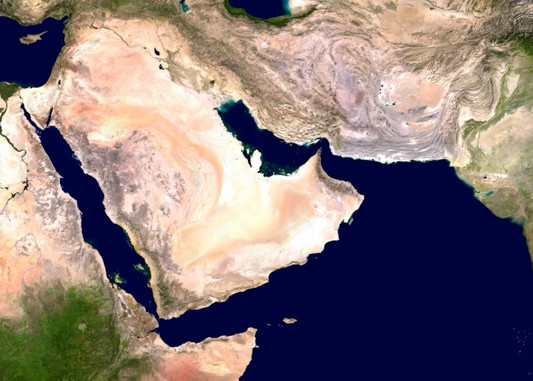
The geopolitical landscape of West Asia has changed significantly since 2024. The region is no longer experiencing classical interstate deterrence, instead it is marked by fragmented security environment full of proxy wars, regime frailty and struggles over economic and logistical routes. This change is embodied in the Israel–Iran conflict of June 2025. The conflict, despite its limited duration, paved the way of the norm of direct military involvement between regional rivals that negated the traditional deterrence principle and increased uncertainty in the energy markets and shipping markets.1
The next event that led to a worse destabilisation of the regional order was the collapse of the Assad regime in Syria. The collapse of the central power left a power vacuum occupied by ideologically motivated non-state actors, affecting overland trade routes and complicating regional connectivity efforts. All these trends put down to the ground the informal security balancing that hitherto limited escalation and gave way to a fragile, unstable one.
The internal crisis in Iran is one of the most relevant risks to India. Rapid currency depreciation, financial hardship, and environmental anxiety have undermined their legitimacy at home, prompting the regime to externalise pressure internally. Although its central security organs have not been eliminated, the ability to disrupt the maritime operations of the asymmetric mode, particularly the Strait of Hormuz, can be considered a latent but powerful lever of Iran. Although it is not physically blocked, the threat of interruption is enough to increase insurance rates, tanker prices and landed energy prices, and instability is inherent in market-pricing processes.2 Simultaneously, the competition within the Gulf has increased. The strategic rivalry between Saudi Arabia and the United Arab Emirates is also evident through different positions on Yemen, where the secession drive by the UAE-backed Southern Transitional Council has further destabilised the security situation along the Bab-el-Mandeb Strait. For India, this disintegration undermines the Gulf Cooperation Council's unity as a stable economic entity and makes long-term investment and energy contracts difficult.
Energy Dependence and the Price Transmission Mechanism
Energy is the most direct and powerful channel through which the instability in West Asia influences Indian macroeconomic stability. India was planning to consume about 4.9 million barrels of crude oil per day in 2025, making the economy acutely sensitive to global price changes. The conveyance of risk is not only done or rather realised through spot prices but also in movements in sourcing, contract arrangements, and geopolitical impositions on commerce.
The dependence of the Indian market on discounted Russian crude due to the conflict with Ukraine initially offered an incentive in the case of global price shock. This strategy however proved to be more unsustainable in 2025 when the United States slapped punitive tariffs on Indian products associated with Russian oil trade. The tariffs were raised to fifty per cent, which compelled Indian refiners to cut down the imports of Russians and switch to more expensive Middle East and US crude. The destruction of discounted supply doubled the annual bill of oil imports in India estimated to be between six and eleven billion dollars, making it more susceptible to local shocks.3
Another source of risk has been the liquefied natural gas (LNG). Indian companies entered into mid-term LNG contracts pegged on the US Henry Hub benchmark in the attempt to minimise their exposure to volatile spot markets. Although this move may seem wise in 2015, estimates of price changes in 2026 suggest that such contracts will become much more costly than domestic gas and crude-based LNG. These pressure costs are threatening city gas distributors, industrial customers, and transport, posing inflationary risks outside the petroleum market.4
Importantly, the volatility of energy and prices is in the interaction with the fiscal structure of India. Any prolonged rise in the prices of crude oil will call on the need to increase fuel and fertiliser subsidies which will make it difficult to engage in fiscal consolidation. In turn, the issue of West Asian instability is relevant not only for trade balance, but also for public finances and macroeconomic planning.
Maritime Chokepoints and Trade Disruption
Economic dependence on maritime passage through some of the world's most disputed waterways greatly increases India's economic exposure to West Asia. Close to one-third of the world's seaborne crude oil transit passes through the Strait of Hormuz, making it an irreplaceable energy security artery to India. Rhetorical threats of disruption at this chokepoint are enough to cause market responses, increasing freight rates and insurance prices before the actual interference.5
Another important route to Indian trade with Europe is the Red Sea and the Suez Canal. Non-state disruptions since 2023 have forced shipping firms to reroute their vessels around the Cape of Good Hope, a route that adds an additional 1,000 nautical miles and nearly a 30 per cent increase in logistics costs. Even though shipping in the Red Sea cautiously resumed in early 2026, the security situation remains weak, and conditional truces are in place rather than binding international guarantees.6 For exporters in India, higher logistics costs reduce competitiveness in price-sensitive markets such as textiles, auto components, and engineering products. These strains augment pre-existing pressures of the slowdown of the global demand and tariff barriers, contributing to the weakness of the Indian external sector to West Asian instability.
Macroeconomic Consequences: Growth, Inflation, and External Balances
Macroeconomic aftershocks of West Asian turmoil are experienced across three interconnected dimensions: growth trends, inflation, and external account stability. India had strong GDP growth in 2025, but this growth was mainly driven by government spending and consumption, as government investment was hesitant. Being exposed to volatility in the long run carries the risk of further reducing investment sentiment, limiting the growth base and making it more dependent on government spending.7
The problem of inflation is especially complex. In 2025, India recorded a very low inflation rate, and this allowed the Reserve Bank of India (RBI) to take an accommodative position. This Goldilocks phase, however, is fragile in itself. The energy price shocks in West Asia would quickly pass over to the headline inflation and it would compel the RBI to turn around. The reduced interest-rate differentials against the United States also limit the scope for monetary policy, increasing the risk of capital outflows if domestic rates go too far.8
Another vulnerability lies in the external account. Even though strong service exports and remittances will counterbalance the current account deficit in 2025, the merchandise trade gap is sensitive to energy prices. The increase in oil imports would increase the deficit, placing pressure on the rupee and foreign exchange reserves. The fact that the rupee has fallen to historical lows in early 2026 highlights how capital inflows are weak and capital reserves will not do much to mitigate a prolonged external shock.
Foreign Policy, Strategic Autonomy, and Economic Risk Management
The doctrine of strategic autonomy shapes India's foreign policy reaction to the destabilisation of West Asia and gives flexibility more priority instead of alignment. The situation has helped India to have a friendly relationship with Israel, Iran, and the gulf states at the same time without losing access to energy, technology, and connectivity projects. Nevertheless, it is becoming expensive to remain neutral in a polarised environment. The Indian reserved approach to the Israel-Iran crisis is an economic risk evaluation. An open alliance with either of them would put at risk key interests, including defence collaboration and connectivity initiatives such as the Chabahar Port.9
Simultaneously, the security of the Indian diaspora places an additional burden, as a mass evacuation would entail significant financial and logistical costs. India has employed long-term resiliency as a means of addressing structural vulnerabilities. The India-Middle East-Europe Economic Corridor (IMEC) aims to diversify trade routes and reduce reliance on the Suez Canal, while the development of strategic petroleum reserves is intended to soften short-term supply shocks. Such efforts, however, need to be backed by a consistent regional stability in order to achieve their full potential- a factor that is not yet assured.
Conclusion
The instability in West Asia has ceased to be an esoteric issue and has become a core determinant of India's macroeconomic risk profile. The geopolitical fragmentation, energy instability, and disputed seas in the region convey shocks through several channels, affecting growth, inflation, fiscal balances, and external stability. The domestic fundamentals provide a gauge of India's resilience, but they are not enough to fully offset the structural exposure embedded in its energy dependency and trade geography. The Indian response is one of pragmatic balancing, a mixture of strategic freedom and select investments in resilience. But the boundaries of this strategy are becoming increasingly apparent. Economic security is no longer immune to foreign policy decisions in a climate where systemic, regularly recurring geopolitical shocks are commonplace. To the Indian policymakers, managing episodic crises is not the only issue; rather, it is how to change macroeconomic planning to accommodate a world where instability in West Asia is a permanent phenomenon, and not an anomaly.
References
1. SpecialEurasia. “Middle East Geopolitical Risk 2026.” December 28, 2025. https://www.specialeurasia.com/2025/12/28/middle-east-risk-2026/.
2. Brookings Institution. “Is Iran on the Brink of Change?” January 15, 2026. https://www.brookings.edu/articles/is-iran-on-the-brink-of-change/.
3. Debuglies. “Geopolitical Leverage and Energy Security: US Pressure on India’s Russian Oil Imports.” January 9, 2026. https://debuglies.com/2026/01/09/geopolitical-leverage-and-energy-security-us-pressure-on-indias-russian-oil-imports-and-multilateral-engagements-in-2025-2026/.
4. Argus Media. “Indian Term LNG to Make 2026 Imports Pricier.” December 24, 2025. https://www.argusmedia.com/en/news-and-insights/latest-market-news/2769530-viewpoint-indian-term-lng-to-make-2026-imports-pricier.
5. India Today. “Can Iran Shut Down the Strait of Hormuz?” January 15, 2026. https://www.indiatoday.in/world/story/iran-news-can-tehran-shut-down-strait-of-hormuz-importance-set-global-oil-prices-on-fire-persian-gulf-lng-energy-security-2852313-2026-01-15.
6. GCaptain. “The Gradual Return of Ships to the Red Sea Hits a Key Milestone.” January 16, 2026. https://gcaptain.com/the-gradual-return-of-ships-to-the-red-sea-hits-a-key-milestone/.
7. Deloitte Insights. “India Economic Outlook.” January 15, 2026. https://www.deloitte.com/us/en/insights/topics/economy/asia-pacific/india-economic-outlook.html.
8. MUFG Research. “IndiaPulse: Flows Before Growth.” January 16, 2026. https://www.mufgresearch.com/fx/indiapulse-flows-before-growth-this-time-is-different-for-inr-16-january-2026/.
9. CeSCube. “India’s Balancing Act in the Middle East.” November 29, 2025. https://www.cescube.com/vp-india-s-balancing-act-in-the-middle-east-navigating-between-israel-iran-and-the-gulf-states.
(The views expressed are those of the author and do not represent the views of CESCUBE)

Rinto Sebastian Charles is currently pursuing a Master’s degree in International Studies at CHRIST (Deemed to be University), Bangalore. He has completed his Bachelor’s in English Language and Literature from Kerala University. His core interests lie in international relations, diplomacy and policy-oriented research. He also aspires to contribute to research-driven institutions, think tanks, and initiatives that engage with global governance and Indo-Pacific perspectives.