Vietnam’s Quiet Balancing Act Against China in the South China Sea
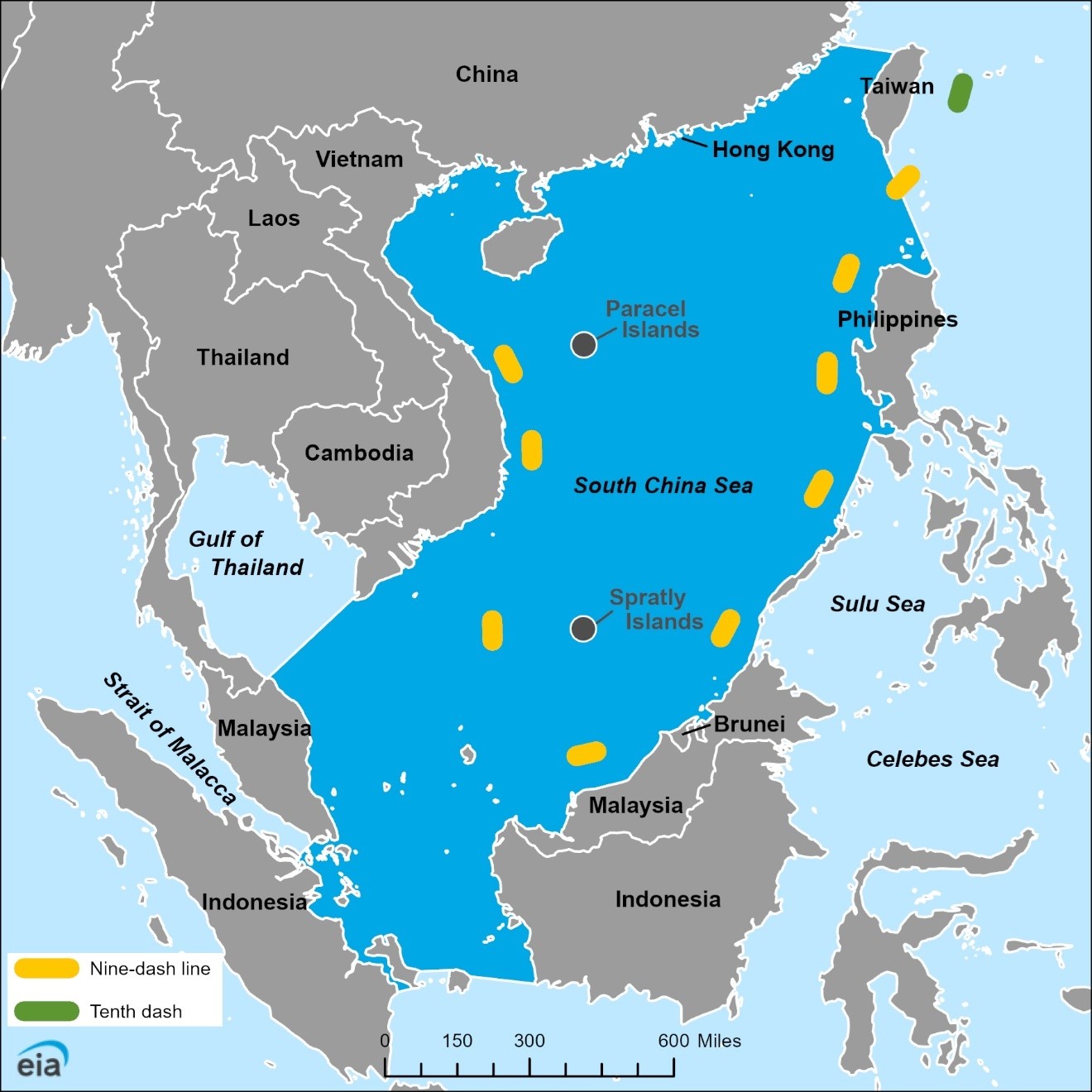
In the contested waters of the South China Sea, Vietnam has emerged as a uniquely positioned actor navigating one of the most challenging maritime dilemmas of the 21st century. As a middle power sharing a land border with an assertive China...
The "Four Nos" and Strategic Hedging
Vietnam's strategic framework rests on what is known as the "Four Nos" policy, which represents the evolution of its longstanding non-alignment doctrine. This concept is originally articulated as the "Three Nos" in the 2009 Defence White Paper, in which the policy prohibited Vietnam from joining military alliances, aligning with one country against another, and allowing foreign military bases on Vietnamese soil (1). The 2019 Defence White Paper added a fourth prohibition: refraining from the threat or use of force in international relations (2). This policy directly reflects what international relations scholars call "hedging", a strategy whereby states pursue security cooperation with multiple partners without committing exclusively to any single alignment. For Vietnam, hedging serves a vital purpose, such as in maintaining strategic autonomy while managing the asymmetric power relationship with China. As a Vietnamese Naval War College analysis highlights, Vietnam lacks the economic, diplomatic, or military power to accept as much risk as larger powers when countering China (3). The Four Nos policy allows Hanoi to diversify its security partnerships while avoiding the appearance of containment and resistance that might provoke Beijing.
However, the 2019 White Paper introduced crucial flexibility through what analysts term the depends clause. The document states that "depending on circumstances and specific conditions, Vietnam will consider developing necessary, appropriate defence and military relations with other countries" (4). This conditional language signals that if Chinese assertiveness may continue to escalate, Vietnam reserves the right to deepen defence cooperation beyond its traditional bounds. The clause represents a strategic hedge within the hedging strategy itself, as a calibrated signal to both Beijing and potential regional partners. Vietnam's hedging operates on the principle of cooperation and struggle toward China, a concept deeply embedded in Vietnamese strategic culture, as well (5). This approach manifests in seemingly contradictory actions, including that Vietnam maintains China as a comprehensive strategic cooperative partnership, the highest designation it offers any power currently, while also simultaneously fortifying its islands, pursuing international arbitration options, and expanding defence ties with regional powers with shared commitments (6).
This strategy aims to particularly preserve space for diplomatic engagement while side-by-side building deterrence capacity. The theoretical foundation of this approach aligns with what scholars of middle-power behaviour describe as strategic autonomy. Middle powers lack the resources to unilaterally balance against great powers but possess sufficient capability to shape their security environment through skilful coalition-building and institutional engagement. Vietnam exemplifies this behaviour by simultaneously deepening ties with the United States, Russia, India, Japan, and ASEAN partners while maintaining economic interdependence with China. This multi-directional approach prevents excessive dependence on any single partner and preserves decision-making flexibility (7).
Defence Modernisation and Maritime Capabilities
Vietnam's defence modernisation represents the manifestation of material dimension of its hedging strategy. Between 2004 and 2013, Vietnam increased military spending by 113 percent, the largest increase among Southeast Asian states, maintaining defence expenditures at approximately 2 percent of GDP (8). This sustained investment has fundamentally transformed Vietnam from a land-centric military into a force capable of credible maritime deterrence. Similarly, between 2023 and 2025, Vietnam’s naval modernization matured from consolidation to strategic expansion.
In 2023, the focus was on strengthening the operational readiness of its six Kilo-class submarines, with investments in basing infrastructure at Cam Ranh Bay and enhanced crew training. These steps ensured the fleet’s integration into Vietnam’s layered maritime defence posture. By 2024, Hanoi broadened its modernization through deeper cooperation with partners such as Japan, South Korea, and the United States. These engagements emphasized training, technology transfer, and maritime security, reducing reliance on Russia while complementing the deterrent value of the submarine fleet with modern surface combatants and coastal missile batteries. The most notable advances came in 2025, when Vietnam and India signed a 'Mutual Submarine Search and Rescue Support Agreement' and a 'Letter of Intent on defence industry collaboration.' These agreements marked a strategic shift toward sustainment and resilience, embedding Vietnam’s submarine programme into a wider network of maritime partnerships. Paired with Su-30MK2 maritime strike fighters, Gepard-class frigates, and shore-based anti-ship missiles, Vietnam has developed what analysts describe as an anti-access/area denial capability designed to raise the costs of military confrontation (10).
This modernisation also reflects a deliberate doctrinal shift emphasised in Vietnamese military thinking. The Vietnam People's Army now prioritises what it terms "active defence”, by identifying threats early and preventing changes to the status quo. The Institute for Military Strategy emphasises that the Vietnam People's Navy should combat the enemy from afar, on the sea and on the islands, to counter hostile amphibious operations (11). This doctrine centres on counter-amphibious operations both in land and marine environments and the ability to contest and control disputed threats even before an adversary can establish their tactics on the ground.
However, significant limitations constrain Vietnam's military effectiveness. As a developing country with a GDP of $514 billion in 2026, by the Vietnam GSO, Vietnam faces resource constraints that limit the pace and scope of modernisation (12). The Vietnamese military retains a Soviet-style organizational structure that hampers operational flexibility and jointness between services. Training activities remain unrealistic, and the military suffers from shortcomings in maritime domain awareness and weapons systems interoperability (13). The 2019 Defence White Paper's emphasis on political indoctrination and economic activities by military units suggests that comprehensive military professionalism remains aspirational rather than achieved (14). Despite these limitations, Vietnam has likely achieved its core objective of convincing Beijing that military conflict would impose substantial costs. Whether Vietnam could sustain extended, high-intensity conventional conflict remains doubtful, but deterrence relies on raising costs rather than guaranteeing victory (15). The strategic logic resembles a porcupine's defence, making the price of aggression too high to justify the gains.
Maritime Deterrence
Vietnam's most dramatic recent initiative has been its island-building campaign in the Spratly Islands. Between 2021 and 2024, Vietnam reclaimed approximately 2,360 acres of land, reaching nearly half of China's 4,650 acres (16). This represents a significant acceleration from previous periods and marks a fundamental shift in Vietnam's approach to physical presence in disputed waters. The expansion includes strategically significant infrastructure developments. Vietnam has constructed an approximately 8,000-foot runway on Barque Canada Reef, with indications it may extend runway networks to additional reefs such as Pearson and Ladd (17). According to the Asia Maritime Transparency Initiative, Vietnam has undertaken reclamation at previously untouched features including Alison Reef, Collins Reef, East Reef, Lansdowne Reef, and Petley Reef (18). These developments create logistics hubs that enhance Vietnam's ability to maintain persistent presence and project limited force across the Spratlys.
China's response to Vietnam's island-building has been notably restrained compared to its other aggressive reactions to similar activities by the Philippines, for example. Beijing issued only mild rebukes and has not attempted to halt construction through coast guard or naval deployments (19). This asymmetry in Chinese responses reveals a very important dynamic about Vietnam's hedging and its quieter, less transparent approach to island-building, maybe a good strategy in contrast to the Philippines' publicity strategy and could provide an insulation from the Chinese aggression. The strategic logic behind Vietnam's island expansion involves creating what military experts call as strategic depth. By establishing multiple fortified positions across the Spratlys, Vietnam complicates Chinese operational planning and creates multiple points where Beijing would need to choose between escalation and cooperation. These installations also support Vietnam's existing legal claims by demonstrating effective occupation and administration, a criterion under international law (20).
However, Vietnam faces a critical challenge in translating its critical physical infrastructure into military capability. While Vietnam has matched much of China's land reclamation, it significantly lags in intelligence, surveillance, reconnaissance (ISR), grey-zone and electronic warfare capabilities, as well. China's Spratly outposts feature sophisticated sensor networks, communications systems, and weapons platforms that Vietnam cannot currently replicate (21). The gap between raw acreage and operational capability remains substantial.
Navigating Great Power Competition
Vietnam's hedging strategy has evolved in response to intensifying great power competition. The 2023 elevation of U.S.-Vietnam relations to a comprehensive strategic partnership marked a significant diplomatic milestone, placing Washington on par with China, India, and Russia in Hanoi's partnership hierarchy (22). This upgrade took place despite Vietnam's Four Nos policy and reflects Hanoi's assessment that Chinese assertiveness requires stronger external balancing. The U.S.-Vietnam defence relationship has expanded significantly in recent years. American aircraft carriers have made multiple port calls to Vietnam, and Vietnamese forces participated in the U.S.-led Rim of the Pacific exercises beginning in 2018 (23). These activities represent concrete implementation of the depends clause in the 2019 Defence White Paper environment that have driven Vietnam to develop more substantial defence cooperation with external powers.
Yet, Vietnam carefully recalibrates these partnerships to avoid provoking Chinese retaliation in the future. Hanoi has been notably slow to purchase U.S. military equipment despite the 2016 lifting of the arms embargo, partly to avoid antagonising Beijing and partly due to budgetary constraints (24). Vietnam also declined to publicly comment on U.S. offers to sell missiles, preferring quiet diplomacy to public commitments that might force China's hand (25). This restraint reflects Vietnam's understanding that its geographic proximity to China creates unique vulnerabilities that more distant powers do not face. Additionally, the regional context also complicates Vietnam's position. The Philippines' shift under President Duterte away from confronting China left Vietnam more exposed as the primary challenger to Chinese claims (26). While recent Philippine re-engagement under President Marcos Jr. has improved the situation, Vietnam cannot rely on consistent ASEAN unity. The stalled negotiations over a Code of Conduct for the South China Sea illustrate ASEAN's limitations as a forum for managing maritime disputes (27).
Challenges and Way Forward
Vietnam's hedging strategy faces several persistent challenges.
First, it has been classified as neither transparent nor opaque but has proven its effectiveness in deterring Chinese grey-zone operations. Beijing continues escalating pressure through coast guard confrontations, research vessel deployments, and fishing militia activities regardless of Vietnamese responses (28). The Chinese strategy appears designed to gradually normalise control over disputed waters through persistent presence rather than dramatic seizures that might trigger international reaction.
Second, Vietnam's limited maritime governance capacity constrains its ability to defend its claims. Financial resources remain insufficient for comprehensive coast guard and naval modernisation. Similarly, law enforcement at the local level is weak and inconsistent across coastal provinces, with overlapping responsibilities among maritime security agencies create coordination challenges (29). These limitations mean Vietnam must prioritise finite resources carefully, reflecting a classic middle-power dilemma.
Third, domestic political factors shape Vietnam's strategic choices. The Communist Party's continued emphasis on absolute leadership over the military and concerns about peaceful evolution limit the depth of security cooperation Vietnam can pursue with Western partners (30). Conservative factions within the Party view closer U.S. ties with suspicion, slowing decision-making on defence modernisation and international partnerships (31). This internal dynamic creates friction between strategic necessity and ideological caution.
Looking forward, Vietnam currently faces challenging strategic choices. Some analysts argue Vietnam must behave more like a proactive middle power, taking bolder steps to defend its interests rather than relying on cautious incrementalism (32). This might also include pursuing international arbitration against Chinese claims, expanding joint patrols with external partners, or publicly challenging Chinese actions more forcefully. However, such measures would significantly risk provoking Chinese economic retaliation or military escalation that Vietnam cannot withstand alone.
Conclusion
Vietnam’s approach in the South China Sea highlights the thin nature of the middle-power strategy amid intensifying great-power rivalry. Through its Four Nos policy, ongoing defence modernization, and selective island development, Hanoi has been crafting a layered hedging approach that safeguards strategic autonomy while reinforcing deterrence. This approach reflects a sophisticated understanding of Vietnam's position, too powerful to be ignored, too weak to confront China directly, but capable enough to shape outcomes through skillful hedging. The effectiveness of this strategy remains contested. Vietnam has succeeded in raising the costs of Chinese coercion and sustaining its claims despite stark asymmetry. Yet Beijing continues to press forward through grey?zone tactics that avoid provoking decisive international backlash. The core dilemma endures between cooperation risks, encroachment risks, while confrontation threatens Chinese escalation.
Endnotes
(1) Ministry of National Defence, Socialist Republic of Vietnam, 2019 Vietnam National Defence White Paper (Hanoi: Ministry of National Defence, 2019), accessed January 2026, https://mod.gov.vn/en/intro/vnd/sa-en-dod-dp/sa-en-dv-mf-stqp/17493317-e8da-4830-ba9d-75d7b39df332
(2) Ibid.
(3) Jeff Zeberlein, Vietnam and the Four Nos - How Chinese Actions in the South China Sea Influence Vietnam's Hedging Strategy, Naval War College Review 77, no. 1 (Winter 2024): p. 130.
(4) Ministry of National Defence, 2019 Vietnam National Defence White Paper, cited in Zeberlein, Vietnam and the Four Nos, p. 120.
(5) Derek Grossman, Vietnam Needs to 'Struggle' More in the South China Sea, RAND Corporation Commentary, November 15, 2019, https://www.rand.org/pubs/commentary/2019/11/vietnam-could-struggle-more-in-the-south-china-sea.html!
(6) Ibid.
(7) Thi Thuy Hang Tran, Vietnam's Post-Cold War Hedging Strategy: A Changing Mix of Realist and Liberal Ingredients, Asian Politics & Policy 10, no. 1 (2018): p. 125–26.
(8) Murray Hiebert, Vietnam Ramps Up Defense Spending, but Its Challenges Remain, Asia Maritime Transparency Initiative, March 18, 2015, https://amti.csis.org/vietnam-ramps-up-defense-spending-but-its-challenges-remain/
(9) Ibid.
(10) Derek Grossman and Nguyen Nhat Anh, Can Vietnam's Military Stand Up to China in the South China Sea? RAND Corporation External Publications, February 22, 2018, https://www.rand.org/pubs/external_publications/EP67504.html
(11) Derek Grossman and Nguyen Nhat Anh, Deciphering Vietnam's Evolving Military Doctrine in the South China Sea, Asia Maritime Transparency Initiative, May 11, 2018, https://amti.csis.org/deciphering-vietnams-doctrine-south-china-sea/
(12) Assessing Vietnam's Maritime Governance Capacity: Priorities and Challenges, Asia Maritime Transparency Initiative, January 10, 2024, https://amti.csis.org/assessing-vietnams-maritime-governance-capacity-priorities-and-challenges/
(13) Grossman and Nguyen, Can Vietnam's Military Stand Up to China.
(14) Phuong Nguyen The, Vietnam's 2019 Defense White Paper: Preparing for a Fragile Future, Asia Maritime Transparency Initiative, December 17, 2019, https://amti.csis.org/vietnams-2019-defense-white-paper-preparing-for-a-fragile-future/
(15) Grossman and Nguyen, Can Vietnam's Military Stand Up to China.
(16) U.S.-China Economic and Security Review Commission, Chapter 4: Crossroads of Competition: China and Southeast Asia, in 2025 Annual Report to Congress (Washington, DC: U.S. Government Publishing Office, November 2025), 221.
(17) Ibid.
(18) Vietnam's Island-Building Campaign Accelerates, Asia Maritime Transparency Initiative, accessed January 2026, https://amti.csis.org/features/
(19) U.S.-China Economic and Security Review Commission, Chapter 4: Crossroads of Competition, p. 221.
(20) Zeberlein, Vietnam and the Four Nos, p. 121–23.
(21) China's Spratly ISR and EW Upgrades, Asia Maritime Transparency Initiative, December 2, 2025, https://amti.csis.org/chinas-spratly-isr-and-ew-upgrades/
(22) Vietnam's Strategic Engagement with China and the United States: Fusion of Neoliberal and Constructivist Approaches, South Asian Survey (2025), accessed January 2026.
(23) Vietnam's Nuanced Securitization of China's Assertiveness in the South China Sea, The Pacific Review (2025), accessed January 2026.
(24) Derek Grossman, U.S. Striking Just the Right Balance with Vietnam in South China Sea, RAND Corporation Commentary, November 23, 2017, https://www.rand.org/pubs/commentary/2017/11/us-striking-just-the-right-balance-with-vietnam-in.html
(25) Ibid.
(26) Derek Grossman, Reviewing Vietnam's 'Struggle' Options in the South China Sea, RAND Corporation Commentary, May 4, 2020, https://www.rand.org/pubs/commentary/2020/05/reviewing-vietnams-struggle-options-in-the-south-china-sea.html
(27) Zeberlein, Vietnam and the Four Nos, p. 118–19.
(28) Derek Grossman, The Philippines' and Vietnam's South China Sea Strategies Have Failed, RAND Corporation Commentary, July 15, 2024, https://www.rand.org/pubs/commentary/2024/07/philippines-and-vietnams-south-china-sea-strategies.html
(29) Assessing Vietnam's Maritime Governance Capacity.
(30) Phuong Nguyen The, Vietnam's Need to Become a Proactive Middle Power, Asia Maritime Transparency Initiative, October 30, 2019, https://amti.csis.org/vietnams-need-to-become-a-proactive-middle-power/
(31) Ibid.
(32) Ibid.
(The views expressed are those of the author and do not represent the views of CESCUBE)
Image Source: U.S. Energy Information Administration
?https://www.eia.gov/international/analysis/regions-of-interest/South_China_Sea

Vivetha Jayaseelan is an International Relations researcher specializing in the securitization of critical infrastructure and Indo-Pacific security architecture. Her research investigates the intersection of sub-sea strategic autonomy, AI space diplomacy, and non-traditional regional security threats using OSINT and quantitative analysis.