Regional Cooperation in East Asia: Enhancing Regional Stability Through Strategic Security Partnerships
East Asia’s strategic landscape is marked by rapid economic growth and complex security rivalries, primarily shaped by the U.S.–China competition. This article examines how evolving regional frameworks and trilateral partnerships such as th...
East Asia is one of the economically dynamic and vibrant regions in the globe, with China and Japan having the largest economies and South Korea as a rising power. Additionally, the area is a center for geopolitical struggle between the US and China.[1] Due to the U.S-China rivalry, East Asia becomes the center of focus but shortly after the end of cold war, both the countries resumed their strategic competition as China’s ascent became more apparent.[2] Since 2008, East Asia has seen a rise in regional tensions, primarily due to China’s geopolitical assertiveness, maritime territorial disputes and military buildup in the area. As a part of US Asia strategy, military cooperation between US and its regional partners is shifting, due to China’s attempts to modernize its military.[3] The structure of regional integration in East Asia has altered significantly over the past two decades, moving from being focused on Japan to being concentrated on China. It is crucial to overcome the negative heritage history and security challenges for boosting mutual trust and regional stability in East Asia.[4]
Regional Security Framework
The East Asian regional security framework is centered around “The Association of Southeast Asian Nations” (ASEAN), American alliance and communist bloc. As the biggest forum in security discussions for East Asia, the ASEAN Regional Forum makes decisions by agreement, which can prevent real progress on difficult security matters. The “East Asia Summit” (EAS), has become the premier platform for the regional leaders to talk matters of security.[5] Opinions were varied over the initial proposal of EAS, some of the states involved generally accepted the summit notion as a further step towards community development in the region. The EAS can be seen as a future forum for meaningful collaboration in addition to being a confidence building endeavour, which is a key component of all types of Asia-Pacific institutionalism.[6]
Cooperation promoting trilateral and bilateral security
a) U.S- Japan- South Korea trilateral cooperation
Since the Bill Clinton administration, the U.S, Japan and South Korea have maintained a trilateral security cooperation. The trilateral has served as an institutional force that safeguard the interests of the United States. As a means of bolstering regional norms and maintaining a rule-based order, Japan consider trilateral cooperation as more of a strategic investment. South Korea involvement with trilateral security cooperation is regarding as a strategic insurance policy and conservative officials viewed it as a tactical necessity.[7] The trilateral partnership has improved the resurgence of South Korea- Japan relations, which allowed Seoul to take on a more active role in the region, and increased the three partners strategic alignment on China and North Korea.[8]
b) China and Russia
The South China sea, Taiwan, the Korean Peninsula and the region surrounding Japan are among the East Asian locations where Beijing and Moscow coordinate. China and Russia cooperate together to push their respective territorial claims and expert pressure on rival regional nations and close ally of United States. In order to counterbalance Moscow’s diplomatic isolation and arms trade, Russia has gotten closer to North Korea. Beijing coordinates with Moscow to lessen international pressure in North Korea while maintaining its own relation with Pyongyang.[9] Russia has been wary of China’s international endeavours and wary about Chinese encroachment into its spheres of influence, despite their close ties. Russia needs more extensive innovative strategy in order to successfully balance its relation with China and other East Asian nations.[10]
c) Australia-Japan-India (AJI) trilateral partnerships
While maintaining the advantages of their economic ties with China, all three countries are determined to stop Chinese domination. They have a fundamental strategic perspective that could serve as the foundation for further cooperation. Furthermore, Australia-Japan-India wants a regional order that promotes collaboration rather than rivalry.[11] By taking a more interest in Asia’s maritime issues collectively, AJI can counterbalance China’s fast expanding influence and wean themselves off of their reliance on US. The trilateral can accelerate regional power redistribution and serve as a foundation for regional economic recovery with a well-defined framework.[12]
Security Challenges in East Asia
Tensions in the region have continued to rise as a result of China’s growing assertiveness about territorial disputes in the East and South China seas. China asserted sovereignty over Diaoyu/Senkaku Islands which was sold to Japanese government. China saw it as a significant escalation and a breach of bilateral agreement, it rejected Japan’s claim about the public purchased of the Islands. As a result, Chinese Coast Guard conducted patrols to challenge the Japan’s control of the Diaoyu/Senkaku Islands and to demonstrate sovereignty. [13] Nuclear capable missiles are frequently tested by North Korea at range that pose a threat to target across the region. Many South Korean officials are concerned that Kim Jong-Un could use nuclear weapon in order to pressure South Korea. Alongside with advanced military system, China’s nuclear capabilities are growing and could become a potential threat to other countries in the region.[14]
In order to make better use of their resources, the region become more and more dependent on web-based technologies, which has also made them vulnerable to new dangers. Due to the various number of cyberattacks in the region, it is challenging for the governments to individually safeguard the emerging cyber threats. The need for East Asian nations to cooperate in order to defend the attacks happening inside and outside the national border is forming. [15] Importance of effective multilateralism has increased with the rise non-traditional security threats. This is particularly evident in the present developments in East Asia to deepen negotiation and improve cooperation through the regional framework.[16]
Conclusion
There has not been any significant regional conflict in East Asia despite having potentially more causes of interstate tension than any other emerging world region. [17] US dominance in East Asia is firmly established regardless the international realignment of power. For the purpose of managing ties between great powers, the region still remains in search of vision and a plan to form a regional security order.[18] China, Japan and Korea should grow their trilateral collaboration and develop an exclusive East Asian approach to establish peace and security. Addressing regional concerns and structural change is necessary to create a regional order with collective efforts.[19]
Endnotes
[1] Just Castillo Iglesias, “East Asia in World Politics”, Universitat Oberta de Catalunya, September 2019. https://openaccess.uoc.edu/bitstream/10609/148906/1/IntroductionToEastAsianPolitics.pdf.
[2] Robert S. Ross, “The Revival of Geopolitics in East Asia: Why and How?”, Global Asia, September 2014. https://www.globalasia.org/v9no3/cover/the-revival-of-geopolitics-in-east-asia-why-and-how_robert-s-ross.
[3] “East Asia Security”, Stockholm International Peace Research Institute, 2015. https://www.sipri.org/yearbook/2015/07.
[4] Liudmila V. Popova and Vladimir N. Kovalenko, “Regional integration in East Asia needs strong political commitment”, World Trade Organization. https://www.wto.org/english/res_e/publications_e/wtr11_forum_e/wtr11_2aug11_b_e.htm.
[5] Biren Nanda, “Evolving Regional Security Architecture in East Asia”, Delhi Policy Group, August 2, 2016. https://www.delhipolicygroup.org/storage/uploads/publications_file/evolving-regional-security-architecture-in-east-asia-1022.pdf.
[6] Ralf Emmers, Joseph Chinyong Liow and See Seng Tan, “The East Asia Summit and the Regional Security Architecture”, School of Law, University of Maryland, Maryland Series in Contemporary Asian Studies, Number 3- 2010 (202). https://digitalcommons.law.umaryland.edu/cgi/viewcontent.cgi?article=1201&context=mscas.
[7] Abhishek Sharma, “US-South Korea-Japan Trilateral: Challenges to an Enduring Security Cooperation”, Observer Research Foundation, August 21, 2025. https://www.orfonline.org/research/us-south-korea-japan-trilateral-challenges-to-an-enduring-security-cooperation.
[8] Kanishkh Kanodia, “The unpromising future of Japan-South Korea-US trilateral cooperation”, Chatham House, February 20, 2025. https://www.chathamhouse.org/2025/02/unpromising-future-japan-south-korea-us-trilateral-cooperation.
[9] Jacob Stokes, Evan Wright and Nathaniel Schochet, “The China-Russia Entente in East Asia”, Center for a New American Security, September 26, 2024. https://www.cnas.org/publications/reports/the-china-russia-entente-in-east-asia.
[10] David Lewis, “Strategic Culture and Russia’s ‘Pivot to the East:’ Russia, China, and ‘Greater Eurasia’”, George C. Marshall European Center for Security Studies, July, 2019. https://www.marshallcenter.org/en/publications/security-insights/strategic-culture-and-russias-pivot-east-russia-china-and-greater-eurasia-0.
[11] Priya Chacko and Jeffrey Wilson, “Australia, Japan and India: A trilateral coalition in the Indo- Pacific?”, Perth USAsia Centre, September, 2020. https://perthusasia.edu.au/research-and-insights/publications/australia-japan-and-india-a-trilateral-coalition-in-the-indo-pacific/.
[12] Dr Jagannath Panda, “The Australia-India-Japan Trilateral Needs a Post-Covid Outlook”, Perth USAsia Centre, Vol 7, Indo-Pacific Analysis Briefs, 2020. https://www.idsa.in/system/files/news/australia-india-japan-trilateral-jppanda.pdf.
[13] Mathieu Duchatel, Oliver Brauner and Katharina Seibel, “Maritime disputes in the South and East China seas”, Stockholm International Peace Research Institute, 2015. https://www.sipri.org/sites/default/files/SIPRIYB15c07sII.pdf.
[14] Jon B. Wolfsthal, and Toby Dalton, “Addressing the Growing Risks of Nuclear Use in East Asia”, Journal for Peace and Nuclear Disarmament, Volume 8, page 1–14, 2025. https://www.tandfonline.com/doi/full/10.1080/25751654.2025.2521033#abstract.
[15] Nicholas Thomas, “Cyber Security in East Asia: Governing Anarchy,” Asian Security Volume 5, page 3–23, January, 2009. https://www.tandfonline.com/doi/full/10.1080/14799850802611446#abstract.
[16] Mely Caballero-Anthony, “Nontraditional Security and Multilateralism in Asia: Reshaping the Contours of Regional Security Architecture?”, The Stanley Foundation, June, 2007. https://stanleycenter.org/publications/pab/pab07mely.pdf.
[17] John Ravenhill, “Responding to Security Challenges in East Asia: Three Perspectives”, Centre for International Governance Innovation, April, 2016. https://www.cigionline.org/publications/responding-security-challenges-east-asia-three-perspectives/.
[18] Jochen Prantl, “Multilateralism in East Asia: The Good, the Bad, and the Ugly”, The ASAN Forum, May, 2014. https://theasanforum.org/multilateralism-in-east-asia-the-good-the-bad-and-the-ugly/.
[19] Hugh Miall, “Preserving the Long East Asian Peace”, Toda Peace Institute, September, 2024. https://toda.org/policy-briefs-and-resources/policy-briefs/report-199-full-text.html.
(The views expressed are those of the author and do not represent the views of CESCUBE)
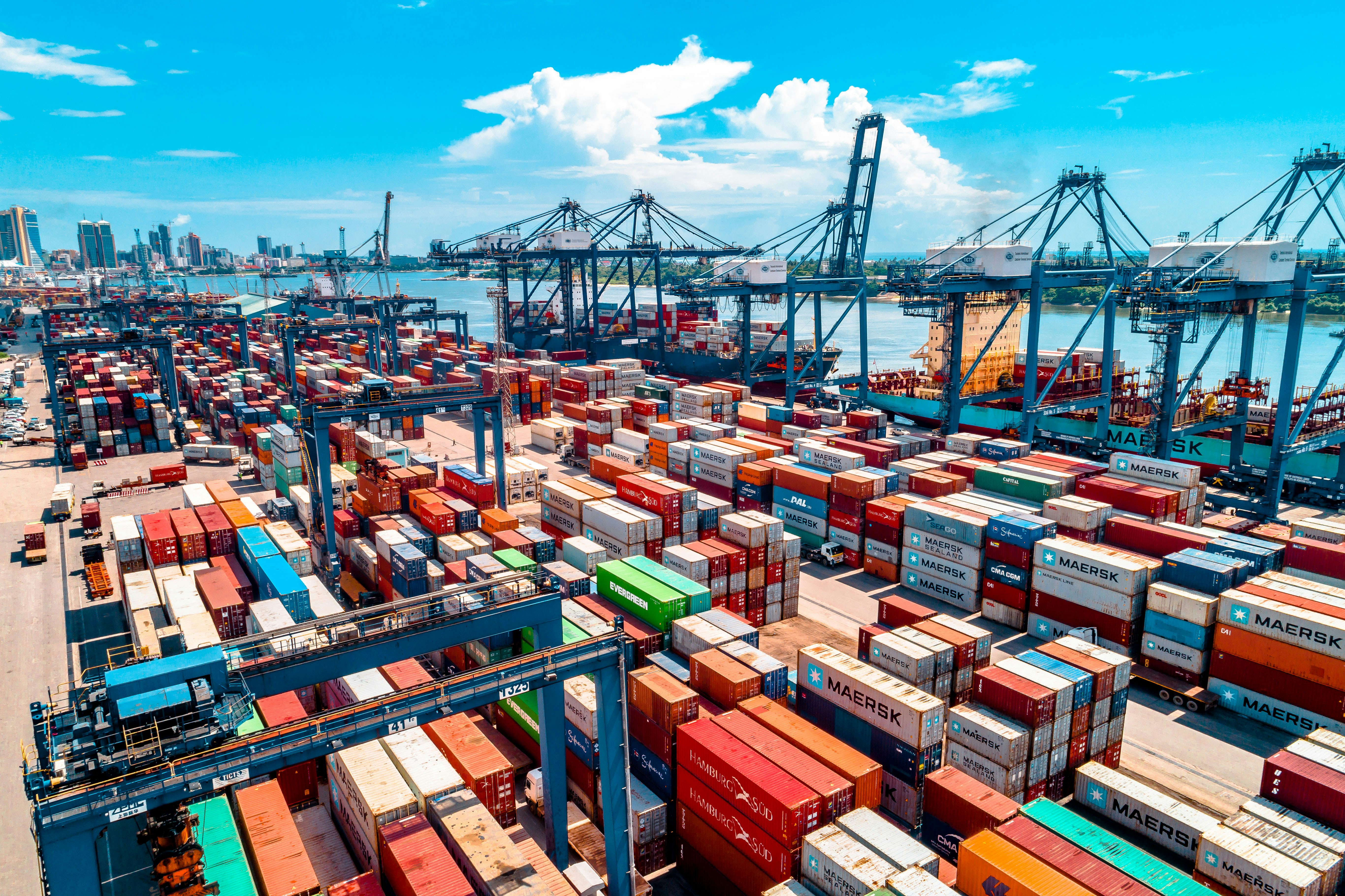
Photo by Ali Mkumbwa on Unsplash
Kushmita Kapoor is a postgraduate in Politics and International Relations with a particular interest in international security, geopolitics, and strategic policy frameworks. She has previously interned at the Future of India Foundation, where she engaged in policy-oriented research and gained hands-on experience in data analysis and policy research. Skilled in OSINT, GIS tools, and multilingual research, she brings a strong analytical lens to the study of strategic policy.