Iran-Israel Conflict and the Future of Asymmetric Warfare in the Middle East
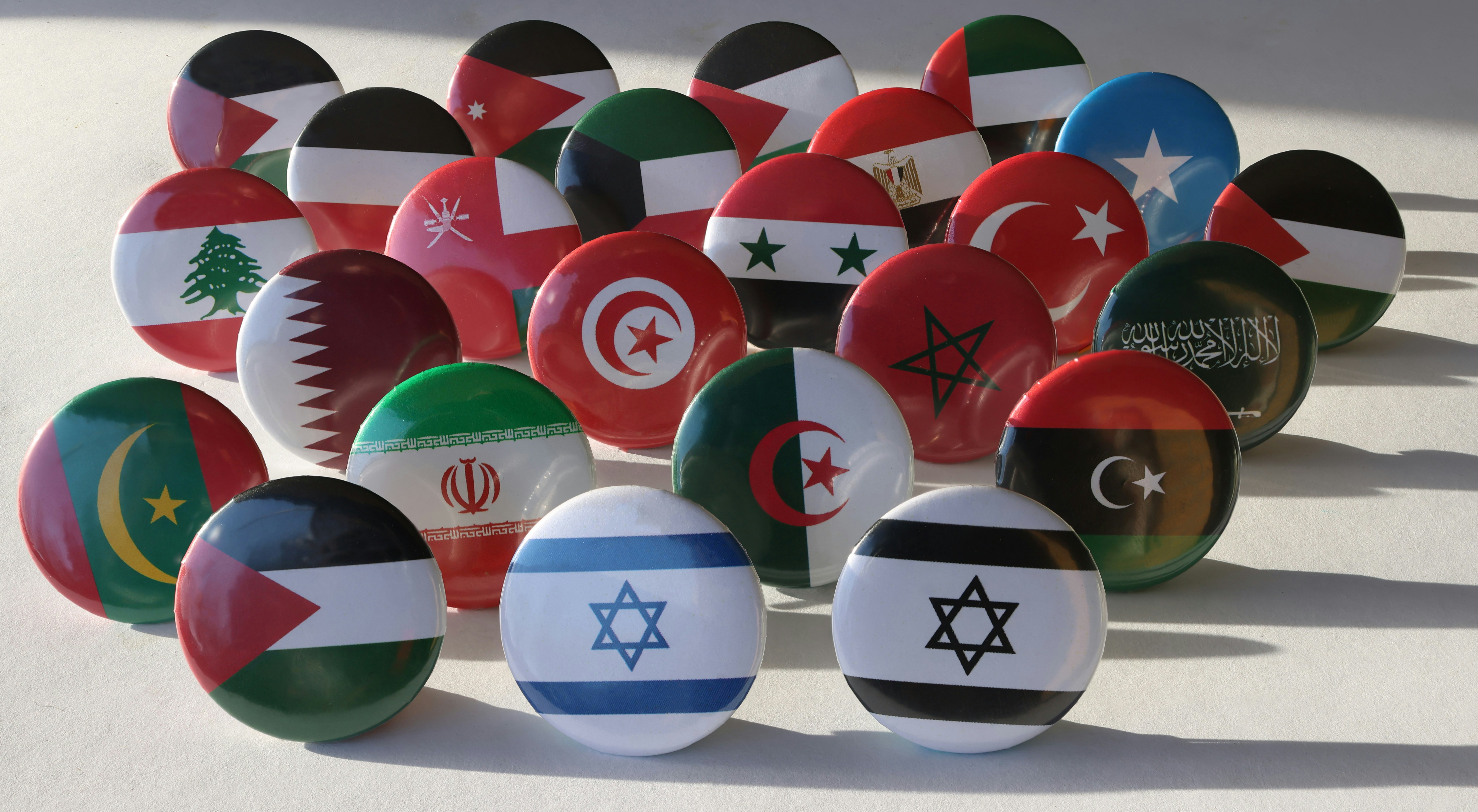
The Iran-Israel conflict represents a critical case study in the evolution of asymmetric warfare within the Middle East. This article examines how conventional military imbalances between the two states have been increasingly offset by the ...
Introduction
The page of international history still reverberates, how, despite deploying substantial military forces in Vietnam, both France and, a few decades later, the United States had to concede to the native forces fighting with local guerrilla tactics. So, the concept of asymmetric warfare is not a new phenomenon in the international military domain, but it has gained traction in recent years with the extraordinary expansion of information and communication technology (ICT). The term was first coined by Andrew J. R. Mack in his article, ‘Why Big Nations Lose Small Wars: The Politics of Asymmetric Conflict.’[i] In this paper, he argues that “if the external power’s ‘will’ to continue the struggle is destroyed, then its military capability – no matter how powerful – is totally irrelevant.”[ii] This means that ‘psychological exhaustion of the enemy’ guides the traction of asymmetric warfare, where the weaker party in the war deploys unconventional methods such as insurgency, terrorism, guerilla tactics, tunnel warfare, cyberattacks, among others, to defeat the opponent having advanced military and technical capability.[iii] However, the technological advancement of the 21st century has revolutionized the domain of asymmetric warfare to now include modern techniques such as Unmanned Aerial Vehicles (UAVs) or drones, disinformation campaigns, corporate espionage, strategic leaks, and a plethora of other non-kinetic measures.[iv]
The notion of asymmetric warfare has influenced almost all conflicts in the Middle East, ranging from the Gulf War in 1991[v] to the most recent Iran-Israel conflict. The extremely volatile geopolitical environment of the region has been further exemplified by this seismic transformation in the ways and means of fighting battles. The Iran’s Axis of Resistance, mainly, Hamas, Hezbollah, and the Houthis, have been causing distress in the region through their asymmetric strategies in terrestrial as well as in the maritime domain. The extremely advanced military might of the US-Israel alliance is being targeted by deploying measures that are redefining contemporary battlefields and altering the traditional conflict paradigm.
In this light, this commentary aims to analyse the role of cyber-attacks, drone strikes, and proxy militias in shaping the asymmetric confrontation between two antagonized nations of the Middle East, Iran and Israel. It also provides a brief account of their impact on the future of asymmetric warfare in the conflict-ridden region.
Iran-Israel Conflict: Understanding the ‘asymmetry’ Involved
Once close allies against the Arab World in the Middle East, Iran-Israel ties changed dramatically after the 1979 Islamic Revolution led by Ayatollah Ruhollah Khomeini established the theocratic government in Tehran.[vi] From being the first Muslim nation to recognize Israel as a sovereign state, Iran started threatening the very existence of the Jewish state after 1979 by supporting proxy militias in Lebanon, Palestine, Syria, and Yemen. With time, the hostilities grew larger, and both countries became fierce enemies, often engaging in direct military confrontations with each other. Besides, the political structure of the Iranian regime and its nuclear ambitions have negatively impacted its ties with the United States and other Western countries.[vii] Consequently, the economic, political, and military sanctions imposed on Iran by the West have moved the country towards utilizing available expertise and facing the adversary through localized high-impact weapon systems, primarily ballistic missiles, drones (both Unmanned Aerial Vehicles and Unmanned Underwater Vehicles), and other electronic warfare systems. Iran also uses proxy militias, or in other words, its Axis of Resistance, to advance its strategic interests in the region and gain tactical advantage over its opponents, mainly Israel and the United States. The recent Iran-Israel conflict has again brought into light the ‘asymmetry’ involved in the fighting capabilities and battlefield strategies of both countries and triggered the debate on the changing nature of warfare in the Middle East.
Cyber Warfare: A Tool to Damage, Disrupt and Destroy
Cyber-attacks have become one of the major tools of shadow war between Iran and Israel, as they can destroy critical infrastructures and weaken the combat capabilities of the adversary in a short period. It has become a potent tool for both countries to, what Daniel Sobelman says, “set new rules of the game” by constraining the enemy and “exacerbating each other’s military and civilian vulnerabilities.”[viii] The unique advantage of cyber warfare is that it does not require any physical presence and can cause intense damage to the enemy’s infrastructure. Its biggest example is the Stuxnet malware attack on the Natanz nuclear facility of Iran in 2010. Considered as the world’s first digital weapon, the malware was jointly developed by Israel and the United States.[ix] It severely damaged several of the Uranium-enriching centrifuges at Natanz, temporarily halting the enrichment activities for almost two years.[x] The incident prompted Iran to reflect and make significant investments in both offensive and defensive cybersecurity capabilities. Since then, cyberspace, to some extent, has become a “substitution for conventional military force” in the Iran-Israel conflict.[xi]
On April 24 and 25, 2020, a cyber-attack tried to sabotage the water flow in two of the rural districts in Israel by crippling computers that controlled the water flow and wastewater treatment.[xii] Although the Iranian government denied any involvement in the attack, Israel and the U.S. blamed Tehran and described the attack as “going against all codes in war” because, if successful, it would have had lethal effects for civilians.[xiii] Before this incident, none of the countries had crossed the line and targeted any civilian infrastructure to cause panic. But, following this escalation, Israel retaliated by causing transport disruptions through a cyber-intrusion at the Iranian port of Shahid Rajaee in May 2020. However, the story doesn’t end here. Increased incidents of cyberattacks since October 7, 2023, show that the ‘new game’ in the Middle East has become more sophisticated and dangerous. A Microsoft Digital Defense Report released in October 2024 highlighted that “from July to October 2023, only 10% of Iranian cyber-attacks targeted Israel; but since the start of the Israel-Hamas conflict to July 2024, nearly half of the Iranian operations targeted Israeli companies”.[xiv] Iran launched disinformation campaigns across social media to destabilize Israel. Fake accounts like ‘Tears of War’ and ‘KarMa’[xv] were created to spread misinformation about the Israeli government, and a swathe of phishing emails were sent to Israeli civilians[xvi] to create social and political chaos in Tel Aviv. Besides, Distributed Denial-of-Service attacks (DDoS) have also become a part of the Iranian strategy to generate mistrust among Israeli citizens towards their government’s capabilities.[xvii]
Israel, too, has used its sophisticated cyber weapons to cause disruptions in the Iranian financial system. For instance, on June 17, 2025, Predatory Sparrow or Gonjeshke Darande, an Israeli hacker group, erased the data of Iran’s largest state-owned bank, Sepah, causing service outages.[xviii] It disrupted citizens from accessing their accounts and making payments. On similar lines, the same group hacked a major Iran-based cryptocurrency exchange, Nobitex’s data.[xix] Both these attacks underscore the criticality of the digital realm in ensuring the national security of nation-states in modern-day warfare.
However, the cyberwarfare, described as ‘war between wars’ by Israel, should not be seen in isolation, but as a part of the broader animosity between Tehran and Tel Aviv. As a former Israel Defense Forces (IDF) chief argues, “Iranian cyber-attack on Israel is a response to Israel’s ongoing efforts against Iran’s military presence and proxies in Syria.”[xx] The same can be argued for Lebanon, Palestine, and Yemen. Seen through the neo-realist perspective, the cyberwarfare between the two has created a security dilemma in the Middle East, further destabilizing the region and highlighting the need for international law to contain the emerging malicious ‘malware’ that is threatening global and regional peace.
Unmanned Aerial Vehicles: A Tool for Surveillance, Supply and Strike
Unmanned Aerial Vehicles (UAVs) or drones have become another defining feature of asymmetric warfare between Israel and Iran. The low costs, smaller size, and agile nature of drones have made them a critical asset for real-time intelligence gathering, precision strikes, and operational efficiency in the contemporary battlefields. They are a cheaper replacement for costly and crewed fighter jets, particularly for resource-scarce countries and violent non-state actors (VNSAs). To gain a tactical advantage over the cutting-edge Israeli aerial technologies, Iran has invested heavily in the research and development (R&D) of advanced land-based, air-launched, and maritime drones. The innovation in drone technology has led Iran to develop a diverse range and type of drones[xxi] (see Table 1) like, solar-powered drones, drones capable of carrying guided bombs and air-to-surface missiles, among others. Iran has also transferred these uncrewed systems to its proxies in the region, which they have used to provoke Israel and disrupt maritime vessels across the Red Sea and the Persian Gulf. Concerning Israel, the cheaper and versatile UAVs (see Table 2) form a key element of the Israel Defense Forces (IDF) to deter adversaries either surrounding its border areas or far from it. The Israeli drone industry has eight biggest companies listed in the ‘Top 100 Drone Defense Companies in 2025,’ ranking it second in the world after the United States.[xxii]
Table 1: List of Iranian UAVs
 ame
ame
Source: (Eslami 2022), https://doi.org/10.1080/25751654.2022.2149077
Table 2: List of Israeli UAVs

Source: https://www.militaryfactory.com/aircraft/israeli-drone-aircraft.php
Regular use of drones by Iran and Israel against each other has significantly altered the warfare dynamics and military strategies in both nations. The recent 12-day conflict between the two countries saw extensive deployment of UAVs, even inside the sovereign territory of the enemy nation. The explosive-laden Israeli drones executed over 500 attacks and preemptive strikes against missile launchers and critical infrastructure inside Iran.[xxiii] Besides, drones helped Israel gain real-time information for deciding targets with enhanced intelligence, surveillance and reconnaissance (ISR). Iran also launched around 1,000 drones at Israel to overwhelm its air defense system.[xxiv] Although 99 percent of these drones were intercepted by the Israeli defense systems before they reached their targets, such a large-scale use of UAVs highlighted the strategic asymmetry of the conflict. Moreover, it also underscored the increasing reliance on unmanned weapons by nation-states in the contemporary war zones and dangers posed to national security due to ‘drone-proliferation.’
Proxy Militias: A Threat Network to Provoke and Pressurize
Proxy militias are a crucial part of the regional foreign policy that Iran has adopted to maintain its strategic influence in the Middle East and exert a kind of ‘proxy pressure’ on its adversaries. The military capability restraints and unfriendly relations with most of the countries of the region have led Iran to turn to these unconventional methods.[xxv] Iran has supported Hezbollah in Lebanon, Hamas in the Gaza Strip, and the Houthis in Yemen since the early 1990s and has provided them with financial assistance, training, and technological know-how to strengthen their combat capabilities.[xxvi] These militias have proved to be a major threat to Israel and a major cause of prolonged instability in the region.
Hezbollah, the first Iranian proxy in the Middle East, has exhibited anti-Israeli sentiments since its existence. It has targeted and attacked the Jewish community not only inside Israel but even abroad, from the African continent to the Americas to Asia.[xxvii] The group is armed with many sophisticated rockets and missiles of diverse ranges, most of them either transferred by Iran via Syria or locally produced by the militant group with the help of Iran. The Israeli invasion of Southern Lebanon, at the peak of Lebanese civil war (1975-1990), in 1982 to destroy the military bases of the Palestinian Liberation Organization (PLO) became the prime reason for Hezbollah’s emergence as well as a cause of its animosity towards Israel.[xxviii] Since the first direct military confrontation in 2006, Israel and Hezbollah have been regularly involved in cross-border skirmishes. The militant group has adopted asymmetric strategies like tunnel warfare and drone strikes in northern Israel and has provided continuous support to Hamas in the Gaza Strip.[xxix] However, the latest clash between the two has proved to be a deadly blow for Hezbollah, as Israeli strikes killed many top leaders of the group, including Hassan Nasrallah, and pager and walkie-talkie attacks demonstrated the vulnerability of the militant force to the advanced intelligence efficiency and operational capacity of the IDF. Besides, the fall of the Assad regime in Syria has further exacerbated[xxx] Iran’s and Hezbollah’s vulnerabilities vis-à-vis Israel.
Figure 1: Iran’s Axis of Resistance

Source: https://www.britannica.com/topic/Axis-of-Resistance
Another proxy group that Iran has used to advance its regional objectives and influence the geopolitical landscape of the Middle East is Hamas, or Harakat al Muqawama al Islamiyah. The common goal of destroying the Jewish state has led Iran to provide all kinds of support to the group.[xxxi] Like Hezbollah and Houthis, Hamas also uses asymmetric warfare tactics such as anti-tank missiles, drones, rockets, etc., to challenge the military might of Israel. Strong backing of Tehran has enabled Hamas to conduct attacks of unprecedented scale, like October 7, which killed around 1,200 Israeli civilians and started a multi-pronged war in the region[xxxii], ultimately leading to a direct conflict between Tehran and Tel Aviv. Experts argue that the 12-day war has “severely weakened the Iranian regime through decapitations, degradation of its armed forces, and damage to its nuclear program.”[xxxiii] However, it is unlikely that Iran will abandon its nuclear ambitions or end its animosity with Israel; rather, it may prioritise strengthening its defense capabilities and enhancing cohesion among its regional proxy groups.
Future of Asymmetric Warfare in the Middle East
By now, it is clear that the nature of warfare in the Middle East has significantly altered the dynamics of military operations and defense strategies in the region. However, the evolving nature of ICT has the potential to further shift the balance between conventional and unconventional capabilities of warring parties.[xxxiv] The adoption of irregular means, such as cyber warfare, by state and non-state actors has enabled them to frustrate and provoke the enemy without violating the Westphalian notion of territorial sovereignty and without risking the lives of their military personnel. This revolution in military affairs (RMA) in the Middle East has been largely due to Iran-Israel animosity and the existing power asymmetry between them.
The escalated rate of drone proliferation in the region points towards the increased use of ‘swarm networks’ where hundreds of thousands of drones are deployed “to swarm against a target and then immediately dissipate their concentration of force.”[xxxv] The advanced tactical and strategic benefits of drone swarms make them a critical asset to rely on. Experts are of the view that “if defenders employ expensive surface-to-air missiles to shoot down cheap drones, missile stocks will not be available for use against more valuable targets like manned aircraft.”[xxxvi] An April 13, 2024, Iranian attack on Israel with 300 drones highlighted this phenomenon when soldiers ran out of missiles while responding to the attack.[xxxvii] Thus, the complex proxy warfare in the region may become more complicated as a quantum leap in UAV technology innovation would further strengthen the surveillance and strike capabilities of state and non-state actors. Furthermore, the pager and walkie-talkie attacks by Israel highlighted the vulnerability of military supply chains and demonstrated the catastrophic reverberations of asymmetric warfare in the region.
Another danger that looms large over the Middle East is the increasing use of Artificial Intelligence to create fake images, videos, and spread misinformation about military strikes, collateral damages, and human casualties, etc., during the conflict. For example, the AI-generated video of the Evin prison gate blast in Iran, shared by the Israeli foreign minister, and synthetic images of Isarel’s strikes in Gaza became headlines of prominent news channels, underscoring the dangers of deceptive AI and deepfakes.[xxxviii] This game of information manipulation impacts the civilians, which may trigger protests against government and further deteriorate the ground situation amid the intensifying fighting.
Besides, beyond fulfilling their military objectives via non-conventional methods, warring parties may use electronic warfare systems to disrupt the economic advancement of the enemy countries by targeting critical infrastructures such as airports, ports, shipping networks, banking systems, etc. and in worst case, may attack civilian areas as a potent tool to cause psychological impact on the adversary. Thus, the expansion of asymmetric warfare across various domains underscores an emerging trend in the region, wherein traditional military strategies are being replaced by asymmetric tactics as an ideal mode of combat operations.[xxxix] It can be argued that the future wars in the region would largely be of small scale with the use of remote-activated claymore explosives, concealed explosives, suicide drones, precision weapons, among others, to create deterrence and exploit the enemy’s vulnerabilities.
Conclusion
The notion of asymmetric warfare in the Middle East has almost fully altered the traditional conflict paradigm by integrating cyber warfare, artificial intelligence, unmanned aerial vehicles and other precision weapons. The region is witnessing a ‘new game’ in which each party involved in the conflict is trying to exploit the others’ vulnerabilities to gain the ‘tactical advantage.’ The resource and power differences between Iran and Israel act as a fuel for asymmetric warfare in the region, exacerbating the complexity and pushing the region on a dangerous path of continuous proxy wars. Instead of vying to shift the balance of power in their favor, nations of the region should try to establish a strategic balance and bridge the fragmented environment to ensure lasting peace.
Endnotes:
[i] The Hindu. “What is asymmetric warfare in military?” December 7, 2018. https://www.thehindu.com/opinion/op-ed/what-is-asymmetric-warfare-in-military/article25682672.ece. Accessed July 17, 2025.
[ii] Mack, Andrew. 1975. “Why big nations lose small wars: The politics of asymmetric conflict.” World Politics 27 (2): 175-200. https://www.thehindu.com/opinion/op-ed/what-is-asymmetric-warfare-in-military/article25682672.ece
[iii] Mello, Patrick A. “Asymmetric Warfare.” In The Wiley-Blackwell Encyclopedia of Sociology, edited by George Ritzer. Malden: Wiley-Blackwell, 2014. https://ssrn.com/abstract=2571255
[iv] Harknett, Richard J., and Max Smeets. 2020. “Cyber campaigns and strategic outcomes.” Journal of Strategic Studies 45 (4): 534-567. https://doi.org/10.1080/01402390.2020.1732354
[v] Gallo, Giorgio, and Arturo Marzano. 2009. “The dynamics of asymmetric conflicts: The Israeli-Palestinian case.” Journal of Conflict Studies 29. https://journals.lib.unb.ca/index.php/jcs/article/view/15231/20801
[vi] Furlan, Marta. 2022. “Israeli-Iranian relations: past friendship, current hostility.” Israel Affairs 28 (2): 170-183. https://doi.org/10.1080/13537121.2022.2041304
[vii] Wright, Robin. 2024. “Explainer: The roots and realities of 10 conflicts in the Middle East.” Wilson Center, February 5, 2024. https://www.wilsoncenter.org/article/explainer-roots-and-realities-10-conflicts-middle-east
[viii] Sobelman, Daniel. 2025. “Rules of the game in asymmetric conflicts.” Security Studies 34 (2): 261-291. https://doi.org/10.1080/09636412.2025.2497969
[ix] The Economic Times. 2024. “Here’s how CIA and Mossad disrupted Iran’s nuclear program using a computer virus.” September 21, 2024. https://economictimes.indiatimes.com/news/defence/heres-how-cia-and-mossad-disrupted-irans-nuclear-program-using-a-computer-virus/articleshow/113545993.cms?from=mdr
[x] Katz, Yaakov. 2010. “Stuxnet virus set back Iran’s nuclear program by 2 years.” The Jerusalem Post, December 15, 2010. https://www.jpost.com/iranian-threat/news/stuxnet-virus-set-back-irans-nuclear-program-by-2-years
[xi] Aanonsen, Claudia Emilie. 2025. “Stuxnet, revisited (again): producing the strategic relevance of cyber operations.” Journal of Cyber Policy 1-17. https://doi.org/10.1080/23738871.2025.2492570
[xii] Warrick, Joby, and Ellen Nakashima. 2020. “Foreign intelligence officials say attempted cyberattack on Isareli water utilities linked to Iran.” The Washington Post, May 8, 2020. https://www.washingtonpost.com/national-security/intelligence-officials-say-attempted-cyberattack-on-israeli-water-utilities-linked-to-iran/2020/05/08/f9ab0d78-9157-11ea-9e23-6914ee410a5f_story.html
[xiii] Joffre, Tzvi. 2020. “Security cabinet: Israel didn’t expect Iranian cyberattack on water system.” The Jerusalem Post, May 10, 2020. https://www.jpost.com/israel-news/security-cabinet-israel-didnt-expect-iranian-cyberattack-on-water-system-627497
[xiv] The Hindu. 2024. “Iran’s cyber attacks against Israel surged since Gaza war: report.” October 16, 2024. https://www.thehindu.com/news/international/irans-cyber-attacks-against-israel-surged-since-gaza-war-report/article68759281.ece
[xv] The Times of Israel. 2024. “Iran’s cyberattacks against Israel surged after Gaza war, Microsoft reports.” October 15, 2024. https://www.timesofisrael.com/iran-cyber-attacks-against-israel-surged-after-gaza-war-started-microsoft-reports/
[xvi] Foundation for Defense Democracies. 2024. “Iranian cyber warfare targeting Israel seeks to exploit fears of military attack.” August 6, 2024. https://www.fdd.org/analysis/2024/08/06/iranian-cyber-warfare-targeting-israel-seeks-to-exploit-fears-of-military-attack/
[xvii] Nelson, Nate. 2025. “Israel enters ‘stage 3’ of cyber wars with Iran proxies.” Dark Reading, April 3, 2025. https://www.darkreading.com/threat-intelligence/israel-stage-3-cyber-wars-with-iran-proxies
[xviii] Kapko, Matt. 2025. “Iran’s bank Sepah disrupted by cyberattack claimed by pro-Israel hacktivist group.” Cyberscoop, June 17, 2025. https://cyberscoop.com/iran-bank-sepah-cyberattack/
[xix] The Economic Times. 2025. “Israel-Iran conflict: Hackers say they wiped out $90 million from Iran cryptocurrency exchange.” June 19, 2025. https://m.economictimes.com/tech/technology/israel-iran-conflict-hackers-say-they-wiped-out-90-million-from-iran-cryptocurrency-exchange/amp_articleshow/121953225.cms
[xx] Gross, Judah Ari. 2020. “IDF chief hints at Israel’s role in cyberattack on Iranian port.” The Times of Isarel, May 19, 2020. https://www.timesofisrael.com/idf-chief-hints-at-israels-role-in-cyberattack-on-iranian-port/
[xxi] Bashir, Hamdi. 2023. “The Iranian drone program: role and scope of its influence in Iran’s foreign policy.” Journal of Iranian Studies 17. https://rasanah-iiis.org/english/wp-content/uploads/sites/2/2023/06/Issue-17.pdf#page=29
[xxii] Elmas, Dean Shmuel. 2025. “Israel ranks second globally in top 100 drone defense companies in 2025.” The Jerusalem Post, June 29, 2025. https://www.jpost.com/israel-news/defense-news/article-859376
[xxiii] Fabian, Emanuel. 2025. “Israeli drone strike said to target Iranian nuclear scientist in a Tehran safehouse.” The Times of Israel, June 20, 2025. https://www.timesofisrael.com/israeli-drone-strike-said-to-target-iranian-nuclear-scientist-in-a-tehran-safehouse/
[xxiv] Fabina, Emanuel. 2025. “The Israel-Iran war by the numbers, after 12 days of fighting.” The Times of Israel, June 24, 2025. https://www.timesofisrael.com/the-israel-iran-war-by-the-numbers-after-12-days-of-fighting/
[xxv] Cohen, Ronen A., and Gadi, P. Shamci. 2022. “The ‘proxy wars’ strategy in Iranian regional foreign policy.” The Journal of the Middle East and Africa 13 (4): 385-405. https://doi.org/10.1080/21520844.2022.2061789
[xxvi] American Jewish Committee. 2025. “Hezbollah, Hamas, and more: Iran’s terror network around the globe.” June 13, 2025. https://www.ajc.org/news/hezbollah-hamas-and-more-irans-terror-network-around-the-globe
[xxvii] Council on Foreign Relations. 2024. “What is Hezbollah?” October 29, 2024. https://www.cfr.org/backgrounder/what-hezbollah#chapter-title-0-10
[xxviii] Noar, Dan, and Eyal Lewin. 2023. “Was the 1982 Lebanon war a deviation from Israeli security doctrine?” The Journal of the Middle East and Africa 14 (2): 219-244. https://doi.org/10.1080/21520844.2023.2171652
[xxix] The Hindu. 2024. “Israel-Hezbollah conflict: All you need to know about the escalating cross-border terrorism.” September 24, 2024. https://www.thehindu.com/news/international/israel-lebanon-hezbollah-conflict-war-pager-explosion-explained/article68676755.ece
[xxx] Carter, Brian. 2025. “The deafening silence of Iran’s proxies.” Institute for the Study of War, June 20, 2025. https://www.understandingwar.org/backgrounder/deafening-silence-iran’s-proxies
[xxxi] Harmouch, Sara, and Nakissa Jahanbani. 2024. “How much influence does Iran have over its ‘Axis of Resistance’ – Hezbollah, Hamas, and the Houthis?” The Conversation, January 23, 2024. https://theconversation.com/how-much-influence-does-iran-have-over-its-proxy-axis-of-resistance-hezbollah-hamas-and-the-houthis-221269
[xxxii] Atlantic Council. 2024. “One year after Hamas’s October 7 terrorist attacks, here’s how the region has changed.” October 4, 2024. https://www.atlanticcouncil.org/blogs/menasource/one-year-after-hamass-october-7-terrorist-attacks-heres-how-the-region-changed/
[xxxiii] ----------. 2025. “Twenty questions (and expert answers) on the Israel-Iran war.” June 16, 2025. https://www.atlanticcouncil.org/blogs/menasource/twenty-questions-and-expert-answers-on-the-israel-iran-war/
[xxxiv] Lee, Sarah. 2025. “The future of warfare in the Middle East.” Number Analytics, June 18, 2025. https://www.numberanalytics.com/blog/future-warfare-middle-east-military-modernization#:~:text=The%20increasing%20importance%20of%20advanced%20technologies%20and%20asymmetric%20warfare%20in,notions%20of%20deterrence%20and%20defense.
[xxxv] Small Wars Journal. 2024. “Something wicked this way comes: The future singularity of asymmetric warfare innovations.” July 7, 2024. https://smallwarsjournal.com/2024/07/25/something-wicked-way-comes-future-singularity-asymmetric-warfare-innovations/
[xxxvi] Kallenborn, Zachary. 2024. “A plague on the horizon: concerns on the proliferation of drone swarms.” Observer Research Foundation, October 22, 2024.https://www.orfonline.org/english/research/a-plague-on-the-horizon-concerns-on-the-proliferation-of-drone-swarms#:~:text=In%20May%202021%2C%20Israel%20became,development%2C%20use%2C%20and%20transfer.
[xxxvii] Hindustan Times. 2024. “Ran out of missiles: US pilots describe battling Iran’s drone swarm in darkness.” November 17, 2024. https://www.hindustantimes.com/world-news/ran-out-of-missiles-us-pilots-describe-battling-irans-drone-swarm-in-darkness-101731801980101.html
[xxxviii] Alimardani, Mahsa, and Sam Gregory. 2025. “Iran-Israel AI war propaganda is a warning to the world.” Carnegie Endowment for International Peace, July 28, 2025. https://carnegieendowment.org/research/2025/07/iran-israel-ai-war-propaganda-is-a-warning-to-the-world?lang=en
[xxxix] Sah, Ethan. 2025. “Asymmetric warfare across multiple domains.” Mad Scientist Laboratory, March 20, 2025. https://madsciblog.tradoc.army.mil/527-asymmetric-warfare-across-multiple-domains/
Pic Courtesy- Photo by Marek Studzinski on Unsplash
(The views expressed are those of the author and do not represent the views of CESCUBE.)

Navodita Kumari is a Research Scholar in International Relations at the Department of Political Science, University of Allahabad, Prayagraj, India. Her research primarily focuses on the evolving dynamics of India-United Arab Emirates relations and their broader geopolitical implications for India’s engagement with the Gulf region. She has deep interest in the ever-changing political scenario of the West Asia and North Africa (WANA) region and is committed to exploring its shifting realities. Her interest areas include Indian Foreign Policy, India-UAE relations, GCC countries, India-Israel relations, Israel and the Arab World, North-western Indian Ocean. A recipient of Junior Research Fellowship, she actively participates in academic seminars and conferences, contributing to scholarly discussions on international politics.