Role of Natural Gas in Fuelling the Russia-Ukraine Crisis
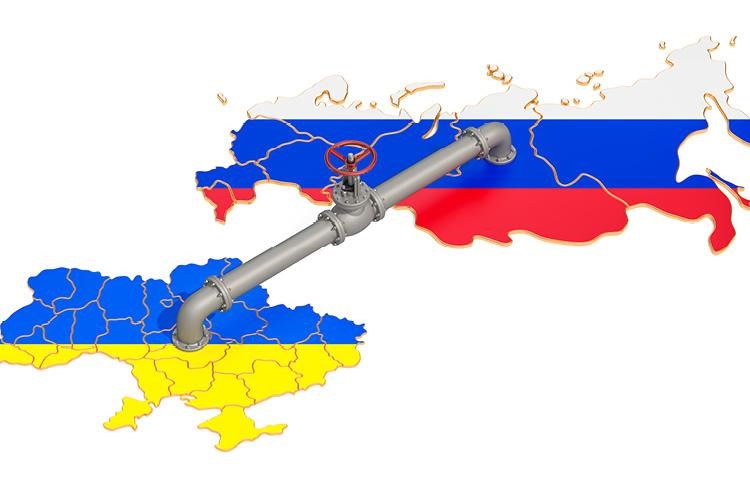
The article identifies the role of natural gas in fuelling the recent and previous conflicts between Russia and Ukraine. The research tries to make a point by analysing the past events involving Russia and Ukraine since the inception o...
The Russia-Ukraine conflict has sparked the energy crisis in the region with a spill-over effect across the world. The crisis has sent seismic shockwaves to the energy markets of Europe. With the constant threats from Russia to cut off the energy supply, the likelihood of future oil and gas disruption and skyrocketing prices has left many European countries with the uncertainty of meeting their future energy demands.[1] The United States has already put sanctions to ban the import of Russian crude oil, coal and Liquefied Natural Gas (LNG).[2] As of now, the Russian crude and other petroleum products have been put under partial sanctions by the EU.[3] One important fact to note here is that the latest sanctions by the EU target only Russian oil which is exported via sea and exempts the petroleum exports through pipelines. Hungary, Slovakia and Czech Republic have been exempted from this partial embargo and are allowed to import Russian crude oil and other petroleum products via the Druzhba pipeline. The EU has still not imposed any sanctions on Russian gas. The latest embargo on Russian petroleum products by the EU will not be able to completely alienate Russia from the European petroleum supply chain. [4]
Russia’s LNG Reserves, Production and Exports
Russia has proven reserves of 1668 trillion cubic feet (Tcf) of natural gas which accounts for around one-fifth of the total gas reserves in the world.[5] Russia is the second-largest producer of LNG in the world after the United States. It is the third leading exporter of LNG in the world accounting for around 10% of the global exports in the world.[6] The production peaked at 10.5 million barrels per day in 2019. The major Russian LNG producers are Gazprom, Rosneft, and Surgutneftegas. Gazprom (state-owned corporation) is Russia’s leading gas producer, which operates the majority of the gas fields in the country. The corporation is one of the largest natural gas extractors in the world. It accounted for 16.3 per cent of the global LNG production in 2019.[7]
The European countries are highly reliant on the imports of LNG from Russia. European nations receive around 40 per cent of their total LNG supplies from Russia.[8] The supply of Russian gas also goes to various Asian countries. The image below depicts the export of Russian LNG to various countries.

Image Source: Author based on the data available at Energy Information Administration https://www.eia.gov/international/analysis/country/RUS
Russia’s Gas Pipeline Infrastructure and the dependence on Ukraine
This flow of gas towards Germany and other parts of Europe across the complex system of pipelines provides critical revenues for the Russian government to function and provides crucial heat for European cities during the winter months. Therefore, both sides rely heavily upon each other. Russia exports LNG through gas pipelines, railways, roadways and gas tankers.
In 2021, 84 per cent of LNG was transported through the gas pipelines to Ukraine, Belarus, Turkmenistan, Uzbekistan, Azerbaijan, Kazakhstan, Latvia, Lithuania, Estonia, Hungary, Germany, Turkey and China.[9] The pipelines transport natural gas through the Eastern European countries to other European nations. Similarly, from Kazakhstan, Russian gas is supplied further to South Asian countries like Pakistan. Russia utilises the money earned from the export of its oil and natural gas to fund its military requirements, pay off debts, build foreign exchange reserves and finance its restoration as a global power. Any sort of disruption in this trade relationship can prove to be disastrous from Moscow’s perspective.

Image Source: The Economist, How will Europe cope if Russia cuts off its gas?
https://www.economist.com/europe/2022/01/29/how-will-europe-cope-if-russia-cuts-off-its-gas
Pipelines connecting Russia to its European Consumers

Source: Authors’ own, using various sources
The Crisis between Russia and Ukraine
The origin of the Russia-Ukraine crisis lies in the collapse of the USSR (United Soviet Socialist Republics), which took place more than three decades ago in 1991. With the collapse of the Soviet Union, the places which were all deeply and intimately connected by the shared history across generations got divided into new geographical boundaries which resulted in the creation of fifteen newly independent republics.[10] During the Soviet Era, when Russia and Ukraine were both one entity, pipelines were built across Ukraine like a bridge that transported natural gas directly from the Siberian sources to its customers in Europe. After the disintegration of the USSR, Ukraine inherited this transport infrastructure which consists of multiple primary and secondary pipelines along with storage facilities. The system is complex and encompasses a pipeline network of around 39000 km in length.[11]
Later, Ukraine started demanding tariffs for the transit of Russian gas through its territory. Ukraine benefits substantially from the transport of natural gas across its territory. Presently, Ukraine transports 82 billion cubic metres (bcm) to 93 bcm of Russian gas per year to the European markets. In 2020, this transit tariff stood at $2 billion.[12] In the early 2000s, this transportation volume stood at 120 bcm per year but later with the development of new gas pipelines, the Russian dependence on Ukraine kept on decreasing. In 2007, around 65% of the total Russian exports were being transported from Ukraine which got reduced to 50% in 2014.[13] In order to further reduce its reliance on Ukraine for the transit of natural gas, Russia invested in new pipeline infrastructure such as Nord Stream 1 and Nord Stream 2 which bypass Ukraine entirely.[14] By 2024, Russia is planning to completely cease all of its gas exports via Ukraine and by doing this it would be able to save billions of dollars in tariffs.
The reverse flow of energy is another important factor that has led to the dispute between Russia and Ukraine. With established pipeline infrastructure between Russia and its European consumers, the energy flow in Europe was from east to west. With Ukraine buying Russian gas from other countries such as Germany, Hungary, Poland and Slovakia, the ‘natural gas’ flow changed from west to east. After, the failed negotiations between Ukraine and Russia over the prices and supply of natural gas, Ukraine started importing Russian gas through the reverse flow from other countries.[15] This move of Ukraine was seen as an attack on its negotiating power while trading with Ukraine and other European powers.
Apart from this reverse flow of energy, more menacing from the perspective of Moscow were the discoveries of shale gas in 2011.[16] As of now, Ukraine holds 39 trillion cubic feet (tcf) of natural gas.[17] These resources are mainly concentrated in three regions. First, is the Dnieper-Donetsk region on the east covering the areas of Donetsk, Luhansk, Kharkiv, Chernihiv, Sumy, Dnipropetrovsk, and Poltava. Second, is the Carpathian region in the west covering the areas of Zakarpattia, Chernivtsi, Ivano-Frankivsk, and Lviv. Third, is the southern region covering the Azov Sea shelf, the Black Sea shelf, Odessa, and the Crimean peninsula.[18] Therefore, a large share of these resources is located in Ukraine’s Exclusive Economic Zone (EEZ) within the Black Sea which is largely concentrated around the Crimean Peninsula.

Presently, Ukraine holds the second-largest gas reserves in Europe after Norway (by excluding the Russian gas reserves present in Asia).[19] From the Russian perspective, the discovery of these natural gas reserves was a direct challenge to Russia’s status as the largest gas exporting country in Europe. The emergence of Ukraine as an exporter of LNG would have provided an opportunity for the European consumers to the diversification of their supplies. This would have lowered the reliance of gas importing countries on the large players and would have strengthened their bargaining position. For the extraction of shale gas, Ukraine signed a deal with Royal Dutch ‘Shell’ worth $10 billion in 2013. The deal was based on production sharing which was believed to be one of the biggest contracts for shale gas extraction in Europe at that time.[20]
Against this backdrop, Ukraine was offered a deal for greater integration of the country with the European Union. Ukrainian President of that time, Viktor Yanukovych rejected the Ukraine-European Association Agreement which sparked protests all across the country against the decision.[21] Later, the President fled the country amidst the rising protests after signing an agreement with the opposition which ended the protests.[22]
Ukraine was already going through internal turmoil when Russia meanwhile annexed the Crimean peninsula.[23] With the annexation of Crimea, all the energy resources present in the region also came under Russia. With this, Moscow also took direct control of Ukraine’s coastline and by extension, it also got access to the majority of Ukraine’s maritime Exclusive Economic Zone (EEZ). Ukraine’s Energy Minister, Stepan Kubiv, mentioned that "Ukraine has lost 80% of oil and gas deposits in the Black Sea and a significant part of the port infrastructure due to the annexation of Crimea.”[24]
With the annexation of Crimea in 2014, Russia put an end to the offshore gas operations of Ukraine and strengthened its operations. Russian forces seized Naftogaz, which is Ukraine’s state energy conglomerate and transferred it to Gazprom.[25] With the ongoing turmoil in the country like the rise of rebel republics in Luhansk and Donetsk located on the Eastern front of Ukraine. These insurgencies are allegedly sponsored by the Russian government. Investors from other gas fields in the country such as Shell and Chevron also decided to pull out their investments.[26] These events left Ukraine with no capability to extract its gas reserves.
Coming to the present scenario, when Kyiv started tilting towards European Union and the United States, Moscow became even more concerned about its strategic interests in the region. The crisis has set off a wider dispute between Moscow and the West. With the outbreak, Russia has also recognised the gas-rich Luhansk and Donetsk regions as independent entities.[27] This can be seen as another attempt by Russia to capture the gas-rich regions of Ukraine. Russia has declared victory on Luhansk, recently.[28]
The strong dependence of European countries on Russia for the import of natural gas has become a strong geopolitical tool of control for Moscow. The ongoing crisis between Ukraine and Russia has opened a window of opportunity for European consumers as well as Russia to develop diversification strategies for reducing the dependence on each other.
Way Forward
Russia is dependent on exporting its LNG to various European countries as the latter is in buying it from the former. Russian dependence on LNG trade to the European countries is both in terms of the revenues which it needs to invest in the new gas fields and as a lucrative market share. However, the dependence arguments need to be seen by the lens of changing strategic environment in the European continent.
The European countries must dive into all the available options before running to any possible conclusion. In the short to mid-term, the importing countries can use the gas stocked in their country’s gas storage facilities. Using the stocked gas in the current situation would come as an immediate rescue for the winter months but at a comparatively higher price because refilling the storage facilities would be difficult and an expensive affair. The second alternative could be importing additional volumes from other European gas producers such as Norway, the Netherlands and extra continental suppliers such as Algeria, Qatar and the United States. This option takes into account other factors such as geographical distance, production capacities and capabilities of the various gas producing countries and availability, location, and capacities of LNG terminals located in the LNG importing countries. The other alternative can be buying the LNG on the spot markets, which is one the most convenient option. The only problems associated with this option are the hiked market prices and limited terminal capacities.
Apart from possible diversifications from both sides as a short term solution, some long term solutions also need to be looked into. European continent needs to accelerate the transition towards renewable sources of energy such as solar, wind and hydrogen fuel cells which would, in turn, reduce their dependence on natural gas. Also, the countries can turn towards other cleaner sources such as nuclear and biofuels. Continuous and serious efforts towards the diversification and decarbonisation of energy sources would help in the development of a more flexible system which, in turn, can decrease the mutual dependency.
Notes
[1] Martin Farrer, “Russia threatens Europe’s gas supplies as west mulls oil import ban over Ukraine invasion”, The Guardian, 08 March 2022, https://www.theguardian.com/world/2022/mar/08/russia-threatens-europes-gas-supplies-as-west-mulls-oil-import-ban-over-ukraine-invasion
[2] “Fact Sheet: United States bans import of Russian Oil Liquefied Natural Gas and Coal”, The White House, 08 March 2022, https://www.whitehouse.gov/briefing-room/statements-releases/2022/03/08/fact-sheet-united-states-bans-imports-of-russian-oil-liquefied-natural-gas-and-coal/
[3] Ben Cahill, “European Union Imposes Partial Ban on Russian Oil”, CSIS, 08 June 2022, https://www.csis.org/analysis/european-union-imposes-partial-ban-russian-oil
[4] “Russian oil: EU agrees compromise deal on banning imports”, BBC, 31 May 2022, https://www.bbc.com/news/world-europe-61638860
[5] Ibid
[6]“Who exported Petroleum oils, crude in 2019?”, Atlas of Economic Complexity, https://atlas.cid.harvard.edu/explore?country=undefined&product=910&year=2019&productClass=HS&target=Product&partner=undefined&startYear=1995
[7] “Natural gas production worldwide in 2020, by country”, Statista, https://www.statista.com/statistics/264101/world-natural-gas-production-by-country/
[8] Ibid.
[9] “Europe is a key destination for Russia’s energy exports”,US Energy Information Administration, 14 March 2022, https://www.eia.gov/todayinenergy/detail.php?id=51618
[10] “Collapse of the Soviet Union”, Britannica, https://www.britannica.com/event/the-collapse-of-the-Soviet-Union
[11] “Ukraine Energy Profile – Energy Security”, International Energy Agency, https://www.iea.org/reports/ukraine-energy-profile/energy-security
[12] “Russian gas transit via Ukraine fell 25% in 2021”, Reuters, 04 January 2022, https://www.reuters.com/markets/commodities/russian-gas-transit-via-ukraine-fell-25-2021-2022-01-04/
[13] Ibid.
[14] Maddy White, “Nord Stream 2 spells pain for Ukraine”, Global Trade Review, 14 January 2020, https://www.gtreview.com/magazine/volume-18-issue-1/nord-stream-2-spells-pain-ukraine/
[15] “Breaking the “Natural Law” of Gas Deliveries. The Mechanism of the Reverse Flows in Ukraine and Europe” Rahvusvaheline Kaitseuuringute Keskus – International Centre for Defence and Security EESTI – Estonia, 03 September 2013, https://icds.ee/en/breaking-the-natural-law-of-gas-deliveries-the-mechanism-of-the-reverse-flows-in-ukraine-and-europe/
[16] Valentin Povroznyuk, “Shale Gas in Ukraine”, The Bleyzer Foundation, 15 November 2013, https://bleyzerfoundation.org/files/tbf_reports/Shale%20Gas%20in%20Ukraine%20Nov%202013.pdf
[17] “Ukraine”, US Energy Information Administration, August 2021, https://www.eia.gov/international/analysis/country/UKR
[18] “Extractive Industries Transparency Initiative”, National Report of Ukraine 2019, Page-64 http://mpe.kmu.gov.ua/minugol/doccatalog/document?id=245516257
[19] Anatoliy Amelin, Andrian Prokip and Andreas Umland, “The Forgotten Potential of Ukraine’s Energy Reserves”, Harvard International Review, 10 October 2020, https://hir.harvard.edu/ukraine-energy-reserves/
[20] Reuters, “Ukraine and Shell sign '$10bn' shale gas deal”, BBC, 24 January 2013, https://www.bbc.com/news/world-europe-21191164
[21] “Ukraine protests after Yanukovych EU deal rejection”, BBC, 30 November 2013, https://www.bbc.com/news/world-europe-25162563
[22] Alexander Baunov, Balázs Jarábik, Alexander Golubov, “A Year After Maidan: Why Did Viktor Yanukovych Flee After Signing the Agreement With the Opposition?”, Carnegie Moscow Center, 25 February 2015, https://carnegiemoscow.org/commentary/59172
[23] Max Fisher, “Everything You Need to Know About the 2014 Ukraine Crisis”, Vox, 03 September 2014, https://www.vox.com/2014/9/3/18088560/ukraine-everything-you-need-to-know
[24] “Ukraine loses 80% of oil and gas deposits in Black Sea due to annexation of Crimea”, Ukrinform, 20 February 2019, https://www.ukrinform.net/rubric-economy/2644538-ukraine-loses-80-of-oil-and-gas-deposits-in-black-sea-due-to-annexation-of-crimea.html
[25] Ariel Cohen, “As Russia Closes In On Crimea’s Resources, What Is Next For Ukraine?”, Forbes, 28 February 2019, https://www.forbes.com/sites/arielcohen/2019/02/28/as-russia-closes-in-on-crimeas-energy-resources-what-is-next-for-ukraine/?sh=4317783629cd
[26] Szilvia Batkov, “Russia’s silent shale gas victory in Ukraine”, EURACTIV, 02 September 2015, https://www.euractiv.com/section/energy/opinion/russia-s-silent-shale-gas-victory-in-ukraine/
[27] Pia Krishnankutty, “Why Donetsk & Luhansk, Ukraine’s rebel territories recognised by Russia, matter”, The Print, 23 February 2022, https://theprint.in/world/why-donetsk-luhansk-ukraines-rebel-territories-recognised-by-russia-matter/842664/
[28] Sam Jones, “Putin declares victory in Luhansk after fall of Lysychansk”, The Guardian, 04 July 2022, https://www.theguardian.com/world/2022/jul/04/ukraine-donetsk-next-russian-target-after-capture-of-luhansk-says-governor
Pic Courtsey-Shutter Stock
(The views expressed are those of the author and do not represent views of CESCUBE.)
Nikita Vats is a Doctoral Research Fellow at the Jindal School of International Affairs (JSIA), O.P. Jindal Global University. Prior to this, she worked as a Research Associate at the National Maritime Foundation, in India. She holds a B.Sc. Honours in Chemistry from the University of Delhi and earned her Master's degree in Chemistry from Panjab University, India. In addition to her scientific background, she possesses a Master’s degree in Political Science and International Relations, showcasing the breadth of her academic pursuits. With a multifaceted academic foundation, she delves into compelling research areas such as strategic affairs in India’s Energy Security, the dynamic landscape of Energy Transition and Geopolitics, Climate Change Diplomacy, and various Technological Issues. Her diverse research interests underscore her commitment to exploring the complexities at the nexus of science, international relations, and environmental issues.