
Core Research Team & Leadership
The CeSCube team includes military veterans, strategic analysts, academic scholars, domain specialists, and policy researchers dedicated to rigorous, non-partisan security intelligence.
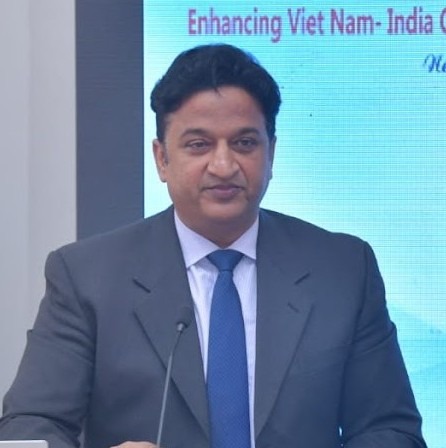
Late Professor (Dr.) Pankaj Jha
Founder & Executive Director of CeSCube, former Deputy Director at National Security Council Secretariat (NSCS, PMO), and Director of Research at ICWA.
Distinguished Editorial Board & Senior Fellows
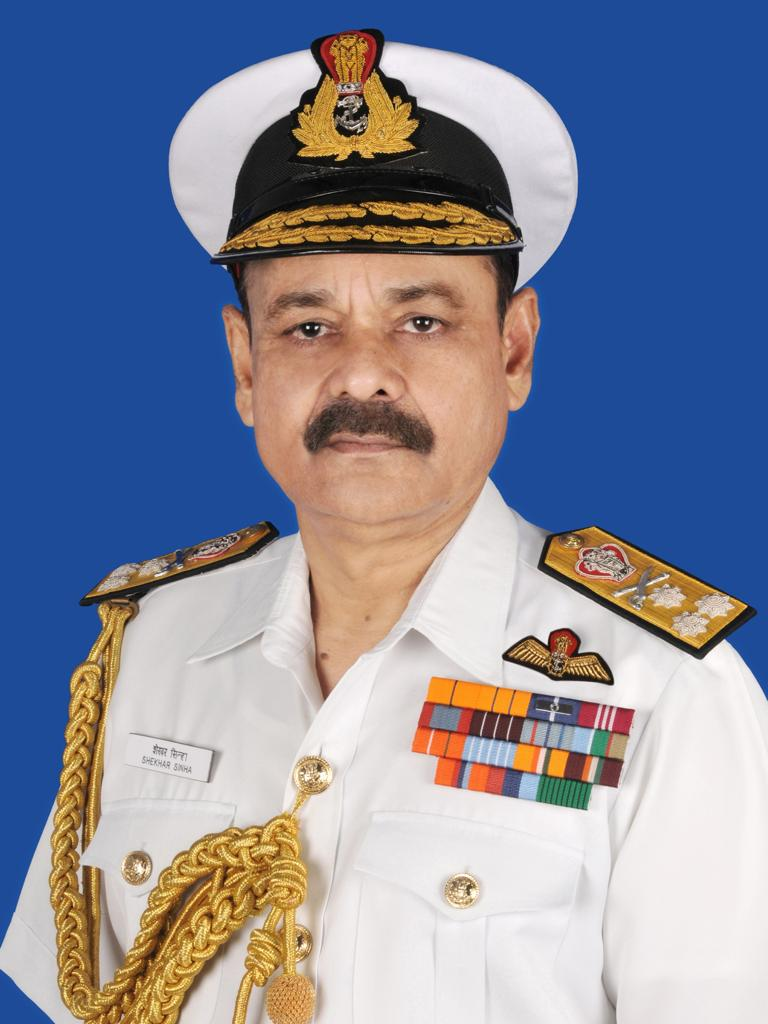
Vice Admiral Shekhar Sinha (Retd.)
Advisor & Senior Fellow — Maritime SecurityAdm. Shekhar Sinha PVSM, AVSM, NM & Bar, ADC is a former Three star Admiral of the Indian Navy, was Commander in Chief of Western Naval Command. He was also a former Chief of Integrated Defence Staff, and a member of the Defence Acquisition Council between 2010 to 2012. During his tenure, the Long Term Integrated Perspective Plan was compiled and approved by the Government. Adm. Sinha is a naval aviator of fighter stream and has flown over 2700 hours. He steered aviation acquisition as the Assistant Chief of Naval Staff and later held command of the Western Fleet. Adm. Sinha retired in 2014 as the Commander in Chief of the Western Naval Command based at Mumbai, with additional responsibility of Commander in Chief Coastal Security, Western Seaboard. He holds an MSc and MPhil in Defence and Strategic Studies from the University of Madras.
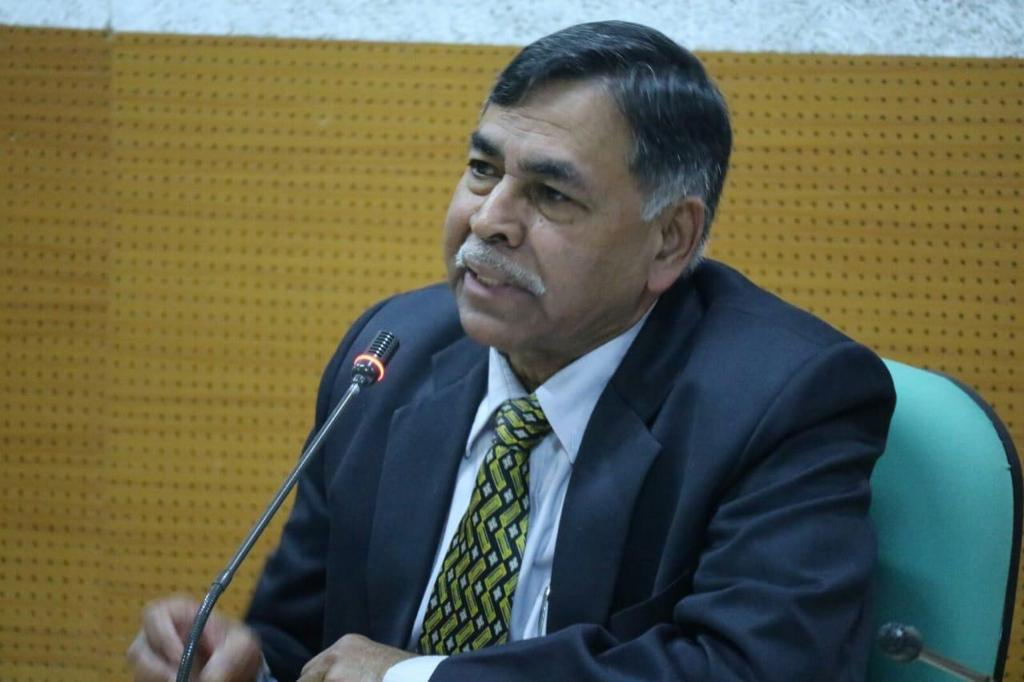
Dr. Rajaram Panda
Senior Fellow & East Asia SpecialistDr. Rajaram Panda is a thorough academic with rich experience in teaching, research and writing. Dr. Panda is a professional researcher, a prolific writer, commentator of international standing. An M. Phil and Ph. D. from JNU in International Studies, with specialization in Japanese Studies and basic knowledge in Japanese, Dr. Panda has worked with some of the most influential organisations. He completed his stint as Senior Fellow with the Institute for Defense studies and Analyses (IDSA), a think tank of the Ministry of Defense, Govt. of India. Prior to this he had a long stint with the Japan Foundation, Indian Council of World Affairs, ICSSR, Jawaharlal Nehru University etc. He also worked as a senior journalist with Eenadu Group and headed the Foreign Affairs department of the group. He is currently serving as Governing Council Member of India Council of World Affairs, An MEA funded think tank. Dr. Panda has received several honours and awards. He is a recipient of Orissa Govt. Merit Scholarship for Higher Studies (1966-67), Japan Foundation President’s Cool Effort Award (2006), Asahi Shimbun Foundation Fellowship (1992-93), South Korean Govt. Scholarship 1976 (Declined), The Japan Foundation Fellowship (2013-14). He has been invited to present papers, deliver lectures in various countries particularly in the Asia-Pacific region. He is recognised as a leading expert on Asia-Pacific Affairs from India. He was ICCR Chair Professor at Reitaku University, Japan, for two academic years, (2016-18). At present, Professor Panda is Lok Sabha Research Fellow, Parliament of India (2018-2020), and Governing Council Member, Indian Council of World Affairs, New Delhi (2019-2022). Apart from research and publications in print media, he maintains a rich presence in the electronic media and the Web. His field of special interest is the Asia-Pacific region, security affairs, economic and foreign policy issues, with focus on Japan and the Korean peninsula.
Dr. Vo Xuan Vinh
Senior Fellow — Southeast Asia & Maritime GeopoliticsDr Vo Xuan Vinh is the Deputy Director, Institute for Southeast Asian Studies (ISEAS), Vietnam Academy of Social Sciences (VASS), Hanoi. His PhD dissertation was the first in Vietnam to focus on India’s Look East Policy. His latest research is Vietnam-India Maritime Cooperation (Maritime Affairs: Journal of the National Maritime Foundation of India, Issue 1, 2017). He has undertaken various researches on India, India’s foreign policy, India’s Look East/Act East Policy, India-ASEAN and India-Vietnam relations. His other fields of conducting research are political, security and international relations in Southeast Asia, the East Sea/South China Sea disputes, and politics of Thailand and Myanmar. He has presented his research papers in national and international conferences in various countries. He has also contributed articles in international journals in India such as Maritime Affairs, Journal of Himalayan and Central Asian Studies, and World Focus. He is now conducting research on maritime issues in Southeast Asia, India’s Look East/Act East Policy, democratization process in Myanmar and Thailand, and international relations in Asia-Pacific.

Mr. Aditya Singh Maurya
Managing Director & Co-FounderAditya Singh Maurya is the founding member of the CS3, CESCUBE, www.cescube.com. He has been a graduate in Computer Science Engineering and an NLIU Dropout, where he ranked ‘AIR 5’ in cyber-law entrance exam. Presently, he is indulged into an academic program, which encompasses ‘International Relations’ and ‘Law’ as a major field of study. He has presented several papers at national/international conferences; some of them are under review for publications. Apart from academia, he has been a part of handful of ventures. His first venture was in the field of agriculture-technology. Second, happened to be in the field of health and right now he sits on the advisory board of couple of startups. He has been named as “MDH Tech Race Winner” in 2013, a global competition conducted by Malardalen University, Sweden. He was also an enrollee of “Core Labs Accelerator, GSV Labs, California, U.S for his startup in 2016. Moreover, He profoundly works on Strategy, encompassing the domains of technology, governance and security. He also attempts to merge science and technology with social science to address public policy concerns.
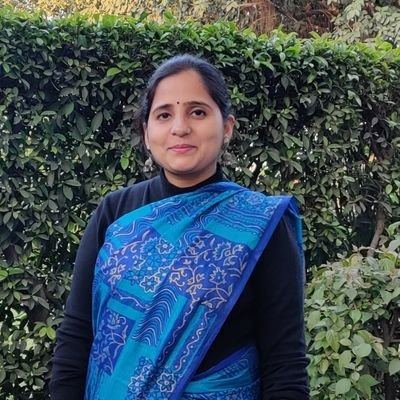
Ms. Nikita Vats
Editorial Head & Managing DirectorNikita Vats is the editorial head at the Centre for Security and Strategy Studies (CeSCube). She is a PhD candidate in International Relations at the Jindal School of International Affairs, O.P. Jindal Global University, India. She previously served as a Research Associate at the National Maritime Foundation, where she contributed to maritime and strategic policy research. She holds a B.Sc. (Hons.) in Chemistry from the University of Delhi and an M.Sc. in Chemistry from Punjab University. She also holds a second Master’s degree in Political Science and International Relations. Her research interests span strategic affairs in the Indo-Pacific, India’s energy security, critical minerals, climate diplomacy, and emerging technology-related security issues. Her current doctoral research focuses on the geopolitics of energy transition and India's strategic imperatives in contemporary world politics.
Board of Strategic Advisors
CeSCube is guided by a Board of Advisors comprising retired flag officers, former diplomats, intelligence directors, and senior university professors across India, the United States, and the Indo-Pacific.