
LIVE DISPATCH
Beyond Consultation: BIMSTEC's Emerging Role in Regional Intelligence and Security Cooperation Maritime India: Security, Trade, and Great Power Competition Between the Desert and the Savannah: Conflict and the Political Economy of Instability in the Sahel Beyond Ukraine: Understanding Putin's Vision of Russian Power The Politics of Ali Khamenei's Funeral Silicon Sovereignty: How Semiconductors Are Redrawing Global Power Hierarchies Operation Sindoor and the Changing Dynamics of India–Pakistan Security The Negative Impact of US–Iran War on the Pacific Region Generative AI, Labour Sovereignty, and the Geoeconomics of India's Service Economy BRICS Expansion and the Multipolar Moment: Opportunity or Strategic Contradiction? India's AI Diplomacy and the Future of Strategic Technologies Foot-Dragging as Feminism: Iran, South Korea, and the Ungovernable Body Lethal Autonomous Weapons Systems and the Governance Deficit: Challenges to International Humanitarian Law and Accountability Beyond Proximity: Why the UAE Occupies a Growing Place in Iran’s Strategic Calculus Great Power Rivalry and the Crisis of the United Nations Why Fiji Matters: The New Geopolitics of the Indo-Pacific Islands Ten Years After Brexit: Regret, Reform, or Reversal? The Long Shadow of 1953: Understanding the Iran–US Conflict Sports, Strategy and Statecraft of Mega Sporting Events as Geoeconomic Instruments: Qatar 2022 to Saudi Arabia 2034 Border Fencing and National security: India’s Strategy along the Bangladesh Border Hardening the Quad: From Strategic Dialogue to Operational Cooperation Lingering Effects of the Bush Doctrine on Contemporary US Foreign Policy The Maghreb of States: Identity, Sovereignty, and the Limits of Non-Interference India’s BRICS 2026 Chairmanship Navigating a tightrope Amidst the Chinese Geopolitical Rise Beyond the Battlefield: Understanding Unconventional Security Challenges in Contemporary Geopolitics The Control Paradox: How Proxy Warfare Enables Strategic Deniability While Constraining Strategic Control Trapped in Deterrence: Nuclear Stability and the Persistence of Conflict in South Asia The Return of Unipolarity? U.S Strategic Primacy and the Future of the Global Order Extended Deterrence Under Strain: Credibility, Assurance, and the Stability-Instability Paradox in the Indo-Pacific Supply Chains and Complicity: The Role of Global Corporations in Forced Labour in Xinjiang The Distant Threat: Is Israel Constructing a Strategic Rival in Pakistan Island Militarisation and Techno-Diplomacy: Turkey’s Eastern Mediterranean Fault Lines Amid India-Greece Alignment India’s Security Scenario: An Assessment of its Continental and Maritime Challenges The Geopolitical Architecture of European Defence: Navigating NATO Synergies, Transatlantic Retrenchment, and the Hybrid Threat Landscape The Artemis Accords and the Future of Global Space Governance AI and the Securitization of Critical Infrastructure: Implications of India's AI Summit Beyond Rhetoric: Evaluating the Effectiveness of International Sanctions on China’s Treatment of Uyghur Muslims The Emerging Maritime Rivalry in the Western Indian Ocean: India’s Response to Extra-Regional Powers India's Maritime Grand Strategy on Trial : The IRIS Dena Incident and the Indian Ocean Question Mistrust to Partnership: India-US Relations Through the Lens of Game Theory Beyond Consultation: BIMSTEC's Emerging Role in Regional Intelligence and Security Cooperation Maritime India: Security, Trade, and Great Power Competition Between the Desert and the Savannah: Conflict and the Political Economy of Instability in the Sahel Beyond Ukraine: Understanding Putin's Vision of Russian Power The Politics of Ali Khamenei's Funeral Silicon Sovereignty: How Semiconductors Are Redrawing Global Power Hierarchies Operation Sindoor and the Changing Dynamics of India–Pakistan Security The Negative Impact of US–Iran War on the Pacific Region Generative AI, Labour Sovereignty, and the Geoeconomics of India's Service Economy BRICS Expansion and the Multipolar Moment: Opportunity or Strategic Contradiction? India's AI Diplomacy and the Future of Strategic Technologies Foot-Dragging as Feminism: Iran, South Korea, and the Ungovernable Body Lethal Autonomous Weapons Systems and the Governance Deficit: Challenges to International Humanitarian Law and Accountability Beyond Proximity: Why the UAE Occupies a Growing Place in Iran’s Strategic Calculus Great Power Rivalry and the Crisis of the United Nations Why Fiji Matters: The New Geopolitics of the Indo-Pacific Islands Ten Years After Brexit: Regret, Reform, or Reversal? The Long Shadow of 1953: Understanding the Iran–US Conflict Sports, Strategy and Statecraft of Mega Sporting Events as Geoeconomic Instruments: Qatar 2022 to Saudi Arabia 2034 Border Fencing and National security: India’s Strategy along the Bangladesh Border Hardening the Quad: From Strategic Dialogue to Operational Cooperation Lingering Effects of the Bush Doctrine on Contemporary US Foreign Policy The Maghreb of States: Identity, Sovereignty, and the Limits of Non-Interference India’s BRICS 2026 Chairmanship Navigating a tightrope Amidst the Chinese Geopolitical Rise Beyond the Battlefield: Understanding Unconventional Security Challenges in Contemporary Geopolitics The Control Paradox: How Proxy Warfare Enables Strategic Deniability While Constraining Strategic Control Trapped in Deterrence: Nuclear Stability and the Persistence of Conflict in South Asia The Return of Unipolarity? U.S Strategic Primacy and the Future of the Global Order Extended Deterrence Under Strain: Credibility, Assurance, and the Stability-Instability Paradox in the Indo-Pacific Supply Chains and Complicity: The Role of Global Corporations in Forced Labour in Xinjiang The Distant Threat: Is Israel Constructing a Strategic Rival in Pakistan Island Militarisation and Techno-Diplomacy: Turkey’s Eastern Mediterranean Fault Lines Amid India-Greece Alignment India’s Security Scenario: An Assessment of its Continental and Maritime Challenges The Geopolitical Architecture of European Defence: Navigating NATO Synergies, Transatlantic Retrenchment, and the Hybrid Threat Landscape The Artemis Accords and the Future of Global Space Governance AI and the Securitization of Critical Infrastructure: Implications of India's AI Summit Beyond Rhetoric: Evaluating the Effectiveness of International Sanctions on China’s Treatment of Uyghur Muslims The Emerging Maritime Rivalry in the Western Indian Ocean: India’s Response to Extra-Regional Powers India's Maritime Grand Strategy on Trial : The IRIS Dena Incident and the Indian Ocean Question Mistrust to Partnership: India-US Relations Through the Lens of Game Theory
IN MEMORIAM & LEGACY
July 7, 1973 – May 20, 2024

Late Professor (Dr.) Pankaj Jha

Founder & Executive Director, Centre for Security and Strategic Studies (CeSCube)

Distinguished strategic scholar, national security advisor, educator, and visionary leader who dedicated his life to advancing Indian strategic thought, fostering independent security research, and mentoring the next generation of defense analysts.
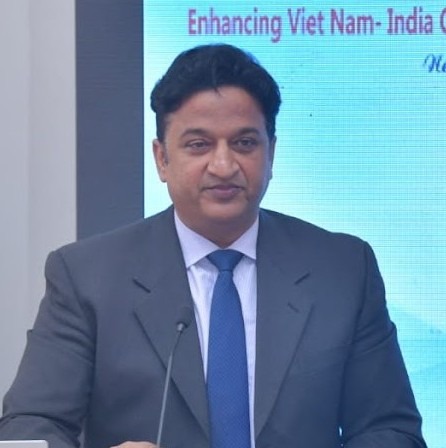
Late Professor (Dr.) Pankaj Jha

Prof. (Dr.) Pankaj Kumar Jha

Founding Visionary of CeSCube (1973–2024)

• Executive Director, CeSCube

• Former Deputy Director, NSCS (PMO)

• Former Director of Research, ICWA

• Founding Director, PKJ-CSS (JGU)

FOUNDING PHILOSOPHY & VISION
“Rigorous security analysis requires bridging the gap between high-level policy decision-making and young, passionate analytical minds. CeSCube was built to empower early-career scholars alongside veteran practitioners to produce uncompromised, objective research for national security.”
— Late Prof. (Dr.) Pankaj Jha, Founding Executive Director

The Founding of CeSCube

Creation of an Independent National Security Think-Tank

The Centre for Security and Strategic Studies (CeSCube) was conceptualized through extensive discussions between Professor (Dr.) Pankaj Jha and his student Aditya Singh Maurya, along with dedicated scholars. Recognizing the need for an agile, independent, and research-intensive platform, Dr. Jha envisioned CeSCube as a collaborative forum where academic rigor intersects with real-world defense policy.

Under his stewardship as Executive Director, CeSCube expanded its research desks across sub-conventional conflict, hybrid warfare, maritime security in the Indo-Pacific, counter-terrorism monitoring, and emerging military technologies.

Distinguished Career & Public Service

Key leadership roles across Government of India, think-tanks, and academia

Professor & Founding Director
2017 – 2024

Centre for Security Studies (CSS), Jindal School of International Affairs (JSIA), JGU

Founded the Centre for Security Studies (renamed Pankaj Kumar Jha Centre for Security Studies - PKJCSS in his honor). Mentored hundreds of students in international relations, defense policy, and strategic foresight.

Director of Research
2014 – 2017

Indian Council of World Affairs (ICWA), Ministry of External Affairs

Spearheaded national foreign policy research, led track-1.5 diplomatic dialogues, and published authoritative assessments on Indo-Pacific maritime security.

Deputy Director
2012 – 2013

National Security Council Secretariat (NSCS), Prime Minister’s Office (PMO), Govt of India

Advised on strategic threat assessments, national security policy coordination, counter-terrorism frameworks, and regional intelligence analysis.

Associate Fellow
2005 – 2011

Manohar Parrikar Institute for Defence Studies and Analyses (MP-IDSA)

Conducted cutting-edge research on South Asian security dynamics, Southeast Asia relations (Look East Policy), and sub-conventional warfare.

Following his demise in May 2024, O.P. Jindal Global University officially renamed its Centre for Security Studies to the Pankaj Kumar Jha Centre for Security Studies (PKJ-CSS) in recognition of his transformative leadership. At CeSCube, his founding principles continue to guide our research publications, policy briefs, and academic fellowships.