Russia’s Strategic Use of Energy as a Weapon: Lessons for the Global South
If there is anything that the past decade has taught us, it is that energy is no longer just a commodity, but a channel of state power. Control over energy supply can give immense economic coercion capabilities and political influence. Russia, one of the world’s largest producers of oil and natural gas, has consistently shown this. What matters is not only the volume of exports but the system of contracts, pipelines and payment systems that create asymmetric dependencies and therefore, political leverage.
Before the 2022 invasion of Ukraine by Russia, Europe’s trade with Russia reflected such an asymmetry. In 2021, the European Union imported roughly 150-155 billion cubic metres (bcm) of natural gas from Russia, which was equivalent to about 40-45% of the bloc’s import needs and a far larger share in several member states like Germany, Austria, and Hungary.1 Moscow had spent years creating and sustaining these links through long-term contracts and politically sensitive projects such as Nord Stream 1 and 2. It also created a transit system that routed much of its gas through its partner countries. This created durable channels of supply and revenue for the Kremlin.
After 2022, Western governments responded with the stern sanctions package ever applied to a G20 economy. The U.S. completely banned the import of Russian oil, liquefied natural gas, and coal on March 8, 2022. The EU and G7 blocked most Russian oil shipments, stopped exporting important energy technology to Russia, cut off major Russian banks from international payment systems, and set a limit on the price of Russian oil using Western shipping and insurance. Assets valued at over?US$300’billion in sovereign reserves were frozen. By early 2024, EU dependence on Russian gas had plummeted from 45% in 2021 to just 11%. 2
Impact of the Sanctions:
Sanctions imposed in 2022 initially delivered a clear shock to Russia’s economy and the wider energy system. In the first two quarters of 2023, Russia experienced a 55–58% drop in oil and gas budget revenues relative to the same period in 2022.3 By late 2023, however, Russia had adapted. Oil and refined products were redirected to China, India, and Turkey, where they supplied high volumes at discounted prices, still generating revenue. The expansion of non-Western shipping and ship-to-ship transfers helped this. As a result, the economy contracted by just 2.1% in 2022 4, a smaller drop than expected, and returned to modest growth the following year. Therefore, the sanctions had a strong short-term impact, but did not cause as much loss in the long term.
This recovery was the product of a deliberate, long-term plan. This paper argues that Russia’s recovery followed a three-pronged strategy of (a) creation of dependence on Russian energy, (b) diversification of export partners and (c) division of the European Union. For resource-rich Global South states, these can serve as a blueprint for surviving economic coercion.
(a) Creation of Dependency on Russian Energy
Europe’s deep reliance on Russian energy has created a structural vulnerability and asymmetric dependence. Central to this dependence were large, state-backed infrastructure projects. The Nord Stream 1 system alone had a design capacity of approximately 55 bcm/year5, creating a direct, high-volume pipeline into Germany and the wider EU market. These physical assets were made even stronger by long-term contracts and arrangements that made switching suppliers costly and slow.
Moscow exploited this vulnerability through predictable and unpredictable tactics. Classic examples are the winter cut-offs: interruptions of transits through Ukraine in 2006 and 2009, followed by severe cut-offs after the 2022 invasion. These were timed to maximise political pain when heating demand shot up during the difficult winters. Alongside this, Russia used pricing as an instrument. Gazprom and other suppliers offered preferential and subsidised rates to politically sympathetic partners of Russia, like Belarus, while imposing strict terms on others like Poland.6 This turned commercial contracts into instruments of foreign policy. The result was that Russia transformed energy into a lever that could be tightened or loosened according to Moscow’s political objectives.
The direct outcome was widespread disruption. Europe’s pipeline imports fell steeply in 2022. Governments struggled to find replacements, storage ran low in some regions, and spot prices spiked. Due to logistical and investment constraints, alternatives like LNG terminals and new pipeline linkages took months to come into place. In that window of time, Russia transformed its control on supply into a bargaining power. States with the highest pre-existing reliance, like Germany, Hungary, and Slovakia, among others, faced the most difficult trade-offs between political choices and survival during winters.
The gas trap was still not a complete win for Moscow. The same pipelines and infrastructure that made Europe dependent also locked European countries into costly projects. After 2022, this pushed them to act fast and launch policies like ‘REPowerEU,’ sign new LNG deals, and cut the use of Russian gas. 7 This sharply reduced Russia’s market share in just two years. Therefore, in the end, controlling the gas tap gave Russia quick profits, but also pushed its customers to find other suppliers, reducing its power over time.
Aspects of this strategy are transferable to resource-rich states in the Global South, but they need prerequisites, and they carry political and economic risks. First, infrastructure control is key. States that own or control export infrastructure like pipelines, LNG terminals and major ports have more credible options to utilise the above strategy. Qatar’s dominance in LNG markets, backed by its long-term supply contracts and ownership or stakes abroad, shows how infrastructure creates power.8 It should continue to utilise this strategy, further drawing from the Russian model explained above. For a country like Nigeria, improving pipeline safety and increasing its ability to export could turn its untapped resources into real strength. This would, however, need big investments and better governance to stop corruption and sabotage at home.9
Venezuela’s historical use of oil for its diplomacy, supported by the state control over PDVSA (Petróleos de Venezuela, Sociedad Anónima), shows how a supplier can use contracts to win over and keep political allies. Yet Venezuela also demonstrates the downside - weak institutions, corruption and sanctions that can quickly nullify the advantages. The countries of the Global South need to therefore work on their domestic issues to be able to successfully adopt these strategies.10 Finally, the political cost must be acknowledged. Using energy as a weapon can hurt a country’s reputation, trigger sanctions, and drive away stable long-term partners. For many Global South states, the quick gains from pressuring buyers may be smaller than the long-term losses in investment, technology, and diplomacy.
(b) Diversification of Export Partners
When Europe cut Russian supplies after February 2022, Moscow faced a choice: accept sharply lower export volumes and revenues, or find new customers. Russia pursued the latter. The diversification of export partners by redirecting crude, refined products and gas flows to buyers in Asia, the Middle East and elsewhere became the central second pillar of Russia’s response.
The speed and scale of Russia’s reorientation were striking. In 2021, Europe accounted for the lion’s share of Russia’s hydrocarbon exports, but by 2024, Asia and Oceania had become the primary destination for Russian crude and coal. According to the U.S. Energy Information Administration, in 2024, roughly 63% of Russia’s crude oil exports and 85% of its coal went to Asia and Oceania, showing a significant re-routing from its traditional European market.11
India became a major new buyer. During the 2022–23 fiscal year, India’s spending on Russian crude oil soared nearly 13-fold, increasing from below $2.5 billion in 2021-22 to over $31 billion, as its refiners took advantage of cheaper Russian Urals crude.12 China, already Russia’s largest energy partner for pipeline gas and oil, increased deliveries further, and Turkey expanded its purchases both for domestic needs and for refining/resale. These changes allowed Russia to keep its seaborne exports much higher than they would have been if it had relied only on Europe.
The graph below shows the change in trade partners explained above. It shows an extremely sharp decline in exports to the EU from the time that sanctions were imposed. At the same time, there is an increase in the China as well as ‘India + China’ levels, indicating that India emerged as a more significant contributor post March 2022.

Figure 1: Russia’s hydrocarbon exports to the European Union, China, and India (billions of U.S. dollars at current prices)
Source: Prepared by Aponte-Gracia and C. Alvarez 13 based on Darvas et al. (2022). 14
https://rujec.org/article/125317/
To support this diversification, Russia and its buyers made use of a “shadow” or “dark” fleet of older tankers with opaque ownership and used ship-to-ship transfers at sea, notably in waters off Oman, to mask cargo origins. They relied on non-Western insurance and broker networks to keep cargoes moving.15 Estimates suggest the shadow fleet handled millions of barrels per day at the height of sanctions pressure, sidestepping Western bans on shipping and insurance for vessels carrying Russian crude above the price cap. With respect to finance, buyers and sellers sidestepped parts of Western financial architecture by shifting settlement currencies. For instance, Rupee and Yuan transactions were done with India and China, and by using intermediary trading firms in some cases.
Having access to these alternative buyers matters for three strategic reasons. First, having multiple buyers weakens the impact of import bans. If one market closes, exports can still go elsewhere, so the producer’s income doesn’t dry up completely. Second, new partners give political cover. Buyers can justify purchases as a national interest, making it harder to isolate the seller. Third, spreading exports across buyers gives the seller more time to adjust. This means that revenues may drop, but not all at once, allowing space to use reserves, change policies, or make new deals. Russia’s case shows all three: instead of collapsing after Europe’s embargo, revenues dropped but then stabilised because India and China took in discounted crude. This let Moscow keep earning enough to fund the state and stay politically stable, even if trade patterns shifted.
There are a number of things that Global South countries can adopt from this. Firstly, they should use a mix of long-term contracts and spot sales. Long-term contracts provide steady and predictable income, while spot sales allow countries to take advantage of higher prices when markets shift. Angola, for instance, gets reliable revenue through its long-term supply to China but also sells cargoes on the spot market in Europe.16 It is also important to develop logistical capacity. Facilities for refining, storage, and LNG give producers options to change what they sell and where. Nigeria’s Dangote refinery, with a planned capacity of 650,000 barrels per day, is a good example.17 Once fully operational, it will allow Nigeria to export refined fuel in addition to crude oil. Another important strategy is to diversify payment and financial channels. Relying only on the US dollar or Western banking systems can leave exporters vulnerable to sanctions or restrictions. Alternatives include local-currency trade arrangements, currency swap lines, and stronger reserves. India’s rupee-rupee and rupee-ruble payment systems with Russia show how trade can continue even under pressure from Western financial controls. Politically, maintaining strong relations with buyers in Asia, the Middle East, and Africa is essential, so they are not dependent on a single market. Algeria and some African producers should continue to use this approach to make sure they have a stable demand, even if one region faces political pressure.
(c) Division: Exploiting Fragmentation within the European Union
A key part of Russia’s energy strategy was that it did not see the European Union as one single, united market. Instead, it dealt with each country separately, knowing that their energy needs, industries, and politics were all different. By doing this, Moscow could give better deals to countries that cooperated, while sidelining or pressuring those that didn’t. This approach created divisions within Europe, and thus, weakened its ability to negotiate as a bloc, and delayed a strong, unified policy.
Germany became an important beneficiary. Pipelines like Nord Stream 1 and the proposed Nord Stream 2 granted Germany direct access to Russian gas under favourable terms. This relationship gave Russia both significant revenue and a political ally within the EU that was reluctant to back harsh sanctions. Hungary, too, gained privileged treatment.18 In late 2021, Gazprom signed an agreement to supply Hungary with 4.5 billion cubic meters annually, out of which 3.5 bcm were supplied via TurkStream, bypassing Ukraine entirely.19 Ukraine faced the major downside of Russia’s fragmentation strategy. Once a vital transit route for Russian gas to Europe, Ukraine lost that role after Moscow invested in bypass pipelines like Nord Stream and TurkStream. In 2023, transit through Ukraine fell to 14.65 bcm, from 40 bcm in 2021, dropping Ukraine’s earnings and its strategic importance. Poland and other Baltic states faced the downside as well.20
These uneven patterns caused policy friction within the EU. Western and core EU states, backed by long-term infrastructure, saw less urgency to decouple from Russia. Meanwhile, Eastern and Central European states, facing real risks of supply cuts, pushed for faster responses and alternative sources. When sanctions were proposed in 2014 after Crimea, and again in 2022 after the Ukraine invasion, energy dependence delayed unified EU action. For resource-rich Global-South countries, Russia’s model must be approached cautiously. Firstly, infrastructure investments are extremely significant. Creating alternate energy transit routes like Russia’s bypass pipelines gives exporters control over who benefits and who doesn’t. Exploiting asymmetry is another key learning. Just as Germany was dependent on Russian gas, Global-South exporters should identify which states rely heavily on their exports and use that to their advantage.
Conclusion
Energy has become an extremely powerful tool of diplomacy over the past decades. Russia’s use of its energy resources in Europe shows how resources can be turned into weapons that can create dependence and influence political choices. For the Global South, rich in oil, gas, and other resources, this is both a risk and an opportunity. Countries can either be trapped as buyers or rise as strategic players if they manage their resources wisely and work together. This is evident with the imposition of harsh tariffs imposed by the U.S under President Trump on India for buying Russian oil, showing how energy choices can spark global pressures. The counter-tactics may raise moral questions, but they remain part of real-world power struggles. The lesson is clear; energy is a commodity, but also a strategic weapon. For the Global South, learning to use it smartly will be key to building strength, independence, and influence in the international order.
Endnotes
1. European Commission, “In focus: EU energy security and gas supplies” (European Commission, 2024) https://energy.ec.europa.eu/news/focus-eu-energy-security-and-gas-supplies-2024-02-15_en.
2. Council of the European Union, “Timeline - Packages of sanctions against Russia since February 2022,” https://www.consilium.europa.eu/en/policies/sanctions-against-russia/timeline-packages-sanctions-since-february-2022/.
3. Milov, Vladimir. Oil, gas, and war: The effect of sanctions on the Russian energy industry. Atlantic Council. May 23rd, 2024. https://www.atlanticcouncil.org/content-series/russia-tomorrow/oil-gas-and-war/#:~:text=Russian%20budget%20revenues%20from%20oil%20and%20gas,compared%20to%20the%20same%20period%20in%202022.
4. European Council. “Impact of sanctions on the Russian economy.” Last updated October 12, 2023. https://www.consilium.europa.eu/en/infographics/impact-sanctions-russian-economy/
5. Nord Stream AG, “The project” https://www.nord-stream.com/the-project/pipeline/
6. Alachnovi?, Ale?. “Belarus’ Increasing Economic Dependence on Russia.” German Economic Team, July 2024. https://www.german-economic-team.com/en/newsletter/belarus-increasing-economic-dependence-on-russia/.
7. European Commission. “REPowerEU?: Affordable, Secure and Sustainable Energy for Europe.” Last Updated June 2025. https://commission.europa.eu/topics/energy/repowereu_en
8. Joseph, Ira, and Anne Corbeau. “Qatar’s Contract Quandary .” Center on Global Energy Policy at Columbia University SIPA, May 19, 2025. https://www.energypolicy.columbia.edu/qatars-contract-quandary/#:~:text=Rare%20cases%20of%20sponsored%20projects,for%20LNG%20than%20previously%20anticipated.
9. Peng, Donna and Poudineh, Ramatallah. “Gas-to-Power Supply Chains in Developing Countries: Comparative Case Studies of Nigeria and Bangladesh.” The Oxford Institute for Energy Studies, March 2017. https://www.oxfordenergy.org/wpcms/wp-content/uploads/2014/07/Gas-to-Power-Supply-Chains-in-Developing-Countries-Comparative-Case-studies-of-Nigeria-and-Bagladesh-EL-24.pdf
10. Roy, Diana, and Amelia Cheatham. “Venezuela: The Rise and Fall of a Petrostate.” Council on Foreign Relations, July 31, 2024. https://www.cfr.org/backgrounder/venezuela-crisis.
11. U.S. Energy Information Administration (EIA), “Country/region export breakdowns and 2024 summaries-Russia” https://www.eia.gov/international/content/analysis/countries_long/russia/
12. Vickery, Raymond and Cutler, Tom. Oil for India. The National Bureau of Asian Research. September 3rd, 2024. https://www.nbr.org/publication/oil-for-india/
13. Aponte-Garcia, Maribel. Hydrocarbon Trade Deflection and Supply’chain Trade Restructuring Under Sanctions Imposed During the Russia–Ukraine Conflict. 2nd October, 2024, Russian Journal of Economics. https://rujec.org/article/125317/list/9/
14. Darvas Z., Martins C., McCaffrey C., Moffat L. L. Russian foreign trade tracker. Bruegel Datasets, May 23rd, 2022. https://www.bruegel.org/dataset/russian-foreign-trade-tracker
15. Sauer, Pjotr. Russia’s shadow fleet of oil tankers grows despite western sanctions. The Guardian, October 14th, 2024. https://www.theguardian.com/world/2024/oct/14/russias-shadow-fleet-oil-tankers-grows-western-sanctions
16. Sambit Mohanty, Gawoon Philip Vahn, and Oceana Zhou, "Asia Eyes Oil Sourcing Flexibility from Angola as Output Rises After OPEC Exit." S&P Global Commodity Insights, May 3, 2024, https://www.spglobal.com/commodityinsights/en/market-insights/latest-news/oil/050323-asia-eyes-oil-sourcing-flexibility-from-angola-as-output-rises-after-opec-exit.
17. Anyaogu, Issac. Nigeria's Dangote Refinery to operate at full capacity in 30 days, executive says. Reuters. February 10th, 2025. https://www.reuters.com/business/energy/nigerias-dangote-refinery-operate-full-capacity-30-days-executive-says-2025-02-10/
18. Purshothaman, Uma. Explained. The importance of the Nord Stream pipeline. The Hindu. February 1st, 2022. https://www.thehindu.com/news/international/explained-the-importance-of-the-nord-stream-pipeline/article38352754.ece
19. Sibel, Morrow. Gazprom strikes deal with Hungary to export gas through TurkStream. Energy Terminal. September 28th, 2021. https://www.aa.com.tr/en/energy/natural-gas/gazprom-strikes-deal-with-hungary-to-export-gas-through-turkstream/33689
20. Elliott, Stuart. Russian gas flows via Ukraine suspended as transit deal expires. Reuters. January 1st, 2025. https://www.spglobal.com/commodity-insights/en/news-research/latest-news/natural-gas/010125-russian-gas-flows-via-ukraine-suspended-as-transit-deal-expires
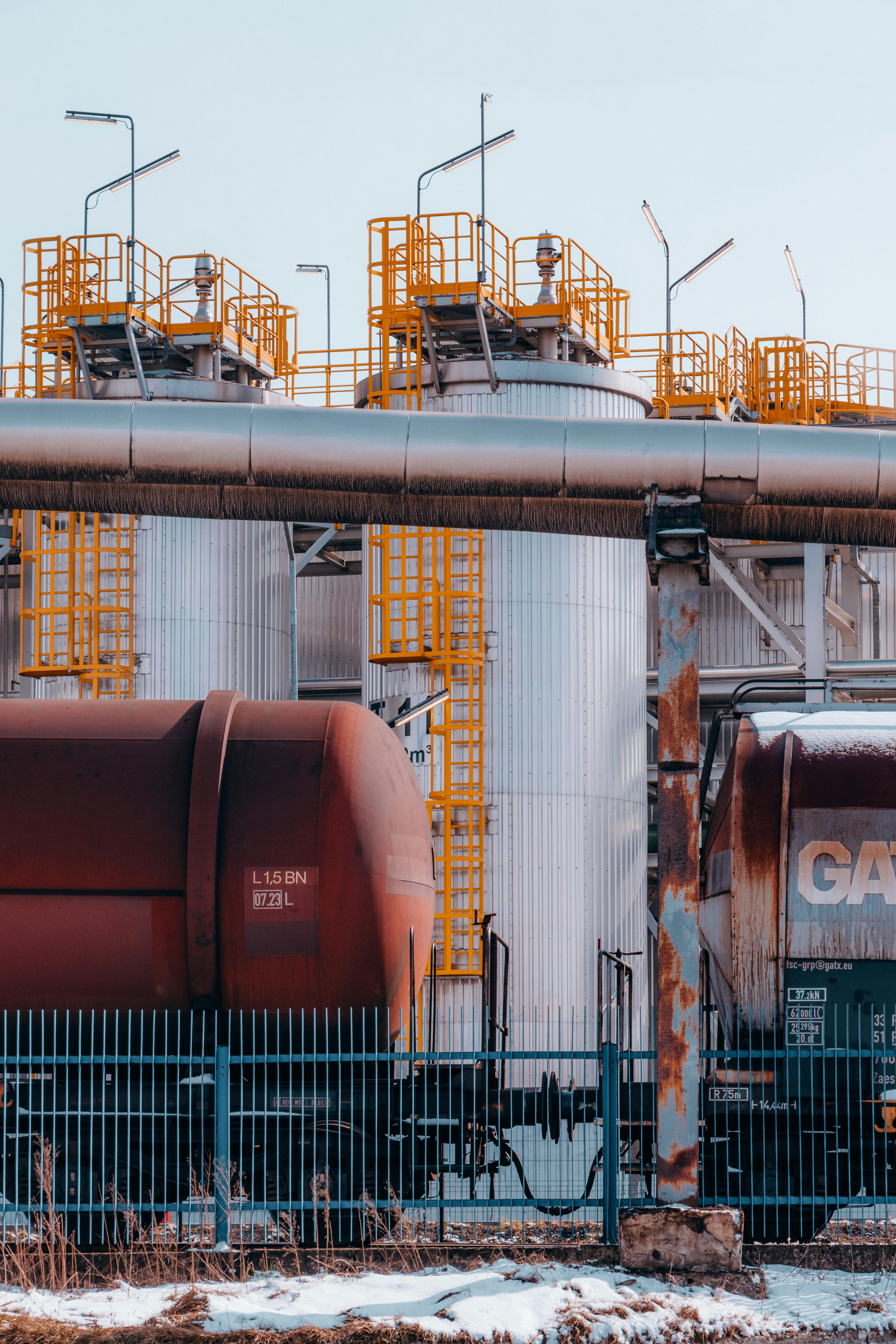
Image Source: Image by Jakub Pabis on Pexels, https://images.pexels.com/photos/15978384/pexels-photo-15978384.jpeg
(The views expressed are those of the author and do not represent the views of CESCUBE.

Nidhi Kondejkar is a student of International Relations from the Symbiosis School for Liberal Arts, with minors in Economics and Mathematics. Her research interests lie in Foreign Policy, International Security, and South Asian Geopolitics. She has been a student panellist at India’s G20 Presidency, a student at the LSE Summer School, and a research intern for various projects on Indian Strategic Thought. She is currently training in global security operations, focusing on geopolitical risk and international conflict, and brings together academic depth and field exposure.