Strategic Realignment and India’s Expanding Engagement with West Asia
India’s engagement with West Asia has undergone a major transformation since the post-Cold War period, evolving from energy-driven ties to a multidimensional strategic partnership. Guided by initiatives such as the “Look West” and “Link Wes...
The Indian engagement with several West Asian countries has experienced significant transformations since the post-Cold War period. With a renewed emphasis on non-alignment, Indian policymakers have progressively shifted their focus in recent years on developing a more holistic strategy that would not only strengthen economic relationships but also foster long-term mutual security cooperation. India has maintained a policy of neutrality during regional conflicts and wider geopolitical issues, a stance that earned respect and enabled steady diplomatic advancement. India’s initial strategic partnership with West Asia has largely existed under contentions with regard to realising its full potential; however, in contemporary times, we have witnessed a significant transformation marked by sustained strategic and diplomatic outreach and careful geopolitical realignment. Policy initiatives such as the “Look West” approach, which was initiated by PM Manmohan Singh back in the year 2005, followed by Prime Minister Narendra Modi’s “Link West” strategy in the year 2014, have undoubtedly fostered bilateral ties, especially with the key Gulf Nations such as the United Arab Emirates and Saudi Arabia. These efforts have undoubtedly expanded the existing scope of cooperation beyond traditional domains such as oil trade and expatriate labour, aiming instead to catalyse enduring and multifaceted strategic partnerships. Recently, Minister of External Affairs, S. Jaishankar, at the inaugural session of Raisina Middle East in Abu Dhabi, emphasised how the Gulf was very vital since more than 9 million Indians work there. Therefore, the Gulf serves as a getaway to both the MENA Region and the Mediterranean region.
Since the early period of the 2000s, several transformations have significantly shaped the strategic bilateral ties between India and the Gulf countries. Post September 11th, 2001, the Gulf Cooperation Council (GCC) adopted a “Look East” policy, followed by the 2010 Riyadh Declaration, and the 2015 Abu Dhabi Declaration, which have collectively promoted the partnership to a comprehensive strategic partnership. While the impact of these developments on hard security may take time to fully materialise, there is existing evidence of enhanced cooperation between India, the United Arab Emirates, and Saudi Arabia in the realm of providing soft security, particularly through several counterterrorism measures and issuing joint statements. Even before the election of the current NDA government, India’s relations with the Gulf states had been witnessing steady improvement. However, in recent decades, a remarkable acceleration has been largely driven by Prime Minister Narendra Modi through his strategy of personal diplomacy. His visit to Abu Dhabi, during which he was received at the airport by the Crown Prince and his five brothers, indicated a rare diplomatic gesture, which underscored the warmth of any bilateral relationship. These high-level engagements have inadvertently facilitated significant strategic milestones, such as India’s first acquisition of oil fields in the Gulf region. Moreover, the visit of S. Jaishankar to Abu Dhabi on 23rd June last year reaffirmed the strength of the comprehensive strategic partnership between the two nations. Beyond traditional areas of agreement and cooperation, India’s bilateral ties with the Gulf have transcended a wide range of factors, including military and maritime security, science and technology, space exploration, food security, cybersecurity, artificial intelligence, civil nuclear collaboration, and renewable energy. Despite this diversification, energy and economic cooperation continue to serve as the cornerstone of India’s engagement with the region.
The geographical and strategic connectivity between India and West Asia has been strengthened through multiple initiatives. One of them is the India-Middle East-Europe Economic Corridor (IMEEC), which, on one hand, links India to Europe, and on the other hand, counters China's Belt and Road Initiative. Within this framework, vital maritime chokepoints like the Strait of Hormuz and Bab-el-Mandeb have a crucial role in order to secure trade and energy flows to India. Additionally, platforms like the I2U2 Group, also referred to as the Middle Eastern or West Quad, comprising India, Israel, the United Arab Emirates, and the United States, reflect cooperation in the growing multilateral relationships between different countries. This partnership stresses more on joint investments in areas which primarily involve water, energy, transportation, space, health, and food security. In this context, foreign policy analyst Mohammed Soliman has visualised a strategic picture consisting of an Indo-Abrahamic alliance which involves these countries, with a potential optimistic future expansion to include Egypt and Saudi Arabia, so as to acquire regional agreement and a favourable balance of power. India’s Comprehensive Economic Partnership Agreement (CEPA) with the United Arab Emirates (UAE), signed in 2022, aims to enhance non-oil bilateral trade to US$100 billion by 2030 through measures like tariff reduction, faster business approvals, and greater access to the market. Further proposed steps, like the local currency trade settlement agreement and the United Arab Emirates’s adoption of a domestic RuPa-based card system, are all aimed at deepening the existing financial partnerships.
Following this trend, India’s relationship with one of the Gulf countries, Saudi Arabia (its 19th largest investor and fourth largest trading partner), was further solidified with the establishment of the Strategic Partnership Council in 2019, marking a significant milestone in bilateral relations. The two nations had earlier collaborated during the G20 summit to address global inequality and promote sustainable development. With this, India became only the fourth country, after France, the United Kingdom, and China, to form such a bilateral institutional mechanism with Saudi Arabia. The Strategic Partnership Council works through two parallel tracks:
1. The Political, Security, and Cultural track, which is co-chaired by the foreign ministers of the two countries.
2. The Economy and Investment track is guided by the Minister of Commerce and Industry (India) and the Minister of Energy (Saudi Arabia).
Therefore, security with regard to energy trade remains as one of the top priorities for India’s engagement with Saudi Arabia. Saudi Arabia, in contemporary times, supplies approximately 18% of India’s crude oil and 30% of its liquefied petroleum gas (LPG) requirements. Both sides are now working to evolve this traditional buyer-seller dynamic into a deeper strategic partnership rooted in mutual complementarity and interdependence. As strategic interests increasingly align, both the current Modi government and the Gulf Cooperation Council (GCC) must take concerted steps to finalise the long-pending Free Trade Agreement (FTA). In the fiscal year 2022–23, the GCC emerged as India’s largest regional trading partner, accounting for 15.8% of India’s total trade.
History has been a testimony to the strength of India’s relationship with the Middle Eastern nations in the fields of oil and energy trade. While in the current scenario, there has been a marginal decline, the Gulf region continues to play a dominant role in supplying over 50% of India’s crude oil imports and nearly 70% of its gas imports. This slight setback has primarily resulted from India’s energy diversification policy, which includes sourcing from alternative suppliers such as the United States and Russia. After the 2022 invasion of Ukraine, Russia offered a discount on its crude oil export, prompting India to change its existing import strategies. India’s energy diversification strategies line up with its broader mental map, which aims at ensuring both availability and affordability at the same time. Moreover, hydrocarbons continue to remain a vital domain of cooperation among the Gulf nations. Countries like Iraq, Saudi Arabia, and the UAE currently rank among India’s top crude exporters and in light of the Red Sea crisis and increasing freight rates, Indian refiners have turned more heavily toward Iraqi oil, particularly in the disparity with the US supply and uncertainty surrounding Russia’s pricing. These dynamics further reaffirm the Gulf’s significance as a strategic key energy partner for India.
In the sector of natural gas export, Qatar plays a pivotal role in supplying 35% of India’s LNG and 29% of India's LPG imports. An extremely important achievement happened in February 2024, when India signed a 20-year agreement to import 7.5 million metric tonnes of LNG annually from Qatar. Prime Minister Narendra Modi’s short visit to Doha during this particular time was instrumental in revitalising bilateral ties, especially after the diplomatic strain that happened due to the arrest of eight former Indian naval personnel back in 2022. Following this, India has strengthened its partnership with Qatar, and this highlights the effectiveness of Modi’s strategy of personal diplomacy. Moreover, a promising domain of emerging cooperation lies in the sector of renewable energy. In 2023, both the United Arab Emirates and Saudi Arabia signed agreements with India aiming to reduce dependence on fossil fuels and promote the practical exercise of solar and wind energy. India’s National Solar Mission and the UAE’s Energy Strategy 2050 imply a shared commitment to advancing clean energy initiatives. Now that India aims at attracting foreign investment and technological expertise in the renewable sector, UAE’s Masdar has reflected interest in acquiring Ayana Renewable Power, an energy company which is supported by India’s National Investment and Infrastructure Fund (NIIF). Additionally, the United Arab Emirates attempts to seek India’s investments for its own projects in the sector of renewable energy, improving the mutually beneficial nature of this bilateral energy relationship. Moreover, India has taken proactive steps to expand its bilateral ties with other nations like Israel, aiming to further its clean energy projects.
Simultaneously, India’s transforming strategic positioning in the Indian Ocean Region (IOR), along with its primary efforts to integrate the western part of the Indian Ocean with the Arabian Sea into its broader Indo-Pacific maritime vision, fosters deeper maritime and naval cooperation with Gulf nations. The naval forces of the Gulf States, like Oman, Saudi Arabia, Qatar, Kuwait, and the UAE, frequently conduct joint maritime exercises with India, reflecting shared concerns along with securing vital sea lanes and promoting regional stability. This cooperation has recently been extended to a trilateral framework in June 2023 involving India, the UAE, and France, underscoring the increasing geopolitical realignment between India and the key Gulf states in one of the world’s most critical maritime corridors. In view of the growing frequency of missile and drone attacks by the Houthis rebels in Yemen, particularly in the Red Sea region, it becomes even more pertinent for India to strengthen its naval footprint with its Gulf partners. These collaborative efforts are important for improving bilateral corrections, addressing both conventional and unconventional maritime threats, ensuring mercantile trade security and independence to navigate through international waters. Within this larger framework of defence and industrial collaboration, there also exists an extremely crucial opportunity for India, along with the Gulf states, to pursue joint ventures in comprehending maritime technologies.
As India and West Asia share these mutual challenges in the areas of climate change, maritime insecurity, and technological disruption, their dynamic populations present a unique opportunity to steer collaborative efforts towards bringing in innovation, sustainability, and capacity building. India's developing Indo-Pacific vision transcends the western part of the Indian Ocean along with the Arabian Sea, strengthening its maritime and cyber collaboration with its key partners. In the upcoming years, India’s engagement with West Asia is expected to broaden, reflecting its shared strategic interests that will extend beyond just having traditional energy and trade partnerships. This shift would indicate a larger transformation in India’s foreign policy, one that proves that West Asia is not merely an energy supplier, but is also a critical strategic actor in creating a stable, secure, and multipolar global order.
REFERENCES:
1. 2025b. India and Qatar elevate ties in trade, energy and investment. The Indian Express, 18 February. https://indianexpress.com/article/india/india-and-qatar-elevate-ties-in-trade-energy-and-investment-9843497/.
2. Press Trust of India and Business Standard. 2025. West Asia a region crucial to India’s strategic interests: EAM Jaishankar. www.business-standard.com, 28. January. https://www.business-standard.com/external-affairs-defence-security/news/west-asia-a-region-crucial-to-india-s-strategic-interests-eam-jaishankar-125012800755_1.html.
3. Taneja, Kabir. 2024. 77th Independence Day: Assessing India–West Asia relations. orfonline.org. https://www.orfonline.org/expert-speak/77th-independence-day-assessing-india-west-asia-relations.
4. Anon. Strategic Partnership Council Agreement with Saudi Arabia would further strengthen the robust bilateral relations, says Prime Minister Narendra Modi. https://www.pib.gov.in/PressReleasePage.aspx?PRID=1589413#:~:text=One%20of%20the%20most%20important%20outcomes%20of%20the%20visit%20is,on%20mutual%20complementarity%20and%20interdependence.
(The views expressed are those of the author and do not represent the views of CESCUBE.
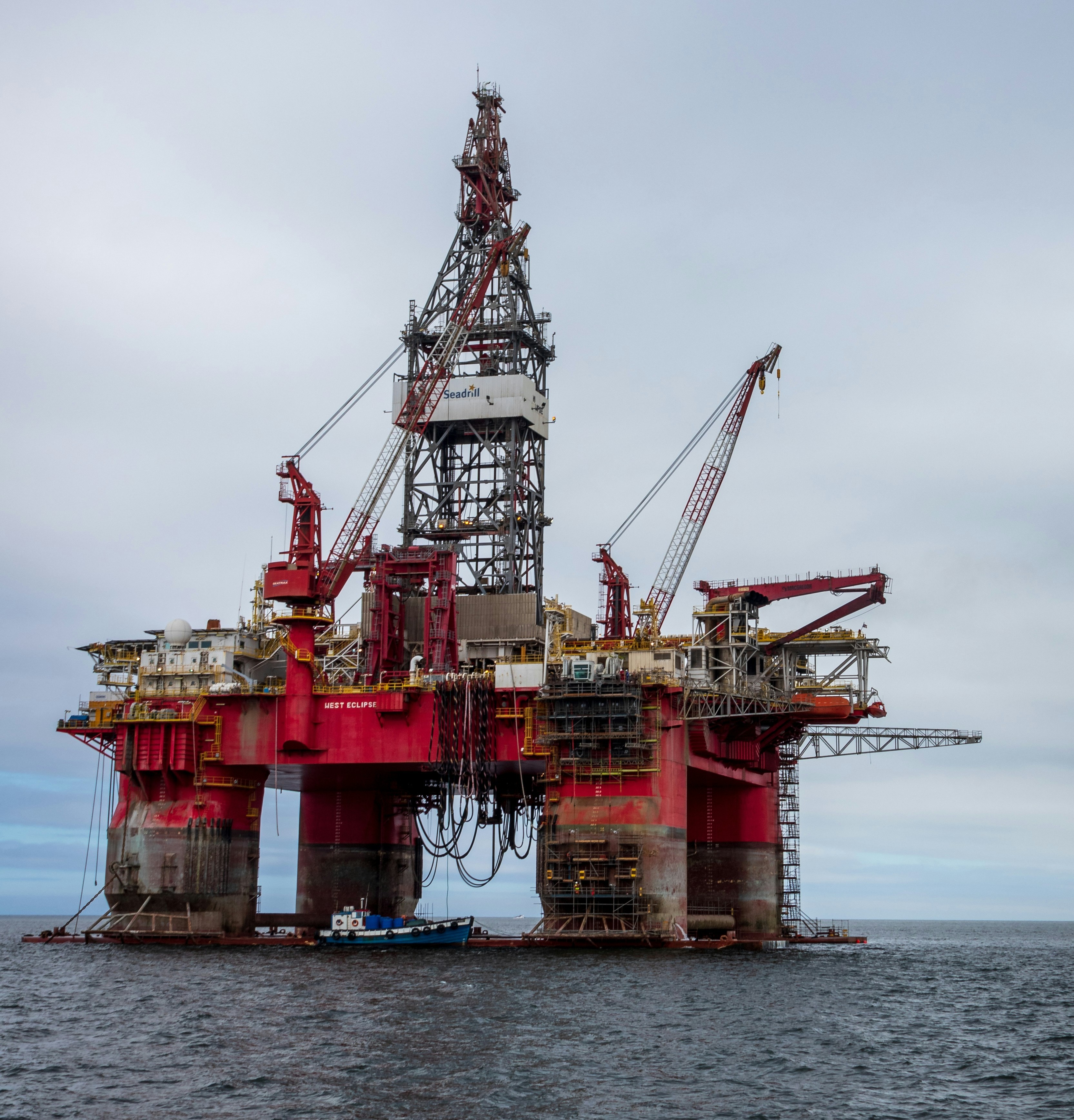
Image Source: Photo by Grant Durr on Unsplash
Aakansha Sengupta is currently pursuing her undergraduate degree in Political Science from the Department of International Relations at Jadavpur University. Her academic interests span across Gender and Politics, Peace and Conflict Resolution, International Politics, and Global Diplomacy. She also maintains a strong engagement with Public Policy, Administration, and key debates in Political Theory. In addition, Aakansha has a keen interest in Middle Eastern Politics, reflecting her broader focus on global affairs. Alongside her major in Political Science, she is also pursuing a minor in Sociology at Jadavpur University.