Increased military spending and military exercises by China and Cambodia
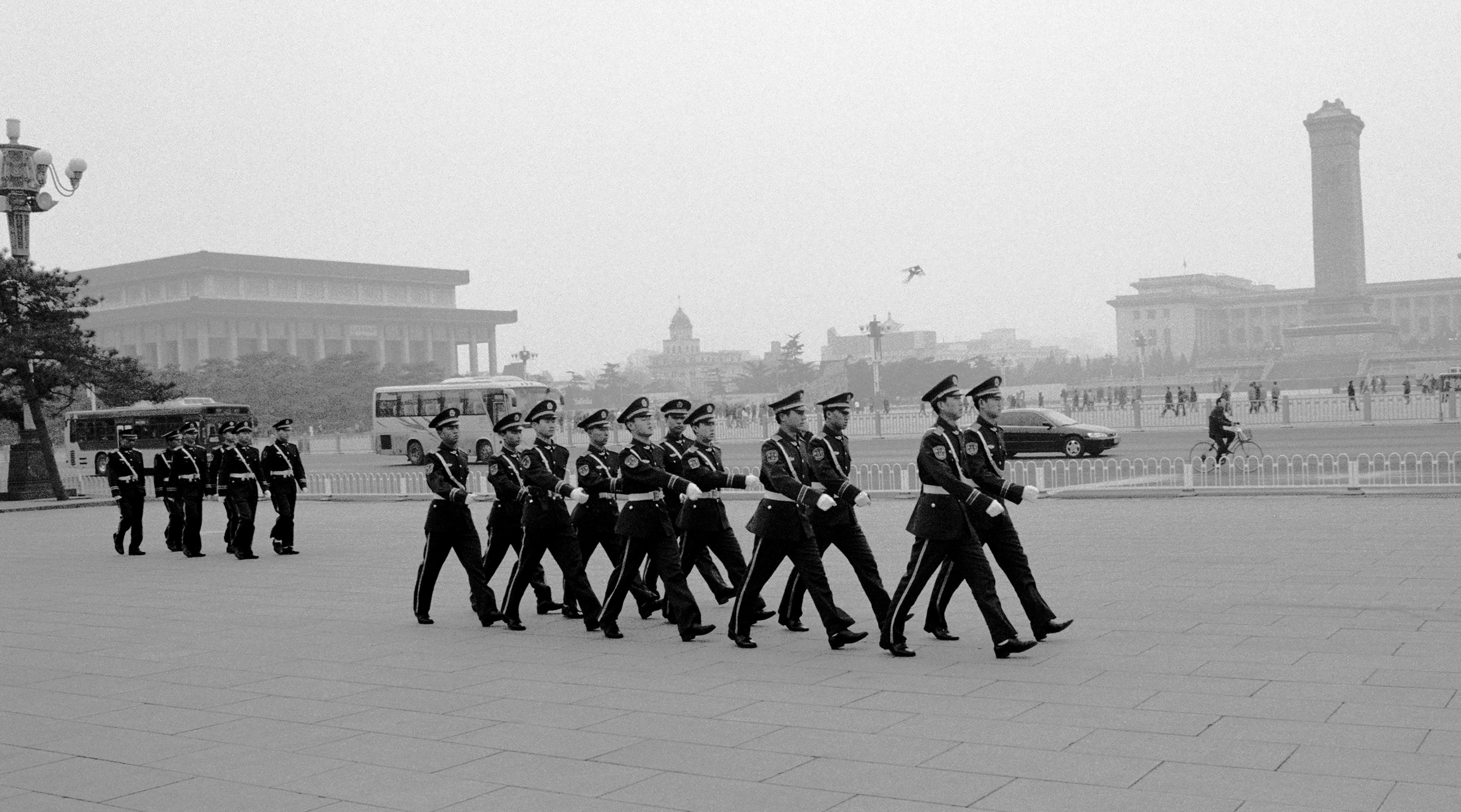
China has been steadily increasing its defence budget for years, aiming to modernise its armed forces and project power regionally. This concerns some countries, particularly those with overlapping territorial claims in the South China Sea....
In 2019, The Wall Street Journal revealed that China and Cambodia had an undisclosed pact to enlarge a maritime installation at Ream, located on the Gulf of Thailand. As per the agreement, the military of China would be permitted to maintain a presence for 30 years, with the option of 10-year renewal terms thereafter.1
Since December 2023, two Chinese naval warships have docked at Cambodia’s key naval base - Ream. The Cambodian government has denied this by stating that they are present in the country for training and military drills. Gen. Chhum Socheat, spokesperson of the Defence Ministry, said that the People’s Liberation Army Navy (PLAN) warships are in Cambodia for training purposes and are “not staying permanently.” He mentioned that the two Chinese corvettes were scheduled to participate in joint Cambodian-Chinese military drills scheduled for later this month. The ships have likewise participated in training Cambodian mariners, he included. Socheat said, “We have been clear that Cambodia is not allowing any foreign forces to be deployed on its territory.” Alongside training and military drills, he mentioned that the PLAN Vessels were "testing" the new pier at Ream, finished last year to accommodate larger naval vessels to dock in the shallow waters near the base.

For numerous years, U.S. policymakers and think tank researchers have been engrossed in reports regarding the potential formation of a Chinese military presence at Ream Naval Base. China has financed a significant enlargement and renovation of the base, and some analysts suggest that this might function as a new permanent station for the PLAN.2 Both the PRC and Cambodia have openly rejected claims of having signed an agreement granting the PLA exclusive access to the Ream Naval Base.3
Why is the Ream Naval Base important?
Ream's importance stems from its location and its potential role in China's strategic goals for the region. Ream is a gateway to the Indian Ocean. The South China Sea is an area where China has territorial disputes with several countries. Having a presence at Ream could be seen as a way for China to project its power and influence in the region. China’s assertiveness in the South China Sea has steadily increased, resulting in heightened tensions with Southeast Asian claimant states, primarily Vietnam. Ream Naval Base sits on the Gulf of Thailand, close to international shipping routes and offers access to the South China Sea. This strategic position makes it potentially valuable for controlling movement in the region. Cambodia is a close ally of China, and China has provided significant financial and military aid to Cambodia. This relationship is a factor in China's growing presence at Ream.
Expansion of Ream Naval Base
Recent satellite images acquired by Radio Free Asia from the Earth observation firm Planet Labs exhibit significant changes in the terrain, along with new buildings and extensive land clearing. In comparison to a Google Earth image from July 1, 2022, when the development project began, the naval base currently features two new piers.

Several new buildings have been constructed at the centre of the base, one of which resembles a cement facility to supply for the entire project, as stated by Tom Shugart, Adjunct Senior Fellow with the Defence Initiative at the Centre for a New American Security.4
China – Cambodia Relations
Cambodia and China have a long and complex relationship, marked by both cooperation and historical ties. Since Cambodia's independence in 1958, the two countries have developed a close strategic partnership. Cambodia views China as a counterweight to its larger neighbours, Vietnam and Thailand. China is a major investor in Cambodia, funding infrastructure projects and development initiatives. China supplies weapons and military equipment to Cambodia. Cambodia likely seeks to maintain good relations with both China and the US. For many years, China has been the primary source of foreign investment in Cambodia. Currently, it represents a greater amount of foreign investment in Cambodia than all other nations together. Significant projects have encompassed dams, countless kilometres of roads, bridges, and free trade areas. The formerly small coastal town of Sihanoukville is now considered a near-colony of China, controlled through investments from China, along with immigrants and visitors.5
Golden Dragon
The Golden Dragon is a series of joint military exercises held annually by China and Cambodia. These exercises focus on strengthening military cooperation and involve thousands of personnel from both countries, including ground forces and naval units. The exercises are seen as a way for China and Cambodia to improve their military’s ability to work together in case of a crisis. The exercises are also seen as a method for China to project its influence in Southeast Asia. Approximately 1,315 military personnel from Cambodia and 760 from China participated in the regular “Golden Dragon” ground and sea manoeuvres, including three Chinese and eleven Cambodian vessels. China contributes to helping Cambodia upgrade its military capabilities.
Conclusion
Over the past two decades, China has underseen the largest military buildup since World War II.6 China's military presence and its strategic investments in countries like Cambodia can tilt the regional balance of power. As China strengthens its military ties and infrastructure in Southeast Asia, it may challenge the influence of other significant nations in the region, like the United States and India. China’s military modernisation could lead to an arms race or increased defence spending as neighbouring countries seek to counterbalance China's military capabilities. The expansion of Chinese military presence in Southeast Asia is a direct challenge to the strategic interests of the United States in the Indo-Pacific. The US may respond by strengthening its own alliances and boosting its armed forces presence in the region to counterbalance China's dominance.
Footnotes:
1 The broad relationship between Cambodia and China – GIS Reports (gisreportsonline.com)
2 Chinese Deployment to Ream Naval Base Not Permanent, Cambodia Says – The Diplomat
3 2022 China Military Power Report (CMPR) (defense.gov)
4 Satellite photos show expansion of Chinese-funded naval base in Cambodia — Radio Free Asia – The Insight Post
5 The broad relationship between Cambodia and China – GIS Reports (gisreportsonline.com)
6 DOD Releases 2023 Report on Military and Security Developments Involving the People's Republic of China > U.S. Department of Defense > Release
Pic Courtesy- Photo by Hennie Stander on Unsplash
(The views expressed are those of the author and do not represent the views of CESCUBE.)

Divya Narvekar is pursuing Masters’ in Diplomacy, Law, and Business from the Jindal School of International Affairs. She holds a bachelor’s degree in French & German Studies from the University of Mumbai. She is working as a Junior Intelligence Analyst at the Centre for Intelligence Research and Analyses (CIRA). She has a keen interest in the Indo-Pacific region, defense, and security studies.