Anti-submarine warfare capabilities of Japanese Maritime Self-Defense Force
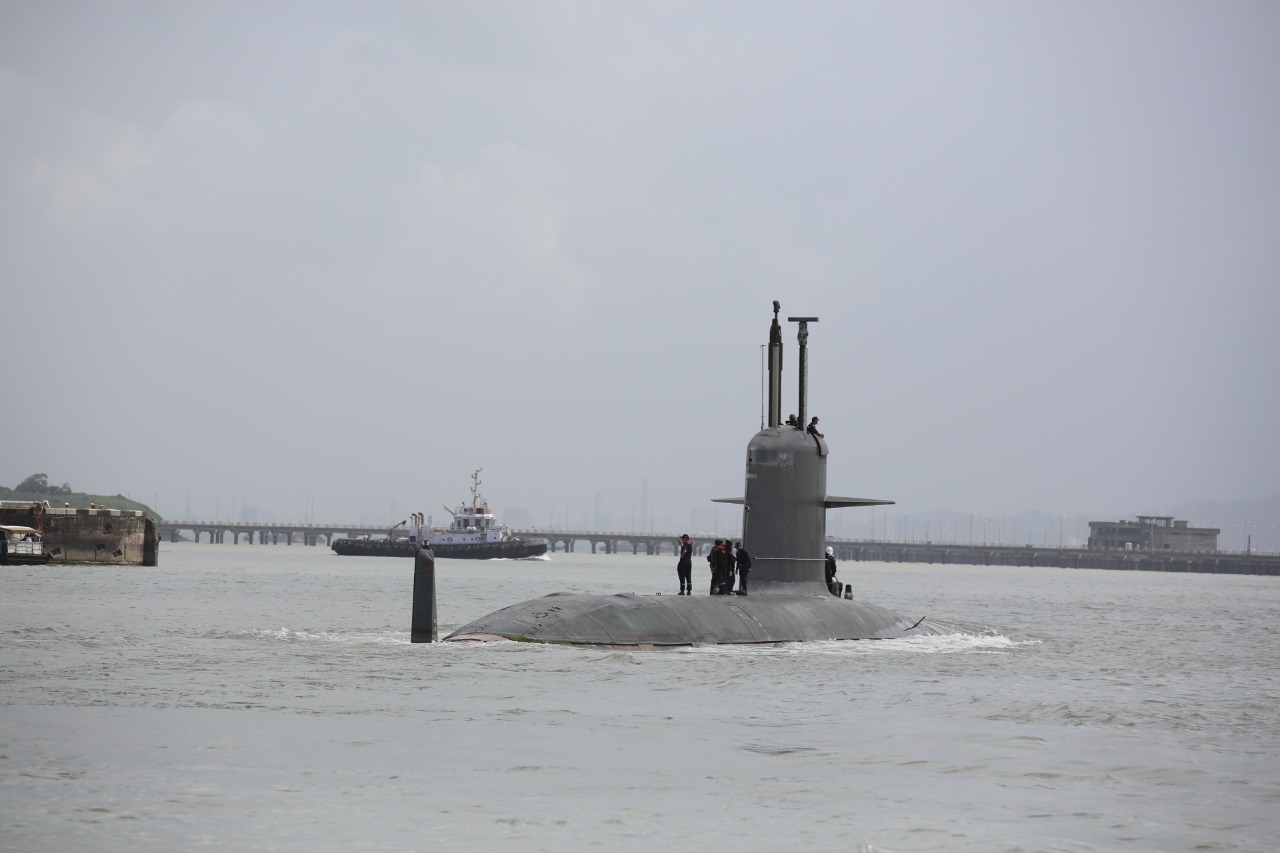
The Japan Maritime Self-Defense Force (JMSDF) and the US Navy carried out a seven-day long anti-submarine warfare exercise in the Philippine Sea
this month. Such military exercises are a successful measure to learn about the development in maritime warfare procedures and tactics over the years.
JMSDF is looking forward to boosting naval capabilities in the era of increased submarine threats, especially from its closest adversary, China. Japan
?has also scheduled numerous anti-submarine training exercises with like-minded countries this year.
Anti-Submarine Warfare
ASW incorporates specialization in detection and tracking of enemy torpedoes and missiles launched from submarines underwater and timely retaliation. It entails a coordinated action between fighter aircrafts, surface ships, and submarines. The fundamental aim behind enhancing the ASW capabilities is to protect familiar vessels in the sea and other coastal facilities from enemy submarine attacks. During the Cold War, lurking enemy submarines in one’s coastal waters were traced by a surface vessel rushing from one end to another which turned out to be inefficient and a tedious task. Times have changed and so are the ASW techniques. Today, enemy submarines can be located by deploying frigates with low-frequency active SONAR system (Sound Navigation and Ranging) that uses sound waves to detect objects in the ocean and air assets such as helicopters with strong sensory equipment. Therefore, it is a proven fact that a sophisticated SONAR system is an extremely crucial element of ASW [1].
Submarines have the capability to launch a long-range ballistic missile which makes underwater a more lethal battlefield than ever. Submarine technology was highly primitive in the 20th century. After the two Great Wars, ASW has advanced to nuclear capacities reducing the traditional maritime warfare methods redundant. In response to such a heightened threat posed by nuclear submarines, several countries are determined to expand their ASW capabilities and Japan is one of them.
The Japanese Experiment
Japan is certainly among the leading ASW capable military powers as per the expert studies. The country is situated in a very uncertain geographical location, hence, the JMSDF is targeting to improve both defensive and offensive submarine capabilities. As per the Global Firepower Report 2021, Japan is ranked 7th among the top 10 countries with the largest military submarine fleets accounting for about 20 diesel-electric submarines until now [2]. They are rated the most modern and sophisticated in the world. Japan conducts several joint ASW readiness and effectiveness training exercises yearly with the other QUAD members either together or independently as well as with UK, Canada, Germany, etc., in the Asia-Pacific region.
Naval exercises aid in building cooperation and ensure coordination to readily confront the underwater threats as a unified force. It widens the scope to train together and improve interoperability. Additionally, it allows the participating countries to interchange their expertise in the field of ASW. The most recent ASW exercise- Noble Fusion- between Japan and the US Navy took place in the Luzon and Miyako Straits [3]. Vessels from both sides conducted maneuvering drills and unit coordination which provides a chance to ameliorate proficiency against China’s maritime aggression, in short, control lethal forces in contested areas and create strategic advantage and deterrence.
Furthermore, the last India-Japan Maritime Bilateral exercise i.e. the fifth edition was conducted for three days in the Arabian Sea in October 2021 with a focus on maritime security cooperation [4]. An advanced well-coordinated ASW training series was undertaken which showcased their seamless offense against a deployed expendable target. Maritime security has always been a topic of deliberation between India and Japan. JIMEX began in 2012 and the cooperation has strengthened since. ASW is a new area of focus for both countries and they aim to expand the existing horizon.
JMSDF also organized a first-of-its-kind joint submarine warfare exercise with UK for two days in 2021 itself to send a message of 'free and open Indo-Pacific [5]. Japan during the exercise sought to test the abilities of its diesel-electric Soryu-class attack submarines which are widely considered as the stealthiest in the world. The core objective stated by Japan's Defense Ministry for this exercise was to improve the navy's tactical skills and build coordination with Britain's Royal Navy.
JMSDF is taking continuous efforts to boost its ASW strategies. In 2019, Japan upgraded JS Izumo, one of the helicopter destroyers in the Japanese fleet, with a launching system for the American F-35 joint strike fighters which is means bolstering the country’s ASW capacity. Later that year, Japan signed a contract with the Northrop Grumman for the RQ-4 Global Hawk drones. Investing in such advanced patrol aircrafts and drones would no doubt enhance Japan's supremacy in terms of ASW [6]. The most imminent threat Japan faces in the region is from China. Confrontations have become more frequent and heated. The number of ASW drills that were orchestrated in the South China Sea in recent years was to project the growing Japanese prowess in submarine warfare. The continuous struggle between Japan and China with respect to the Diaoyu Islands or Senkaku Islands as called by the Japanese is the main intention behind the JMSDF’s zeal to prioritize and invest in ASW capabilities. ASW exercises with leading powers including the US and UK ensures sending a ‘symbolic message’ to China.
However, it is not an easy task to adopt such high-quality ASW techniques. Technological innovation is central to the future possibilities of ASW. Japan must set aside funds from its defense budget for better research and development in the ASW arena which means cheaper and smarter solutions replacing the big and expensive burdens. Further, AI capacities and studies are going to bring a dramatic change in how countries execute ASW. The underwater operations will soon witness autonomous vehicles capable of a high degree of independent decision-making abilities. These smart underwater vehicles will be adapted to listen, evaluate, and retransmit all the collected information to the surface-based control room. Therefore, Japan should start drawing out a plan to fortify its optimized fleet including submarines, surface ships, and aircrafts for more effective anti-submarine warfare. The level of Japanese sophistication in terms of submarines is uncontested at present but it is indisputably outnumbered.
?References:
[1] https://www.youtube.com/watch’v=cMnej9muc6E&ab_channel=NATO
[2]https://worldpopulationreview.com/country-rankings/submarines-by-country
[3]https://www.thedefensepost.com/2022/02/03/us-japan-anti-submarine-warfare/#:~:text=US%2C%20Japan%20Complete%20Anti%2DSubmarine%20Warfare%20Exercise%20in%20Philippine%20Sea,-Hanan%20Zaffar%20February&text=The%20US%20Navy%20and%20the,can%20detect%20and%20track%20submarines.
[4]https://pib.gov.in/PressReleasePage.aspx?PRID=1761131#:~:text=The%20last%20edition%20of%20JIMEX,will%20represent%20the%20Indian%20Navy
[5]https://www.scmp.com/week-asia/politics/article/3151396/first-japan-uk-submarine-warfare-exercise-held-china-its-sights
[6]https://www.thedefensepost.com/2019/06/18/japan-anti-submarine-warfare-capabilities/
Image Courtesy: Indian Navy Twitter Account
(The views expressed are those of the author and do not represent views of CESCUBE.)

Poonam Jindal is post graduate in International Relations from O.P. Jindal Global University. She did under- graduation in Political Science from Delhi University. She has experience in primary and secondary research and has done a certificate course on Conflict Management from Bar-Ilan University in Israel. Ms Jindal has studied East Asian Politics at National Chengchi University in Taiwan and co- authored a paper on China Military Modernization. Her research interests include China Studies, Geo-politics in Asia, Diplomacy and Security Issues. She is Research Assistant with CESCUBE.