Strategic significance of Mozambique channel
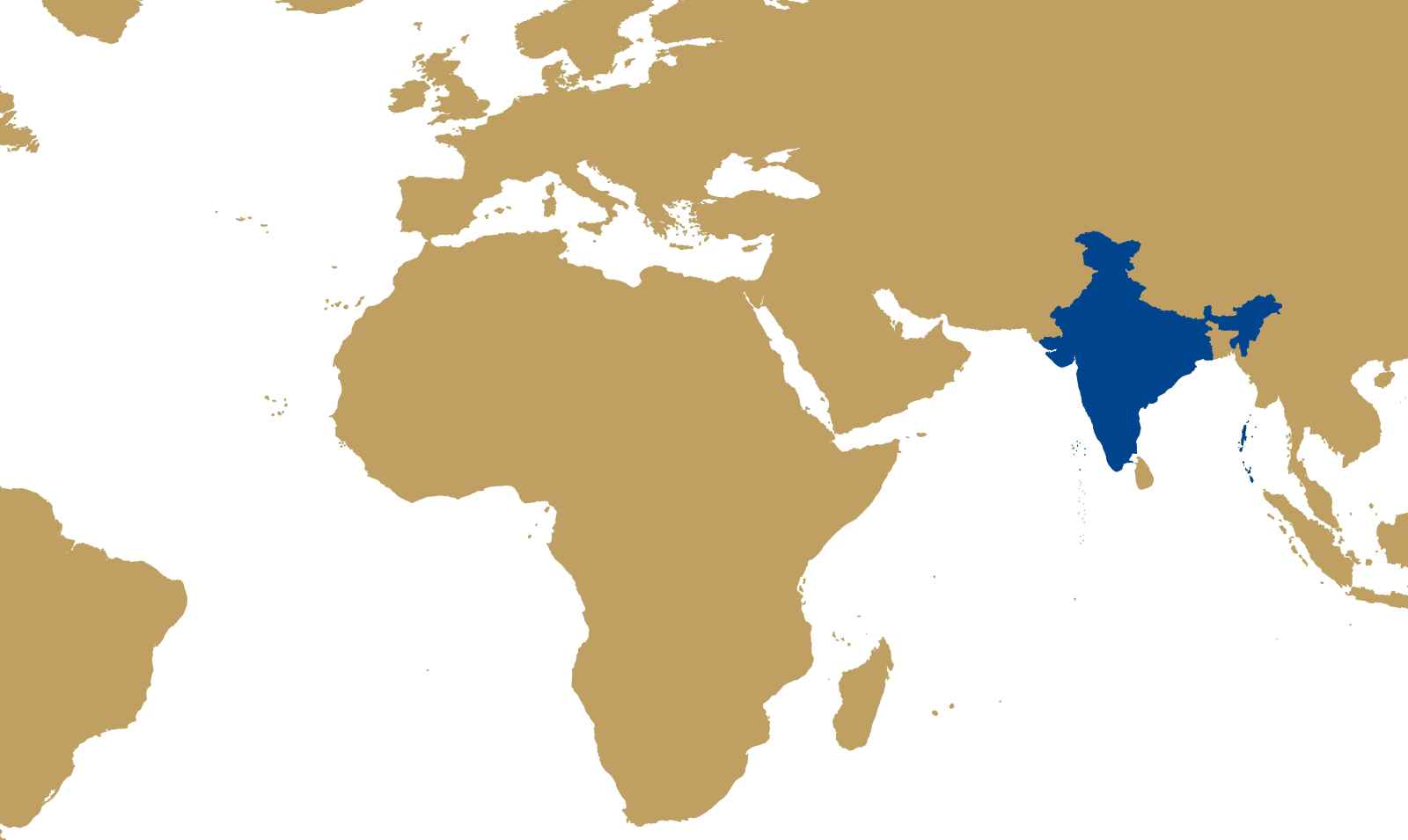
The Mozambique Channel is about 100 nautical miles long and 250 nautical miles wide. To its east, lies the world’s fourth largest island Madagascar, and Mozambique to the west. Before the opening-up of Suez Canal on 17 November 1869, the Mozambique channel was the main trade route in the Indian ocean linking India with the Middle East and East Asia with Europe and Brazil. The Suez Canal sharply reduced the shipping time and cost to traverse between Asia, Europe and the Americas and thereby displaced Mozambique channel as the leading trade route in the Indian Ocean.
However, with Rovuma Basin containing on estimate over 100 trillion cubic feet of natural gas which is by far the largest gas find ever, East Africa is emerging as one of the hottest regions for energy players. With this, Mozambique channel may regain the importance it once commanded in the Indian Ocean.
Historical importance:
Mozambique channel has played an important role in Indian Ocean history. During the 11th and 12th century, Omani Arab and Persian traders were able to establish trading posts and began slave trade from East Africa to the Middle East. The region was important for the Europeans too as Portuguese explorer Vasco De Gama crossed through the strategic channel on his way to India in 1498. The channel proved instrumental for the Portugal empire as they were able to displace Arab traders and slave labour proved useful in supplying plantations to Brazil as well as other colonies of the Indian Ocean.

Source: https://cimsec.org/forgotten-chokepoint-mozambique-channels-rich-past-bright-insecure-future/
As France and Britain rose, Mozambique channel became an important part of their trade route with India and the Middle East. Furthermore, majority of British trade before the rise of Suez Canal was conducted through the channel in the Indian ocean as can be seen in the picture above. The channel was also extensively utilized by the allied forces during the second world war.
Foreign Investments:
Rovuma Basin located in Eastern Africa is blessed with abundant resources for example international energy firms estimate that there could be 100 trillion cubic feet of untapped natural gas. Energy firms from developed and developing countries alike have rushed to take advantage of this opportunity. For instance, US energy giant Anadarko through its petroleum corporation has invested about $20 billion in Mozambique. Italian energy firm Eni had signed a deal worth $8 billion in 2017 to extract natural gas, process it into Liquified Natural Gas (LNG) and is expected to market LNG to Asia by 2024.
Indian firm oil and natural gas corporation (ONGC), Indian oil limited and Bharat petroleum corporation bought a 30 percent stake in Anadarko’s Rovuma projects back in 2014. As of 2019, ONGC Videsh limited along with partners plan to invest about $20 billion to construct gas liquification facility as well as an export terminal. China national petroleum company bought a 28 percent stake in Eni’s Mozambique project for a total of $4.2 billion in 2013. Japanese group Mitsui planned to invest about $1.5 billion in the project led by Anadarko where it holds 20 percent stake. South Korean energy firm Korean gas corporation holds a 10 percent stake in Eni’s project.
Western Madagascar also holds billions of dollars of heavy oil onshore and natural gas offshore. Bemolanga deposit has about 9.9 billion barrels of recoverable oil and since Madagascar consumes only about 15,000 barrels per day, it has huge export potential. Growing investments in eastern Africa is due to enormous economic potential as it contains large amounts of untapped natural resources. Secondly, the trade route holds one maritime chokepoint unlike the Middle East which has 4, namely- strait of Hormuz, Bab el Mandeb strait, Suez Canal, and strait of Gibraltar.
Mozambique channel holds geopolitical significance, not only because it holds vast resources which can be duly exploited, but also because it remains undeveloped and whichever country controls this channel will command the western Indian ocean.
Chinese inroads:
China has been investing massively in Mozambique as the total investment in 2016 was about $8 billion in fields such as infrastructure, mining, energy, agriculture etc. It has also worked to develop natural gas projects in Area 1 and 4 which could be utilized for export in the future. Considering the Sri Lanka case where Beijing exploited the development card to force the island nation into leasing the Hambantota port for 99 years. There is no reason why it will not use the same strategy to gain control over key ports in Mozambique. The geography of the channel is such that it could permit the Chinese dominance over the western Indian ocean.
Indian footprint:
India navy has its footprint in the western Indian ocean as it has conducted humanitarian relief and disaster management operations (HADR). For instance, when Madagascar was devastated by cyclone Ava, New Delhi provided supplies through ‘operation vanilla’. Similarly, when Mozambique witnessed cyclone Idai in March 2019, India responded by sending three naval ships for HADR missions. New Delhi has profound interests in the Mozambique channel which can be seen through the 2015 maritime security strategy which identifies the region as one of the primary areas of maritime interests.
Although trade with east Africa is limited but India has consistently maintained security presence through various HADR missions over the years. It is working to enhance its strategic footprint in eastern Africa for example New Delhi is building air and naval facility on Mauritius’ Agalega island and combining Mauritius and Seychelles into coastal radar chain network. New Delhi is also working on the economic front as ONGC Videsh plans to invest about $20 billion for the construction of gas liquification facility as well as an export terminal.
American strategy:
Eastern Africa is a wonderful opportunity for America to capitalize not only due to abundance of human resources but also since Africa is the future of humanity for example one in four people on earth by 2050 would be an African. African continent will slowly become a key area of contestation between Washington and Beijing. While US Indo-Pacific strategy was limited to the western shores of India, but in late 2020 western Indian ocean was defined as ‘the area in the Indian ocean extending from the west coast of India to the east coast of Africa’.
The Pentagon is expanding its Indo-Pacific outlook to include the western Indian ocean. This signals a change in Washington’s thinking wherein they are giving importance to eastern Africa this would enable the goliath to increase its presence on the continent which is essential if it hopes to challenge the dragon. America could leverage its strategic partnership with India to gain foothold in eastern Africa, as New Delhi has long played the role of ‘net security provider in the western Indian ocean’.
Challenges:
Eastern Africa is gaining renewed importance due to the largest gas find ever, the region has lot of potential to develop economically, lessen poverty but the challenges galore. On the economic front, the infrastructure to convert natural gas to into liquified natural gas (LNG) needs to be created from scratch. Port facilities which are required to export LNG across Asia is being developed by foreign powers.
Navies in the region are unequipped due to neglect by governments for example Mozambique has only one naval vessel capable of patrolling the region, Madagascar has few old vessels with doubtful quality. US donated one of its advanced patrol vessels but due to high maintenance costs, usage is limited. The maritime forces do not have the capability to conduct patrols across their exclusive economic zones which allows foreign powers to employ private militaries to secure their energy sources.
Final Standpoint:
Eastern Africa and the Mozambique channel is gaining renewed attention owing to the find of natural resources in the region. The region is strategically significant for foreign powers such as US, China, and India. China, which is known for using the development card to attain geopolitical advantage, has upped the ante with huge investments in Mozambique. India has been a net security provider in western Indian ocean for some time now, and it is working to enhance its economic foothold. Lastly, the American goliath, with its renewed Indo-Pacific strategy is looking at eastern Africa and hopes to utilize India to further its strategic hold in the region. Mozambique channel is significant, and it will play an important role in the western Indian ocean in the coming years.
End Notes
1)https://cimsec.org/forgotten-chokepoint-mozambique-channels-rich-past-bright-insecure-future/
2)https://www.mirandalawfirm.com/en/insights-knowledge/media/newsroom/miranda-assists-anadarko-in-one-of-the-largest-investments-in-africa
3)https://www.reuters.com/article/us-eni-mozambique-idUSKBN18S6AW
4)https://www.eni.com/en-IT/global-presence/africa/mozambique.html
5)https://economictimes.indiatimes.com/industry/energy/oil-gas/ovl-partners-agree-to-invest-20-billion-in-mozambique-lng-project/articleshow/69858686.cms’from=mdr
6)https://www.cga.co.mz/en/mitsui-investe-no-gas-do-rovuma/
7)https://www.rigzone.com/training/heavyoil/insight.asp?i_id=285
8)https://www.globaltimes.cn/content/1206694.shtml
9)https://www.scmp.com/comment/insight-opinion/article/3008799/truth-about-sri-lankas-hambantota-port-chinese-debt-traps
10)https://www.deccanherald.com/opinion/understanding-the-geopolitical-significance-of-india-s-aid-to-madagascar-801396.html
11)https://www.orfonline.org/expert-speak/mozambiques-insurgency-and-indias-interest/#:~:text=India's%202015%20Maritime%20Security%20Strategy,security%20presence%20in%20the%20region.
12)https://www.defense.gov/Explore/News/Article/Article/2580930/commander-says-africa-is-too-important-for-americans-to-ignore/
13)https://www.newsclick.in/US-Indian-Strategic-Construct-of-Western-Indian-Ocean-Runs-into-Headwinds
Pic Courtesy- IDSA GIS Lab
(The views expressed are those author and do not represent views of CESCUBE.)

Abhijeet Nehra is a M.A. International Relations from University of Sheffield and has done his graduation in Global Affairs from Jindal School of International Affairs, O P Jindal Global University . He was research associate with CESCUBE.