Freebies Culture – Inflating Economic and Social Adversities
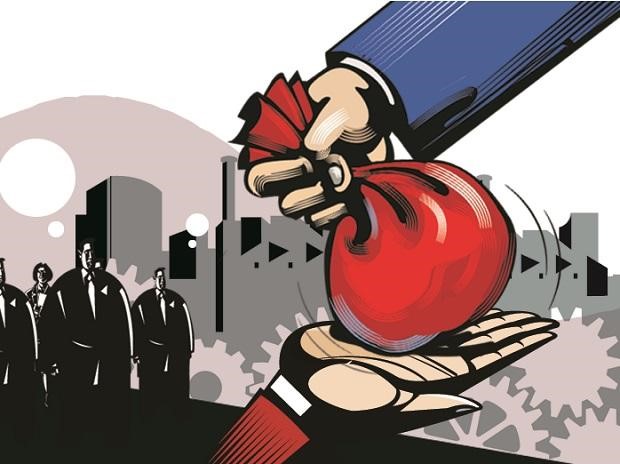
With the increasing rift and race between the political parties in pursuit of winning the elections, the rationale behind promising freebies is taking a big toll on the Indian economy. Freebie culture is not new to the Indian society but the extent to which it is spreading its reach is something very petrifying for the fiscal health of the country if not looked at in the coming future. Freebie indeed is a myth since someone has to bear the cost of providing it, the benefits availed by one section will be the increased cost borne by any other section of the society.
According to the experts conducting research on this culture, this policy in the long run is economically unsustainable. With the inflation rate already ranging at 7.5%, the impact of the freebies in long run will further increase the cost of other goods and hence will drag the common people into the spiral of high payments and debt burden for the state government.
The share of subsidies and freebies as a percentage of GDP is alarmingly high for almost all the states. The farm loan waivers further deteriorated the fiscal health of the states. As per the National Bank For Agriculture And Rural Development (NABARD) report on Farm Loan Waivers, the schemes cost approximately Rs,10,000 crores and Rs.34,020 crore in Punjab and Maharashtra respectively. It was also found that inflation spiked after the implementation of the scheme and on the other hand market borrowing was on a constant rise. States including Rajasthan, Chhattisgarh, Andhra Pradesh, Bihar, Jharkhand, West Bengal, and Kerala have committed to spend 5-19% of their revenue receipts on such schemes. In terms of percentage of state own tax revenue, this is as much as 53% for some of the states.
The fiscal condition of the states has already deteriorated owing to COVID -19. Further, an average fiscal deficit (as % of GSDP) has been revised upwards by 50 bps to 4% for FY22. States including Telangana, Rajasthan, Madhya Pradesh and a few more have already reported more than 4% deficit thus slithering towards the red line.
The Comptroller and Auditor General of India(CAG) reports of states like Gujarat, Telangana and West Bengal indicated the whopping numbers corresponding to the fiscal indicators. Telangana’s Total Outstanding Liabilities have more than doubled (104.57 percent) from 2016-17 to 2020-21 while in the case of Gujarat the outstanding public debt grew at a CAGR of 11.49%. As per the budgetary data available for various states through their recent budget speeches, it is concluded that the expenditure on education and health declined for almost all the states while their interest payments and liabilities rose indicating the shift of budget allocation from the sectors of prime importance towards these non-merit goods.
The chairman of Fifteen Finance Commission, N.K. Singh mentioned that the states need to understand the line between merit and non-merit goods and should spend on the resources which promote overall welfare of the economy. Hence, it does not matter how cheap the freebie is if it does not promote to social cohesion and life quality. As depicted in the figure below, out of the total expenditure the states incur, a major proportion is spent on the freebies. The borrowing mechanism of states from the Centre has also increased several folds thereby impacting the economy as a whole on the macro level.

Source- Handbook of Statistics of Indian States, RBI
Apart from the economic-political implications, the societal impact of these provisions on the society as a whole is even more troublesome and spiking. The race of winning elections and distributing freebies for the same is given evenly in the society. For instance, if we consider free transportation for women or Free electricity up to decided units, the entire section of the society avails the benefits. This reduces and impacts the honest will of those who are able to pay and slide through the benefits of these scheme thereby adding additional burden on the shoulders of states government’s budget. The NABARD Study also mentioned about the consequence of farmers relying upon these farm waivers in any and every situation, keeping aside the factor that whether they can pay or not. This impetus is acting as a force for our economy moving towards the trap and economists are concerned. They think that if the trend continues, we might land up in the situation of present-day Sri Lanka.
Considering the global outlook countries like Canada, Brazil and Australia went completely against the policy of farm loan waivers and rather followed the approach of loan easing and extensions. In response to free power and gas, Turkmenistan the fourth largest natural reserves in the world asked its officials to stop the subsidies and give only tot the ones who actually need it. While the countries around are pushing away this culture, the trend in India is complete opposite. The status at present demands careful vigilance and a shift in the policy measures of the states. There is an urgent need for reconsideration of the policies pertaining to this culture. Political parties should come up with agendas and promises that aim at economic and social welfare. While talking about promises, keeping in mind only the political motive is not wise. The aim of winning should not be at the cost of deteriorating the economic prosperity of the country. The present culture even destroys the federal structure of the economy and thereby can even impact the Centre-State relations. The budgetary and grants allocation on merit goods can still bear the fruits of welfare and development but disposing of things without proper consideration of the impact in near future, will lead the Indian economy into the black hole of debt traps, liabilities, and fiscal hurdles.
?References
1. State Finances and Audit Report of the Comptroller and Auditor General of India (2021)
2. PRS State Budget Analysis Report (2022-23)
3. Handbook of Statistics of Indian Economy, RBI
4. RBI Report On State Finances, Fiscal Position of The State Governments (2021-22)
https://rbi.org.in/Scripts/PublicationsView.aspx’id=20833
5. Shweta Saini, Siraj Hussain & Pulkit Khatri (2021), “Farm Loan Waivers In India” ,NABARD Report
6. https://www.nabard.org/auth/writereaddata/tender/2304223730farm-loan-waivers-in-india-assessing-impact-and-looking-ahead_compressed.pdf
7. ‘Freebies race could lead to bankruptcy of States’ - The Hindu
8. Election Commission looks at practices in other countries on poll ‘freebies’ | India News - Times of India
9. https://timesofindia.indiatimes.com/india/the-folly-of-free/articleshow/90985395.cms
10. https://economictimes.indiatimes.com/markets/expert-view/india-could-very-well-be-in-stagflation-situation-before-end-of-next-fiscal-mythili-bhusnurmath/articleshow/92271543.cms
11. https://economictimes.indiatimes.com/news/economy/finance/states-doling-out-competitive-subsidies-on-brink-of-fiscal-collapse-report/articleshow/91188598.cms’from=mdr
12. https://www.thehindu.com/business/Economy/india-could-meet-sri-lanka-fate-if-freebie-culture-persists/article65335476.ece
Pic Courtsey-Author
(The views expressed are those of the author and do not represent views of CESCUBE.)

Vanshika Arora is a first- year student pursuing Master’s in Economics from Jamia Millia Islamia. She has worked as an intern with Niti Aayog and Ministry of External Affairs (MEA). Her areas of interest include economics and policy research. She has written research paper and articles on Economics and comparative analysis.