LIVE DISPATCH
Loss and Damage Finance: From COP28 Pledges to Policy Architecture Extended Deterrence Under Strain: Credibility, Assurance, and the Stability-Instability Paradox in the Indo-Pacific Beyond Consultation: BIMSTEC's Emerging Role in Regional Intelligence and Security Cooperation Maritime India: Security, Trade, and Great Power Competition Between the Desert and the Savannah: Conflict and the Political Economy of Instability in the Sahel Beyond Ukraine: Understanding Putin's Vision of Russian Power The Politics of Ali Khamenei's Funeral Silicon Sovereignty: How Semiconductors Are Redrawing Global Power Hierarchies Operation Sindoor and the Changing Dynamics of India–Pakistan Security The Negative Impact of US–Iran War on the Pacific Region Generative AI, Labour Sovereignty, and the Geoeconomics of India's Service Economy BRICS Expansion and the Multipolar Moment: Opportunity or Strategic Contradiction? India's AI Diplomacy and the Future of Strategic Technologies Foot-Dragging as Feminism: Iran, South Korea, and the Ungovernable Body Lethal Autonomous Weapons Systems and the Governance Deficit: Challenges to International Humanitarian Law and Accountability Beyond Proximity: Why the UAE Occupies a Growing Place in Iran’s Strategic Calculus Great Power Rivalry and the Crisis of the United Nations Why Fiji Matters: The New Geopolitics of the Indo-Pacific Islands Ten Years After Brexit: Regret, Reform, or Reversal? The Long Shadow of 1953: Understanding the Iran–US Conflict Sports, Strategy and Statecraft of Mega Sporting Events as Geoeconomic Instruments: Qatar 2022 to Saudi Arabia 2034 Border Fencing and National security: India’s Strategy along the Bangladesh Border Hardening the Quad: From Strategic Dialogue to Operational Cooperation Lingering Effects of the Bush Doctrine on Contemporary US Foreign Policy The Maghreb of States: Identity, Sovereignty, and the Limits of Non-Interference India’s BRICS 2026 Chairmanship Navigating a tightrope Amidst the Chinese Geopolitical Rise Beyond the Battlefield: Understanding Unconventional Security Challenges in Contemporary Geopolitics The Control Paradox: How Proxy Warfare Enables Strategic Deniability While Constraining Strategic Control Trapped in Deterrence: Nuclear Stability and the Persistence of Conflict in South Asia The Return of Unipolarity? U.S Strategic Primacy and the Future of the Global Order Supply Chains and Complicity: The Role of Global Corporations in Forced Labour in Xinjiang The Distant Threat: Is Israel Constructing a Strategic Rival in Pakistan Island Militarisation and Techno-Diplomacy: Turkey’s Eastern Mediterranean Fault Lines Amid India-Greece Alignment India’s Security Scenario: An Assessment of its Continental and Maritime Challenges The Geopolitical Architecture of European Defence: Navigating NATO Synergies, Transatlantic Retrenchment, and the Hybrid Threat Landscape The Artemis Accords and the Future of Global Space Governance AI and the Securitization of Critical Infrastructure: Implications of India's AI Summit Beyond Rhetoric: Evaluating the Effectiveness of International Sanctions on China’s Treatment of Uyghur Muslims The Emerging Maritime Rivalry in the Western Indian Ocean: India’s Response to Extra-Regional Powers India's Maritime Grand Strategy on Trial : The IRIS Dena Incident and the Indian Ocean Question Loss and Damage Finance: From COP28 Pledges to Policy Architecture Extended Deterrence Under Strain: Credibility, Assurance, and the Stability-Instability Paradox in the Indo-Pacific Beyond Consultation: BIMSTEC's Emerging Role in Regional Intelligence and Security Cooperation Maritime India: Security, Trade, and Great Power Competition Between the Desert and the Savannah: Conflict and the Political Economy of Instability in the Sahel Beyond Ukraine: Understanding Putin's Vision of Russian Power The Politics of Ali Khamenei's Funeral Silicon Sovereignty: How Semiconductors Are Redrawing Global Power Hierarchies Operation Sindoor and the Changing Dynamics of India–Pakistan Security The Negative Impact of US–Iran War on the Pacific Region Generative AI, Labour Sovereignty, and the Geoeconomics of India's Service Economy BRICS Expansion and the Multipolar Moment: Opportunity or Strategic Contradiction? India's AI Diplomacy and the Future of Strategic Technologies Foot-Dragging as Feminism: Iran, South Korea, and the Ungovernable Body Lethal Autonomous Weapons Systems and the Governance Deficit: Challenges to International Humanitarian Law and Accountability Beyond Proximity: Why the UAE Occupies a Growing Place in Iran’s Strategic Calculus Great Power Rivalry and the Crisis of the United Nations Why Fiji Matters: The New Geopolitics of the Indo-Pacific Islands Ten Years After Brexit: Regret, Reform, or Reversal? The Long Shadow of 1953: Understanding the Iran–US Conflict Sports, Strategy and Statecraft of Mega Sporting Events as Geoeconomic Instruments: Qatar 2022 to Saudi Arabia 2034 Border Fencing and National security: India’s Strategy along the Bangladesh Border Hardening the Quad: From Strategic Dialogue to Operational Cooperation Lingering Effects of the Bush Doctrine on Contemporary US Foreign Policy The Maghreb of States: Identity, Sovereignty, and the Limits of Non-Interference India’s BRICS 2026 Chairmanship Navigating a tightrope Amidst the Chinese Geopolitical Rise Beyond the Battlefield: Understanding Unconventional Security Challenges in Contemporary Geopolitics The Control Paradox: How Proxy Warfare Enables Strategic Deniability While Constraining Strategic Control Trapped in Deterrence: Nuclear Stability and the Persistence of Conflict in South Asia The Return of Unipolarity? U.S Strategic Primacy and the Future of the Global Order Supply Chains and Complicity: The Role of Global Corporations in Forced Labour in Xinjiang The Distant Threat: Is Israel Constructing a Strategic Rival in Pakistan Island Militarisation and Techno-Diplomacy: Turkey’s Eastern Mediterranean Fault Lines Amid India-Greece Alignment India’s Security Scenario: An Assessment of its Continental and Maritime Challenges The Geopolitical Architecture of European Defence: Navigating NATO Synergies, Transatlantic Retrenchment, and the Hybrid Threat Landscape The Artemis Accords and the Future of Global Space Governance AI and the Securitization of Critical Infrastructure: Implications of India's AI Summit Beyond Rhetoric: Evaluating the Effectiveness of International Sanctions on China’s Treatment of Uyghur Muslims The Emerging Maritime Rivalry in the Western Indian Ocean: India’s Response to Extra-Regional Powers India's Maritime Grand Strategy on Trial : The IRIS Dena Incident and the Indian Ocean Question
ADVERTISEMENT
Politics December 28, 2021 1695 Reads

A Fateful Triangle: China, Taiwan and USA
G
By Gaurav Sen
Author • Centre for Security & Strategic Studies
A Fateful Triangle: China, Taiwan and USA
Share Analysis:
EXECUTIVE SUMMARY & STRATEGIC TAKEAWAYS

Beijing has dispatched over 150 military aircraft into Taiwan's air defence zone since the beginning of October 2021 in an attempt to frighten the Taiwanese administration. According to military analysts the People's Liberation Army is anti...

ADVERTISEMENT

The underlying issue is Beijing's perception of Taiwan as a breakaway province with a population of 23 million people that must eventually be "reunified" with the rest of China. Beijing's authorities are pressing for "peaceful reunification," but have not ruled out the use of armed force. Xi Jinping has increased pressure on Taiwan, declaring reunification a goal of the "China Dream" of "national rejuvenation." Since 2016, when Taiwanese President Tsai Ing-wen assumed office, China's pressure campaign against Taiwan has increased. Tsai, a member of the pro-independence Democratic Progressive Party, refuses to adopt Beijing's "One China" doctrine, which treats Taiwan as a province of one China. After watching Beijing's onslaught on Hong Kong's autonomy, Tsai's resistance is the conclusion of a major shift in Taiwan sentiment against unification with the mainland. Beijing has deployed a slew of coercive capabilities to compel Taiwan's capitulation, which has been greeted with growing US backing for Taiwan. The Taiwan Question, according to Beijing, is a remnant of national shame that dates back to 1895, when Japan took the island from the imperial Qing Dynasty as a colony.

The United States maintained diplomatic relations with Taipei until 1979, when it recognised Beijing. Taiwan was not the democracy it is now, but rather an authoritarian regime at the time of the transition. When the United States and China switched diplomatic recognition to Beijing, they agreed to follow the "One China" Policy. For the US, it was an admission that "Chinese on both sides of the Taiwan Strait maintain there is only one China," but that Taiwan's status is unknown and expected to be resolved peacefully. This means that Taiwan is now part of Beijing's "One China" policy. These disparities in policy perceptions have been the bedrock of the US-China relationship. The Taiwan Relations Act, passed by the US Congress to provide guarantees to Taiwan, asks for the US to retain unofficial, de facto relations with Taipei and permits the US to equip Taiwan with armaments for self-defense. The act does not guarantee that the US will interfere if Beijing strikes or invades the island, but it does create "strategic ambiguity" in the hopes of deterring Beijing from attacking and Taipei from declaring independence unilaterally.

Beijing cancelled all the official lines of communication with DPP government almost immediately after its ascension to power, portraying the DPP as secessionists. It has halted all Chinese tour groups visiting the island, thereby cutting off the island's only stable source of revenue. After that, Beijing began hunting Taiwan's last diplomatic allies in the goal of isolating the government totally. Tsai lost seven diplomatic allies to Beijing during her first term as president. Beijing began using low-level "Gray-zone warfare" to threaten the Taiwanese military and people soon after.

In 2020, Chinese warplanes flew 380 sorties into Taiwan's air defence zone, forcing Taipei to scramble its own fighter jets to counter. This year's intrusions have only become worse. As a result, the US has become more open with Taiwan. In the last days of the Trump administration, former Secretary of State Mike Pompeo relaxed all limits on diplomatic meetings between US and Taiwan officials, angering Beijing. The Biden Administration has gone even further, fostering collaboration with Taiwanese officials and even inviting the Taiwanese ambassador to President Biden's inauguration.

Beijing has been willing to employ force in the past, but only to a limited extent. Because such limited use of force allows for definite casualties, the PLA will be more daring in action, even willing to employ force to neutralise opposing forces. The PLA's approach of "encircling enemy positions while preventing reinforcements from coming to their rescue" is most effective on Taiwan's outer islands, therefore they become targets. It's also because Taiwan's outlying islands constitute a national defence vulnerability. As PLA ships encircle and block access to those islands, the PLA may amp up the impacts by simultaneously initiating the three warfare’s, prompting Taiwanese people to get tired of war and ask for peace without hesitation.

With an extraordinary domestic power shortage, a major real estate developer fearing an approaching default, a big Communist Party leadership meeting in November, and the burden of hosting the Winter Olympics in a few months, Beijing may have more pressing concerns than a war over Taiwan. There's little doubt that China expected worldwide retaliation for its pressure on Taiwan, but increasing US pledges and international attention are only going to strengthen, not diminish, Taiwan's resolve to maintain its democracy and identity. The fact that the Chinese Communist Party's objective of national rejuvenation includes unification with Taiwan has increased political pressure to deliver. It would be irresponsible for the United States to leave itself no option in the event of Chinese aggression other than war. But nor should Washington abandon Taiwan. There is a prudent middle way.


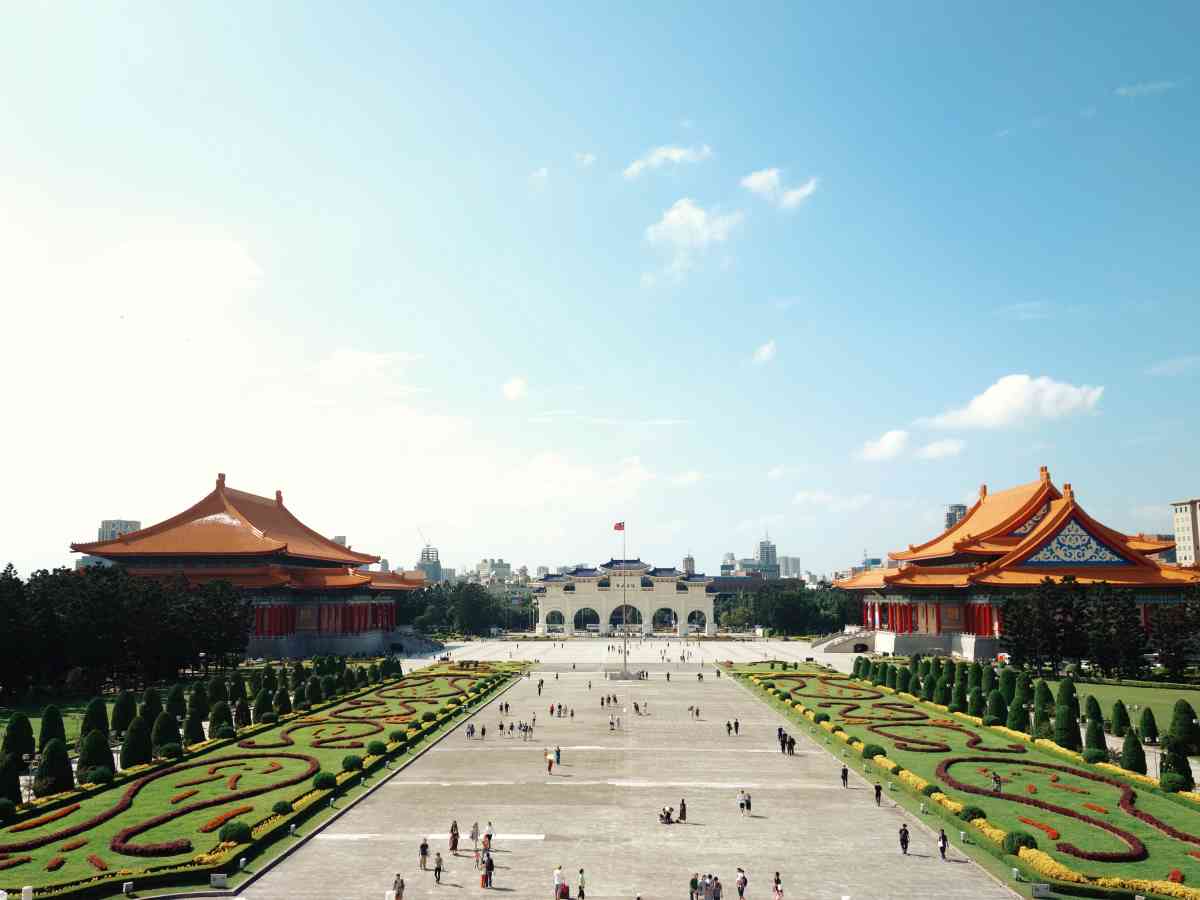
Pic Courtsey-Rovin Ferrer at unsplash.com

(The views expressed are thsoe fo the author and do nto represent views fo CESCUBE.) 

 

Gaurav Sen
About Gaurav Sen →

Gaurav Sen is a graduate from Delhi University. He is currently doing his Masters in International relations from Jawaharlal Nehru University, New Delhi. His research area includes IR theories, Great Power competition in Indo-Pacific, Maritime Security, Emerging Warfare Concepts, and Military Strategies.
ADVERTISEMENT

Related Strategic Analysis