A New Normal in India-Taiwan relations
If one looks at the current status of the India-Taiwan relationship, democracy has been a binding element for the two nations. The relations and dynamics of India Taiwan relations have remained understudied for a long. Taking into account t...
India has been cautious of its bilateral relations with Taiwan, because of China’s ‘One China’ policy it has thus not given Taiwan much reason to build confidence in India. In 2018, the bilateral trade between both the countries crossed $7 billion, and though there is a steady rise in trade, its potential still lies largely untapped. However, enlisting Taiwan as one economy in Act East policy shows the blueprint for future ties. India is keen on developing educational and tourism ties. Education would create a strong lobby among Indian students who will show more affiliation towards Taiwan and its priorities. India is also looking for developing science parks and pilot projects in industrial automation, and develop synergies in ICT manufacturing.
The Indian Council for Research on International Economic Relations (ICRIER) and Chung Hua Institution for Economic Research (CIER), conducted a joint study, and as early as 2013, they suggested for India and Taiwan to sign Economic Cooperation Agreement (ECA) while maintaining the unofficial relationship similar to those Taiwan signed with New Zealand and Singapore. It was never pursued, as China’s One China policy has constrained India, thus not allowing it to enhance its bilateral ties with Taiwan. India should look forward to means to engage with Taipei without antagonizing China like many other countries have been doing. According to C. Raja Mohan productive engagement with Taiwan is not about abandoning India's "One-China" policy or playing some kind of a "card". As it is by no means sensible for Delhi to deny itself the benefits of engaging Taiwan within the framework of its One-China policy, it's high time for India to stop looking at Taiwan from China's prism.
India has come to the point where it can evaluate what's lacking in the bilateral relations with Taipei, and work upon it. Rather than looking at Taiwan as a card against China, India should realize the potential of the bilateral relations with Taiwan, which could be of great commercial and strategic importance. There have been several sectors where collaboration can give fruitful results. Taiwan's leadership has also been keen on developing a relationship with the global south with its New Southbound Policy and India serves to be just the right partner in the region which provides a large market and is also a strategic player in the region. India should take a more proactive role in fostering relations with Taiwan, and that shouldn't be just because of China. Taiwan also provides a great investment opportunity, be it politically, economically, or culturally. G. Parthasarathy (former Diplomat) also talks about the need for enhancing collaboration with Taiwan to reduce reliance on China. Dr. I-Chung Lai in an interview talked about how Taiwan produces a lot of engineers while India can export a lot of CEOs, and if they join hands, their capabilities could be greatly strengthened.
In the last year since the pandemic, there has been a stronger call for self-reliance and the use of made-in-India products for India. However, the crisis-hit economy has made it necessary for India to explore its potential and reduce its overdependence on countries like China. With a low manufacture base and technological advancements, India needs to look for partners with comparative advantages. After the pandemic, many of countries are shifting their base from China. Taiwan is also is looking for new markets beyond China for investment and India with its more than 400 million citizens of the middle class presents a lucrative market for Taiwan to invest and collaborate with India. There have been several steps in the right direction when it comes to the education and industry sector. Another sector that has a lot of potential is the technology sector. Initiatives like Make in India, Skill India and Digital India have opened the door for investment from Taiwan in India. It provides a great amalgamation of India's human resources and software skills with Taiwan's electronic and technology sector. India has not explored the technological potential of Taiwan, and has a lot to gain from Taipei.
With the trade war between US-China and the adventurism of China in the region, India and Taiwan get greater opportunities to further their relations. Taiwan has the potential to provide India a chance to catch on to the 4th Industrial Revolution, in which India lags behind China. Proximity with China makes Taiwan the best alternative for India for infrastructure and manufacturing technology including IT and hardware industry India and Taiwan are often referred to by few as IT to indicate the complementary nature of both the countries, as India is known for its software whereas Taiwan is a leader in hardware manufacturing. De-coupling from China on critical infrastructures such as 5G, Taiwan serves as the best alternative being the leading actor when it comes to the semiconductor and 5G industry. Taiwan is a highly developed economy that has a specialization in technology and a highly skilled labour force. Whereas India is a developing economy with abundant human resources, both the nations have a comparative advantage and a complimenting economy which can help both effectively further their economies. India and Taiwan signed a MoU on communication technology in 2019, which aims at building cooperation amongst economies, including projects like those of smart cities. Taiwan is well known for its technological advancements in different fields and has considerable expertise in hardware manufacturing. It could play a vital role in India’s domestic projects like Digital India, Make in India, Smart City, and Skill India initiatives that move India towards self-sufficiency. Taiwan's food processing and agro-technology could prove to be very beneficial for reducing wastage and increase by modernizing the capacity of the Indian agriculture sector. For example, the bamboo charcoal technology of Taiwan can be of much use for the bamboo producers in India. The collaboration has the potential to even help the rural economy of India.
Taiwan has already shown its eagerness to invest in India and against the backdrop of India-China's recent clashes, New Delhi too has started looking at its engagements with Taiwan. This effort of collaboration can also result in more concrete assimilation of Taiwan in the policy of Indo pacific and strengthen India's strategic position. There exist a lot of potential for cooperation among both nations. The relationship with Taiwan is an ambitious one and it can only be fruitful if practicalities are taken into consideration. India will have to consider Taiwan as an independent, autonomous, geographic entity. India should also back Taiwan in various international forums to build trust and foster their evolving relationship. In South Asia, India is the most important player, and thus could be an important partner for Taiwan under its National Southbound Policy (NSP). In order to take the relationship forward, it needs to integrate Taiwan into the regional and global supply chain networks. There is a need to draw a bridge between Taiwan’s National Southbound policy and India's Act East policy.
References
[1] https://www.orfonline.org/research/the-time-is-ripe-for-a-deeper-and-more-meaningful-relationship-with-taiwan/
[2] Taiwan’s Relations with India: Partisan Divides – The Diplomat
[3] https://www.orfonline.org/research/calls-for-india-to-play-the-taiwan-card-grow-louder-69530/
[4] https://www.orfonline.org/research/prioritising-taiwan-is-important-for-the-world-and-for-india-74267/
[5] https://economictimes.indiatimes.com/news/economy/foreign-trade/india-set-to-expand-ties-with-taiwan-focus-on-trade-and-investments-says-envoy/articleshow/80201407.cms
[6] https://www.hindustantimes.com/analysis/india-must-engage-with-taiwan-and-not-just-because-of-china/story-rxKdf4jtfgsMmgqe82XshK.html
[7] https://idsa.in/system/files/book/book_india-taiwan-relations_jppanda.pdf
[8] https://carnegieindia.org/2019/05/28/raja-mandala-modi-s-taiwan-opportunity-pub-79205
[9] https://www.taiwantrade.com/news/taiwan-india-sign-mous-on-business-technology-cooperation-1904555.html#
[10] http://www.indiandefencereview.com/news/india-taiwan-relations-a-comprehensive-security-perspective/
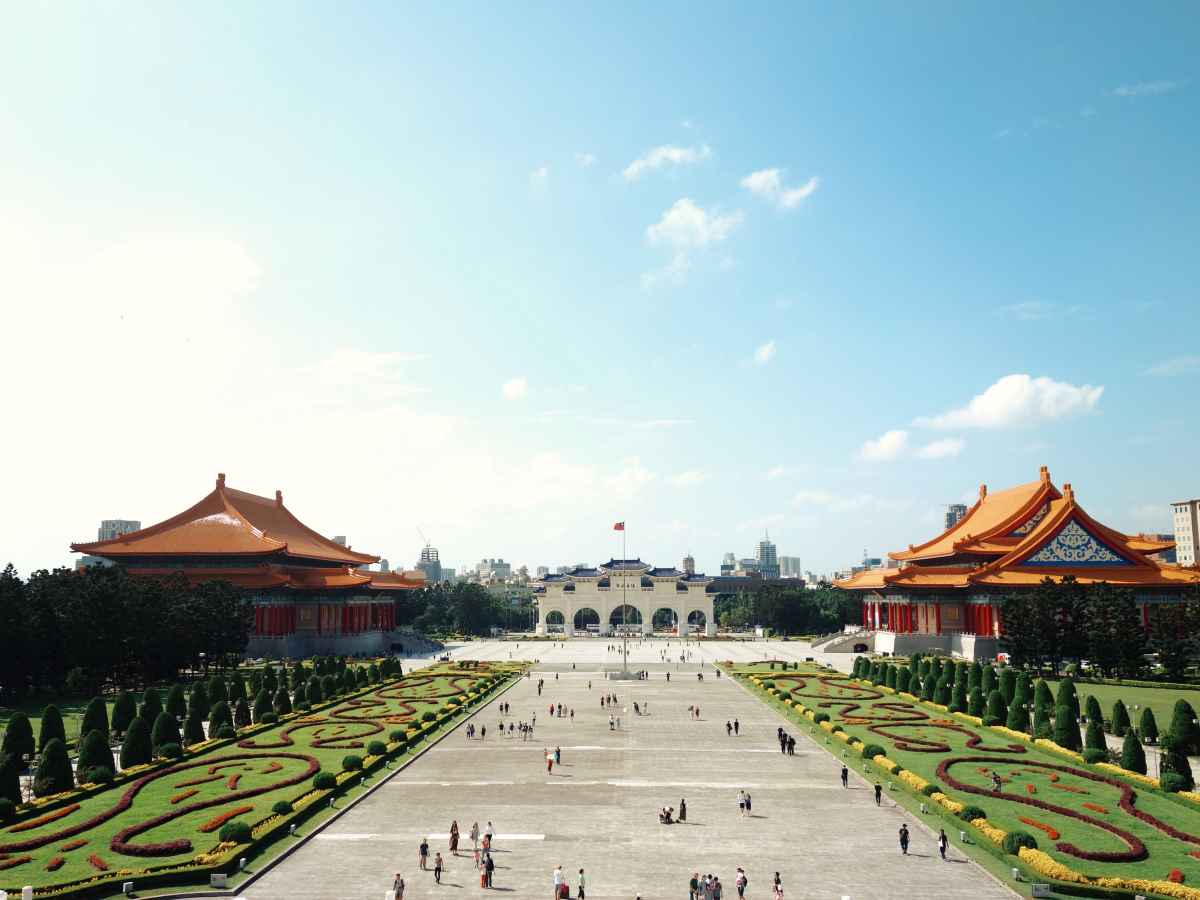
Pic Courtesy-Rovin Ferrer at unsplash.com
(The views expressed are personal and it does not represent the views of CESCUBE or its officials.)

Ragini Kashyap is a graduate from Delhi University and is currently pursuing Masters in Politics with specialisation in International Relations from Jawaharlal Nehru University, New Delhi. Her research area includes global political economy, Indo-China Relations and Emerging politics in the Indo-Pacific.