LIVE DISPATCH
Loss and Damage Finance: From COP28 Pledges to Policy Architecture Extended Deterrence Under Strain: Credibility, Assurance, and the Stability-Instability Paradox in the Indo-Pacific Beyond Consultation: BIMSTEC's Emerging Role in Regional Intelligence and Security Cooperation Maritime India: Security, Trade, and Great Power Competition Between the Desert and the Savannah: Conflict and the Political Economy of Instability in the Sahel Beyond Ukraine: Understanding Putin's Vision of Russian Power The Politics of Ali Khamenei's Funeral Silicon Sovereignty: How Semiconductors Are Redrawing Global Power Hierarchies Operation Sindoor and the Changing Dynamics of India–Pakistan Security The Negative Impact of US–Iran War on the Pacific Region Generative AI, Labour Sovereignty, and the Geoeconomics of India's Service Economy BRICS Expansion and the Multipolar Moment: Opportunity or Strategic Contradiction? India's AI Diplomacy and the Future of Strategic Technologies Foot-Dragging as Feminism: Iran, South Korea, and the Ungovernable Body Lethal Autonomous Weapons Systems and the Governance Deficit: Challenges to International Humanitarian Law and Accountability Beyond Proximity: Why the UAE Occupies a Growing Place in Iran’s Strategic Calculus Great Power Rivalry and the Crisis of the United Nations Why Fiji Matters: The New Geopolitics of the Indo-Pacific Islands Ten Years After Brexit: Regret, Reform, or Reversal? The Long Shadow of 1953: Understanding the Iran–US Conflict Sports, Strategy and Statecraft of Mega Sporting Events as Geoeconomic Instruments: Qatar 2022 to Saudi Arabia 2034 Border Fencing and National security: India’s Strategy along the Bangladesh Border Hardening the Quad: From Strategic Dialogue to Operational Cooperation Lingering Effects of the Bush Doctrine on Contemporary US Foreign Policy The Maghreb of States: Identity, Sovereignty, and the Limits of Non-Interference India’s BRICS 2026 Chairmanship Navigating a tightrope Amidst the Chinese Geopolitical Rise Beyond the Battlefield: Understanding Unconventional Security Challenges in Contemporary Geopolitics The Control Paradox: How Proxy Warfare Enables Strategic Deniability While Constraining Strategic Control Trapped in Deterrence: Nuclear Stability and the Persistence of Conflict in South Asia The Return of Unipolarity? U.S Strategic Primacy and the Future of the Global Order Supply Chains and Complicity: The Role of Global Corporations in Forced Labour in Xinjiang The Distant Threat: Is Israel Constructing a Strategic Rival in Pakistan Island Militarisation and Techno-Diplomacy: Turkey’s Eastern Mediterranean Fault Lines Amid India-Greece Alignment India’s Security Scenario: An Assessment of its Continental and Maritime Challenges The Geopolitical Architecture of European Defence: Navigating NATO Synergies, Transatlantic Retrenchment, and the Hybrid Threat Landscape The Artemis Accords and the Future of Global Space Governance AI and the Securitization of Critical Infrastructure: Implications of India's AI Summit Beyond Rhetoric: Evaluating the Effectiveness of International Sanctions on China’s Treatment of Uyghur Muslims The Emerging Maritime Rivalry in the Western Indian Ocean: India’s Response to Extra-Regional Powers India's Maritime Grand Strategy on Trial : The IRIS Dena Incident and the Indian Ocean Question Loss and Damage Finance: From COP28 Pledges to Policy Architecture Extended Deterrence Under Strain: Credibility, Assurance, and the Stability-Instability Paradox in the Indo-Pacific Beyond Consultation: BIMSTEC's Emerging Role in Regional Intelligence and Security Cooperation Maritime India: Security, Trade, and Great Power Competition Between the Desert and the Savannah: Conflict and the Political Economy of Instability in the Sahel Beyond Ukraine: Understanding Putin's Vision of Russian Power The Politics of Ali Khamenei's Funeral Silicon Sovereignty: How Semiconductors Are Redrawing Global Power Hierarchies Operation Sindoor and the Changing Dynamics of India–Pakistan Security The Negative Impact of US–Iran War on the Pacific Region Generative AI, Labour Sovereignty, and the Geoeconomics of India's Service Economy BRICS Expansion and the Multipolar Moment: Opportunity or Strategic Contradiction? India's AI Diplomacy and the Future of Strategic Technologies Foot-Dragging as Feminism: Iran, South Korea, and the Ungovernable Body Lethal Autonomous Weapons Systems and the Governance Deficit: Challenges to International Humanitarian Law and Accountability Beyond Proximity: Why the UAE Occupies a Growing Place in Iran’s Strategic Calculus Great Power Rivalry and the Crisis of the United Nations Why Fiji Matters: The New Geopolitics of the Indo-Pacific Islands Ten Years After Brexit: Regret, Reform, or Reversal? The Long Shadow of 1953: Understanding the Iran–US Conflict Sports, Strategy and Statecraft of Mega Sporting Events as Geoeconomic Instruments: Qatar 2022 to Saudi Arabia 2034 Border Fencing and National security: India’s Strategy along the Bangladesh Border Hardening the Quad: From Strategic Dialogue to Operational Cooperation Lingering Effects of the Bush Doctrine on Contemporary US Foreign Policy The Maghreb of States: Identity, Sovereignty, and the Limits of Non-Interference India’s BRICS 2026 Chairmanship Navigating a tightrope Amidst the Chinese Geopolitical Rise Beyond the Battlefield: Understanding Unconventional Security Challenges in Contemporary Geopolitics The Control Paradox: How Proxy Warfare Enables Strategic Deniability While Constraining Strategic Control Trapped in Deterrence: Nuclear Stability and the Persistence of Conflict in South Asia The Return of Unipolarity? U.S Strategic Primacy and the Future of the Global Order Supply Chains and Complicity: The Role of Global Corporations in Forced Labour in Xinjiang The Distant Threat: Is Israel Constructing a Strategic Rival in Pakistan Island Militarisation and Techno-Diplomacy: Turkey’s Eastern Mediterranean Fault Lines Amid India-Greece Alignment India’s Security Scenario: An Assessment of its Continental and Maritime Challenges The Geopolitical Architecture of European Defence: Navigating NATO Synergies, Transatlantic Retrenchment, and the Hybrid Threat Landscape The Artemis Accords and the Future of Global Space Governance AI and the Securitization of Critical Infrastructure: Implications of India's AI Summit Beyond Rhetoric: Evaluating the Effectiveness of International Sanctions on China’s Treatment of Uyghur Muslims The Emerging Maritime Rivalry in the Western Indian Ocean: India’s Response to Extra-Regional Powers India's Maritime Grand Strategy on Trial : The IRIS Dena Incident and the Indian Ocean Question
ADVERTISEMENT
World July 12, 2022 2469 Reads

Abe-San, till we meet again!
G
By Gitanjali Sinha Roy
Author • Centre for Security & Strategic Studies
Abe-San, till we meet again!
Share Analysis:
EXECUTIVE SUMMARY & STRATEGIC TAKEAWAYS

Dead perturbs people, it brings out the pain and the feeling of loss. Globally, there are rare occasions when people love and follow a leader so dearly. On 8th July 2022, the world experienced immense pain and loss as Former Prime Minister ...

ADVERTISEMENT

Shinzo Abe was the longest-serving Prime Minister that Japan has had and staying true to his legacy, Abe-san left a great impact on domestic politics, regional politics and world affairs. When Shinzo Abe assumed leadership in 2006, it faced several issues like economic disruptions in Japan as Japan had already been facing several bubble bursts and these were followed by repeated disasters like earthquakes and tsunamis. The task at hand for Shinzo Abe was a tough one, but he braved it all.

Former Prime Minister Abe can be called a leader with guts as most leaders before him stepped down after seeing the mountain of work and the challenges that they faced. This attitude and grit spoke highly about Abe-san. He changed the way the world looked at Japan in the 2000s and he was able to reinstate Japan as an important global power. Prime Minister Abe reinvented the wheel of diplomacy for Japan as he focused on Golf Diplomacy and worked on building a special rapport with global leaders. One such special relationship that Prime Minister Abe had was with Prime Minister Modi. The bonhomie between the two leaders was something extremely special and this specialness reflected in the strengthening of India-Japan relations.

Talking of diplomacy, Shinzo Abe was a master of statecraft man as he knew what was the need of the hour. He not only worked on strengthening Japan’s diplomacy but he had a keen eye for developing Japanese foreign policy and diplomacy from a panoramic view which made Japan, the most sort after partnering in global affairs. He further pioneered the way for the Indo-Pacific vision which today is the most sort after global policy and most countries have adopted their very own version of the Indo-Pacific strategy. He also was the architect of the QUAD and today, the QUAD stands on a stronger footing than most of the regional and global groupings and institutions.

Today, Japan can defend itself and has been able to strengthen itself as Abe-san worked on strengthening the Self-Defence Forces and fought for the constitutional amendment to Article 9 of the post-war Japanese Constitution upholding Pacifism. He also helped tackle multiple island issues with China, Russia and other countries and gave these countries a befitting reply, by not just protecting Japan’s sovereignty but also territorial integrity. Former Prime Minister Abe was a fearless man, as, since 2012, he spoke directly about China as a threat to Japan. Later, in 2019, the Japanese Defence White Papers resonated with the same thought and also highlighted China’s growing belligerence globally.

Economically, Japan was facing several economic issues and to tackle those, Abe-san released three economic policies like monetary and fiscal stimulus and economic reforms which were later called Abenomics. Though these policies weren’t received that well, they did keep Japan afloat. Abenomics also worked on Womenomics as Abe-san thought that the female labour force would yet again take Japan to its glorious days of economic growth in 1960s.

In the domain of nuclear security, Abe-san was able to maintain Japan’s position of not being a nuclear power when all the countries are working on strengthening their nuclear stockpile. During the leadership of President Trump, he suggested that Japan must go nuclear and Prime Minister Abe tackled this scenario rather well by still maintaining Japan’s stance of being non-nuclear.

Educationally, Former Prime Minister Abe launched the JENESYS programme in 2007 and this gave students from the world over to travel to Japan for a 10-day trip and experience Japan’s history, culture, education system and work on student-to-student exchange programmes. This programme was a great success as this also promoted Japan’s soft power culture and this helped attract more students to pursue their higher studies in Japan.

Culturally, Abe-san was greatly involved in people-to-people connections and emphasised that these bonds must be stronger than ever. Infrastructurally too, Former Prime Minister Shinzo Abe was instrumental in developing high-technological and advanced infrastructural projects in many countries, especially in South Asia like India and Southeast Asia. Very few know that Abe-san was a great practitioner of meditation and regularly practised Sudarshan kriya.

Today, as we remember Abe-san, we should remember him for the multiple hats he wore as a son, husband, global leader, friend, philosopher and guide. They say great men never die; they leave behind a legacy. Shinzo Abe has left behind a legacy worthy to be remembered forever.

Abe-san, you live forever and always in our hearts. Till we meet again! ( ???)


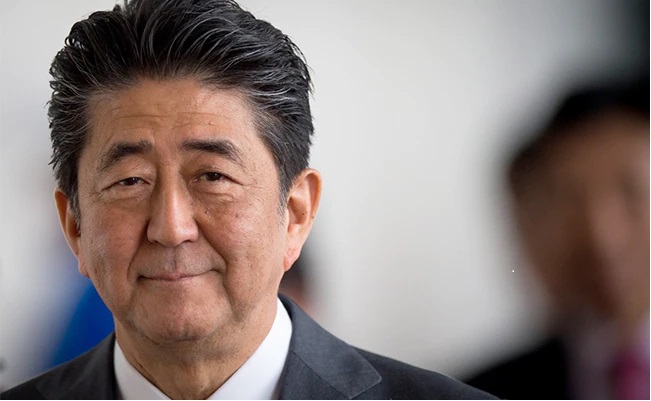
Pic Courtsey-NDTV.com

(The views expressed are those of the author and do not represent views of CESCUBE.)

Gitanjali Sinha Roy
About Gitanjali Sinha Roy →

Gitanjali Sinha Roy is Assiatnt Professor at O P Jindla Global University and is a Ph.D. scholar at the Department of East Asian Studies, University of Delhi with specialisation in Japanese Studies. At present, she is a visiting Monbukagakusho (MEXT) Scholar at the University of Tokyo. Her M.Phil dissertation was Role of Female Labour Force in Japanese Economic Development: A Case Study of Womenomics in Abe's Reform Strategy. Gitanjali is a graduate in Political Science (Hons) from Miranda House and completed her post-graduation from Lady Shri Ram College of Commerce in Political Science as well. Her interest areas comprise of India and Japan's Foreign Policy, Security Strategy and Diplomacy, India-Japan Relations: Maritime Security and Strategy in the Indo-Pacific and Southeast Asian and South Asian Politics, Security Strategy and Diplomacy. Ms Roy had worked working with Centre for Land Warfare Studies(CLAWS) as a research assistant. Gitanjali Sinha Roy is a Research Associate at the Centre for Security and Security Studies (CESCUBE) and apart from this, she is a Fellow at the Japan Division at CESCUBE
ADVERTISEMENT

Related Strategic Analysis