LIVE DISPATCH
Loss and Damage Finance: From COP28 Pledges to Policy Architecture Extended Deterrence Under Strain: Credibility, Assurance, and the Stability-Instability Paradox in the Indo-Pacific Beyond Consultation: BIMSTEC's Emerging Role in Regional Intelligence and Security Cooperation Maritime India: Security, Trade, and Great Power Competition Between the Desert and the Savannah: Conflict and the Political Economy of Instability in the Sahel Beyond Ukraine: Understanding Putin's Vision of Russian Power The Politics of Ali Khamenei's Funeral Silicon Sovereignty: How Semiconductors Are Redrawing Global Power Hierarchies Operation Sindoor and the Changing Dynamics of India–Pakistan Security The Negative Impact of US–Iran War on the Pacific Region Generative AI, Labour Sovereignty, and the Geoeconomics of India's Service Economy BRICS Expansion and the Multipolar Moment: Opportunity or Strategic Contradiction? India's AI Diplomacy and the Future of Strategic Technologies Foot-Dragging as Feminism: Iran, South Korea, and the Ungovernable Body Lethal Autonomous Weapons Systems and the Governance Deficit: Challenges to International Humanitarian Law and Accountability Beyond Proximity: Why the UAE Occupies a Growing Place in Iran’s Strategic Calculus Great Power Rivalry and the Crisis of the United Nations Why Fiji Matters: The New Geopolitics of the Indo-Pacific Islands Ten Years After Brexit: Regret, Reform, or Reversal? The Long Shadow of 1953: Understanding the Iran–US Conflict Sports, Strategy and Statecraft of Mega Sporting Events as Geoeconomic Instruments: Qatar 2022 to Saudi Arabia 2034 Border Fencing and National security: India’s Strategy along the Bangladesh Border Hardening the Quad: From Strategic Dialogue to Operational Cooperation Lingering Effects of the Bush Doctrine on Contemporary US Foreign Policy The Maghreb of States: Identity, Sovereignty, and the Limits of Non-Interference India’s BRICS 2026 Chairmanship Navigating a tightrope Amidst the Chinese Geopolitical Rise Beyond the Battlefield: Understanding Unconventional Security Challenges in Contemporary Geopolitics The Control Paradox: How Proxy Warfare Enables Strategic Deniability While Constraining Strategic Control Trapped in Deterrence: Nuclear Stability and the Persistence of Conflict in South Asia The Return of Unipolarity? U.S Strategic Primacy and the Future of the Global Order Supply Chains and Complicity: The Role of Global Corporations in Forced Labour in Xinjiang The Distant Threat: Is Israel Constructing a Strategic Rival in Pakistan Island Militarisation and Techno-Diplomacy: Turkey’s Eastern Mediterranean Fault Lines Amid India-Greece Alignment India’s Security Scenario: An Assessment of its Continental and Maritime Challenges The Geopolitical Architecture of European Defence: Navigating NATO Synergies, Transatlantic Retrenchment, and the Hybrid Threat Landscape The Artemis Accords and the Future of Global Space Governance AI and the Securitization of Critical Infrastructure: Implications of India's AI Summit Beyond Rhetoric: Evaluating the Effectiveness of International Sanctions on China’s Treatment of Uyghur Muslims The Emerging Maritime Rivalry in the Western Indian Ocean: India’s Response to Extra-Regional Powers India's Maritime Grand Strategy on Trial : The IRIS Dena Incident and the Indian Ocean Question Loss and Damage Finance: From COP28 Pledges to Policy Architecture Extended Deterrence Under Strain: Credibility, Assurance, and the Stability-Instability Paradox in the Indo-Pacific Beyond Consultation: BIMSTEC's Emerging Role in Regional Intelligence and Security Cooperation Maritime India: Security, Trade, and Great Power Competition Between the Desert and the Savannah: Conflict and the Political Economy of Instability in the Sahel Beyond Ukraine: Understanding Putin's Vision of Russian Power The Politics of Ali Khamenei's Funeral Silicon Sovereignty: How Semiconductors Are Redrawing Global Power Hierarchies Operation Sindoor and the Changing Dynamics of India–Pakistan Security The Negative Impact of US–Iran War on the Pacific Region Generative AI, Labour Sovereignty, and the Geoeconomics of India's Service Economy BRICS Expansion and the Multipolar Moment: Opportunity or Strategic Contradiction? India's AI Diplomacy and the Future of Strategic Technologies Foot-Dragging as Feminism: Iran, South Korea, and the Ungovernable Body Lethal Autonomous Weapons Systems and the Governance Deficit: Challenges to International Humanitarian Law and Accountability Beyond Proximity: Why the UAE Occupies a Growing Place in Iran’s Strategic Calculus Great Power Rivalry and the Crisis of the United Nations Why Fiji Matters: The New Geopolitics of the Indo-Pacific Islands Ten Years After Brexit: Regret, Reform, or Reversal? The Long Shadow of 1953: Understanding the Iran–US Conflict Sports, Strategy and Statecraft of Mega Sporting Events as Geoeconomic Instruments: Qatar 2022 to Saudi Arabia 2034 Border Fencing and National security: India’s Strategy along the Bangladesh Border Hardening the Quad: From Strategic Dialogue to Operational Cooperation Lingering Effects of the Bush Doctrine on Contemporary US Foreign Policy The Maghreb of States: Identity, Sovereignty, and the Limits of Non-Interference India’s BRICS 2026 Chairmanship Navigating a tightrope Amidst the Chinese Geopolitical Rise Beyond the Battlefield: Understanding Unconventional Security Challenges in Contemporary Geopolitics The Control Paradox: How Proxy Warfare Enables Strategic Deniability While Constraining Strategic Control Trapped in Deterrence: Nuclear Stability and the Persistence of Conflict in South Asia The Return of Unipolarity? U.S Strategic Primacy and the Future of the Global Order Supply Chains and Complicity: The Role of Global Corporations in Forced Labour in Xinjiang The Distant Threat: Is Israel Constructing a Strategic Rival in Pakistan Island Militarisation and Techno-Diplomacy: Turkey’s Eastern Mediterranean Fault Lines Amid India-Greece Alignment India’s Security Scenario: An Assessment of its Continental and Maritime Challenges The Geopolitical Architecture of European Defence: Navigating NATO Synergies, Transatlantic Retrenchment, and the Hybrid Threat Landscape The Artemis Accords and the Future of Global Space Governance AI and the Securitization of Critical Infrastructure: Implications of India's AI Summit Beyond Rhetoric: Evaluating the Effectiveness of International Sanctions on China’s Treatment of Uyghur Muslims The Emerging Maritime Rivalry in the Western Indian Ocean: India’s Response to Extra-Regional Powers India's Maritime Grand Strategy on Trial : The IRIS Dena Incident and the Indian Ocean Question
ADVERTISEMENT
Health March 22, 2022 13639 Reads

Afghanistan food crisis- the dilemma for international community
M
By Mahima Chouhan
Author • Centre for Security & Strategic Studies
Afghanistan food crisis- the dilemma for international community
Share Analysis:
EXECUTIVE SUMMARY & STRATEGIC TAKEAWAYS

On 15 August 2021, the Taliban seized the capital of Afghanistan, and soon after this, it has brought almost all of it under its control. The siege began two weeks before the deadline set by the United States to retreat its troops following...

ADVERTISEMENT

The international community is fearful of the kind of rule the Taliban would reimpose in Afghanistan. In addition, the coming of the Taliban has also brought some tough choices to the world. However, in recent times the food crisis of Afghanistan has turned out to be the biggest concern of the global world. According to the UN resident coordinator, a staggering 95 percent of Afghans are not getting enough to eat, with that number rising to almost 100 percent in female-headed households. Such a massive humanitarian crisis in today’s increasingly globalized world is hard to believe, yet this is the grim reality of Afghanistan. Severe drought conditions and the effects of covid 19 intensified by the prospect of another bad harvest will take a toll on the ongoing food crisis. The Center for Strategic and International Studies (CSIS) notes that hunger in Afghanistan has increased substantially since 2014 due to major droughts, floods, and economic and security challenges.

Moreover, Afghanistan's massive food insecurity has its roots in the economic challenges of the country. Since the Taliban takeover of Afghanistan, the US government has stopped recognizing Afghanistan's central bank, has frozen nearly $9.5 billion in assets belonging to the central bank of Afghanistan, and curtailed the income of millions of health workers and other essential workers. With the fall of local currency and the decline in imports of food products from other nations, food prices are skyrocketing in Afghanistan. According to human rights watch, Afghanistan’s massive humanitarian crisis has its roots in outside restrictions on the country’s banking sector and international humanitarian and development funds. 

In such a situation, the international community is in a huge dilemma on how to deal with the Taliban as well as the rising humanitarian crisis of Afghanistan. Taliban sees the contemporary humanitarian crisis in Afghanistan as an opportunity to intensify its engagement with other nations. Such humanitarian catastrophe is a big dilemma for the future course of actions by nations. However, the world leaders are in no mood to recognize the Taliban as a legitimate face of Afghan people, yet perceive it as an obligation to mitigate the humanitarian crisis. 

The rising food insecurity and acute malnutrition rates would have a long-lasting impact on the entire generation of Afghanistan. “The fate of an entire generation of Afghans is at stake,” says Ramiz Alakbarov who is a Deputy Special Representative of the Secretary-General, Resident, and Humanitarian Coordinator. Thus, the international community has come forward and prioritized the humanitarian disaster. The world bank has unfrozen the US $280 million in Afghan reconstruction funds, the UN is raising $ 4.4 billion and the organizations like OIC and the Gulf Cooperation Council have also landed a helping hand to Afghanistan. Subsequently, the USA will be releasing the US $3.5 billion in Afghan central bank assets on US soil to mobilize resources and help Afghanistan. However, these humanitarian efforts alone would not be enough to mitigate food insecurity. Millions of people are selling their possessions to survive, some people are even forced to sell their children to buy food. And for the very first time, urban communities are facing problems at similar levels to rural communities in Afghanistan. As a result, Afghanistan's tremendous humanitarian disaster necessitates a concrete economic policy and ongoing trade involvement with the rest of the globe.

However, these economic solutions would come at a hefty political cost for the parties involved. The international community remains wary of cooperating with the Taliban because it is felt that doing so will simply reinforce and legitimize the Taliban's grip over Afghanistan. Both the organization are on different sides on human rights, female education, employment, freedom of religion, terrorism, and many other aspects. The international community has proposed certain reforms and preconditions to recognize the Taliban. There are certain norms and values which the international community feels must be fulfilled before recognizing the new regime. However, these proposed reforms have a high political cost for the Taliban who appear to be hesitant to oblige the norms set by the international community. The organization has continued to make empty promises and remained committed to its ideological leaning. In such a situation, the international leaders are at a loss as to how to assist the Afghan people without endorsing the Taliban.

In addition, the humanitarian crisis has intensified the conundrum for most neighboring states bordering Afghanistan. The acute food shortage has set alarm bells ringing in the regional states, which would feel the most immediate impact. These states are ready to provide humanitarian assistance to avoid the mass influx of people from Afghanistan, the economic chaos, and the regional instability. But the neighboring states as well as the western world is reluctant in a long-term engagement with the Taliban. With no change in the ideas and policies of the Taliban, the trust deficit of both organizations has only intensified. 

The world is at a loss as to how to address the issues posed by Afghanistan's food crisis. On the one hand, if it leaves the economic solutions and long-term engagement with Afghanistan, it would only increase the migration, instability, trafficking, and at last the collapse of Afghan society. Thus, it does not even want to strengthen the unreformed Taliban nor want to leave the humanitarian crisis unattended. Recognition of the Taliban before fulfilling the preconditions would only lead to a vital blow to the values of international society and will also give space to more such extremist outfits. As it stands currently, the international world is providing humanitarian assistance and aid to help the Afghan people from this crisis while also pressuring the group to reform.


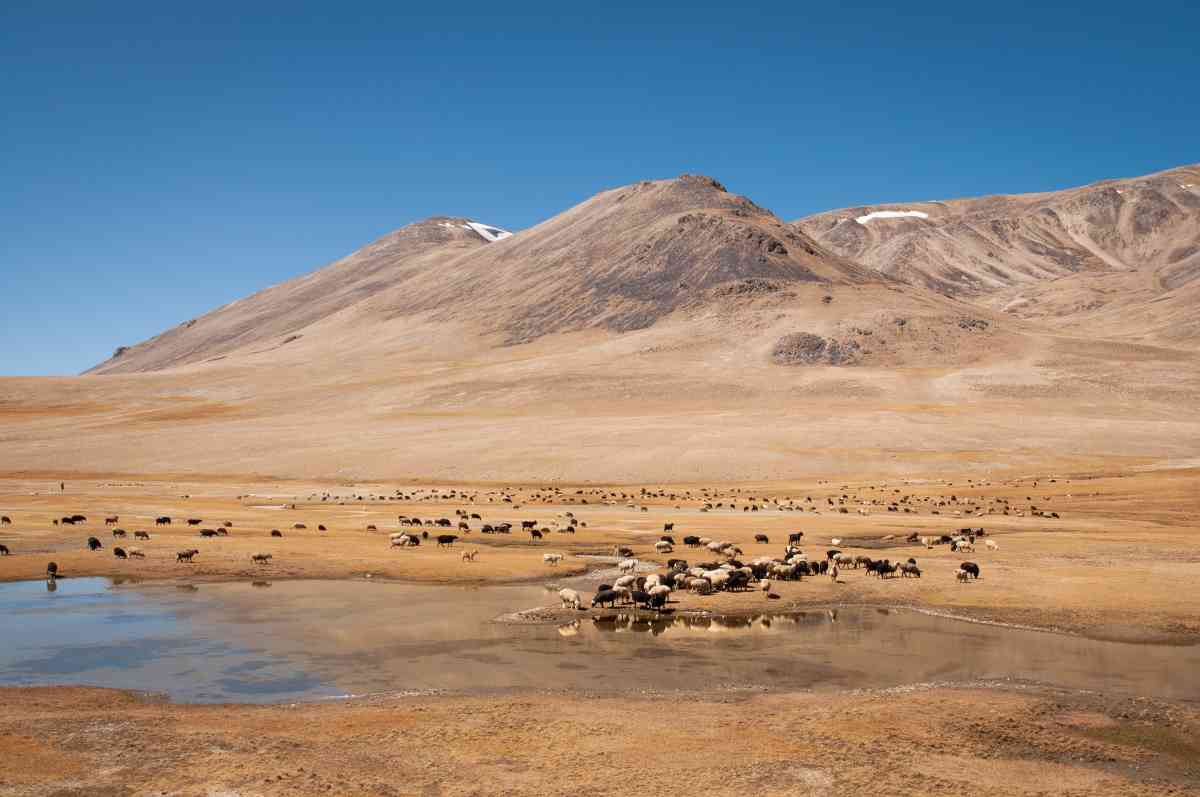
Pic Courtsey-Joel Heard at unsplash.com

(The views expressed are those of the author and do not represent views of CESCUBE.)

Mahima Chouhan
About Mahima Chouhan →

Mahima Chouhan is a Postgraduate student of Politics with Specialization in International Studies at Jawaharlal Nehru University. Her area of interest lies in the cultural and political aspects of West Asia, Central Asia and the challenges of Internally Displaced people and refugees.
ADVERTISEMENT

Related Strategic Analysis