Afghanistan Peace Roadmap
Afghanistan has been embroiled in conflict for the past 40 years, first under the Soviet Union and after 9/11 by the United States. America invaded the country after the Taliban government refused to hand over Osama Bin Laden who had orches...
President Biden’s plans:
Firstly, an UN-led conference has been proposed which will be comprised of representatives of key stakeholders such as Russia, China, Pakistan, Iran, India, and the United States who will discuss a collective approach to ensure lasting peace. US representative in Afghanistan Zalmay Khalilzad will be sharing written proposals with both the Afghanistan government as well as the Islamic Emirate. The proposal would address key issues such as constitutional and government arrangements with regards to the future, terms for permanent and a comprehensive ceasefire.
Moreover, Secretary of State Anthony Blinken has suggested that the Afghanistan government and the Taliban hold talks in Turkey to discuss power sharing agreement which will determine who would hold political power in the country after foreign troops withdraw.
On 14th April 2021 President Biden announced his decision to withdraw the remaining 2500 troops from Afghanistan by September 11, and in declaring the pullout he also said that “the US cannot continue to pour resources into an intractable war and expect different results”. The statement clearly conveys that the Americans are exhausted, and they no longer wish to stay and prolong the conflict any longer than it already has. The Biden administration’s stance on Afghanistan indicates that they want to withdraw soon but not rush the exit which is manifested through the extension of the deadline from 1st May to 11th September.
However, President Biden explicitly conveyed that he will not let the withdrawal extend beyond 2021. Also, before giving the withdrawal announcement the US president spoke with Afghan President Ghani saying that “United States would continue to support the Afghan people through development, humanitarian and security assistance”. This indicates that although the military involvement will end if the plan comes to fruition, but it seems that US may be involved in Afghanistan through humanitarian assistance.
President Ghani’s proposal:
President Ashraf Ghani rejected US plan which seeks to install an interim government and his stance on the peace process is that it should be achieved through a democratic process which implies having elected leaders decide the future of Afghanistan.
Ghani’s proposal is designed to ensure a “sovereign, democratic, united, neutral and connected Afghanistan”. The first phase would entail a settlement between the Taliban and the Afghan government which will be endorsed by the Loya Jirga or the council of elders and along with it a ceasefire would be reached.
The second phase will focus on the formation of a new government according to the constitution with internationally monitored Presidential election held within a given timeframe. The third phase will push for ‘a constitutional framework, reintegration of refugees and development for Afghanistan moving forward’.
On 11th April 2021, President Ghani announced that achieving peace is on the top of his agenda, but he reiterated that the process should not be hurried. As far his vision for the peace plan is concerned, he said that ‘the transition of power from the present government to the successor government will be made on the people’s will’. This implies that the government which will govern Afghanistan should be democratic and elected by the people rather than appointed through a political deal. President Ghani does not intend to run for the elections under the peace plan proposed by him. His statement reflects that he is not trying to gain power at the expense of the Taliban, and instead desires to have a safer, more peaceful Afghanistan. It remains to be seen whether his plan will materialize in the coming months, but one thing is clear from his proposal which is the peace should be reached with consensus of all key stakeholders in the region.
Taliban’s aim:
The Taliban wants to amass power which was confirmed by one of the senior members of the team which negotiated Doha accord with the Trump administration. It sees the Afghan government as an illegitimate puppet of America and has been for more than a decade. He also said that the present leadership is different from the one which was ousted by the American administration back in 2001 and they might even allow women ministers and minorities. The group wishes to be a legitimate stakeholder in the governance of Afghanistan.
Taliban is a powerful entity as it controls about half of the territory, and it would utilize it as a tool to further its own interest which is to dominate the political system. Newly, the militant organization has backed out of the Turkey talks citing that they will not attend any summit until all the foreign forces pullout from the country. The talks which were planned to be held 24th April onwards for a period of 10 days wherein the Taliban and the Afghan government were to meet and discuss the peace process and thereby decide the future of the country.
Now the talks have been postponed until the end of Muslim holy month of Ramadan which will end in mid-May due to Taliban’s refusal. The decision to postpone conveys that the militant group is an essential part of the Afghan peace process. Furthermore, Afghanistan will not achieve a lasting peace until the government and the Islamic Emirate come to an agreement with regards to the future.
In response to US withdrawal being delayed to 11th September 2021, Taliban said that it is a clear violation of the Doha accord which was signed in February 2020 with the Trump administration. It also stressed that all the foreign troops should withdraw from the country immediately.
Final View:
Afghanistan has been witnessing war for the past 40 years since 1979 when the Soviets first invaded the country. The Islamic Emirate and the Afghan government has been at odds with each other, the two compete for political dominance in the country. The Taliban with its control over vast swaths of Afghan territory hopes to control the nation and mold it according to its views which are guided by the Sharia law. The government led by President Ghani is like the Islamic Emirate in the sense that it also wishes to shape the war-torn nation in its own eyes.
However, there is a fundamental difference in the way the two warring groups seek to achieve their goals as the militant group seeks to gain power through a political deal while the Ghani government is pursuing peace, stability through a popular mandate rather than through secret dealings behind closed doors.
The Americans who have been embroiled in war for the past 20 years with more than 2,300 deaths are tired as they have failed in their mission to eliminate the militant group and wish to go back home. The Biden administration is looking to withdraw troops by September this year and has pushed for a fast-tracked peace process through talks in Turkey, but they have been postponed as the Taliban refused to participate. The peace deal will determine not only who holds political power in Afghanistan, but it will also influence regional security dynamics. It remains to be seen what future holds for the war-torn country.
End Notes
1)https://www.theatlantic.com/photo/2014/08/the-soviet-war-in-afghanistan-1979-1989/100786/
2)https://abc7news.com/afghanistan-war-troops-in-biden-withdrawal/10516383/
3)https://iasbaba.com/2021/03/joe-bidens-afghanistan-peace-plan/
6)https://www.voanews.com/south-central-asia/afghan-president-offers-three-step-peace-plan
7)https://tribune.com.pk/story/2294070/istanbul-conference-and-the-afghan-peace-plan
13)https://www.aa.com.tr/en/asia-pacific/afghanistan-divided-over-us-withdrawal-plan/2210633
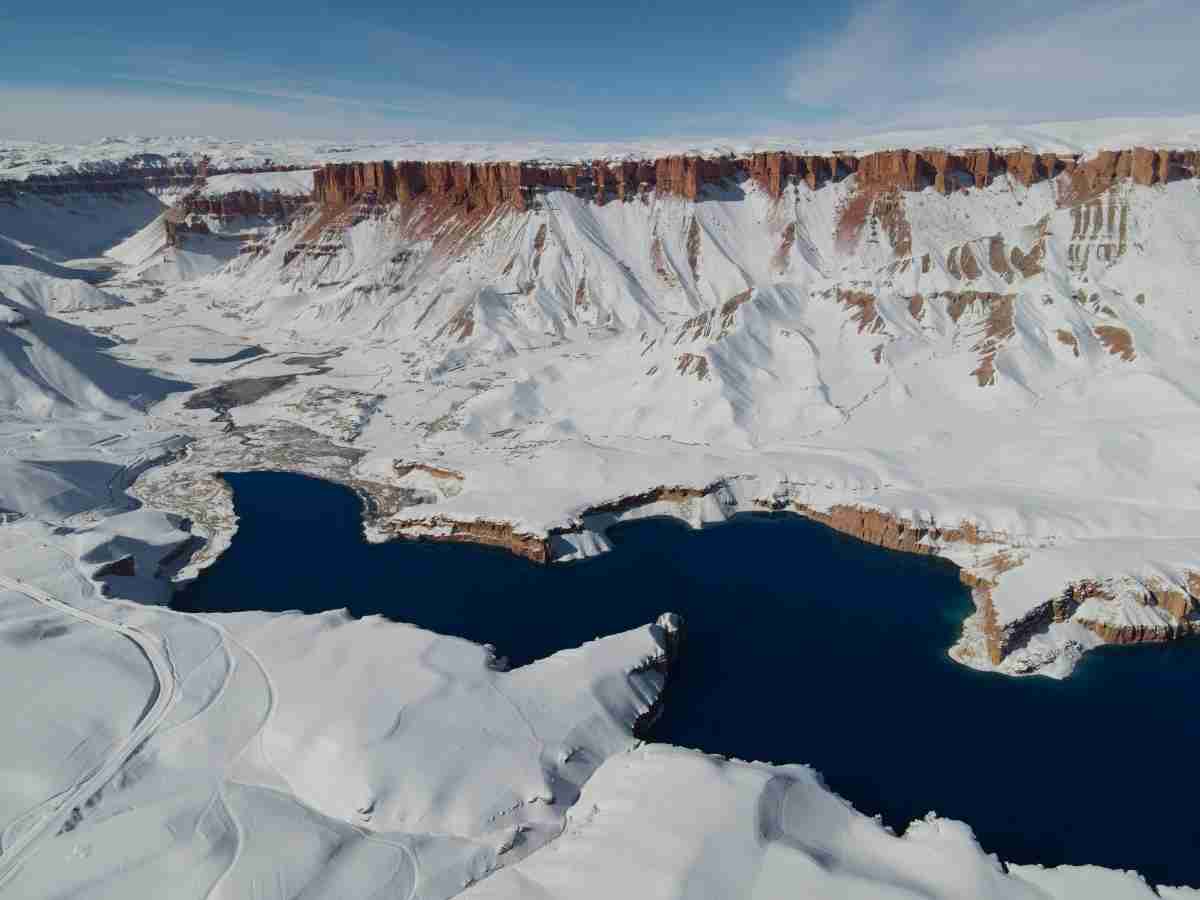
Pic Courtesy- Shoaib Ghyasi at Unsplash.com
(The views expressed are those of the author and do not represent views of CESCUBE.)

Abhijeet Nehra is a M.A. International Relations from University of Sheffield and has done his graduation in Global Affairs from Jindal School of International Affairs, O P Jindal Global University . He was research associate with CESCUBE.