LIVE DISPATCH
Loss and Damage Finance: From COP28 Pledges to Policy Architecture Extended Deterrence Under Strain: Credibility, Assurance, and the Stability-Instability Paradox in the Indo-Pacific Beyond Consultation: BIMSTEC's Emerging Role in Regional Intelligence and Security Cooperation Maritime India: Security, Trade, and Great Power Competition Between the Desert and the Savannah: Conflict and the Political Economy of Instability in the Sahel Beyond Ukraine: Understanding Putin's Vision of Russian Power The Politics of Ali Khamenei's Funeral Silicon Sovereignty: How Semiconductors Are Redrawing Global Power Hierarchies Operation Sindoor and the Changing Dynamics of India–Pakistan Security The Negative Impact of US–Iran War on the Pacific Region Generative AI, Labour Sovereignty, and the Geoeconomics of India's Service Economy BRICS Expansion and the Multipolar Moment: Opportunity or Strategic Contradiction? India's AI Diplomacy and the Future of Strategic Technologies Foot-Dragging as Feminism: Iran, South Korea, and the Ungovernable Body Lethal Autonomous Weapons Systems and the Governance Deficit: Challenges to International Humanitarian Law and Accountability Beyond Proximity: Why the UAE Occupies a Growing Place in Iran’s Strategic Calculus Great Power Rivalry and the Crisis of the United Nations Why Fiji Matters: The New Geopolitics of the Indo-Pacific Islands Ten Years After Brexit: Regret, Reform, or Reversal? The Long Shadow of 1953: Understanding the Iran–US Conflict Sports, Strategy and Statecraft of Mega Sporting Events as Geoeconomic Instruments: Qatar 2022 to Saudi Arabia 2034 Border Fencing and National security: India’s Strategy along the Bangladesh Border Hardening the Quad: From Strategic Dialogue to Operational Cooperation Lingering Effects of the Bush Doctrine on Contemporary US Foreign Policy The Maghreb of States: Identity, Sovereignty, and the Limits of Non-Interference India’s BRICS 2026 Chairmanship Navigating a tightrope Amidst the Chinese Geopolitical Rise Beyond the Battlefield: Understanding Unconventional Security Challenges in Contemporary Geopolitics The Control Paradox: How Proxy Warfare Enables Strategic Deniability While Constraining Strategic Control Trapped in Deterrence: Nuclear Stability and the Persistence of Conflict in South Asia The Return of Unipolarity? U.S Strategic Primacy and the Future of the Global Order Supply Chains and Complicity: The Role of Global Corporations in Forced Labour in Xinjiang The Distant Threat: Is Israel Constructing a Strategic Rival in Pakistan Island Militarisation and Techno-Diplomacy: Turkey’s Eastern Mediterranean Fault Lines Amid India-Greece Alignment India’s Security Scenario: An Assessment of its Continental and Maritime Challenges The Geopolitical Architecture of European Defence: Navigating NATO Synergies, Transatlantic Retrenchment, and the Hybrid Threat Landscape The Artemis Accords and the Future of Global Space Governance AI and the Securitization of Critical Infrastructure: Implications of India's AI Summit Beyond Rhetoric: Evaluating the Effectiveness of International Sanctions on China’s Treatment of Uyghur Muslims The Emerging Maritime Rivalry in the Western Indian Ocean: India’s Response to Extra-Regional Powers India's Maritime Grand Strategy on Trial : The IRIS Dena Incident and the Indian Ocean Question Loss and Damage Finance: From COP28 Pledges to Policy Architecture Extended Deterrence Under Strain: Credibility, Assurance, and the Stability-Instability Paradox in the Indo-Pacific Beyond Consultation: BIMSTEC's Emerging Role in Regional Intelligence and Security Cooperation Maritime India: Security, Trade, and Great Power Competition Between the Desert and the Savannah: Conflict and the Political Economy of Instability in the Sahel Beyond Ukraine: Understanding Putin's Vision of Russian Power The Politics of Ali Khamenei's Funeral Silicon Sovereignty: How Semiconductors Are Redrawing Global Power Hierarchies Operation Sindoor and the Changing Dynamics of India–Pakistan Security The Negative Impact of US–Iran War on the Pacific Region Generative AI, Labour Sovereignty, and the Geoeconomics of India's Service Economy BRICS Expansion and the Multipolar Moment: Opportunity or Strategic Contradiction? India's AI Diplomacy and the Future of Strategic Technologies Foot-Dragging as Feminism: Iran, South Korea, and the Ungovernable Body Lethal Autonomous Weapons Systems and the Governance Deficit: Challenges to International Humanitarian Law and Accountability Beyond Proximity: Why the UAE Occupies a Growing Place in Iran’s Strategic Calculus Great Power Rivalry and the Crisis of the United Nations Why Fiji Matters: The New Geopolitics of the Indo-Pacific Islands Ten Years After Brexit: Regret, Reform, or Reversal? The Long Shadow of 1953: Understanding the Iran–US Conflict Sports, Strategy and Statecraft of Mega Sporting Events as Geoeconomic Instruments: Qatar 2022 to Saudi Arabia 2034 Border Fencing and National security: India’s Strategy along the Bangladesh Border Hardening the Quad: From Strategic Dialogue to Operational Cooperation Lingering Effects of the Bush Doctrine on Contemporary US Foreign Policy The Maghreb of States: Identity, Sovereignty, and the Limits of Non-Interference India’s BRICS 2026 Chairmanship Navigating a tightrope Amidst the Chinese Geopolitical Rise Beyond the Battlefield: Understanding Unconventional Security Challenges in Contemporary Geopolitics The Control Paradox: How Proxy Warfare Enables Strategic Deniability While Constraining Strategic Control Trapped in Deterrence: Nuclear Stability and the Persistence of Conflict in South Asia The Return of Unipolarity? U.S Strategic Primacy and the Future of the Global Order Supply Chains and Complicity: The Role of Global Corporations in Forced Labour in Xinjiang The Distant Threat: Is Israel Constructing a Strategic Rival in Pakistan Island Militarisation and Techno-Diplomacy: Turkey’s Eastern Mediterranean Fault Lines Amid India-Greece Alignment India’s Security Scenario: An Assessment of its Continental and Maritime Challenges The Geopolitical Architecture of European Defence: Navigating NATO Synergies, Transatlantic Retrenchment, and the Hybrid Threat Landscape The Artemis Accords and the Future of Global Space Governance AI and the Securitization of Critical Infrastructure: Implications of India's AI Summit Beyond Rhetoric: Evaluating the Effectiveness of International Sanctions on China’s Treatment of Uyghur Muslims The Emerging Maritime Rivalry in the Western Indian Ocean: India’s Response to Extra-Regional Powers India's Maritime Grand Strategy on Trial : The IRIS Dena Incident and the Indian Ocean Question
ADVERTISEMENT
Business March 18, 2020 2184 Reads

ASEAN 2020: Rescheduling the 36th ASEAN Summit?
V
By Vo Xuan Vinh
Author • Centre for Security & Strategic Studies
ASEAN 2020: Rescheduling the 36th ASEAN Summit?
Share Analysis:
EXECUTIVE SUMMARY & STRATEGIC TAKEAWAYS

 by Dr. Vo Xuan Vinh Having a look at the timeline of ASEAN activities in 2020, there are a lot of events will be held. As the Chairman of ASEAN, Vietnam would be hosting more than 300 meetings this year. Some other events are schedule...

ADVERTISEMENT

Rescheduling the 36th ASEAN summit

Vietnam is now in the second phase of combating SARS-CoV-2 pandemic after the 17th case was confirmed on March 6, 2020. Until March 18, 2020, there are 68 SARS-CoV-2 infected cases in Vietnam, 16 out of them were successfully cured. Importantly, except Laos and Myanmar, other ASEAN member states have noted that the positive cases are on the rise. In Malaysia, the government-imposed movement control order started in March 17 after two of the 673 positive cases died. The positive cases have been on the rise in the Philippines, reached nearly 200 cases, 14 of them died. In March 17, Indonesia extends SARS-CoV-2 emergency to May 29 as cases rise to 172. Cambodia has announced a ban on the entry of foreigners from Italy, Germany, Spain, France and the US for 30 days. Indonesia stated to suspend its visa exemption policy for all countries for one month and expand restrictions for people with a history of travel to some of the world’s countries hardest hit by the coronavirus. Laos and Myanmar have also posed strict measures for SARS-CoV-2 containment.

As scheduled, the 36th ASEAN summit meeting, the 45th ASEAN-New Zealand Commemorative summit meeting and other related meetings will be held in the late first and early second weeks of April. There are 15 meetings will also be commenced in the framework of the 36th ASEAN summit meeting. In April only, there are more than 40 events will be held. Those indicators show that there will be a large number of officials and staffs from ASEAN countries and New Zealand gathering. Obviously, it is difficult for ASEAN member states to manage the domestic situation caused by SARS-CoV-2 pandemic to participate in the meetings. It is possible that there will be some ASEAN leaders who will be absent. If the summit is organised as scheduled, there will be risks for Vietnam to prevent the pandemic from further spreading. Last month, the United States delayed special ASEAN-US summit scheduled to take place in Las Vegas in March due to fears of the virus.

In this context, it will be wise if Vietnam reschedules to organise the 36th ASEAN summit meetings. Instead of commencing the summit in April, it is more suitable if the summit is held in the late July or in early August 2020. At that time, ASEAN member states having SARS-CoV-2 positive cases could control their epidemic situation. Instead of sharing resources for multiple tasks in short period, Vietnam in the next several months should devote more efforts to completely control the pandemic, facilitating the summit held in the late July or early August. In addition, the dialogues between ASEAN and its dialogue partners, and ASEAN Regional Forum meeting scheduled to be held in the late March should also be changed. ASEAN should also consider to delay or cancel some small meetings to prevent virus from spreading. It is also necessary to consider to combine the 36th and the 37th summits as Laos did in 2016 if pandemic control situation does not improve in most of ASEAN countries until July and August. In that situation, the 36th and 37th ASEAN Summits will be held in October or November this year.

An ASEAN summit annually?

In recently years, there are comments arguing that ASEAN is just a ‘talk shop’ that merely provides venues where ministers and leaders from countries as members of ASEAN and ASEAN-led mechanisms such as ASEAN Regional Forum, East Asia Summit, ASEAN Defense Ministers’ Meeting Plus, Expanded ASEAN Maritime Forum… join together to exchange views on regional security and economic issues. It is undeniable that the ASEAN summit is an important avenue for global leaders to meet and discuss issues impact the region. ASEAN has played an important role in maintaining peace, stability, security and prosperity not only in Southeast Asia but in the Asia-Pacific region. Two summits organised in one year are understood to meet the increasingly complicated demands of security and development in the region and beyond. However, more than 300 events that a rotation chairman of ASEAN must organise in one year is too many. A large amount of finance, labour force, and time are deployed for the mission. Retrospect, prior to 2007, there was only an ASEAN summit a year. As mentioned above, Laos combined the 36th and 37th summits in one event in September 2016. It is good if ASEAN member states agree to consider to organise one ASEAN summit per year. In the wake of the Fourth Industrial Revolution (IR4.0), online meetings should be considered to organise to save time, travel expenses and labour force.


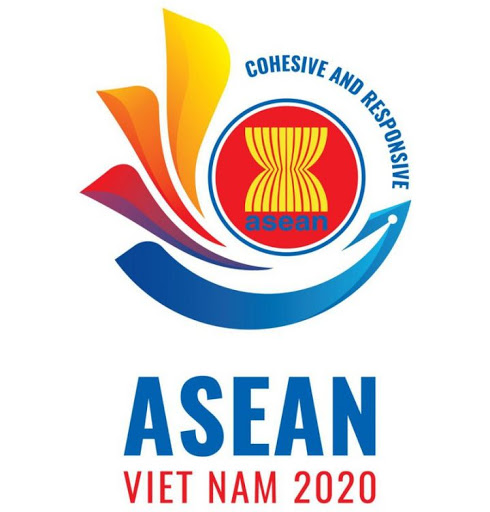
(Image Courtesy-ASEAN Vietnam 2020 website)


(Dr. Vo Xuan Vinh is Deputy Director General, Institute for Southeast Asian Studies, Vietnam Academy of Social Sciences. The views are those of the author.)


V
About Vo Xuan Vinh →

Dr Vo Xuan Vinh is the Deputy Director General, Institute for Southeast Asian Studies (ISEAS Vietnam), Vietnam Academy of Social Sciences (VASS), Hanoi. He is also the Director of Centre for Australia and New Zealand Studies under ISEAS Vietnam. He successfully defenced his PhD thesis on ASEAN in India’s Look East Policy in 2011. Dr. Vo Xuan Vinh has conducted research on various fields of Southeast Asia studies,mostly on politics, security and international relations, and India’s Look/Act East Policy. His fields of specialization include politics and international relations in Indo Pacific, maritime security in Southeast Asia, politics of Thailand and Myanmar, and India’s Look/Act East Policy. He has contributed research papers and conference papers for Indian Council of World Affairs, Institute for Defence Studies and Analyses, Maritime Affairs, Journal of Indian Ocean Studies, World Focus, … He is now leading two research projects, one on India-China Strategic Rivalry in Southeast Asia, and the other on Australia-ASEAN Relations.
ADVERTISEMENT

Related Strategic Analysis