Beijing Winter Olympics and the diplomatic boycott of the games
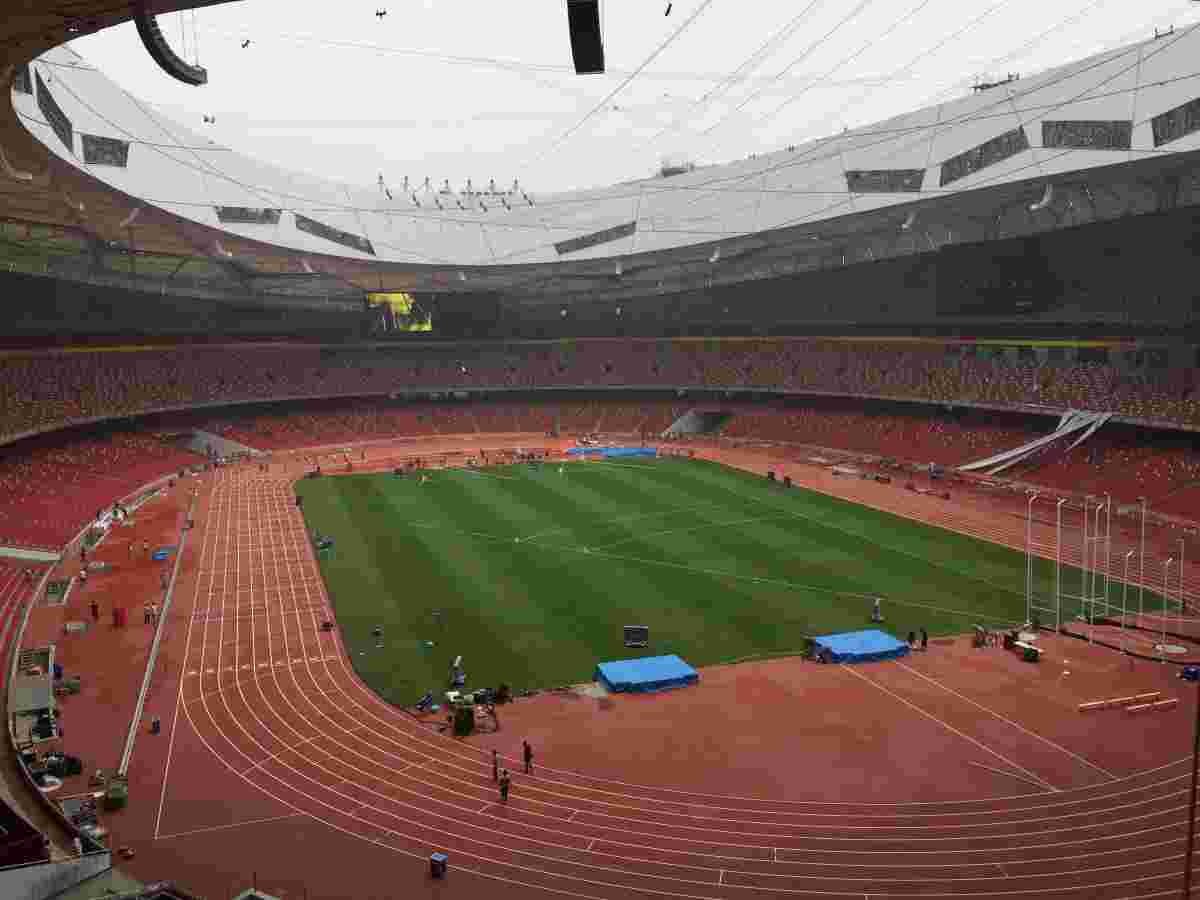
Beijing Winter Olympics was held between 4 to 20th February 2022. Olympics have always been political. It is a platform that attracts one of the largest crowd and media attention from various nations. Hence, it allows concerned voices to be...
The Olympics represent one of the world’s oldest symbols of cooperation and sportsmanship, yet the athletic competition also stokes nationalistic passions and informs identity formation.[1]
Olympic events have some of the major contentions between states to protest against policies. And not just states over the years with globalization non-state actors have continuously used the Olympics’ platform to raise their voices against an issue and draw attention from the media as well as the many high-level dignitaries that attend the event. Hence, giving them a chance for larger exposure and building more alliances. For example, the Greenpeace protests in Montreal to protest against the Trans Mountain pipeline in 2018 is one of the many.[2]
Boycott as a means of showing state contention.
A diplomatic boycott means that no state leader will represent the state in the opening and closing ceremony at the Olympics. It does not ban players from participating in the events. Like the First Lady Jill Biden led the U.S. delegation to the 2020 Tokyo Summer Olympics, Vice President Mike Pence and Mrs Pence represented the United States at the 2018 Pyeongchang Winter Games in South Korea during the Trump administration, First Lady Michelle Obama led the delegation to the 2012 London Summer Games, and President George W. Bush attended the 2008 Beijing Summer Games.[3] Majorly Olympics have seen political protests over states’ contentions. For example, the Nazi Olympics of 1936 were boycotted by many countries such as the United States. Boycotting Olympic Games by a state or group of states are used to highlight the issue. Which also helps in domesticizing the issue. The symbolic meaning that the Olympics carry makes it an important platform to bring worldwide attention. Here were are talking of states like China with restricted media, and the US condemning the event in the 2008 Beijing summer Olympics and now the 2022 winter Olympics to highlight China’s abysmal human rights records in the autonomous region of Xinjiang, Tibet and Hong Kong. There are also other examples where states have used boycott mechanisms to show their dissent to a particular issue or against a nation. The collective boycott of the Montreal Olympics by more than 20 African nations as they refused to ban New Zealand. New Zealand had played a rugby game with racially segregated South Africa some months earlier. To protest against apartheid African nations boycotted the Olympics. South Africa which practised apartheid was banned up till 1992.
The cold war rivalry was also in full show in the Olympics when during the 1980 winter Olympics in Moscow, US president Jimmy Carter started a campaign to boycott Moscow Olympics in protest against the Russian invasion of Afghanistan. The Soviet Union did the same during the 1984 summer Olympics in California, Los Angeles.
What makes Olympics the platform for showcasing power politics?
Firstly, Olympics is a high-level event. All high dignitaries, heads of state often attend the opening ceremony. People from all nationalities and backgrounds and ethnicities attend the event. It has the privilege of worldwide media coverage and is an audience to tourists from many countries. This helps in raising the issue, awareness across the globe, involving more people and thus increasing the network.
Secondly, Olympics have a symbolic meaning. Here we ask what does Olympics represents. The coming together of people from various continents consisting of several nationalities, ethnicities and cultures. The universalism and the humanitarian context of Olympics make it a crucial platform for showcasing dissent against powerful institutions.
Boycott of the Winter Olympics at Beijing 2022
The US and China are involved in power politics since the rise of China started challenging the US-led liberal world order. With the boycott of the winter Olympics 2022, US followed by Australia, Canada and UK highlighted the issue of gross human rights violation in Xinjiang Autonomous Region of China. India and China who were recently engaged in clashes along LAC (Line of Actual Control) of the Indo-China border also saw tensions in the torch-bearing ceremony when China fielded a soldier who fought in the Galwan Valley incident as its torchbearer. India also called for a full diplomatic boycott after that. China’s Ministry of Foreign Affairs spokesperson responded to the boycott as “[The boycott] seriously violates the principle of political neutrality of sports established by the Olympic Charter and runs counter to the Olympic motto 'more united' ... The U.S. will pay a price for its practices. You may stay tuned for follow-ups.”[4] His statement indicates a sharp division between US and China. A sharp retaliatory note that US will pay the price is yet another example of China’s wolf warrior diplomacy. China has accused US of cooking lies and politicizing the games. This war of words has marked the competition between US and China, since the volatile Alaska summit.
If we look at China’s history of Olympics boycott, Beijing has used the same tools to express dissent over the years to the international community. China boycotted the Summer Olympics for almost three decades from 1952 to 1980 over questions of Taiwan’s participation. It restricted tourism to South Korea’s 2018 Pyeongchang Winter Olympics over a missile defence controversy.[5] China has also not properly explained the disappearance of tennis star Peng Shuai after she accused a state officer of sexual assault. Due to intense pressure from the international community and the tennis association, it released a video of Peng Shuai in a safe condition. But the video like other previous videos of influential people like Jack Ma reeks of compulsion. The diplomatic boycott doesn’t cost China much as the events went smoothly with participation from many countries. US allies that did not boycott the election include France, South Korea, Germany and Italy. Whereas Japan did not announce a boycott but refused to send official delegates.
Conclusion
The diplomatic boycott is only a show measure and will not deter China. US is in a perplexing situation. The China-US relationship was built on mutual benefit and a win-win situation. Where US produced technology and China manufactures the product. China has now risen to become the manufacturing powerhouse of the world and an integral part of the world’s supply chains. It is also linked closely with US economies. The political war of words in a platform like Olympics indicate rising completion between US and China and US’s moves to change the narratives since perceptions matter in International Politics, not just economic and military might.
Notes
[1] Nelson, Travis and M. Patrick Cottrell (2011), “Not just the Games? Power,
protest and politics at the Olympics”, European Journal of International Relations, Vol: 17(4) 729-753.
URL: http://ejt.sagepub.com/content/17/4/729
[2] By Staff, Canada Press (2018), “Greenpeace members climb Olympic Stadium tower in Montreal to protest Trans Mountain”, Global News, 19 July 2018. URL:https://globalnews.ca/news/4340505/greenpeace-members-climbing-olympic-stadium-tower-in-montreal/
[3] Victor, Cha (2022), “The Biden Boycott of the 2022 Beijing Winter Olympics”, Center for Strategic and International Studies, 18 January 2022. URL:https://www.csis.org/analysis/biden-boycott-2022-beijing-winter-olympics
[4]McCarriston, Shanna (2021), “China responds after U.S. announces diplomatic boycott of 2022 Beijing Olympics”, CBS Sports, 7 December 2021. URL: https://www.cbssports.com/olympics/news/china-responds-after-u-s-announces-diplomatic-boycott-of-2022-beijing-olympics/
[5] Victor, Cha (2022), “The Biden Boycott of the 2022 Beijing Winter Olympics”, Center for Strategic and International Studies, 18 January 2022. URL:https://www.csis.org/analysis/biden-boycott-2022-beijing-winter-olympics
Pic Courtsey-Pankaj Jha
(The views expressed are those of the author and do not represent views of CESCUBE.)

Mahima has studied politics with specialization in international politics at Jawaharlal Nehru University. Research interests include security studies, Chinese history and politics and international political economy.