LIVE DISPATCH
Cuba’s Economic Crisis and Strategic Relevance: A Peripheral State in Renewed Great Power Competition Trapped in Deterrence: Nuclear Stability and the Persistence of Conflict in South Asia Loss and Damage Finance: From COP28 Pledges to Policy Architecture Extended Deterrence Under Strain: Credibility, Assurance, and the Stability-Instability Paradox in the Indo-Pacific Beyond Consultation: BIMSTEC's Emerging Role in Regional Intelligence and Security Cooperation Maritime India: Security, Trade, and Great Power Competition Between the Desert and the Savannah: Conflict and the Political Economy of Instability in the Sahel Beyond Ukraine: Understanding Putin's Vision of Russian Power The Politics of Ali Khamenei's Funeral Silicon Sovereignty: How Semiconductors Are Redrawing Global Power Hierarchies Operation Sindoor and the Changing Dynamics of India–Pakistan Security The Negative Impact of US–Iran War on the Pacific Region Generative AI, Labour Sovereignty, and the Geoeconomics of India's Service Economy BRICS Expansion and the Multipolar Moment: Opportunity or Strategic Contradiction? India's AI Diplomacy and the Future of Strategic Technologies Foot-Dragging as Feminism: Iran, South Korea, and the Ungovernable Body Lethal Autonomous Weapons Systems and the Governance Deficit: Challenges to International Humanitarian Law and Accountability Beyond Proximity: Why the UAE Occupies a Growing Place in Iran’s Strategic Calculus Great Power Rivalry and the Crisis of the United Nations Why Fiji Matters: The New Geopolitics of the Indo-Pacific Islands Ten Years After Brexit: Regret, Reform, or Reversal? The Long Shadow of 1953: Understanding the Iran–US Conflict Sports, Strategy and Statecraft of Mega Sporting Events as Geoeconomic Instruments: Qatar 2022 to Saudi Arabia 2034 Border Fencing and National security: India’s Strategy along the Bangladesh Border Hardening the Quad: From Strategic Dialogue to Operational Cooperation Lingering Effects of the Bush Doctrine on Contemporary US Foreign Policy The Maghreb of States: Identity, Sovereignty, and the Limits of Non-Interference India’s BRICS 2026 Chairmanship Navigating a tightrope Amidst the Chinese Geopolitical Rise Beyond the Battlefield: Understanding Unconventional Security Challenges in Contemporary Geopolitics The Control Paradox: How Proxy Warfare Enables Strategic Deniability While Constraining Strategic Control The Return of Unipolarity? U.S Strategic Primacy and the Future of the Global Order Supply Chains and Complicity: The Role of Global Corporations in Forced Labour in Xinjiang The Distant Threat: Is Israel Constructing a Strategic Rival in Pakistan Island Militarisation and Techno-Diplomacy: Turkey’s Eastern Mediterranean Fault Lines Amid India-Greece Alignment India’s Security Scenario: An Assessment of its Continental and Maritime Challenges The Geopolitical Architecture of European Defence: Navigating NATO Synergies, Transatlantic Retrenchment, and the Hybrid Threat Landscape The Artemis Accords and the Future of Global Space Governance AI and the Securitization of Critical Infrastructure: Implications of India's AI Summit Beyond Rhetoric: Evaluating the Effectiveness of International Sanctions on China’s Treatment of Uyghur Muslims The Emerging Maritime Rivalry in the Western Indian Ocean: India’s Response to Extra-Regional Powers Cuba’s Economic Crisis and Strategic Relevance: A Peripheral State in Renewed Great Power Competition Trapped in Deterrence: Nuclear Stability and the Persistence of Conflict in South Asia Loss and Damage Finance: From COP28 Pledges to Policy Architecture Extended Deterrence Under Strain: Credibility, Assurance, and the Stability-Instability Paradox in the Indo-Pacific Beyond Consultation: BIMSTEC's Emerging Role in Regional Intelligence and Security Cooperation Maritime India: Security, Trade, and Great Power Competition Between the Desert and the Savannah: Conflict and the Political Economy of Instability in the Sahel Beyond Ukraine: Understanding Putin's Vision of Russian Power The Politics of Ali Khamenei's Funeral Silicon Sovereignty: How Semiconductors Are Redrawing Global Power Hierarchies Operation Sindoor and the Changing Dynamics of India–Pakistan Security The Negative Impact of US–Iran War on the Pacific Region Generative AI, Labour Sovereignty, and the Geoeconomics of India's Service Economy BRICS Expansion and the Multipolar Moment: Opportunity or Strategic Contradiction? India's AI Diplomacy and the Future of Strategic Technologies Foot-Dragging as Feminism: Iran, South Korea, and the Ungovernable Body Lethal Autonomous Weapons Systems and the Governance Deficit: Challenges to International Humanitarian Law and Accountability Beyond Proximity: Why the UAE Occupies a Growing Place in Iran’s Strategic Calculus Great Power Rivalry and the Crisis of the United Nations Why Fiji Matters: The New Geopolitics of the Indo-Pacific Islands Ten Years After Brexit: Regret, Reform, or Reversal? The Long Shadow of 1953: Understanding the Iran–US Conflict Sports, Strategy and Statecraft of Mega Sporting Events as Geoeconomic Instruments: Qatar 2022 to Saudi Arabia 2034 Border Fencing and National security: India’s Strategy along the Bangladesh Border Hardening the Quad: From Strategic Dialogue to Operational Cooperation Lingering Effects of the Bush Doctrine on Contemporary US Foreign Policy The Maghreb of States: Identity, Sovereignty, and the Limits of Non-Interference India’s BRICS 2026 Chairmanship Navigating a tightrope Amidst the Chinese Geopolitical Rise Beyond the Battlefield: Understanding Unconventional Security Challenges in Contemporary Geopolitics The Control Paradox: How Proxy Warfare Enables Strategic Deniability While Constraining Strategic Control The Return of Unipolarity? U.S Strategic Primacy and the Future of the Global Order Supply Chains and Complicity: The Role of Global Corporations in Forced Labour in Xinjiang The Distant Threat: Is Israel Constructing a Strategic Rival in Pakistan Island Militarisation and Techno-Diplomacy: Turkey’s Eastern Mediterranean Fault Lines Amid India-Greece Alignment India’s Security Scenario: An Assessment of its Continental and Maritime Challenges The Geopolitical Architecture of European Defence: Navigating NATO Synergies, Transatlantic Retrenchment, and the Hybrid Threat Landscape The Artemis Accords and the Future of Global Space Governance AI and the Securitization of Critical Infrastructure: Implications of India's AI Summit Beyond Rhetoric: Evaluating the Effectiveness of International Sanctions on China’s Treatment of Uyghur Muslims The Emerging Maritime Rivalry in the Western Indian Ocean: India’s Response to Extra-Regional Powers
ADVERTISEMENT
Military August 10, 2020 2712 Reads

Belligerence against the Dragon: Quad Nations strategy on growing Chinese Influence
S
By Shreya Johar
Author • Centre for Security & Strategic Studies
Belligerence against the Dragon: Quad Nations strategy on growing Chinese Influence
Share Analysis:
EXECUTIVE SUMMARY & STRATEGIC TAKEAWAYS

With the increasing impact of the ‘dragon virus’, cases rising everyday have decelerated the countries in terms of their health policies and measures, political stabilisation and economic growth. What even remains the biggest threat is Chin...

ADVERTISEMENT

Post pandemic events have made the Chinese State more cautious than ever by being more vigilant of its assets in the region. However, recent reports show Chinese electronic surveillance aircrafts flying in the area where US and Japanese forces were conducting bilateral joint naval exercises in South China Sea. China has long been involved in unsolicited activities since decades. Its proliferation and undercover strategies have made its neighbours and other powers more vigilant of its next conquest.

The Indo-Pacific region has recently been an area of contestation among major regions of the world. It is particularly important to Japan, Australia, US, India, ASEAN members and particularly China. This region is of significance due to its global trade and supply of energy with over two-thirds of the world trade that passes through this area and in specific to counter Chinese growth. Though China recognizes this collaboration as an ‘Anti-China’ pact to transform the hegemonic power struggle in the South-East Asia and specifically in the Indo-Pacific region. The Quad short for ‘Quadrilateral Security Dialogue’ is one its kind, formed in 2007 by the Japanese President Shinzo Abe. His ‘Confluence of the two Seas’ speech laid the foundation of this grouping. He sought to formulate and hold several exercises through dialogues that could reshape alliances as well as partnerships that could respond to China’s rise. Modi and Abe have had several talks on the ‘Indo-Pacific strategy’ which reflects the interests of US as well. During the Obama administration, US corresponded to this dialogue as a broadening policy of ‘Asia-Pacific Rebalancing Strategy’. However, the Quad was dissolved in early 2008 following the Rudd Government elections and felt it did not suit its strategic outlook by going against China. Although ten years and a transition of governments have particularly raised concerns about Chinese intervention and changed relations amongst major stakeholders about the importance of Quad 2.0.

This partnership remains one of the most critical power pacts with nations like Japan being endangered in the region by rising concerns of Chinese economic and military capabilities. The East China Sea is its only source of trade and a medium for exchange of resources which is in peril by Chinese intervention. India wants to be an attentive partner in the South East Asian politics and become an undeniable member in international relations. Blunting China’s role has been the most important strategy of US and in collaboration with Australia, it could enhance US-Australia trade relations and give Australia an unabated influence in the South East Asian relations. Countries like Indonesia and Singapore are supporters of this dialogue, however, most of the South East Asian countries are sceptical of the vague stance of US within the region considering the costs that it may reduce its share of facilitating heavy military force as most of its forces are deployed in the Middle East and due to its presence there, the Asian countries fear going against China.

The Quad ensures and has a goal of forming a informal military alliance which is similar to NATO while China believes it as vexing and divisive in nature. Secondly, it is a formation that acts against Chinese regional hegemony and serves in the national interest of the quad nations. As America initiated a ‘Pivot to Asia’ to ‘Asia Reassurance Initiative Act’, these policies work on a long-term strategic vision which is inclusive and focused on US policy towards the Indo-Pacific region while investing to counter Chinese economic plans. The Trilateral Malabar Naval Exercises which involve JAI (Japan, America and India) is a permanent partnership of these nations to strengthen defence ties formed in 1992. With recent Chinese aggression in Ladakh, South China Sea and Strait of Taiwan, this partnership will act as a principal force against China.

Lately with China developing a blue water navy called the ‘PLAN’ (People’s Liberation Army Navy), it has asserted an inexorable maritime superiority in the South China Sea, China also seems to be making big strides in achieving its economic plans like the BRI which is a multimillion dollar project under progress. The string of Pearls has already benefited China with its potential interest in the Indian Ocean Region while creating a network of SLOCs (Sea Lines of Communications) that stretch from the Chinese mainland to one of its chief ports - The Port of Sudan that lies in the Horn of Africa. Therefore, while one talks about the Chinese strategic ability being transpired in world politics, no one can be sure of what the communist regime has kept in its loop. With claims reporting the Wuhan virus to be a bio warfare, it is highly important to attenuate Chinese capabilities within the region and the world at large. The geopolitical and economic rivalry that these quad nations share against China will not only expand this multilateral dialogue but will work in the best interest of achieving more comprehensive objectives. It will garner support in areas like defence, infrastructure, Indo-Pacific, development and joint operations in the future.


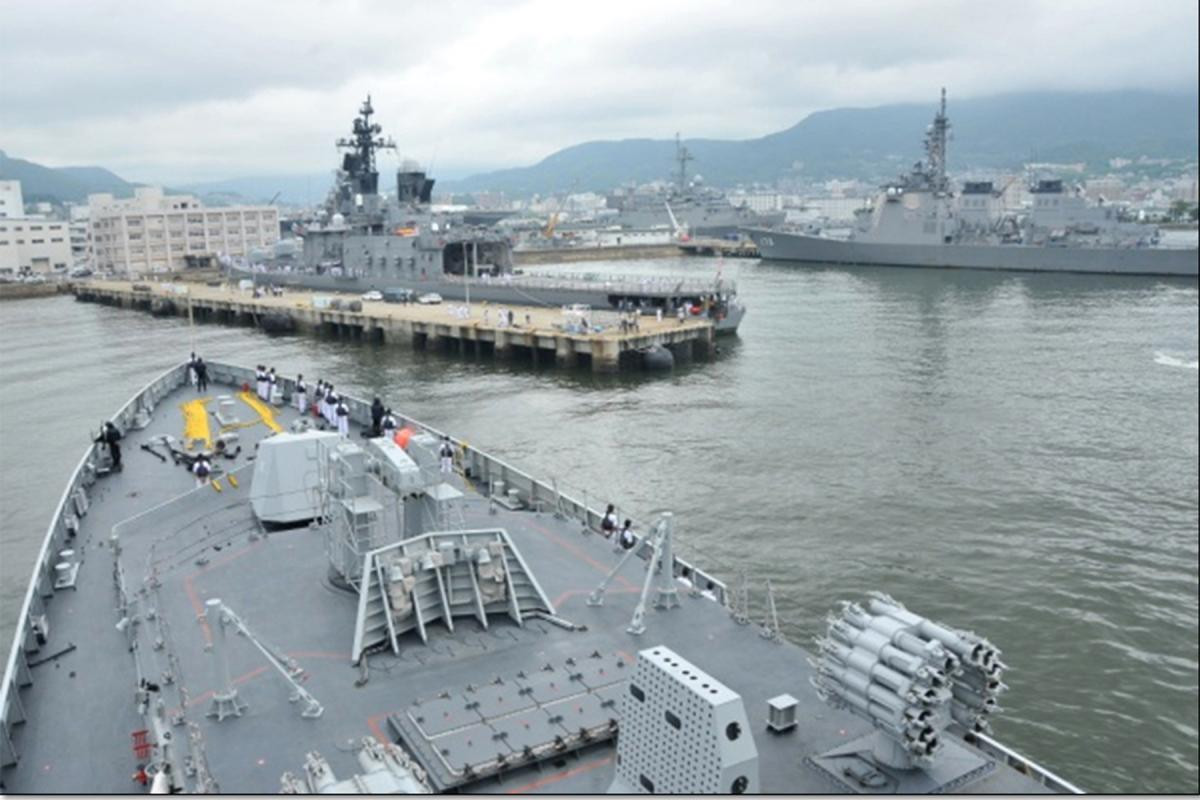
Pic Courtesy-Indian Navy @indiannavy.nic.in


(The views expressed are personal)

Shreya Johar
About Shreya Johar →

Shreya Johar, is a third year, undergraduate student at O.P Jindal Global University pursuing B.A (Hons) Global Affairs. Being from the forces background one got intrigued with subjects pertaining to defence and military strategy, South Asian and South East Asian politics and security, Maritime affairs and conflict and peace studies. While in college one interned for Defstrat, a defence magazine which further kindled my interest in the constantly changing military and security scenario globally given the complexities arising through constantly shifting political climate around the world. In a shrinking world, where national interests seem to dominate international requirements it is difficult to identify singular independent international interests. Studying subjects that relate to the ever-changing structure of interconnected communities, strategizing today’s requirement is of grave importance. She is research Intern with CESCUBE

ADVERTISEMENT

Related Strategic Analysis