Brazil’s economy during COVID times
Brazil, the largest economy in the South American continent and the 8th largest economy in the world was already struggling before it was battered by the coronavirus outbreak. COVID-19 a black swan event which is transforming the world econ...
The first wave:
In March 2020 when countries around the world began imposing lockdowns as covid cases were rising, President Bolsonaro’s response was astonishing as he heavily downplayed the virus by saying “90% of us will have no symptoms if contaminated”. He branded the mayors and governors who advocated for lockdowns as criminals saying, “what a few mayors and governors are doing is a crime, they are destroying Brazil”.
On 16th April 2020, the right-wing President fired his health minister Luiz Henrique Mandetta over differences of opinion with regards to policy response meant to tackle covid-19. Mr Mandetta urged people to wear mask, practice social distancing and stay indoors while Mr Bolsonaro who referred to the virus as a “little flu”, refused to wear mask and practice social distancing.
The President’s response was dumbfounded to say the least as he not only criticized the governors who imposed lockdowns as “dictatorial”, but he also attended an anti-lockdown protest addressing a crowd of hundreds of people while refusing to wear mask, gloves and coughing in between.
He argued that the lockdown measures be lifted as they were damaging the economy and the borders should be reopened. President Bolsonaro’s administration announced the plans to inject as much as $30 billion to combat the coronavirus in the form of social assistance payments, deferring taxes and enhancing access to severance funds.
As far as the economy is concerned, GDP contracted by 1.5 percent in the first quarter, first contraction since 2016 as services tanked by 1.6 percent, transport by 2.4 percent, industry by 1.4 percent. The second quarter where no national lockdown was imposed but restrictive measures were imposed by some states, the country contracted by a record 9.7 percent and the economy entered recession. Services shrank by 9.7 percent, transport 19.3 percent, industry 12.3 percent. Overall, the economic impact during the second quarter was more devastating as covid cases arose at the end of the first quarter and were high for most of the second quarter.
Post the first wave:
Brazilian economy expanded on the back of easing of containment measures and the fiscal stimulus which was announced in March 2020. GDP expanded by a record 7.7 percent in the third quarter although it fell below the expectations of 9 percent. Services increased by 6.3 percent, transport and storage by 12.5 percent and industry by 14.8 percent.
In the fourth quarter the rate of expansion slowed as GDP grew by 3.2 percent mainly due to increase in services which rose by 2.7 percent, transport and storage by 6.2 percent and industry expanded by 1.2 percent. Overall, the last two quarters of the year posted positive-growth rate after the economy entered recession due to consecutive negative quarters. The South American economy shrank by 4.1 percent due to the pandemic, but it did beat the expectations of world bank and the international monetary fund which predicted shrinkage by 8 and 9.1 percent respectively.
Brazil did better economically than the neighbours but if we talk about the number of covid cases and deaths then the nation is worst affected in the region. The country was able to protect the economy with stimulus packages and avoiding nationwide lockdowns although there were lockdowns in some states whose governors disagreed with President Bolsonaro.
Second wave:
The South American nation was recovering in 2021 as it rose 1.7 percent in February 2021 due to higher tax collection, increase in jobs. The second covid wave began in January and continued till April when the cases slowed down with business closures and stay at home order at the regional level. With the rise in cases business were forced to close and people were asked to stay at home which resulted in GDP contracting by 1.59 percent in March, although the GDP growth rate for the quarter was 1.2 percent better than analyst expectations of 0.7 percent. Here in the industry rose by 0.7 percent, agribusiness by 5.7 percent and the service sector with a meagre 0.1 percent increase.
This conveys that the impact of the second covid wave on the economy was not as bad as was initially feared. Brasilia was able to steer clear from the negative impact on the economy by circumventing nationwide lockdown despite high death rates and a health system which was on the verge of collapsing during the second wave.
Cases came down in April which led Rio de Janeiro to lift the night curfew, which was imposed during the second wave, Sao Paulo permitted opening-up of retail stores, restaurants, parks, clubs, and entertainment businesses. Brasilia allowed nonessential businesses to open, and Minas Gerais lifted the night curfew in the state.
Third wave:
The third wave began in first week of June 2021 as it passed the grim milestone of 500,000 lives lost to the coronavirus. Few states extended lockdowns and they were:
Sao Paulo: On 17th June, Sao Paulo governor Joao Doria announced extension of night-time curfew and other restrictive measures till 30th June. A week later, on 24th June restrictions were extended till 15th July in the bid to control covid cases.
Bahia: Governor Rui Costa announced on 16th June that night curfew would continue till 29th June and public gatherings were also banned. On 1st July, a new announcement was made stating that the night curfew was extended till 8th July.
Brasilia: Governor Ibaneis Rocha announced on 16th June that night curfew will be in place but allowed nonessential businesses to open with limited capacity. The governor through a new announcement on 1st July reduced nigh curfew hours and increased hours for nonessential businesses.
Parana: Governor Ratinho Junior announced on 16th June that night curfew will be in place, allowed business to open with limited capacity but public gatherings as well as cinemas were banned. 1st July onwards night curfew hours were reduced, and businesses were now allowed to remain open on Sundays.
Rio de Janeiro: Governor Claudio Castro announced on 16th June that businesses and retail stores could operate with limited capacity and restrictions would continue till 28th June. 1st July announcement said previous rules will be extended till 12th July. The opening up of the economy is helping the country as economic forecast for the year was increased from 5.18 to 5.26 percent.
Final Viewpoint:
Brazil under President Bolsonaro did one thing right which is keep the economy going despite the coronavirus pandemic. It did not impose a nationwide lockdown no matter how much the cases rose or hospitals jampacked with positive patients. This led to two things-one being that the nation is one of the worst affected countries in the world and second, it was able to keep the economy afloat.
So Brazilian economy contracted by 4.6 percent year on year which was not as bad as neighbouring Argentina which shrank by 9.9 percent. The cost of keeping the economy open is massive as half a million people died in the country which goes on to showcase that for the President keeping the economy going was a priority rather than keeping people safe.
End Notes
1) https://www.thebalance.com/brazil-s-economy-3306343
2) https://www.reuters.com/article/us-health-coronavirus-brazil-idUSKBN21C1QM
3) https://www.bbc.com/news/world-latin-america-52316150
4) https://www.bbc.com/news/world-latin-america-52351636
5) https://tradingeconomics.com/brazil/gdp-growth#:~:text=GDP%20Growth%20Rate%20in%20Brazil,the%20second%20quarter%20of%202020.
6) https://www.focus-economics.com/countries/brazil/news/gdp/economy-bounces-back-at-record-pace-in-q3
7) https://www.reuters.com/article/us-brazil-economy-budget-idUSKBN213411
8) https://www.aljazeera.com/economy/2021/3/4/brazils-gdp-shrank-4-1-percent-in-2020-worst-drop-in-decades#:~:text=News%20%7C%20Al%20Jazeera-,Brazil's%20GDP%20drops%204.1%20percent%20in%202020%2C%20beating%20gloomier%20outlooks,percent%20and%209.1%20percent%2C%20respectively.
9) https://www.reuters.com/business/brazil-economic-activity-surges-february-before-covid-19-second-wave-impact-2021-04-19/
10) https://www.bloomberg.com/news/articles/2021-05-13/brazil-economy-outperforms-expectations-during-second-covid-wave
11) https://brazilian.report/liveblog/2021/06/01/brazil-gdp-pre-pandemic-levels/
12) https://www.ndtv.com/world-news/coronavirus-brazil-crosses-500-000-covid-deaths-says-health-minister-marcelo-queiroga-2467913
13) https://www.newindianexpress.com/world/2021/mar/11/fatal-second-wave-brazils-daily-covid-19-death-toll-tops-2000-for-first-time-2275162.html
14) https://www.garda.com/crisis24/news-alerts/470051/brazil-authorities-in-some-states-ease-covid-19-restrictions-lift-curfews-as-of-april-21-update-33
15) https://www.reuters.com/world/americas/brazil-cenbank-ups-2021-gdp-growth-forecast-46-2021-06-24/
16) https://www.deseret.com/coronavirus/2021/6/24/22548695/brazil-covid-outbreak-reaches-third-wave
17) https://timesofindia.indiatimes.com/world/rest-of-world/brazil-braces-for-third-wave-of-covid-19/articleshow/83328494.cms
18) https://global-monitoring.com/gm/page/events/epidemic-0001981.PDJ4eRFDiciT.html?lang=en
19) https://www.garda.com/crisis24/news-alerts/491506/brazil-authorities-maintain-domestic-covid-19-related-restrictions-in-most-states-as-of-june-16-update-37
20) https://www.macaubusiness.com/brazilian-market-upgrades-2021-gdp-growth-forecast-to-5-26-pct/
21) https://www.bbc.com/news/world-latin-america-57733540
22) https://www.batimes.com.ar/news/economy/official-argentinas-economy-shrank-99-in-2020-confirms-indec.phtml
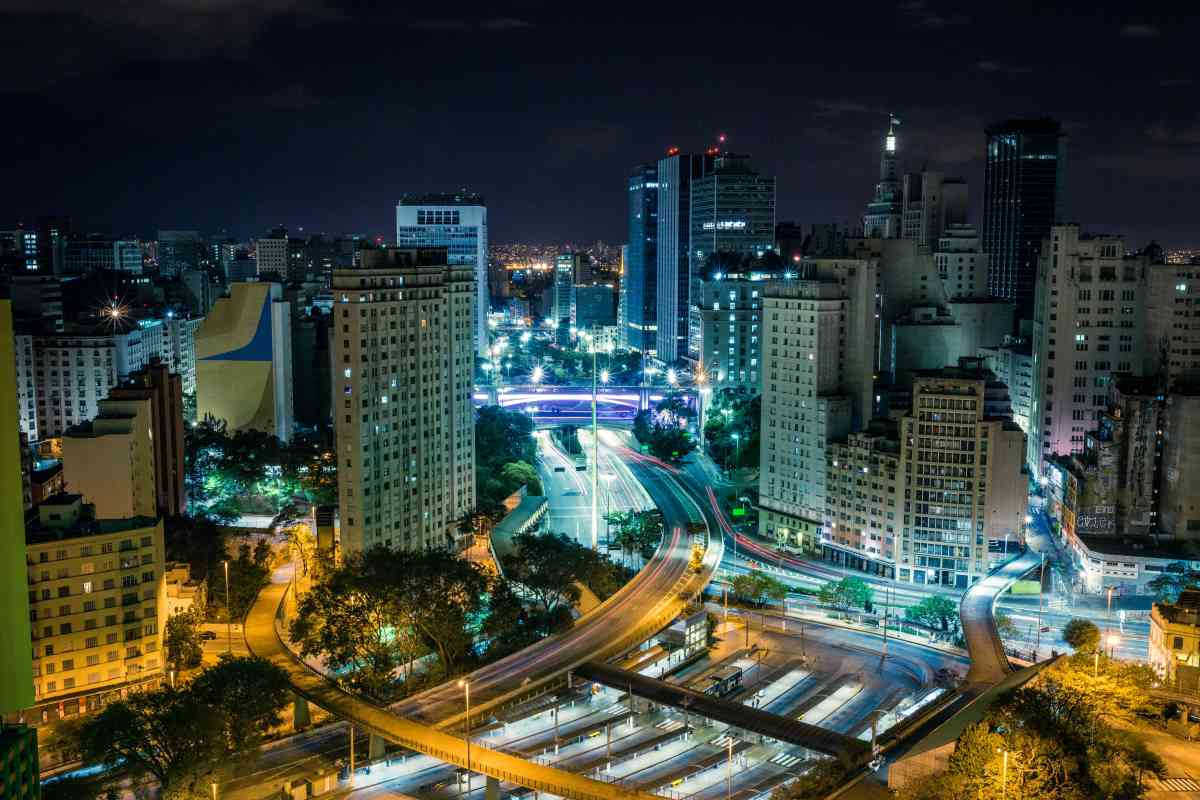
Pic Courtesy-Vanessa Bumbeers at unsplash.com
(The views expressed are those of the author and do not represent views of CESCUBE.)

Abhijeet Nehra is a M.A. International Relations from University of Sheffield and has done his graduation in Global Affairs from Jindal School of International Affairs, O P Jindal Global University . He was research associate with CESCUBE.