Challenges for the government in Israel: Will it bring stability?
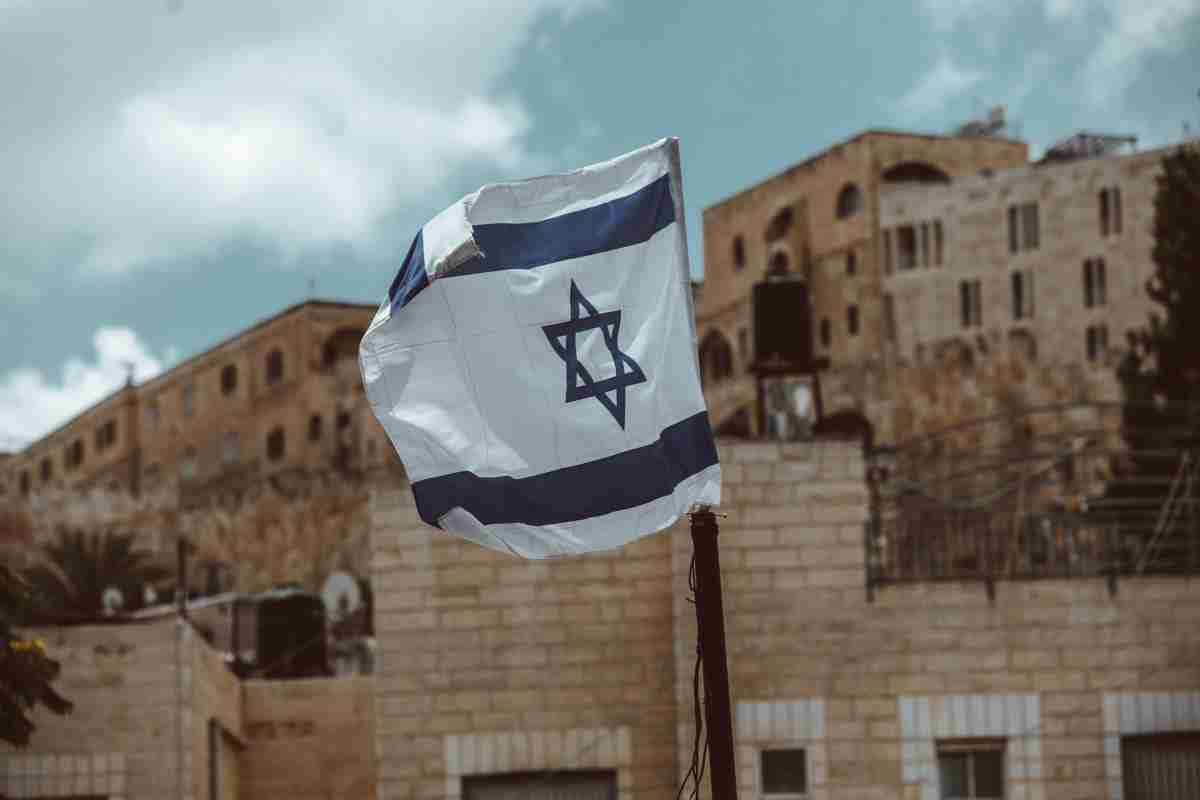
Political instability has been an integral part of Israel’s landscape. For the fifth time within three years, Israel goes to the polls again in November. The November elections will be its 25th time since its birth in 1948. Only twice befor...
While the instability of Israel’s political structure has been a recurrent question on the future of Israeli politics, but to understand what is really happening, one cannot move forward without delving into Israel’s deep rooted political past. Since the West Bank and Gaza Strip were seized in 1967, Israeli political parties have largely distinguished themselves by supporting the continuation of the military occupation of the Palestinians in order to maintain control over what Jewish nationalists refer to as "Greater Israel" or by wanting to coexist peacefully with a Palestinian state. (MANDEL, 2022)
After 1948, the pre-state Jewish community in mandate Palestine continued to experience greater ideological variety. Due to Israel's electoral system using proportional representation, no party has ever been able to win a simple majority of 61 members in the 120-member Knesset. The Labour Alignment won 56 seats in 1969, the most seats ever won by a political party. The Labour’s monopoly ended when Likud came to power in 1977, and since then, the latter has emerged as a dominant force through its effective alliance and partnership with the religious parties, which were once Labour allies. With the exceptions of Yitzhak Rabin-Shimon Peres (1992–1996) and Ehud Barak (1999–2001), the Labour Party has become a marginal player in Israel.In the last two decades, centrist parties like Kadima, Blue and White and Yesh Atid have emerged as real alternatives to the Likud. (MANDEL, 2022)
Plural political identities: fate decider for Israel
Israelis cast their ballots according to party, and in the 120-member Knesset's 74-year history, no single side has earned a majority. That require for any prospective prime minister to build a coalition after each election to combine a majority of at least 61 seats. As a result, minor parties have had excessive authority. Almost often, one or more prospective kingmakers and their specific demands come to light after an election. The country goes back to the polls and the current administration continues in place as a caretaker if no one can muster a majority, as happened following elections in April and September 2019.
New election, same issues: Israel’s Plague
Israelis are now expected to return to the polls soon, where they will wearily confront a familiar choice- Netanyahu. But it's far too early for any reliable polling, and even if Netanyahu and his allies secure more seats, they could fall short of a majority yet again. While the four-month timeframe is too long in Israeli politics, it is possible to decipher important lessons. Yet however, perennial political instability has luckily not impeded or slowed Israel’s progress in other areas. It has emerged as a military-security power, a technological powerhouse, a strong market for foreign investments, a start-up nation, premier nation in various scientific advancements. It is a widely-courted diplomatic power and hence a regional power. These accomplishments paralleled decades of domestic political instability credit Israel’s future significantly. (Miller, 2021)
All political parties have agreed on the nation's top priorities, despite profound differences in strategy and objectives. While there have been differences between the Left and the Right over what it means to pursue national security, there has also been a crucial convergence on guaranteeing the fundamental security of the citizens, both in terms of the military and the socio-economic. Another crucial factor is political stability, particularly from the perspective of international relations. However, unlike many of its neighbours, Israel has made sure that its citizens are economically and socially secure. There are injustices and disparities, but Israel hasn't held them captive because of murky election results or hung parliaments. Israel is making it quite obvious that legislative majorities and political stability are not necessary for a country to advance.
Netanyahu's departure has been a very fortunate break for U.S. President Joe Biden, whose administration is determined to focus on domestic priorities and avoid expending energy on foreign-policy issues where it doesn't expect much return on investment, as we assess Israel's performance in light of its tumultuous political journey. As a reward for positive behaviour, Biden will be more than glad to grant Israel's latest billion-dollar request for Iron Dome replacement, advance the Abraham Accords, and extend an early invitation to the White House to Bennett and later, most likely, Lapid. (Sachs, 2021) The challenge facing the Biden administration will be to find a strategy on the most difficult problem of all—the future of the Palestinians—that doesn't put undue pressure on the new administration but nevertheless manages to achieve.
Hope for recovery: A better committed government to Multilateralism and Progressivism
The new government features many influential advocates for increasing Israel’s use of traditional diplomacy after Netanyahu had downgraded the influence of the Ministry of Foreign Affairs in favor of building personalized relations with prominent global leaders. It will likely be more receptive to playing a greater international role in combating climate change and promoting sustainability than past governments. Lapid has also prioritized a restrengthening of ties with the European Union, as Netanyahu sought to snub the institution and leverage strategic relations with certain EU states to undermine common policies on Israel that he perceived as hostile to the country. (Kornbluh, 2022)
However, from what one sees, we can say that the new coalition may have the best of intentions to promote consensus and keep disagreement under control. Given if it can pass a two-year budget the government may actually endure for some time. And there is plenty to do: post-COVID-19 economic recovery; infrastructure development. Such progress would keep the coalition together and would be good for Israel’s national interest. It would also mean the individual parties will have to swallow hard and postpone their own ideological policy goals. While the new coalition is likely to endure beyond what the sceptics predict, it would still be advisable for Israel to focus on reforming and restructuring what is left of it, than diving into its complicated Palestinian concerns as of now.
References
· Explained: What's Behind the Political Instability In Israel. (2022, june 22). Retrieved from outlookindia.com: https://www.outlookindia.com/international/explained-what-s-behind-the-political-instability-in-israel-news-204015
· Halpern, O. (2022, june 30). Can new Israeli elections secure a stable government? Retrieved from aljazeera.com/: https://www.aljazeera.com/news/2022/6/30/can-new-israeli-elections-secure-a-stable-government
· Ivri, N. (2021, july 21). The New Israeli Government: Challenges Ahead and Key Stakeholders. Retrieved from apcoworldwide: https://apcoworldwide.com/blog/the-new-israeli-government-challenges-ahead-and-key-stakeholders/
· Kornbluh, J. (2022, june 20). Israel’s ‘change’ government promised political stability, but that didn’t hold: The guide to a fifth election. Retrieved from forward.com: https://forward.com/news/506677/israels-change-government-promised-political-stability-but-that-didnt-hold-the-guide-to-a-fifth-election/
· Kumaraswamy, P. R. (2022, july 14). Looking at Israel beyond political instability. Retrieved from newindianexpress: https://www.newindianexpress.com/opinions/2022/jul/14/looking-at-israel-beyond-political-instability-2476241.html
· MANDEL, E. R. (2022, june 22). Israel’s government collapses — again. So, what now? Retrieved from thehill.com: https://thehill.com/opinion/international/3532125-israels-government-collapses-again-so-what-now/
· Miller, A. D. (2021, june 14). Israel’s New Coalition Government Is More Stable Than It Looks. Retrieved from foreignpolicy.com: https://foreignpolicy.com/2021/06/14/israel-bennett-coalition-government-stable/
· Sachs, N. (2021, june 23). https://www.brookings.edu/blog/order-from-chaos/2021/06/23/israels-new-government-agrees-on-only-one-thing-booting-netanyahu/. Retrieved from brookings.edu: https://www.brookings.edu/blog/order-from-chaos/2021/06/23/israels-new-government-agrees-on-only-one-thing-booting-netanyahu/
Pic Courtsey-Taylor Brandon at unsplash.com
(The views expressed are those of the author and do not represent views of CESCUBE.)

Aastha Saluja is a graduate from lady Shri Ram college, Delhi University and is currently pursuing her masters in politics with specialization in international relations at Jawaharlal Nehru University. Her area of interest includes emerging trends of the Indo -pacific region and challenges of democratization and economic development post Cold War.