LIVE DISPATCH
Loss and Damage Finance: From COP28 Pledges to Policy Architecture Extended Deterrence Under Strain: Credibility, Assurance, and the Stability-Instability Paradox in the Indo-Pacific Beyond Consultation: BIMSTEC's Emerging Role in Regional Intelligence and Security Cooperation Maritime India: Security, Trade, and Great Power Competition Between the Desert and the Savannah: Conflict and the Political Economy of Instability in the Sahel Beyond Ukraine: Understanding Putin's Vision of Russian Power The Politics of Ali Khamenei's Funeral Silicon Sovereignty: How Semiconductors Are Redrawing Global Power Hierarchies Operation Sindoor and the Changing Dynamics of India–Pakistan Security The Negative Impact of US–Iran War on the Pacific Region Generative AI, Labour Sovereignty, and the Geoeconomics of India's Service Economy BRICS Expansion and the Multipolar Moment: Opportunity or Strategic Contradiction? India's AI Diplomacy and the Future of Strategic Technologies Foot-Dragging as Feminism: Iran, South Korea, and the Ungovernable Body Lethal Autonomous Weapons Systems and the Governance Deficit: Challenges to International Humanitarian Law and Accountability Beyond Proximity: Why the UAE Occupies a Growing Place in Iran’s Strategic Calculus Great Power Rivalry and the Crisis of the United Nations Why Fiji Matters: The New Geopolitics of the Indo-Pacific Islands Ten Years After Brexit: Regret, Reform, or Reversal? The Long Shadow of 1953: Understanding the Iran–US Conflict Sports, Strategy and Statecraft of Mega Sporting Events as Geoeconomic Instruments: Qatar 2022 to Saudi Arabia 2034 Border Fencing and National security: India’s Strategy along the Bangladesh Border Hardening the Quad: From Strategic Dialogue to Operational Cooperation Lingering Effects of the Bush Doctrine on Contemporary US Foreign Policy The Maghreb of States: Identity, Sovereignty, and the Limits of Non-Interference India’s BRICS 2026 Chairmanship Navigating a tightrope Amidst the Chinese Geopolitical Rise Beyond the Battlefield: Understanding Unconventional Security Challenges in Contemporary Geopolitics The Control Paradox: How Proxy Warfare Enables Strategic Deniability While Constraining Strategic Control Trapped in Deterrence: Nuclear Stability and the Persistence of Conflict in South Asia The Return of Unipolarity? U.S Strategic Primacy and the Future of the Global Order Supply Chains and Complicity: The Role of Global Corporations in Forced Labour in Xinjiang The Distant Threat: Is Israel Constructing a Strategic Rival in Pakistan Island Militarisation and Techno-Diplomacy: Turkey’s Eastern Mediterranean Fault Lines Amid India-Greece Alignment India’s Security Scenario: An Assessment of its Continental and Maritime Challenges The Geopolitical Architecture of European Defence: Navigating NATO Synergies, Transatlantic Retrenchment, and the Hybrid Threat Landscape The Artemis Accords and the Future of Global Space Governance AI and the Securitization of Critical Infrastructure: Implications of India's AI Summit Beyond Rhetoric: Evaluating the Effectiveness of International Sanctions on China’s Treatment of Uyghur Muslims The Emerging Maritime Rivalry in the Western Indian Ocean: India’s Response to Extra-Regional Powers India's Maritime Grand Strategy on Trial : The IRIS Dena Incident and the Indian Ocean Question Loss and Damage Finance: From COP28 Pledges to Policy Architecture Extended Deterrence Under Strain: Credibility, Assurance, and the Stability-Instability Paradox in the Indo-Pacific Beyond Consultation: BIMSTEC's Emerging Role in Regional Intelligence and Security Cooperation Maritime India: Security, Trade, and Great Power Competition Between the Desert and the Savannah: Conflict and the Political Economy of Instability in the Sahel Beyond Ukraine: Understanding Putin's Vision of Russian Power The Politics of Ali Khamenei's Funeral Silicon Sovereignty: How Semiconductors Are Redrawing Global Power Hierarchies Operation Sindoor and the Changing Dynamics of India–Pakistan Security The Negative Impact of US–Iran War on the Pacific Region Generative AI, Labour Sovereignty, and the Geoeconomics of India's Service Economy BRICS Expansion and the Multipolar Moment: Opportunity or Strategic Contradiction? India's AI Diplomacy and the Future of Strategic Technologies Foot-Dragging as Feminism: Iran, South Korea, and the Ungovernable Body Lethal Autonomous Weapons Systems and the Governance Deficit: Challenges to International Humanitarian Law and Accountability Beyond Proximity: Why the UAE Occupies a Growing Place in Iran’s Strategic Calculus Great Power Rivalry and the Crisis of the United Nations Why Fiji Matters: The New Geopolitics of the Indo-Pacific Islands Ten Years After Brexit: Regret, Reform, or Reversal? The Long Shadow of 1953: Understanding the Iran–US Conflict Sports, Strategy and Statecraft of Mega Sporting Events as Geoeconomic Instruments: Qatar 2022 to Saudi Arabia 2034 Border Fencing and National security: India’s Strategy along the Bangladesh Border Hardening the Quad: From Strategic Dialogue to Operational Cooperation Lingering Effects of the Bush Doctrine on Contemporary US Foreign Policy The Maghreb of States: Identity, Sovereignty, and the Limits of Non-Interference India’s BRICS 2026 Chairmanship Navigating a tightrope Amidst the Chinese Geopolitical Rise Beyond the Battlefield: Understanding Unconventional Security Challenges in Contemporary Geopolitics The Control Paradox: How Proxy Warfare Enables Strategic Deniability While Constraining Strategic Control Trapped in Deterrence: Nuclear Stability and the Persistence of Conflict in South Asia The Return of Unipolarity? U.S Strategic Primacy and the Future of the Global Order Supply Chains and Complicity: The Role of Global Corporations in Forced Labour in Xinjiang The Distant Threat: Is Israel Constructing a Strategic Rival in Pakistan Island Militarisation and Techno-Diplomacy: Turkey’s Eastern Mediterranean Fault Lines Amid India-Greece Alignment India’s Security Scenario: An Assessment of its Continental and Maritime Challenges The Geopolitical Architecture of European Defence: Navigating NATO Synergies, Transatlantic Retrenchment, and the Hybrid Threat Landscape The Artemis Accords and the Future of Global Space Governance AI and the Securitization of Critical Infrastructure: Implications of India's AI Summit Beyond Rhetoric: Evaluating the Effectiveness of International Sanctions on China’s Treatment of Uyghur Muslims The Emerging Maritime Rivalry in the Western Indian Ocean: India’s Response to Extra-Regional Powers India's Maritime Grand Strategy on Trial : The IRIS Dena Incident and the Indian Ocean Question
ADVERTISEMENT
World April 28, 2020 1558 Reads

China in the Pacific: A Threat?
S
By Saber Salem
Author • Centre for Security & Strategic Studies
China in the Pacific: A Threat?
Share Analysis:
EXECUTIVE SUMMARY & STRATEGIC TAKEAWAYS

Over the past two decades, China has widened and deepened its economic and diplomatic footprint in the Pacific Island Countries (PICs). This unprecedented Chinese power posturing in the Blue Pacific region has caused trepidation in the corr...

ADVERTISEMENT

Over the past years, China has appropriated over US$6 billion to social development focused more specifically on roads, ports and other major infrastructure projects connected to its ambitious grand Belt and Road Initiative. China has also provided easy-to-get concessional loans to the aid dependent island nations. Hence, foreign aid and foreign direct investment have been the bedrock of Chinese soft power and major facilitators to the steady expansion of Chinese diplomatic and economic engagement in the geographically isolated and sea-locked region. As a result, China has emerged as one of the biggest bilateral donors to most PICs surpassing traditional donors such as Australia, US, Japan and the European Union (EU). It is due in large part to these expansionist Chinese activities that analysts believe the regional balance of power is tilting overwhelmingly in favour of Beijing.

Furthermore, the first defining factor behind Chinese heavy-handed involvement in the region is Taiwan’s diplomatic presence, which has diplomatic relations with four countries with the rest (10) recognize ‘One China Policy’. Beijing considers Taiwan as its renegade province, and wishes to annex it back to the mainland either through political and diplomatic pressures or even use of military force, should Taipei choose to unilaterally declare independence. To curtail Taiwan’s diplomatic recognition and tighten its global space, China has been giving colossal sums of soft loans to the island nations to coax them to adhere to One China Policy. So far, Beijing has been exceptionally successful in derailing Taipei’s push for diplomatic recognition. Last year two of Taiwan’s major allies, the Solomon Islands and Kiribati, switched allegiances to Beijing. Both nations cited their burgeoning economic and financial needs, which Taiwanese assistance was not able to address.

This begs the question as to whether China is a threat to Pacific. The answer to this question depends on the angle we take. If we look at China’s rapid expansion in the region through the prism of the United States, Australia and their regional allies, it notwithstanding suggests that China is indeed a growing threat to the vested interests of the traditional powers. In the immediate aftermath of the Cold War, the Pacific region generally lost its erstwhile significance to the US. The US not only reduced its aid budget substantially, but also closed down its aid giving agencies in the region. Nevertheless, the Chinese presence in the region has, arguably, forced the US to reopen its aid agencies and boost its aid volume.

Interestingly, the governments of the island nations do not perceive Chinese presence in their respective countries as a formidable threat. For them, the Sino-Taiwan cheque book diplomacy is a God-sent opportunity, where the two Asiatic economic giants spend astronomical sums of money in an attempt to buy allegiance of the microstates. The once forgotten and neglected region of the world is once again emerging in the global limelight. The US, UK, EU, Japan and Australia have all hiked up their development investments in the Pacific region, resulting in poverty alleviation, social development and economic growth.

However, despite a seemingly absent official government antipathy towards Beijing in the island nations, analysts warn against Han Chinese migrating in their droves to the Pacific. This could cause an imbalance in the ethnic composition of the island nations, which could fissure into ethnic tensions as happened in Tonga, Solomon Islands and Papua New Guinea. Pacific governments must be extra vigilant about this element and take pre-emptive measures to avoid repetition of ethnic conflicts in their countries. If the number of Chinese nationals increases in the region and that leads to anti-Chinese civil strife, warn experts, China will not deploy civilian aircrafts to evacuate its caught-in-the-conflict nationals as it did during 2006 and 2009 riots. Instead, Beijing will deploy warships and military personnel to quell anti-Chinese rioters and thereafter would justify maintaining long-term military bases in the region with an aim to protect its offshore nationals. Bearing the latter in mind, China’s multi-dimensional engagement in the Pacific could be deemed as a potential threat to the island nations.   


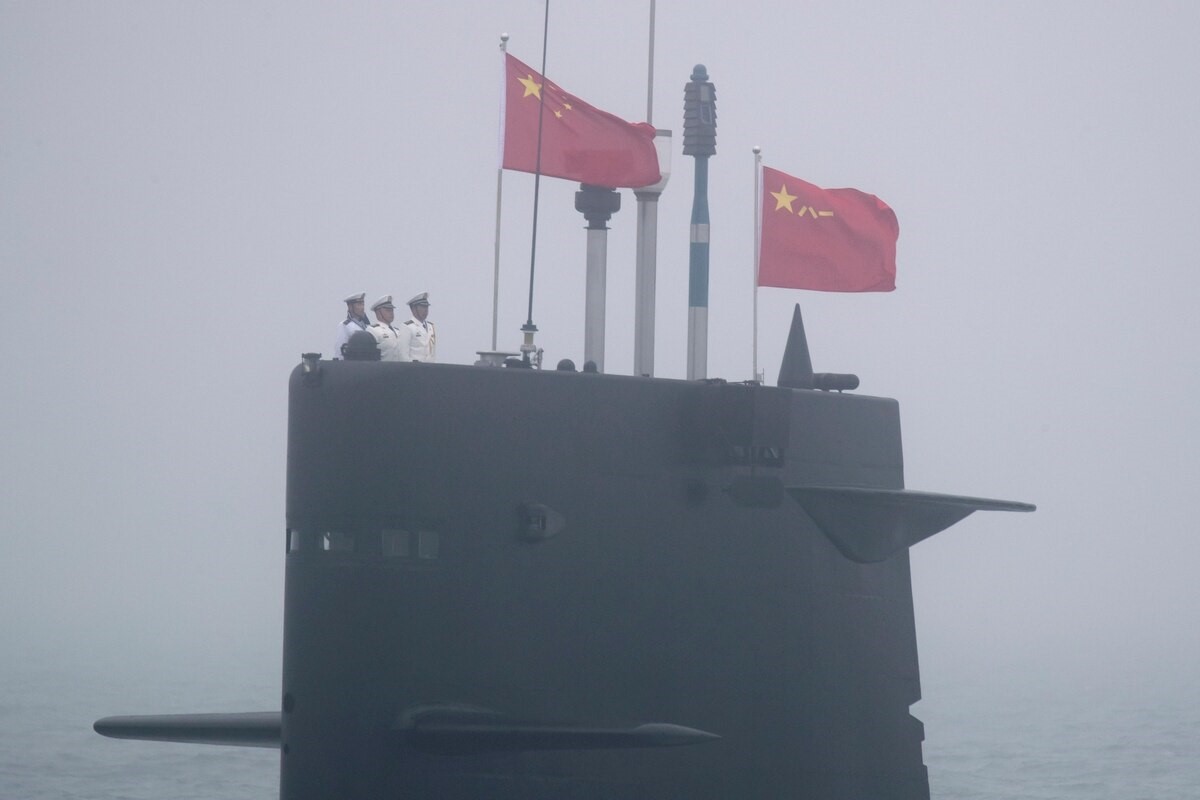
(Pic Courtesy- Mark Schiefelbein/AFP/Getty Images)

(Saber Salem is a Doctoral Research Fellow with the OP Jindal Global University’s School of International Affairs, India. The views expressed are personal)


Saber Salem
About Saber Salem →

Dr Saber Salem is an Associate Professor of International Relations and Diplomacy at the University of Fiji. Prior to joining academia, he worked with the United Nations in various roles and capacities and served as a Policy Analyst with the Canadian International Development Agency (CIDA). Dr Salem has authored and co-authored numerous scholarly articles published in Scopus-indexed journals in India and the United States. His research interests include foreign aid, conflict resolution, and climate change. He holds a Doctorate in Politics and International Relations from O.P. Jindal Global University.
ADVERTISEMENT

Related Strategic Analysis