China’s Party Congress and Third Term for Xi Jinping
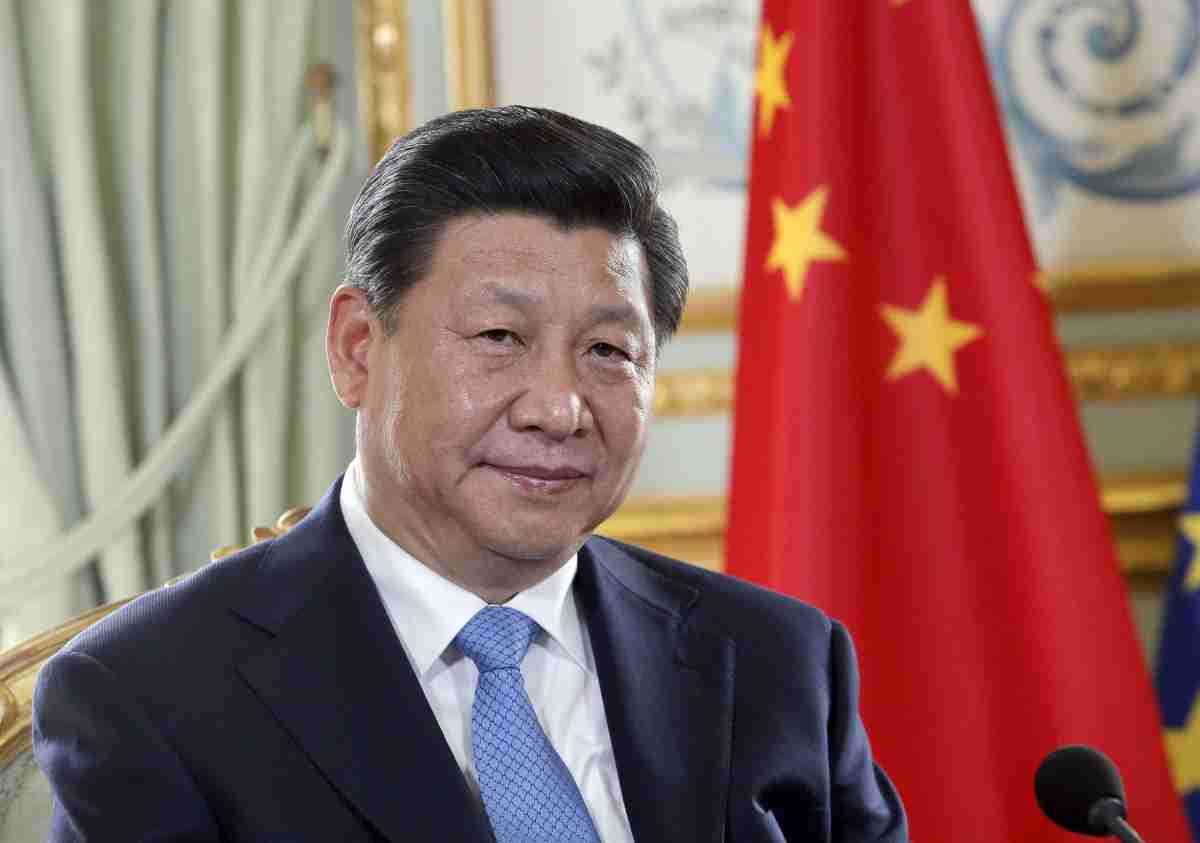
For a few days now, news about the Chinese Party Congress has been making the rounds. This is because China's governing communist party is convening its 20th national congress from October 16 to October 22 at the Great Hall of the People on...
The national Congress now has around 96 million members. The party congress is attended by around a thousand members, who are chosen to attend every fifth year. These representatives are drawn from various provinces, the military, ministries, governmental agencies, and social groups. It is vital to highlight that these delegates are chosen after careful consideration, and no party member is permitted to campaign openly during this period.
The Central Committee, the party's main national-level institution, is then filled by these delegates, who choose 400 people. The 25-member Politburo and the even more prestigious Standing Committee will thereafter be chosen from among the Central Committee's 200 voting members. Resolutions on various problems are also moved. However, in reality, the delegates only serve as a rubber stamp for the decisions made by the party leadership, who decide the amendments and personnel selections in advance.
According to reports, 2,296 delegates were chosen to serve in the congress this time. Of those, 771 are referred to as "frontline party members" who work outside of the party apparatus, either in the military, which serves as the party's military wing, or in the fields of agriculture or technology.
Choosing new Leadership
Politburo
The Chinese Communist Party's ruling body is the Politburo, also known as the Political Bureau of the Communist Party of China Central Committee. Currently, the CCP is governed by a group of 25 senior officials, which is led by the general secretary.
Standing Committee
The standing committee's official mandate is to hold policy discussions and make decisions on key matters while the Politburo is not in session. There are now seven members of the Politburo's standing committee, which has historically had five to eleven members. These include Xi Jinping, Li Keqiang, Li Zhanshu, Wang Yang, Wang Huning, Zhao Leji, and Han Zheng. At the completion of Congress, the new members of the standing committee and Politburo will be announced.
However, a set of internal age norms for promotion and retirement govern the appointments and promotions in these two bodies. According to the "seven up, eight down" convention, officials who are 67 or younger at the time of a party congress are eligible for promotion, while those who are 68 or older are typically expected to retire. Nobody above the age of 68 was selected for a new term in the Politburo at the most recent congresses in 2007, 2012, or 2017. However, with the exception of Xi Jinping (who will be discussed later), all senior officials, including number two leader Premier Li Keqiang will be replaced as a result of this convention.

The 20th National Congress's next significant revelation is that Xi Jinping will retain his existing roles as party leader, head of state, and military commander for the ensuing five years. In the past, Chinese presidents like Hu Jintao and Jiang Zemin adhered to an unofficial two-term restriction, which required them to step down from office after two terms. Deng Xiaoping instituted this unofficial two-term limit to either avoid a repeat of Mao's cult of personality, which caused China to regress by decades and resulted in the tragic Great Leap Forward and Cultural Revolution, which claimed the lives of millions of Chinese, or to simply avoid the emergence of a one-leader dominated system. Many believe that this term limit makes China into a new type of autarchy, considering term limitations are uncommon in authoritarian regimes.
However, this time, Xi Jinping is set to begin his third term by departing from previous norms. The planning for this began in 2018, when China enacted a constitutional amendment that abolished the two-term restriction from China's constitution. Additionally, because Xi Jinping is currently 69 years old, it is reported that he is breaking the "seven up, eight down" tradition. Along with these alterations, the senior leadership of the Chinese military will also shift.
All these developments will increase Xi Jinping's prestige, making him one of the most powerful presidents in modern Chinese history. His zero-corruption policy and signature anti-corruption campaign, which resulted in the investigation of around 4.4 million individuals, including Xi Jinping's opponents, on corruption-related charges, were two of his most notable accomplishments during his first two years. It will be intriguing to see what Xi has in store for Chinese citizens.
Amending the Party’s Constitution
The Party's constitution, which was last changed in 2017, is the second item on the National Congress's agenda. In 2017, Xi Jinping was able to incorporate his philosophy—known as "Xi Jinping Thought on Socialism with Chinese Characteristics for a New Era"—into the Chinese Communist Party's constitution. Only Mao had this honor before him (that is, to have their own independent ideology incorporated into the constitution while remaining in office).
Setting the main policy direction
The National Congress's third goal is to establish the main policy direction. According to several reports, the party congress has recently stated that continuity rather than change will be the dominant theme for the following five years. China's position on Taiwan is one such instance of this continuity. According to the report of the 20th National Congress, the unification of Taiwan is "a natural prerequisite for achieving the rejuvenation of the Chinese nation." (Bonny Lin, 2022). The report, however, does not outline a precise date for reunification.
In addition, Xi Jinping is said to have discussed China's challenges during his speech to the Party Congress, in addition to the slow global economy and regional disturbances.
While talking on the importance of new politburo and standing Committee, the Asia Society Policy Institute (Decoding the 20th Party Congress, n.d.) asserts that while Xi Jinping will have the last word on key policy choices, the selection of leadership personnel will also have a significant impact on more minute choices about specific policy matters.
Apart from these, one area that has grown in relevance at the 20th Party Congress is national security. The 20th Party Congress report, according to the Centre for Strategic and International Studies, has a brand-new section on national security that focuses on a "multidimensional" and broad view of national security, which is referred to as a "bedrock of national rejuvenation." According to CSIS, the report exhorts Chinese cadres to defend "centralized, unified leadership over national security work" and to "promote national security in all areas and stages of the work of the Party and the country." (Bonny Lin, 2022)
Thus, the world will continue to deal with a more assertive and aggressive China, at least for the next five years, if these elements are taken together, as there hasn't been much of a shift in party leadership and policy orientation.
References
1. Bonny Lin, B. H. (2022, October 19). China’s 20th Party Congress Report: Doubling Down in the Face of External Threats. Retrieved from Centre for Strategic and International Studies : https://www.csis.org/analysis/chinas-20th-party-congress-report-doubling-down-face-external-threats
2. Decoding the 20th Party Congress. (n.d.). Retrieved from Asia Society Policy Institute : https://asiasociety.org/policy-institute/decoding-chinas-20th-party-congress
Pic Courtsey-Xinhua News.
(The views expressed are those of the author and do not represent views of CESCUBE.)

Neha Dayma has recently completed her Masters in Politics with Specialization in International Studies from Jawaharlal Nehru University. She is a political science graduate and also a current intern at Online Foreign Policy School. Her areas of interest include South- East Asia, West Asia, geopolitics, Indo- Pacific and India's foreign policy.