Chinese assertiveness and US aggressiveness: Transforming strategic equations in the Indo-Pacific
As the COVID-19 pandemic and China’s antagonistic strategies have begun to alter political and economic dynamics across the globe, it is only likely that many countries will now adjust their foreign policies and strategies as well. It has b...
The US President signed into law the Asia Reassurance Initiative Act (ARIA) on the 31st of December 2018, which allows for $1.5 billion in spending on a range of programs in East and Southeast Asia. According to the White House, this act would “establish a multifaceted U.S. strategy to increase U.S. security, economic interests, and values in the Indo-Pacific region.” Since then, it would seem like the US has utilised and built upon this act endlessly, motivating new partnerships in Asia with countries like Vietnam as well as strengthening older partnerships with countries like India. These actions are resultant out of one significant factor, China. In upping the aggression against China, the US has chosen rather interesting means, coaxing partners whose decisions do not sit well with US strategic goals away from China. In this context, it has become apparent that the US administration has found fault in a few old partners that are now proving to be a challenge. This seems to be the main motivating factor behind Trump's decisions concerning Germany. Perhaps, the view behind the decision has been to pressurise US partners that currently view China favourably, into a corner.
Trump's announcement in June, for the withdrawal of some 9500 troops from Germany has invited backlash from many in the German government as well as members of the US congress. While it is yet to be seen whether this move will be carried out, it is symbolic of the changing priorities of the US, which are being increasingly focused on China. Trump’s announcements on their own have often been viewed as erratic and failing to amount to anything constructive. However, followed by Pompeo’s statement, this announcement must be seen as conducive to actual action rather than merely a warning to Germany. The Trump administration has expressed dissent over Germany’s trade surplus and lack of contribution to the NATOs budget, as well as irritation over the EU’s growing ties with China. In this context, the reduction of US troops in Germany will serve as a blow to an already strained relationship between the two major NATO members. Yet, it may also push the EU to alter its priorities and relationship with China. This has however not been forthcoming and the EU has remained one of the only western entities to continue building relations with China during the COVID pandemic. It has thus become apparent that the message the Trump administration chooses to project to Germany and others in Europe with such statements is clear. “Choose a side on the China issue or face the consequences laid before it by the US.”
The US has thus adopted a course that angles it towards aggression and confrontation on many fronts. The US’ current Asia policy is built on the foundations of the relationship that it shares with China under the Trump administration. It is undoubtedly evident that China has adopted an aggressive stance in recent years. However, the foreign policy decisions made under Trump have perhaps only helped in the escalation of the same. From the trade war to the coronavirus pandemic, the US government has only been critical of China. In this regard, the personal disregard shared by members of the Trump administration have also come to the forefront. Trump himself has made numerous statements against China, however, his Secretary of State as well, seems to share in the hatred. Mike Pompeo has been at the source of a majority of the criticism directed at the Chinese Communist Party and its decisions, going so far as to term China as a “rogue actor”. However, he in turn has faced increased criticism from China, being singled out on many occasions by the CCP. It would then seem like the current decision making of the US has largely been governed by the personal beliefs and opinions of many within its administration.
Nonetheless, the strategies of the US government cannot be merely prescribed to the personal choices of members in the administration and must be viewed through strategic lenses as well. Many within the US government hold a definite fear of being subordinated to Chinese interests and dominance in the Asia-Pacific, especially since China began exerting influence through the BRI and in the South China Sea. It is not yet clear whether China is set to challenge the US as a global hegemon, however, it is apparent that it seeks to carve out a sphere of influence in East and Southeast Asia at the very least. The US has remained a prominent power in the Indo-Pacific region for decades. However, China’s assertiveness in both the Western Pacific as well as the Indian Ocean now poses a significant challenge to the US and its allies. China’s extending influence compromises on the interests of Japan, Australia, India, and others in Southeast Asia as well. These trends have motivated the definite change in US foreign policy, making it more assertive in countering China.
The trade war marked the first escalation between China and the US under the Trump administration. Since then, tensions have been high and the US has sought to counter China through any means possible. In this regard, the South China Sea has been at the center of the US’ attention. Its administration has accused China of coercing US allies and partners in the region, militarising islands, and seeking regional hegemony. It has become increasingly evident that such accusations are not far from the truth, even though China claims they are. If such ambitions are achieved by the Chinese government, it will be highly detrimental to many others who currently stake equal claim to the sea. Not only will it infringe on the strategic aspirations of a few but also on the fishing rights and oil resources that countries like the Philippines and Vietnam are reliant upon. Additionally, such claims would only result in territorial land grabs by China and an end to all freedom of navigation in the region. There have also been reports of China seeking to set up an Air Defence Identification Zone in the region, a plan that will grant China the powers to monitor all happenings in the region. The United States has therefore rejected all of China’s maritime claims to the South China Sea, seeing it as highly compromising for its strategic interests.
In keeping with the freedom of navigation in the region, the US has also adopted other means. It has conducted a number of joint naval exercises in the South China Sea over the last few months. In April, the US navy announced that the 7th Fleet Expeditionary Strike Group was conducting naval exercises with Australia in the South China Sea. A month later, the Independence-variant combat ship, the USS Gabriel Gifford conducted exercises with the navy of the Republic of Singapore in the same region. Additionally, for the first time since 2017, it was reported by the US Navy at the end of June, that three aircraft carrier groups, the USS Theodore Roosevelt, USS Nimitz, and USS Ronald Reagan, were positioned near the disputed South China Sea. It is evident that such deployments carry only one message for China, i.e. the United States will continue to maintain a strong presence in the region even during the coronavirus pandemic.
The ultimate aim of the US in the South China Sea is that of deterring Chinese influence in the region. Whether such tactics have worked though is definitely up for question. It would seem like the use of such tactics has only served to escalate tensions further, inviting aggression from the Peoples Liberation Army Navy. The increased US naval deployments and exercises have caused China to begin its own naval exercises in the South China Sea on the 1st of July. These activities included both the PLAN and the China Coast Guard and followed the announcement of a maritime exclusion zone in the South China sea. It has thus become apparent that US support and intervention in the region has not deterred any activities by the Chinese government. The South China Sea is also not the only region where the US is failing to deter China, and recent developments in Hong Kong as well have signified the failure of US tactics.
Many within the US administration have been critical of China’s infringement on the autonomy of Hong Kong, highlighting the "suppression of political expression, restrictions on press freedom, violations of autonomy, and challenges to its independent judiciary." In an announcement in April, Mike Pompeo stated that “any effort to impose draconian national security legislation on Hong Kong would be inconsistent with Beijing’s promises and would impact American interests there.” This announcement was made months after the US leaned complete support to Hong Kong in passing a legislation that would allow the US government to monitor human rights and autonomy violations in Hong Kong. This Hong Kong Human Rights and Democracy Act of 2019 would also allow the US President to impose sanctions on any foreign actors “undermining fundamental freedoms and autonomy in Hong Kong.” Today, China has imposed a national security law that almost completely integrates Hong Kong into the mainland. The new law marks a definite end to the “one country, two systems” model, which has allowed Hong Kong to enjoy autonomy for almost three decades.
The US has retaliated by ending the sale of military equipment and other technologies to Hong Kong which will complicate China’s plans of acquiring certain US technologies that were not available in the mainland. Additionally, the US Department of Commerce has suspended preferential treatment and export license exceptions for Hong Kong. The US also imposed visa restrictions on officials of the CCP who were considered responsible for limiting freedoms in Hong Kong. These actions are welcome in the face of a complete takeover of Hong Kong by China but will not do much in countering Chinese influence. It would seem like Hong Kong is a battle that the US has effectively lost. Nonetheless, it has sought other measures in dealing with Chinese influence and aggressiveness, a fact that is apparent in the announcement by Mike Pompeo on the 25th of June post the Indo-China standoff at Galwan.
In Pompeo’s statement, it has become evident that support for Indian actions and decisions is only going to increase. Not only did he term China as a “rogue actor” but also as a definitive “threat” to India, responsible for “escalating” border tensions with the South Asian nation. India is to be at the forefront of the US’ policy in Asia and act as a strong counter to China. In the shifting of US troops from Germany to Asia, Pompeo stated that “they are aimed squarely at what we believe to be democracies’ fundamental interests,” a direct reference at the increased cooperation between the world’s biggest democracies. India has already signed the Logistics Exchange Memorandum of Agreement (LEMOA) and the Communications Compatibility and Security Agreement (COMCASA) with the US, two foundational agreements that significantly increase the operationality and cooperation between their militaries. It has thus become apparent that these agreements may draw the country closer into the US’ strategic circuit, a questionable aspect for India but an asset for the United States. Nonetheless, the basis for these agreements has once again been the increasing strategic influence of China. Touting China’s expansionism as the “challenge of our time,” the US administration has therefore set a course of building stronger partnerships in Asia, in increasing its ability to counter China.
India is just one of many other partnerships that the US has begun capitalising on in Asia. In securing the Indo-Pacific from China’s growing military and economic aspirations, the US has thus built on ties with another emerging power in Southeast Asia, Vietnam. Once adversaries, the two countries are now edging towards a strategic partnership, built on the need to secure “autonomy, peace, and freedom of navigation in Asia.” The US, therefore, sent the USS Theodore Roosevelt to Vietnam on the 5th of March this year in a display of their deepening security ties. The US has also attempted to integrate Vietnam into its larger security frameworks in the Indo-Pacific. A recent teleconference between the four “Quad” countries (Australia, India, Japan, and the US) also included representatives from Vietnam, New Zealand, and South Korea, three other Indo-Pacific powers. However, according to many, China remains unfazed by such warming of ties between the US and Vietnam, even though they have the potential of reaching significant heights.
Nonetheless, it has become apparent that measures at countering China are slowly being scaled up. In this regard, the US was able to salvage one of its oldest alliances in Asia as well. In February of this year, President Duterte of the Philippines had sought to end the visiting forces agreement it shares with the US. Many at the time saw this as an indication of the Philippines inching slowly into China’s strategic circuit. However, as of the beginning of June, Duterte’s government backed off from terminating the agreement, which seems to be symbolic of the fear that many Southeast Asian countries now share for China’s growing influence and aggressiveness.
The US, therefore, finds a number of allies in the Asia-Pacific region that share in its need to contain and counter Chinese influence. While it already has strong partnerships with Japan and South Korea in East Asia, it has now begun building on other relationships with Chinese adversaries in South and Southeast Asia. Relations with India, Singapore, Vietnam, and the Philippines have begun to develop rapidly, signifying the urgency of the US administration in dealing with the Asian Giant. It has thus begun a process of rearranging its security forces to concentrate on the developments in the region. Once the re-deployment of troops from Germany to countries in the region has occurred, the once diminished presence of US troops in South and Southeast Asia will have been brought to life. This may undoubtedly signify an era of increased security for US allies in the region, however, the repercussions will also be numerous. Increased deployments in the Indo-Pacific would result in a definite escalation of tensions, the extent of which, will soon have to be assessed and accounted for by all.
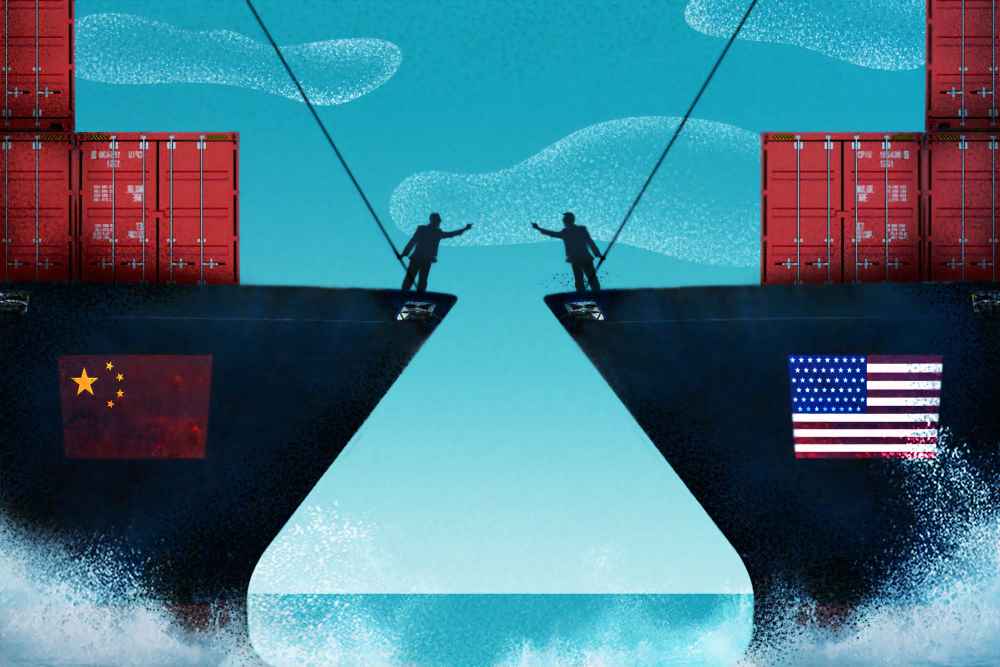
Pic Courtesy-Morning Brew at unsplash.com
(The views expressed are personal)
Zeus Hans Mendez is research assistant with Centre for Security and Strategy Studies, The views expressed are personal.