Chinese companies and Undersea Cables Business
The submarine cables hold immense value in this digitalized world, The undersea cables essentially carry 95 per cent of the world’s data, the submarine cables were being used for over 150 years, from carrying the dots and dashes of the mors...
“China is to build two bases to maintain undersea cables in the East China and South China seas as part of efforts to bolster its digital infrastructure, which has emerged as a new front in its geopolitical competition with the United States”.[1] This is considered to be China’s “Digital War” against the US and its allies, Cyberwarfare and Big data are the new fronts of the geopolitical competition between the US and China. The leading company involved in the submarine cables is Huwaei Marine Networks Co., the majority of which is owned by a Chinese telecom giant.
China Telecom owns three cable landing stations, they are
· Chongming Station for APCN-2, SWM3, TPE and APG, China-US CN (retired), NPC.
· Shantou Station for China-US CN, SMW3, APCN-2, and SJC.
· Xiamen Station for the undergoing Xiamen-Jinmen cable connecting Mainland China and Jinmen Island of Taiwan.
China Unicom owns four cable landing stations, they are
· Qingdao Station for the EAC network and the TPE.
· Stations in Nanhui, one for C2C, APG and NCP and the other for FLAG.
· Changle Station in Fujian province for the undergoing TSE-1 connecting Mainland China and Taiwan Island.
China Mobile owns two cable landing stations:
· Lingang Station for SJC2 and NCP.
· Wenchang Station for Hong Kong Express (H2HE) to Hainan.
A lot of Chinese investments into global submarine cables network are directly controlled by the Chinese state. China Mobile (Zhongguo yidong), China Telecom (Zhongguo dianxin), and China Unicom (Zhongguo liantong) are completely owned by the state of China. The stake of China’s investment into laying the submarine cable go back up till 1999. China Mobile has invested in at least eight cables, China Telecom has invested in twelve cables, and China Unicom invested in eleven cables. The three companies have been labelled as a national security risk to the United States by U.S. Federal Communications Commission (FCC), they made this decision based on their finding and said these firms are “subject to the influence and control of the Chinese government”.[2]
Huwaei is one of the biggest companies involved in the submarine cables business from china, it has done around 90 projects related to submarine fibre optic cable laying down and maintenance in various regions in the world. The countries are fearing espionage from China’s end as the companies from China have an obligation to their country to provide them with any data the government wants, according to their national intelligence and counter Espionage laws. According to National Intelligence Law of the People's Republic of China’s Article 7 which came into legislation in 2017, “any organization or citizen shall support, assist and cooperate with the state intelligence work in accordance with the law,” According to the Counter-Espionage Law of 2014 “when the state security organ investigates and understands the situation of espionage and collects relevant evidence, the relevant organizations and individuals shall provide it truthfully and may not refuse.”[3]
Even though Huawei giving assurances regarding its stance on not sharing information with its government even when it is requested by it, with complications in the current technologies and with lawmakers who cannot fully understand how that technology works, the analysis of the issue from a geopolitical perspective is becoming difficult. and the assurances about customer privacy won't go long way when they have very little scope of fighting a request of that sort in the court and winning it in China. “There is no way Huawei can resist any order from the People’s Republic of China government or the Chinese Communist Party to do its bidding in any context, commercial or otherwise. Huawei would have to turn over all requested data and perform whatever other surveillance activities are required,”[4] said Jerome Cohen, a New York University law professor and Council on Foreign Relations adjunct senior fellow. He also said that “Not only is this mandated by existing legislation but, more important, also by political reality and the organizational structure and operation of the Party-State’s economy, The Party is embedded in Huawei and controls it.”[5]
The international community is worried about the privacy concerns from not only Huwaie Marine but with other telecom giants from china like ZTE as well. The United States was deemed Huwaie as ineligible to bid for US government contracts and deemed it as a security risk, also instructed all the telecom carriers to remove all equipment that Huawei manufactured from their infrastructure. The governance of global information networks in the submarine cables is unclear and doesn’t guarantee the protection of the data, this leaves the data vulnerable to sabotage and espionage. Countries like the United State may consider the options of isolating their data from the cables that are under the maintenance of Chinese owned companies. The international community should work on a cooperative strategy to put in place robust and independent safeguards in order to protect data privacy.
Japan is very concerned about this threat, and taking some necessary steps towards the safekeeping of its interests. To avoid data eavesdropping by china, Japan is promoting its private players to get into the Undersea cables market and working on providing them incentivised schemes with investments and financing. Britain's national security advisor, Mark Sedwill said that an attack on their undersea cables will be equivalent to the bombing of London Docks in World War 2, to express the importance of these cables. A report from the Pentagon said that the “digital silk road” could allow china to “obtain foreign technology” and “enable politically motivated censorship”.
If the Chinese companies control most of the world's undersea cables and the Chinese government have access to them, then they will have the ability to use it for their strategic advantage in conflict situations, this can give them a tactical edge over the rest of the world, and they will also have the advantage to tamper with the data, and use it for various implications which will result in the benefit of CCP. The countries should look into establishing a governance policy for the cables and Put in safeguards to restrict any misuse by private companies or states.
Notes
[1] Laura Zhou, China builds undersea cable bases amid digital infrastructure rivalry, South China morning post, 12 December 2021.
[2] https://www.fcc.gov/document/fcc-scrutinizes-four-chinese-government-controlled-telecom-entities
[3] https://www.cnbc.com/2019/03/05/huawei-would-have-to-give-data-to-china-government-if-asked-experts.html
[4] https://www.cnbc.com/2019/03/05/huawei-would-have-to-give-data-to-china-government-if-asked-experts.html
[5] Ibid
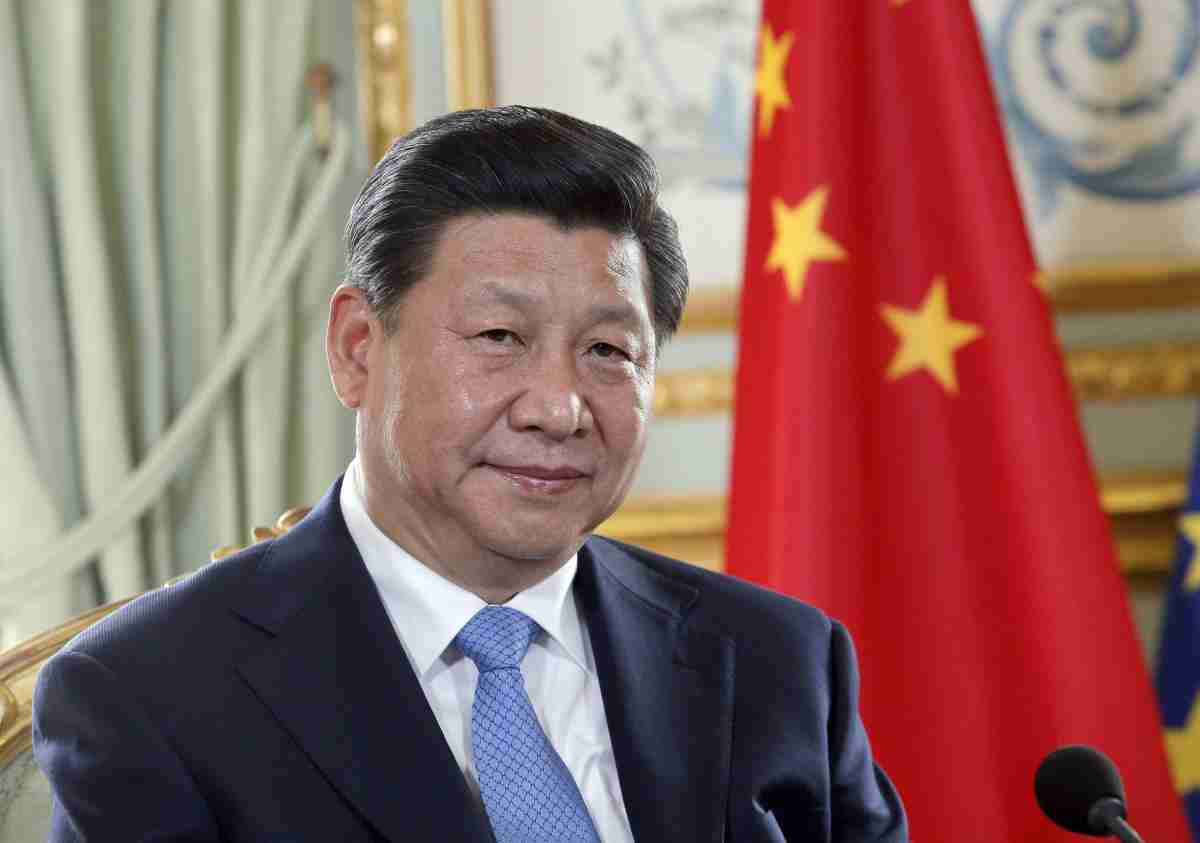
Pic Courtsey-Chinese Ministry of External Affairs
(The views expressed are those of the author and do not represent views of CESCUBE.)

Sharath Kumar Kolipaka is doing a masters degree at Jindal School of International affairs, specializing in national security and peace and conflict studies.