Chinese dams on Brahmaputra and its impact on lower riparian countries
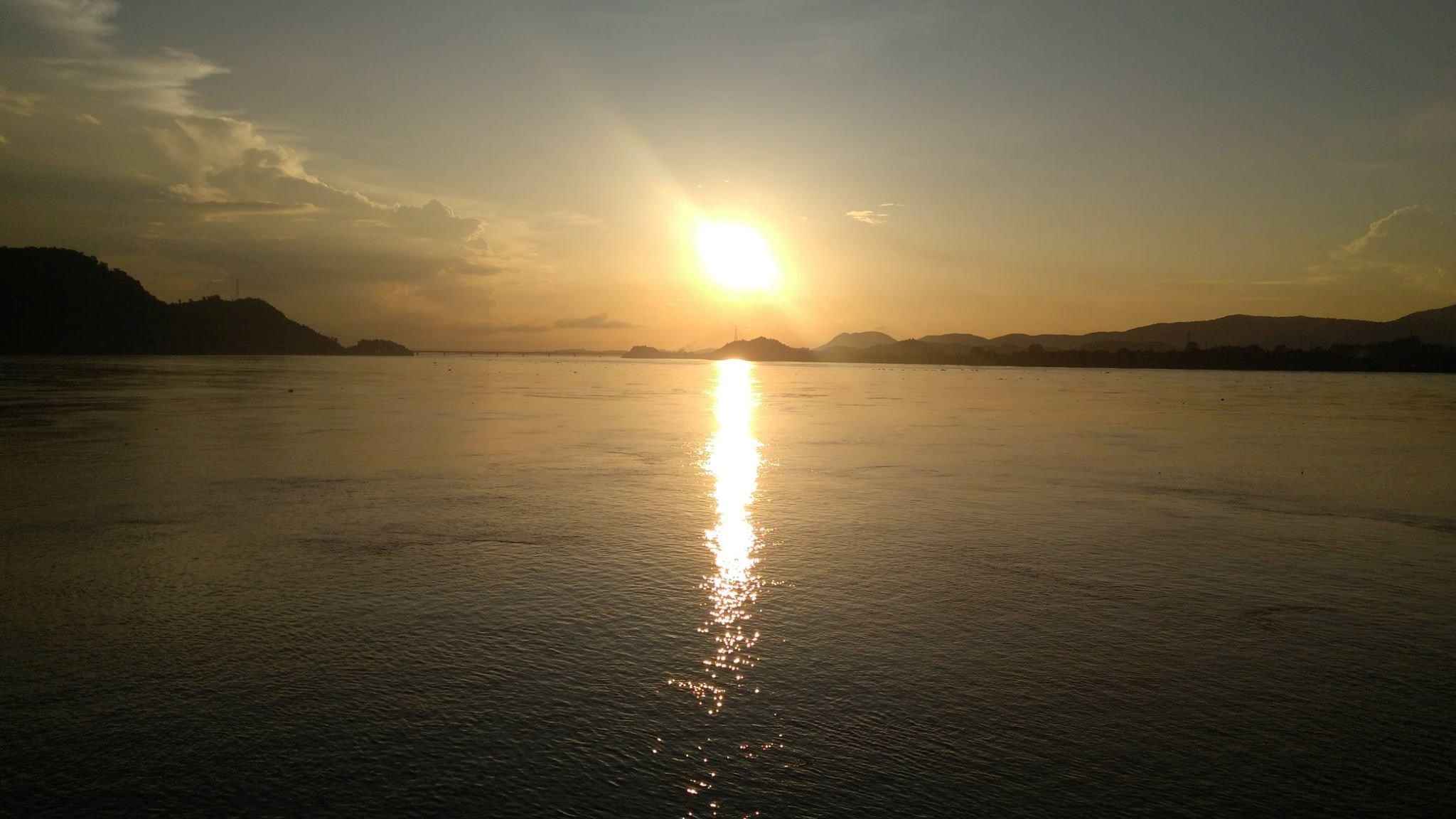
Brahmaputra as a perennial river enjoys a dynamic course through the countries it flows changing its path frequently. Not only it is geologically significant and a challenge to deal with in itself for the countries having access to it, but ...
China’s over dependence and focus on Brahmaputra is not borne out of nothing. With an ever increasing demography accounting for almost 20% of the world population with merely 7 per cent of it having access to water resources and pressure of industrialization, the northern region particularly relies on uncertainty of water stress, while the southern part is still better off in terms of struggle. It is the largest industrial water consumer with a consumption around 120 billion cubic meters a year. This clearly proves china to be a water thirsty country. This has prompted china to undertake an ambitious plan of interlinking its northern and southern region through aqueducts and canals, diverting water through the region’s lifeline river.
In addition, to meet its irrigation and power needs, as per its Five-Year Plan 2011–15, the Chinese government successfully built 120 gigawatts of new hydropower plants on the Salween, the Upper Mekong, Upper Yangtze and the Brahmaputra .While, china still can as a upper riparian state envision this, it has left the lower riparian states of south Asia such as Thailand, Laos, Vietnam, India and Cambodia under drastic stress. This not only means a stifling on the political economic front, but ecological damage which means years of undoing. Neither of which the countries of the region can handle at the moment. Similar to China, India accounts for 17 per cent of world population and only 4 per cent of water resources.
However, before jumping onto the political significance of dams on Yarlung Tsang Po, it is essential we discuss the ecological aspects of such constructions. First and foremost is the challenge that dam construction would render on the agricultural productivity of the region. The rivers carry huge amounts of silt and nutrients with them, which now as a result get blocked due to dams severely affecting the soil quality. Secondly, Brahmaputra basin is one of the world’s most ecologically fragile ecosystems, home to several flora and fauna species, some of which endemic to the region. Thirdly, dams in the Himalayan belt pose great threat to stability and constantly are under the radar of earthquake prone casualty. Such a scenario has been therefore, a significant feature of northeastern India’s seismic activity and floods.
India and China established the Expert Level Mechanism (ELM) in 2006 to discuss various issues related to trans-border Rivers. However, suspicions with regard to China’s access to valuable hydrological data that can help manage floods and inconsistencies downstream has been a significant roadblock in taking any robust action that may have consequences otherwise. On the political front, having control over a perennial water source as significant as Brahmaputra means access to water security in uncertain times and the ability to manage the water flow as per the interests of the country in control. Such an instance was witnessed during the Doklam standoff in 2018, when china stopped the passage of water flow from its dams towards India, rendering India powerless and dependent on china in critical capacity.
While China’s plans to build a hydropower dam across the Yarlung Zangbo River in the Tibet Autonomous Region has evoked concerns in India and Bangladesh, it is also important to recognize here, that the volume of Brahmaputra is not solely determined by the water flowing into India through Tibet but considerably by its monsoon fed tributaries. Further, the dam is supposed to be a run off the river hydropower project which therefore does not require large amounts of water to be held back. At the same time, it prompts us to go beyond the blame game with respect to china and understand the significant role it will play in enabling china attain its expected benefit of 60 million KWH hydropower potential and its subsequent clean renewable energy source.
The situation then presents a contrasting viewpoint further. It makes us question if it is even so much so about the adverse effect such dams have on the natural ecological discourse or is it just about the apprehensions that the lower riparian states harbor due to china’s over indulgence. While the Chinese officials often suggest of acting responsibly and committed to transparency, such assurances do not seem to have sufficed. This has been due to multiple reasons. Clearly, the recent project at the great bend is just one of many other dams earlier constructed for instance at Dagu, Jiexu or Jacha. These raise concern of over- exploitation. Moreover, china continues to remain opaque when it comes to sharing future plans of construction. As a result, in many instances, even India has been looking at constructing dams, one such as in Arunachal Pradesh to offset the adverse effect of that witnessed by Chinese dam. However, it then becomes crucial to highlight that the lower we come, the burden keeps on increasing. It is then Bangladesh, which is to bear the brunt of the “dam power struggle” on account of china and India. This poses a question to the notion of being neighbors in a region where all are and all must save their own skin.
In such a situation, without a mutually agreed dispute settlement mechanism on water sharing of Transboundary Rivers, India is not left with much option but to assume a greater role at aligning a coalition of south Asian countries that share a similar discourse. Such an institutional set up would not only provide the lower riparian countries with better bargaining power against china, but also enable aggregation of a water information grid, furthering better water management practices.
Therefore, while one looks at the water crisis in the region, it becomes clear that china treats water as a strategic commodity and a political tool to establish its hegemony in the region. In such a situation, India’s edginess seems justified over china’s opaqueness. However, in the long run, this approach might not suffice. India must deal with the issue multilaterally than bilaterally. Future cooperation between the countries needs to be based on policies which are perceptive rather than reactionary. Is it therefore imperative that the nations come together to share mutually beneficial technology to garner partnerships that further better water sharing and environmental protection.
References
1. Ameya Pratap Singh, U. T. (2020). India-China Relations And Geopolitics Of Water. The Lowy Institute.
2.Bhatnagar, A. (2020, December 2). China Plans Dam On Brahmaputra: How It May Impact India, Ban .. Retrieved From Times Of India: Https://Timesofindia.Indiatimes.Com/India/China-Plans-Dam-On-Brahmaputra-How-It-May-Impact-India-Bangladesh/Articleshow/79528597.Cms
3.China's Attempt To Build Dam On Brahmaputra Will Be Encroachment On India's Rights: Government. (2021, January 21). Retrieved From Outlook Web Bureau: Https://Www.Outlookindia.Com/Website/Story/India-News-Chinas-Attempt-To-Build-Dam-On-Brahmaputra-Will-Be-Encroachment-On-Indias-Rights-Govt/371308
4.Christophe Jaffrelot, V. G. (2020, November 23). Chinese Dam Projects On Brahmaputra Are A Threat To Lives And Livelihoods Downstream. Retrieved From Indian Express: Https://Indianexpress.Com/Article/Opinion/Columns/Brahmaputra-River-China-Dam-India-China-Relation-7061644/
5.Krishnan, A. (2020, December 4). ‘Carefully Monitoring’ Brahmaputra Amid China Dam Plans, Says India. Retrieved From The Hindu: Https://Www.Thehindu.Com/News/National/Brahmaputra-Dam-India-Is-Monitoring-Developments-Wishes-To-Remain-Engaged-With-China/Article33241811.Ece
6.Ramachandran, S. (2020, December 9). Chinese Dam Plan Worries India – But Perhaps Excessively. Retrieved From The Diplomat: Https://Thediplomat.Com/2020/12/Chinese-Dam-Plan-Worries-India-But-Perhaps-Excessively/
7.Ratha, S. K. (2015). Sovereign States And Surging Water: Brahmaputra River Between China And India. Fondazione Eni Enrico Mattei.
8.Why India Is Worried About China's Dam Projects On The Brahmaputra River. (2016, October 16). Retrieved From Economic Times: Https://Economictimes.Indiatimes.Com/News/Politics-And-Nation/Why-India-Is-Worried-About-Chinas-Dam-Projects-On-The-Brahmaputra-River/Articleshow/54691589.Cms?From=Mdr
Pic Courtesy- Pradyut Majumdar
(The views expressed are personal and do not reflect the views of CESCUBE.)

Aastha Saluja is a graduate from lady Shri Ram college, Delhi University and is currently pursuing her masters in politics with specialization in international relations at Jawaharlal Nehru University. Her area of interest includes emerging trends of the Indo -pacific region and challenges of democratization and economic development post Cold War.