Climate Change: An Existential Threat to Pacific
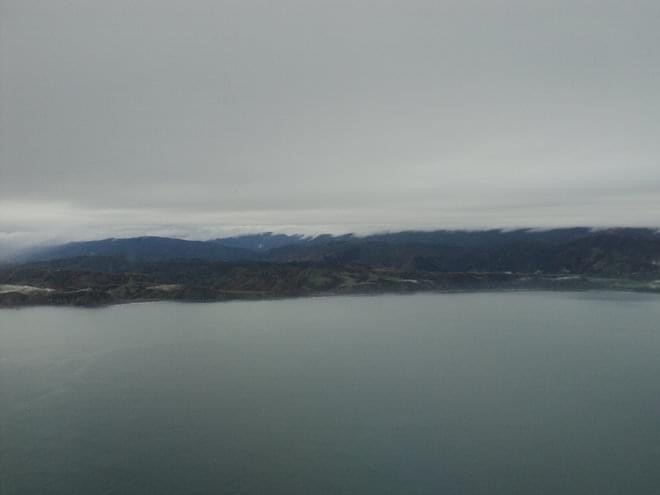
Climate change and severe weather events is causing environmental catastrophe in the South Pacific region. The region as a whole has experienced innumerable changes in weather patterns that have posed fundamental threats to lives and l...
For many Pacific small island nations, the current fast pace ocean level rise will severely impact their shorelines, and more agricultural lands will be lost to the ocean. This loss of agricultural lands would inevitably threaten food security of the region and could send millions of the islanders to starvation. Sea level rise is therefore considered an existential threat to the entire Pacific region. The atoll island nations of Tuvalu, Kiribati, and the Marshall Islands are already experiencing gradual sinking. Climatologists predict that the rising ocean level will submerge most of the atoll nations by mid next century. As a precautionary measure, the atoll island nations of Tuvalu and Kiribati have purchased land in Fiji, to relocate their sinking population in order to avoid a major humanitarian crisis.
Over the past two decades, it has been observed that there has been an acceleration in rise in temperature, which has a domino effect on the rise of sea levels. It is also noted that rapid global temperature rise as a result of high volume industrialisation and fast pace economic activities around the world has resulted in coral reef degradation, which is “extremely sensitive to warming ocean temperatures.” Coral reefs are major breeding habitat for fish and other marine species. Any loss in coral reefs will directly and severely impact fish stock, which is an important source of food and income to the Pacific island dwellers. According to a report by the Australian government, the coral reefs have a “very poor” outlook. The report forecasts that by 2030, “the reefs could look drabber, with fewer fish”.
Furthermore, severe weather events such as catastrophic tropical cyclones, sea flooding, coastal inundation, torrential rainfall that causes destructive deluges, landslides and prolonged droughts each take a heavy toll on social development and economic growth of the Pacific. The magnitude of loss and infrastructural degradation from each of these climatic disasters are far beyond the affordability level of the Pacific island nations. Hence, they require foreign assistance to foot the costly bills, which they cannot appropriate from their national budgets. These island states are most affected by climate change and are highly dependent on foreign aid. The outlook for the region to become aid independent is quite bleak, because no matter how fast they grow socially and economically, natural disasters reverse their hard socio-economic gains and take them back to square one.
In addition, climate change and unbearable weather events forces millions of people out of their homes. These affected people then migrate to the urban areas in search of food, employment and shelter. Some of them even choose to migrate beyond their national shores. International migration is fraught with enormous risks and challenges. Firstly, climate migrants do not enjoy ‘refugee’ status. Hence, they risk being deported to their country of origin because the principle of non-refoulment, which prevents host states from deporting refugees, is not applicable to climate migrants. This principle is only applicable to war refugees who under the Refugee Convention are exempted. The case in point is Mr Ioane Teitiota from Kiribati who in 2013 applied for asylum in New Zealand. The country’s High Court rejected his application on the ground that the claimant did not face any ‘serious harm’ and termed their migration to New Zealand as a ‘voluntary adaptive migration’.
Secondly, climate migrants are considered illegal in the host countries, and hence cannot access social services. They also cannot seek employment because of their unlawful status. Most industrialised nations are unwilling to bestow refugee status on climate migrants simply because they cannot be repatriated to their places of origin due in large part to the fact that climate changed has claimed all their belongings. However, the expectation from the war refugees is that once the war is over and the reconstruction phase ensues, refugees will be repatriated to their places of origin because there is no ‘destination country’ for them. The other factor that prevents states from legalising climate migrants is dwindling financial and material resources. Despite all these challenges and hurdles that the international community is currently facing, it has a legal obligation vis-Ã -vis climate migrants who require legal protection internationally.
Climate change and severe weather events will not improve anytime soon due to the lack of international consensus and absence of an effective global governance structure to punish free riders. As the 2019 UN report reveals, there has been a steady increase in greenhouse gas emissions as a result of heavy industrialisation and global economic activities. Any rise in global greenhouse gas emissions will strongly contribute to global warming and acceleration in climate change, which will then force millions of people out of their homes and places them in abject poverty.
In conclusion, climate change is deteriorating at a faster pace year after year with its fallout being felt heavily in the Pacific region where it is considered an existential threat. Sea level is rising far faster than it was predicted earlier. Many atoll nations have already started disappearing with the populations having nowhere to take shelter. Catastrophic tropical cyclones also play a major role in causing harm and destruction to people’s lives and livelihood. Cyclones cause sea flooding, which washes saltwater onto croplands making them uncultivable thereafter. Not to mention that climate change causes en masse migration sending millions of people into destitution.
Bearing all the climatic destructions in mind, it necessitates that the industrialised nations take it seriously and take action now before it is too late. It is now scientifically proven that no country will be safe from the destructive fallout of the climate change. Its severe damage in every sphere of life will be felt across the spectrum. It is considered an existential threat to the entire Pacific region. It will not be too long before it becomes an existential threat to other coastal regions followed by threat to the entire world. Thus, global climate is changing at a much faster rate. The world must unite now and with one voice must combat this destructive natural phenomenon.

Dr Saber Salem is an Associate Professor of International Relations and Diplomacy at the University of Fiji. Prior to joining academia, he worked with the United Nations in various roles and capacities and served as a Policy Analyst with the Canadian International Development Agency (CIDA). Dr Salem has authored and co-authored numerous scholarly articles published in Scopus-indexed journals in India and the United States. His research interests include foreign aid, conflict resolution, and climate change. He holds a Doctorate in Politics and International Relations from O.P. Jindal Global University.