Collective Security Treaty Organization(CSTO)- Is It Regaining Relevance?
An organization that remained on the back foot in matters of collective security for years is gradually gaining significance now. Beginning from its active involvement in the Kazakhstan crisis to its role in the Russia-Ukraine war. The most...
Background
CSTO is a military organization formed after the signing of the Collective Security Treaty (also called the Tashkent pact) in 1992 in Tashkent, Uzbekistan. The founding members include Armenia, Russia, Kazakhstan, Kyrgyzstan, Tajikistan, and Uzbekistan. Belarus, Azerbaijan, and Georgia joined the grouping a year later which came into effect in 1994. The organization is a collaboration of the post-Soviet states belonging to the Commonwealth of Independent States (CIS). The member countries chalked out a collective security agreement for five years with a clause of further extension. In 1999, all the members except Azerbaijan, Georgia, and Uzbekistan determined to extend their commitment period. These three countries withdrew their membership in the Treaty. The Collective Security Treaty was mainly a regional agreement until 2002 which played a crucial role in maintaining close cooperation between the participating countries. On May 14, 2002, the Collective Security Council (apex body of the organization and consisting of heads of the member countries) decided to grant an international organization status to the Treaty and refer to it as a military alliance since then. It was in late 2002 that the Charter of the CSTO was recognized and it got registered at the UN Secretariat in December 2003. In accordance with the Charter, the following are the most important sections upheld by CSTO [1];
'Article 3' states the objectives of the organization including strengthening of peace, international and regional security and stability, the protection on a collective basis of the independence, territorial integrity, and sovereignty of the member countries. The guiding principles of CSTO comprise priority of political means over the military, strict respect for independence, voluntary participation, equality of rights and obligations of member states, non-interference in affairs falling under the national jurisdiction of member countries.
'Article 4' states the protocol of collective security i.e. if one of the member countries is subjected to aggression by any other country or group of countries, then it will be considered as aggression against all the member countries of this Treaty. In this circumstance, other members of the organization will provide the country in crisis with necessary assistance both in terms of military and monetary, and also give support at their disposal in exercising the right to collective defense under Article 51 of the UN Charter. In 2016, the CSC established a CSTO Crisis Response Centre which is required to provide analytical and logistical support to the CSTO decision-making bodies in case of responding to a crisis around the world. CSTO's military aid led to the creation of collective operational response forces, regional troops, collective aviation and peacekeeping forces, joint military systems and military infrastructure, and collective rapid reaction forces.
‘Article 9’ states the mechanism of regular political consultations among the member countries with regard to the evolving international events. Collective foreign policy statements and international agendas are promulgated to project their common stand on any current issue. CSTO is proactive to an extent in its engagements with various international organizations for maintaining peace and stability in the world.
CSTO’s Potential
The Eurasian intergovernmental military alliance is not powerful enough to directly challenge the western alliance-NATO, however, it does have strategic importance in geopolitics which is often overlooked. The majority of the world is unaware of the potential of this petite organization involving five Central Asian countries with small populations and inadequate armed forces tied with Russian pre-dominance. The basic aim is to prevent and counter armed attacks on the CSTO members. Although the broad agenda entails fighting against international terrorism, drug trafficking, illegal arms trade, and other kinds of transnational organized crime [2].
Since 2007, CSTO is actively undertaking peacekeeping missions. Its peacekeeping force involves up to 3000 armed forces personnel and around 600 representatives of the internal affairs agencies of the member countries.
Kazakhstan Operation
CSTO was in international news recently after years of failed attempts to become an international organization equivalent to NATO. Russia aims to carve CSTO in a way it becomes a direct challenge to the western military alliance and which is fully capable of reshaping regional and global security. In early January, Kazakhstan was embroiled in a series of large-scale protests against the sudden price rise of liquefied gas. In addition to this, the people of the country were discontent with the growing government's inaction and economic inequality. President Tokayev requested the involvement of CSTO to stabilize the situation and in no time around 2,500 of its troops entered to quell the violent protests [3]. Aid from CSTO's forces protected the country's critical infrastructure and overcame the logistical constraints of the security forces on the ground. This was a radical step forward as the organization has refused to intervene in the domestic affairs of member countries before. Tajikistan and Kyrgyzstan in 2010 and Armenia during the 2020 conflict in the Nagorno-Karabakh region compelled CSTO to assist them in their times of despair, however, the organization did not respond which highlighted its ineffectiveness. The Kazakhstan intervention concluded that CSTO is way more capable as an alliance and it is not just about Russian military prowess. This was CSTO’s first notable military operation lasting nearly a week which caught attention in the international domain. Member countries were rested assured that support can be acquired from the organization when required without the contribution from well-established international organizations such as the Shanghai Cooperation Organization (SCO), UN, or NATO.
Ukraine Intervention- a possibility
Experts suggest CSTO might play a key role in the ongoing Russia-Ukraine conflict. The Central Asian member states exist within CSTO under the shadows of Russia. It is highly unlikely they will become additional support to Russian forces progressing in Ukraine. These countries have little experience of an active war zone outside the CSTO territory. It would be difficult for the organization to execute its operations in Ukraine similar to what occurred in Kazakhstan. All the members are under constant persuasion by Russia as they share close contacts with the Kremlin. These countries are tied to Russia economically, for example, Russian remittances account for 26 percent of Tajikistan's and 31 percent of Kyrgyzstan's GDP, more than 40 percent of Belarus’ exports lands in Russia, and all the members except Tajikistan are participants of the Russia-led economic bloc, the Eurasian Economic Union [4]. CSTO’s involvement in the Ukraine crisis would only provide a limited reinforcement to Russia, moreover, it will bring the wrath of the international community down on the members. It will most certainly enable a strong NATO deployment in the region and the imposition of draconian western sanctions. Belarus is already targeted with wide-ranging economic sanctions for its support of the Russian invasion of Ukraine.
Russia is the dominant military power within CSTO and other members are dependent, in short, the decision-making power lies in the hands of the Kremlin. Members adopted ‘the right to veto the establishment of new foreign military bases in the member countries of the CSTO’ in 2011, which gives Russia substantial control over their sovereignty and a considerable part of Eurasia. Russia's agenda concerning this organization is to build an alternative to NATO in global security matters. And it would be quite beneficial for Russia that an organization it commands is a responsible crisis mediator and plays a key role in the international arena. The Russian upper hand not only weakens CSTO's legitimacy globally but presents a foreign policy challenge because Russian interests do not always align with those of the member countries [5]. To expand CSTO's presence in the region as well as in the world, there must be a sizable uptick in the membership and the military efficacy of members other than Russia improves to cast aside leverages and coercions.
References
[1] https://en.odkb-csto.org/25years/
[2] https://atalayar.com/en/content/russia-also-has-its-nato-and-its-called-csto
[3]https://www.neweurope.eu/article/why-its-time-to-take-the-russian-led-military-alliance-seriously/
[4] https://asiatimes.com/2022/03/what-would-a-csto-intervention-in-ukraine-look-like/
[5]https://evnreport.com/understanding-the-region/fact-sheet-what-is-the-collective-security-treaty-organization/
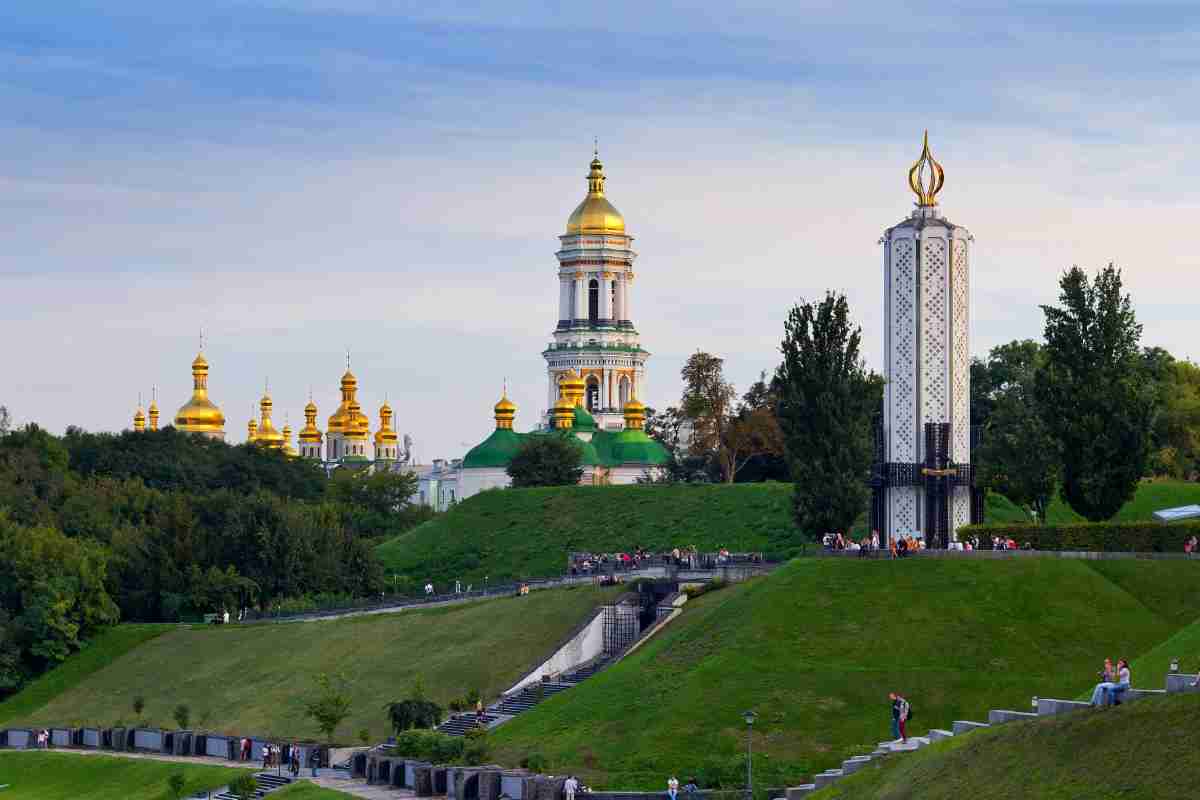
Pic Courtsey-Eugene A at unsplash.com
(The views expressed are thoSe of the author and do not represent views of CESCUBE.)

Poonam Jindal is post graduate in International Relations from O.P. Jindal Global University. She did under- graduation in Political Science from Delhi University. She has experience in primary and secondary research and has done a certificate course on Conflict Management from Bar-Ilan University in Israel. Ms Jindal has studied East Asian Politics at National Chengchi University in Taiwan and co- authored a paper on China Military Modernization. Her research interests include China Studies, Geo-politics in Asia, Diplomacy and Security Issues. She is Research Assistant with CESCUBE.