LIVE DISPATCH
Loss and Damage Finance: From COP28 Pledges to Policy Architecture Extended Deterrence Under Strain: Credibility, Assurance, and the Stability-Instability Paradox in the Indo-Pacific Beyond Consultation: BIMSTEC's Emerging Role in Regional Intelligence and Security Cooperation Maritime India: Security, Trade, and Great Power Competition Between the Desert and the Savannah: Conflict and the Political Economy of Instability in the Sahel Beyond Ukraine: Understanding Putin's Vision of Russian Power The Politics of Ali Khamenei's Funeral Silicon Sovereignty: How Semiconductors Are Redrawing Global Power Hierarchies Operation Sindoor and the Changing Dynamics of India–Pakistan Security The Negative Impact of US–Iran War on the Pacific Region Generative AI, Labour Sovereignty, and the Geoeconomics of India's Service Economy BRICS Expansion and the Multipolar Moment: Opportunity or Strategic Contradiction? India's AI Diplomacy and the Future of Strategic Technologies Foot-Dragging as Feminism: Iran, South Korea, and the Ungovernable Body Lethal Autonomous Weapons Systems and the Governance Deficit: Challenges to International Humanitarian Law and Accountability Beyond Proximity: Why the UAE Occupies a Growing Place in Iran’s Strategic Calculus Great Power Rivalry and the Crisis of the United Nations Why Fiji Matters: The New Geopolitics of the Indo-Pacific Islands Ten Years After Brexit: Regret, Reform, or Reversal? The Long Shadow of 1953: Understanding the Iran–US Conflict Sports, Strategy and Statecraft of Mega Sporting Events as Geoeconomic Instruments: Qatar 2022 to Saudi Arabia 2034 Border Fencing and National security: India’s Strategy along the Bangladesh Border Hardening the Quad: From Strategic Dialogue to Operational Cooperation Lingering Effects of the Bush Doctrine on Contemporary US Foreign Policy The Maghreb of States: Identity, Sovereignty, and the Limits of Non-Interference India’s BRICS 2026 Chairmanship Navigating a tightrope Amidst the Chinese Geopolitical Rise Beyond the Battlefield: Understanding Unconventional Security Challenges in Contemporary Geopolitics The Control Paradox: How Proxy Warfare Enables Strategic Deniability While Constraining Strategic Control Trapped in Deterrence: Nuclear Stability and the Persistence of Conflict in South Asia The Return of Unipolarity? U.S Strategic Primacy and the Future of the Global Order Supply Chains and Complicity: The Role of Global Corporations in Forced Labour in Xinjiang The Distant Threat: Is Israel Constructing a Strategic Rival in Pakistan Island Militarisation and Techno-Diplomacy: Turkey’s Eastern Mediterranean Fault Lines Amid India-Greece Alignment India’s Security Scenario: An Assessment of its Continental and Maritime Challenges The Geopolitical Architecture of European Defence: Navigating NATO Synergies, Transatlantic Retrenchment, and the Hybrid Threat Landscape The Artemis Accords and the Future of Global Space Governance AI and the Securitization of Critical Infrastructure: Implications of India's AI Summit Beyond Rhetoric: Evaluating the Effectiveness of International Sanctions on China’s Treatment of Uyghur Muslims The Emerging Maritime Rivalry in the Western Indian Ocean: India’s Response to Extra-Regional Powers India's Maritime Grand Strategy on Trial : The IRIS Dena Incident and the Indian Ocean Question Loss and Damage Finance: From COP28 Pledges to Policy Architecture Extended Deterrence Under Strain: Credibility, Assurance, and the Stability-Instability Paradox in the Indo-Pacific Beyond Consultation: BIMSTEC's Emerging Role in Regional Intelligence and Security Cooperation Maritime India: Security, Trade, and Great Power Competition Between the Desert and the Savannah: Conflict and the Political Economy of Instability in the Sahel Beyond Ukraine: Understanding Putin's Vision of Russian Power The Politics of Ali Khamenei's Funeral Silicon Sovereignty: How Semiconductors Are Redrawing Global Power Hierarchies Operation Sindoor and the Changing Dynamics of India–Pakistan Security The Negative Impact of US–Iran War on the Pacific Region Generative AI, Labour Sovereignty, and the Geoeconomics of India's Service Economy BRICS Expansion and the Multipolar Moment: Opportunity or Strategic Contradiction? India's AI Diplomacy and the Future of Strategic Technologies Foot-Dragging as Feminism: Iran, South Korea, and the Ungovernable Body Lethal Autonomous Weapons Systems and the Governance Deficit: Challenges to International Humanitarian Law and Accountability Beyond Proximity: Why the UAE Occupies a Growing Place in Iran’s Strategic Calculus Great Power Rivalry and the Crisis of the United Nations Why Fiji Matters: The New Geopolitics of the Indo-Pacific Islands Ten Years After Brexit: Regret, Reform, or Reversal? The Long Shadow of 1953: Understanding the Iran–US Conflict Sports, Strategy and Statecraft of Mega Sporting Events as Geoeconomic Instruments: Qatar 2022 to Saudi Arabia 2034 Border Fencing and National security: India’s Strategy along the Bangladesh Border Hardening the Quad: From Strategic Dialogue to Operational Cooperation Lingering Effects of the Bush Doctrine on Contemporary US Foreign Policy The Maghreb of States: Identity, Sovereignty, and the Limits of Non-Interference India’s BRICS 2026 Chairmanship Navigating a tightrope Amidst the Chinese Geopolitical Rise Beyond the Battlefield: Understanding Unconventional Security Challenges in Contemporary Geopolitics The Control Paradox: How Proxy Warfare Enables Strategic Deniability While Constraining Strategic Control Trapped in Deterrence: Nuclear Stability and the Persistence of Conflict in South Asia The Return of Unipolarity? U.S Strategic Primacy and the Future of the Global Order Supply Chains and Complicity: The Role of Global Corporations in Forced Labour in Xinjiang The Distant Threat: Is Israel Constructing a Strategic Rival in Pakistan Island Militarisation and Techno-Diplomacy: Turkey’s Eastern Mediterranean Fault Lines Amid India-Greece Alignment India’s Security Scenario: An Assessment of its Continental and Maritime Challenges The Geopolitical Architecture of European Defence: Navigating NATO Synergies, Transatlantic Retrenchment, and the Hybrid Threat Landscape The Artemis Accords and the Future of Global Space Governance AI and the Securitization of Critical Infrastructure: Implications of India's AI Summit Beyond Rhetoric: Evaluating the Effectiveness of International Sanctions on China’s Treatment of Uyghur Muslims The Emerging Maritime Rivalry in the Western Indian Ocean: India’s Response to Extra-Regional Powers India's Maritime Grand Strategy on Trial : The IRIS Dena Incident and the Indian Ocean Question
ADVERTISEMENT
Security October 5, 2020 2055 Reads

Decoding Germany’s Indo-Pacific policy
P
By Pankaj Jha
Author • Centre for Security & Strategic Studies
Decoding Germany’s Indo-Pacific policy
Share Analysis:
EXECUTIVE SUMMARY & STRATEGIC TAKEAWAYS

In the document titled ‘Germany – Europe – Asia: shaping the 21st century together’( 72 pages document)outlined the new role that Germany envisaged for the European union. The country is the European Union (EU) chair and also one of th...

ADVERTISEMENT

Outlining the German perspective, the German foreign minister has elucidated that Germany has been sending a clear message that Indo Pacific region is a criterion for Germany’s foreign policy. This clearly means an incremental shift from the Euro Atlantic to the Indo-pacific geo political imagination. With the development in the concept and the moment of which has been gained by Quad 2.0, it was but pertinent for other countries to take note of the development in this context. There have been prepositions with regard to Indo Pacific Economic Corridor (IPEC) and the strengthening of a new infrastructure standard which is known as Blue dot network.

Germany which has been subscribing to the BRI project has acknowledged that the project has new imperialist designs. For that there has been proposals for including peripheral countries under the Quad plus programme and also coordinating which regional powers so as to bring in a global architecture spanning Indian and Pacific oceans, while increasing subscription to the US strategic priorities.

For many European countries the priority is for a rule based regional order and specific guidelines for maintaining freedom of navigation and operations in the Indo-Pacific region. France with the signing of the largest Logistics Pact with India and also developing a new tri lateral structure comprising of New Delhi, Paris and Canberra, fills the strategic gap in the Indian Ocean region. Britain which had refused itself from any operation to the East of Suez is finding a new role under the stewardship of US while at the same time gives it the requisite strategic mass to develop the Five Power Defence Agreement (FPDA). FPDA comprises on two southeast Asian countries(Singapore and Malaysia) and two Oceania countries(Australia and New Zeeland ) with the UK as the European power as the binding force.

France has also expressed its desire to be a part of the larger Quad 2.0 initiative because of its dominance and territories spread across the Indo Pacific region. In that context a better understanding and developing a cohesive strategy with Indian ocean powers wood help in security and protection of maritime resources which is now increasing living scavengers by China.

 Germany along with France under the alliance for multilateralism. Under its Indo-Pacific strategy has suggested that European Commission should negotiate free trade agreements with the South East Asia nations and also with ASEAN as a composite measure. In his forwarding remarks the German foreign minister has clearly outline that their Organization for Security and Cooperation in Europe (OSCE) along with NATO, should take cognizance of the new developments in the Indo-Pacific region, and should undertake initiatives including structure and participation in ASEAN led approaches.

The German Indo-Pacific strategy definition of the geographical expanse of Indo-Pacific comprises of both Indian and the Pacific Ocean which is similar to what India and Japan has been proposing. This preposition made under this Indo-Pacific strategy clearly outlines the importance of Asia and how the geopolitical balance is increasingly shifting towards this new geo- political imagination.

For Germany, Indo-Pacific region is gaining important as Germany’s 20 per cent of total trade is now with the Indo-Pacific region. European Union is also active member of the ASEAN Regional Forum. Under the Asia-Europe meeting (ASEM) there has been increasing number of countries form Indo-Pacific which are represented in this forum. While the forum addresses, political, socio-cultural and economic issues but it ahs not enlisted security as a major component. The next biennial summit meeting of ASEM is scheduled to be held in Phnom Penh , Cambodia on 16-17 November 2020.The EU and ASEAN Secretariat are the members and therefore Germany’s new Indo-Pacific policy would have an impact on the dialogue process and also agenda.

Apart from these structural issues Germany’s adoption of the policy also has three intrinsic objectives which includes bringing consensus on the issues of climate change specifically when most of the island countries in the region as well as coastal cities would be affected. Secondly, to formalise the strategic partnership between EU and ASEAN which would bring two successful regional organisations together and lastly, to work on a code of conduct in South China Sea to bring about peace and therefore support maritime trade and commercial activities. The developments in SCS has been major concern for the EU members of NATO and the increasing tensions between US and China. The policy outline has bene also influenced by ASEAN’s outlook towards Indo-Pacific where inclusivity and peace was enshrined in the statement. Germany also buttressed the same idea while acknowledging that the Indo-Pacific region has a youthful , literate population which can be instrumental in driving global growth for decades. 


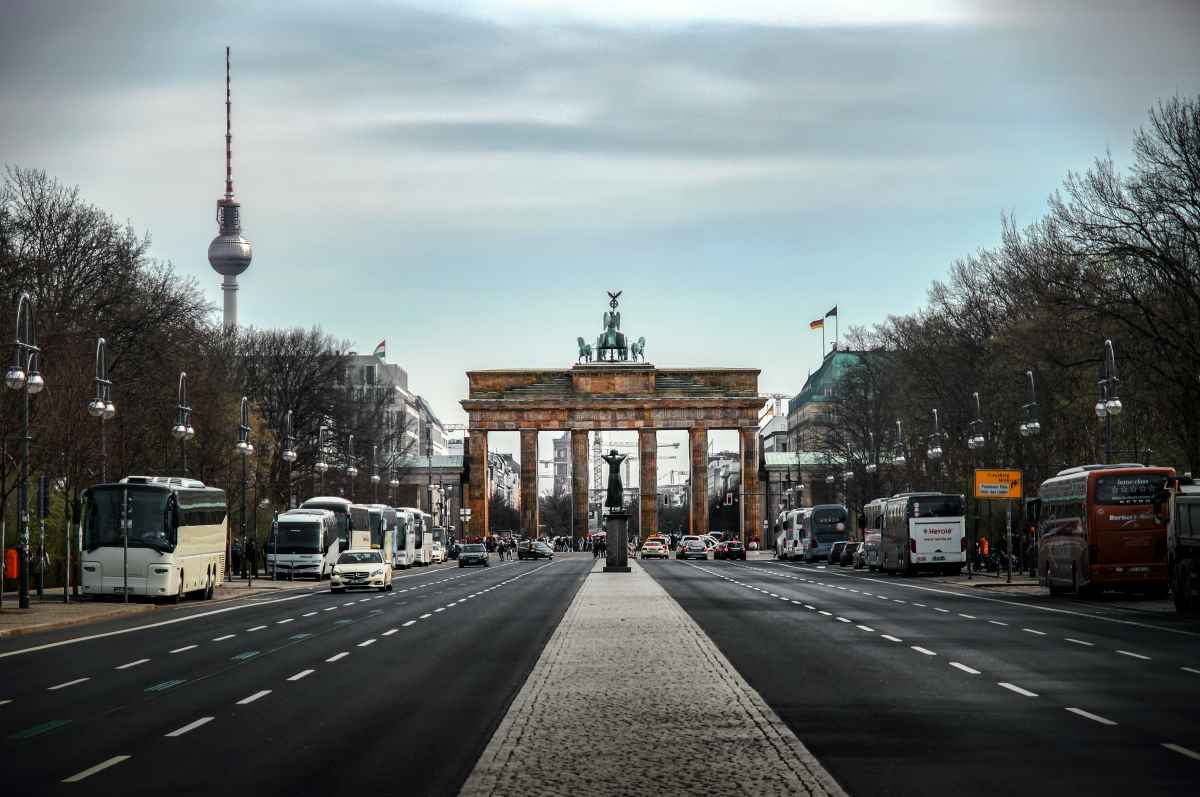
Pic Courtsey-Ansgar Sheffold at unsplash.com


(The views expressed are personal.)

P
About Pankaj Jha →

Senior Research Fellow at Centre for Security & Strategic Studies.
ADVERTISEMENT

Related Strategic Analysis