Decoding the Agenda for Economic Community of West African States (ECOWAS)
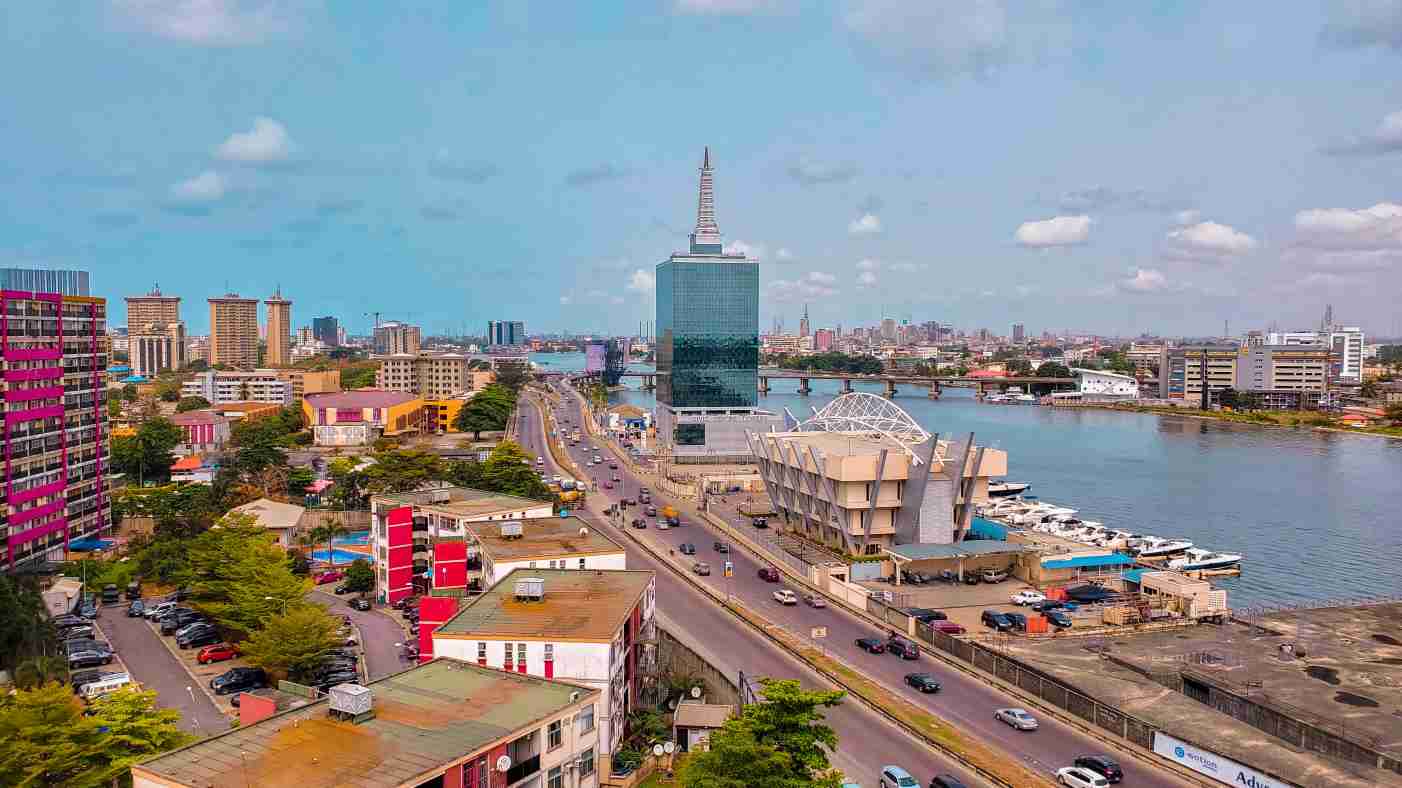
Economic Community of West African States was formulated through a treaty signed in Lagos, Nigeria on 28th May 1975. It is a 15-member regional group comprising of Benin, Burkina Faso, Cape Verde, Cote d’ Ivoire, The Gambia, Ghana, Guinea B...
The economic activities including but not limited to industry, transport, telecommunications, energy, agriculture, natural resources, commerce, monetary and financial issues. The issue at hand here is to decode the agenda for the economic community of West African States.
History:
Although ECOWAS was established in 1975 but the first effort to integrate the region was made way back in 1945. When central Africa franc was created to bring a single currency to the francophone countries meaning French colonies of Western Africa. About 20 years later in 1964, President of Liberia, Mr. William Tubman put forwarded a proposal to establish an economic union for West Africa. This led to an agreement in 1965 which was assented by Cote d’ Ivoire, Guinea, Liberia and Sierra Leonne.
7 years later, in 1972 Nigerian head of state General Yakubu Gowon and the President of Togo General Gnassingbe Eyadema supported the integration of western Africa and put forwarded drafts for the same. Finally, in 1975 ECOWAS came into existence, as the Heads of State and Government affirmed that “the ultimate objective of their efforts is an accelerated and sustained economic development of their states and the creation of a homogenous society, leading to the unity of the countries of West Africa by the elimination of all types of obstacles to the free movement of goods, capital and persons”.
However, in 1993 the treaty was revised which marked the evolution of the union as the scope and powers were expanded to include political issues as well and it was no longer limited to the original economic mandate. In the revised treaty, the definition of regional integration was re-defined as “the High Contracting Parties in pursuit of the objectives stated in Article 3 of this treaty, solemnly affirm and declare their adherence to the principles of recognition, promotion and protection of human and peoples; rights in accordance with the provisions of the African charter on Human and Peoples’ rights and accountability, economic and social justice and popular participation in development”.
Summit & Meeting:
The 59th ordinary session of the ECOWAS authority of heads of state and governments was held in Accra, Ghana on 19th June 2021 under the chairmanship of H.E. Nana Addo Dankwa Afuko-Addo, President of the Republic of Ghana. Due to the covid-19 pandemic, the convergence pact for 2020-2021 has been suspended. A new convergence pact will run from 2022 till 2026 and a year later in 2027 a new single currency “eco” will be launched. “The countries hope a single currency will help to boost trade and economic growth”.
The leaders also discussed Covid response, African continental free trade area, rotation of leadership in the community, security challenges and terror attacks, sea piracy, the crisis in Mali and lastly, the strength of the regional block. Thirteen African Heads of State and government met in Abidjan, the capital city of Cote d’ Ivoire about a month later, on 15th July 2021 and passed a resolution focusing on recovery from the COVID-19 pandemic, enhancing investments in human capital and increase job creation.
On economic recovery, they called for supporting structural and spatial transformation of economies, through diversification as well as regional development. To improve human capital, they called for education systems to be utilized to build skills for the future. On creation of new jobs, emphasis on magnifying productivity by digitalization, mechanization, manufacturing and improving access to finance as well as provide a better business environment.
The leaders also called for funding of at least $100 billion by the end of this year to meet the aspirations of the continent. In addition to that, about “$285 billion over the next five years to fight the pandemic, climate change and accelerate economic recovery”.
Decoding the Agenda:
The purpose for the economic community of West African states was to economically integrate the region and tried to emulate Western Europe’s integration in 1957 through the European Coal and Steel community. The two leaders, General Yakubu Gowon of Nigeria and General Gnassingbe Eyadema of Togo pushed for regional integration in 1972. Similarly, the agenda this year was to adopt a single currency by 2027, it wants to follow in European Union’s footsteps and mimic its success.
The immediate issue at hand is economic recovery from the pandemic, inoculating the population with vaccines through the COVAX initiative as well as the G7 donated vaccines. It is necessary both to prevent further infections and death as well as getting the economy back on track. On the African continental free trade area, “the authority urged member states to ratify the agreement and directed the ECOWAS commission to coordinate common positions to speed up negotiations”.
As far as rotation of leadership is concerned, “the authority endorses the criteria set up in the report and the subsequent rotation proposed within the ECOWAS member states for the chairmanship position of the African Union”. On the security situation in the region, the Authority was concerned and reaffirmed its determination to combat the scourge of terrorism and strongly condemned the recurrence of terrorist attacks in Burkina Faso, Mali, Niger, and Nigeria.
The block addressed the political crisis in Mali by suspending it from the regional block till February 2022 when the interim leaders would hand over the country to democratically elected leaders during an emergency summit in Ghana’s capital, Accra. It pushed for the appointment of a new civilian Prime Minister and formation of an inclusive government. This time they stopped short of imposing sanctions which they did when the first coup took place in August 2020.
On strength of the regional block, “it has intervened against, sanctioned or condemned actions taken by most of its member states over the past two decades. It has organized peaceful resolutions and restored constitutional governments in Burkina Faso, Cote d’Ivoire, and Gambia, among others. It has been able to manage conflicts and prevented shift towards authoritarianism.
Final Standpoint:
Economic Community of West African States was established in 1975 with the vision of its forefathers to mimic the success of European Coal and Steel Community. However, due to political instability in the region, the organisation revised its mandate in 1993 to include political issues along with economic ones.
The agenda this year included taking stock of the political crisis in Mali, focusing on economic recovery amidst the coronavirus pandemic. Addressing rotation of leadership for the chairmanship post and recognizing the strength of the block in preventing a shift towards authoritarianism.
The regional organisation hopes to follow in the European Union’s footsteps and take advantage of a common currency which would enable regional integration. The plans for adopting a single currency have been postponed thrice before and due to the pandemic, the convergence pact was suspended, and a new convergence pact will run from 2022 to 2026 before the formal adoption of the single currency called “eco” in 2027.
Peace and development go hand in hand, so for successful adoption of single currency, instability in the region needs to be taken care of. For instance, the crisis in Mali where two coups have taken place in the past year, priority here should be first ensuring a legitimate government in the country and preventing fallout in neighboring countries.
End Notes
1) https://www.ecowas.int/about-ecowas/basic-information/
2) https://www.ecowas.int/about-ecowas/history/
3) http://www.federalist-debate.org/index.php/current/item/1077-the-evolution-of-the-west-african-regional-integration-process
4) https://www.worldbank.org/en/news/press-release/2021/07/15/african-heads-of-state-call-for-an-ambitious-replenishment-of-the-ida20-to-support-their-recovery-agenda
5) https://www.reuters.com/article/ozatp-uk-westafrica-summit-currency-idAFKCN2DW060-OZATP
6) https://www.bbc.com/pidgin/tori-57540201
7) https://www.ecowas.int/wp-content/uploads/2021/06/Final-Communique%CC%81-EN.pdf
8)https://www.researchgate.net/publication/281571847_EU_versus_ECOWAS_for_the_purpose_of_regional_integration
9) https://www.aljazeera.com/news/2021/5/31/ecowas-suspends-mali-over-second-coup-in-nine-months
10) https://carnegieendowment.org/2018/03/19/regional-cooperation-on-democratization-and-conflict-management-in-africa-pub-75769
Pic Courtesy-Nupo Deyon Daniel at unsplash.com
(The views expressed are those of the author and do not represent views of CESCUBE.)

Abhijeet Nehra is a M.A. International Relations from University of Sheffield and has done his graduation in Global Affairs from Jindal School of International Affairs, O P Jindal Global University . He was research associate with CESCUBE.