Differences between Russia and United States : The Ukraine Factor
Ukraine played an important role during the Cold War time. It continues to play a crucial order in the global security order, even though its presence is overlooked at times. But in the recent times, Ukraine has appeared in the forefront of...
Ukraine was a part of Soviet Union during the Cold War. It was the second largest, populated and powerful state in USSR and was vital to the union during the Cold War times. The breakup of Soviet Union in 1991 led to Ukraine becoming an independent state. While both Ukraine and Russia tried to maintain amicable relations with each other given their shared cultural history, Russia's assertiveness to establish its power and control over its allies (who were now independent) was not received well by nationally conscious Ukraine. This led to increasing tensions between the two countries and in the February 2014, Russia under Putin decided to seize Crimea. Russia under his leadership began arming and assisting the separatists’ forces in the Donbas region of Ukraine. Since then, the war has been fought by both Russian and proxy forces supported by Russia via weapons, finance and military support. It was for the first time that a European state annexed another European country since World War II. Until now, more than 14,000 people have been killed in the on-going conflict. This conflict also showcases a dynamic shift in the global security where Ukraine's growing closeness with USA created Cold War realities. It has renewed power competition between Russia and USA and Ukraine seems to be a factor for their differences this time.
German Chancellor Angela Merkel and then-French President François Hollande mediated a settlement between Ukrainian President Petro Poroshenko and Russian President Vladimir Putin in February 2015. Known as the Minsk II agreement, it called for ceasefire and withdrawal of heavy weapons from the line of contact. But these goals were never achieved as Kremlin continues undermine and destabilize the Ukrainian government as it wants to hinder its effort to build a successful Ukrainian state and its associated agreement with the European Union.
Ukraine's increasing ties with European Union and USA was the triggering point which led to Russia annexing Crimea. With an increase in the anti-Russian sentiment, the appeal of the West has grown in Ukraine. Most of the Ukrainians are attracted to the economic prosperity of the EU and the democracy which it brings in. The pro-democracy sentiment was so huge that Yanukovych presidency moved toward authoritarian governance and did not sign the agreement with EU in 2010-13. This led to nationwide demonstrations in Kyiv in November 2013 which increased over the time.
Putin aims to restore Russia to the status of great power. He aspires to make Russia economically strong which has powerful military backing; the two components which would make Russia a strong player in the international system. By gaining control of Crimea, Russia controls the critical geographical location on the foothold of Black Sea. It can also use the geopolitical location to increases its sphere of influence to Mediterranean, Middle East, and North Africa.
What may have been a bilateral conflict between Ukraine and Russia, it is difficult to ignore the role of United States in the conflict. United States relationship with Ukraine goes back to the Cold War time. After the end of the Cold War, while Russia was slowly accepting post-cold war order, USA played a major role in promoting democracy and liberal economic regime in Ukraine. After the end of the Cold War, Washington pushed Ukraine along with Kazakhstan and Belarus to give up its nuclear arsenal so that only Russia could retain the union's weapons. It tried to actively promote democracy in Russia when it knew that the foundations were shaky. Ukraine was prominent for the Soviet Union's survival and now Russia's and hence for many analysts, the conflict between the two countries does not come as a surprise.
Given the escalation of the conflict and the US-Russia differences, US along with its western allies have taken strong stances against Russia, condemning its move. US remains committed to restoring the democracy in Ukraine along with its territorial integrity. It has not given up on the its post-cold war agenda on promoting democracy in the region. Even before the crisis, Ukraine was one of the top destinations of U.S Foreign aid. Post the conflict, U.S has provided Ukraine will more than $600 million annually in development and security aid. U.S has also provided Ukrainian forces with training and equipment’s of military. NATO alliances hold yearly joint military exercises with Ukraine too. But with all this happening, US also has another agenda when it supports Ukraine. It wants to deep dive into the energy sector of the country and promote privatization of the state-owned business, something which the current government of Ukraine also is keen about.
Given the clash of ideologies between Russia and USA and its allies, it is given that their bilateral relationship will continue to suffer blows when it comes to Ukraine. Both the sides are not ready to budge despite the interventions and this just replays the Cold War attitudes of both Russia and USA. Putin's refusal to take any actions to de-escalate the conflict just shows that he does not want to play by the rules set up by USA. Russia's aggression in Ukraine with the pretext of providing security to the Russian minority in the Ukraine who seem to be 'suffering' has just promoted Ukraine's westward leaning. Euromaidan led to Ukraine electing billionaire businessmen Petro Poroshenko who is a staunch supporter of the EU and NATO integration. Petro in 2019 was defeated by Volodymyr Zelensky, an actor-comedian who campaigned aggressively on the issues of anticorruption, economic renewal and peace in Donbas. Zelensky's victory as an outsider indicates how the people of Ukraine are fed up with the political establishment which leads the corrupt oligarchy economy.
It is safe to say that the issues between Ukraine and Russia will take years to solve as most of them stem from the post-Cold War transformation in the East Europe. But at the same time, unchecked revisionist policy of Russia will continue to prove a threat to European security and the postwar order in which USA has invested heavily. Hence, till the time, the Russo-Ukrainian issue lasts, USA will continue to be in the middle of it. Now it is pertinent to see how President Zelensky who promised to maintaining strong bipartisan support for Ukraine’s path forward, introduced internal reforms. While Russian troops have pulled back from the border, Ukraine continues to seek support from USA and its allies to deal with the conflict. To solve the conflict, international mediation will be required but when and how, it is yet to be seen!
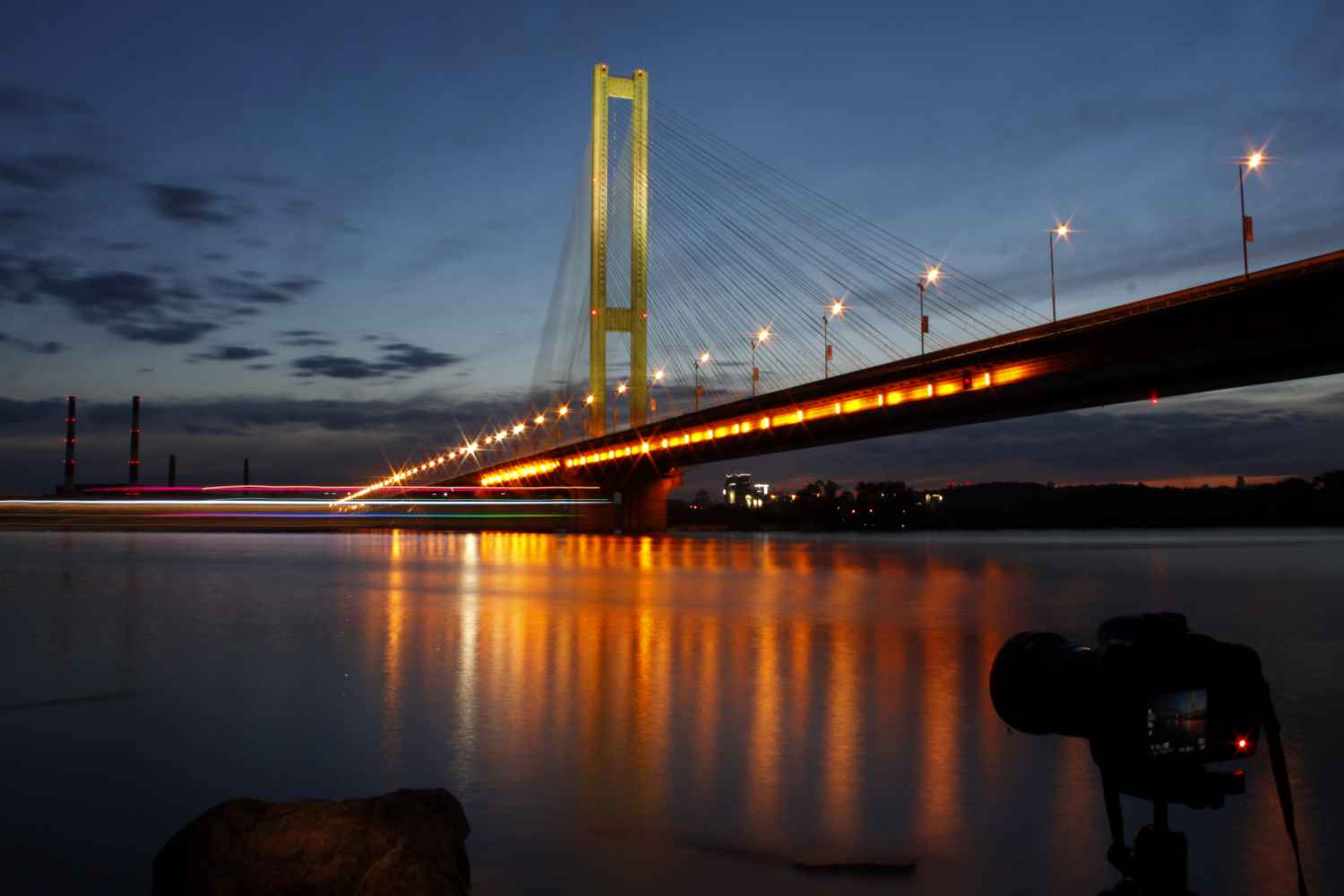
Pic Courtesy-Tetiana Shyshkina at unsplash.com
(The views expressed are those of the author and do not represent views of CESCUBE.)

Krupa Vasani is a current Scholar at The Vedica’s Scholar Program, New Delhi and is pursuing her MBA in Management and Leadership. An undergraduate from O. P Jindal Global University, Krupa holds a bachelors in International Relations. Over the course of three years as an undergraduate, Krupa has developed an interest in the Security and Strategic Studies and Development Sector. Indian Foreign Policy, South South Cooperation and the Strategy in Indo-Pacific and South Asian Politics and the emerging Quadrilateral Diplomacy are some of her areas of interest. She is currently associated with CESCUBE as part time researcher.