Enhanced capability planning and R&D in Indian Navy: A prerequisite for countering Chinese unmanned submersibles
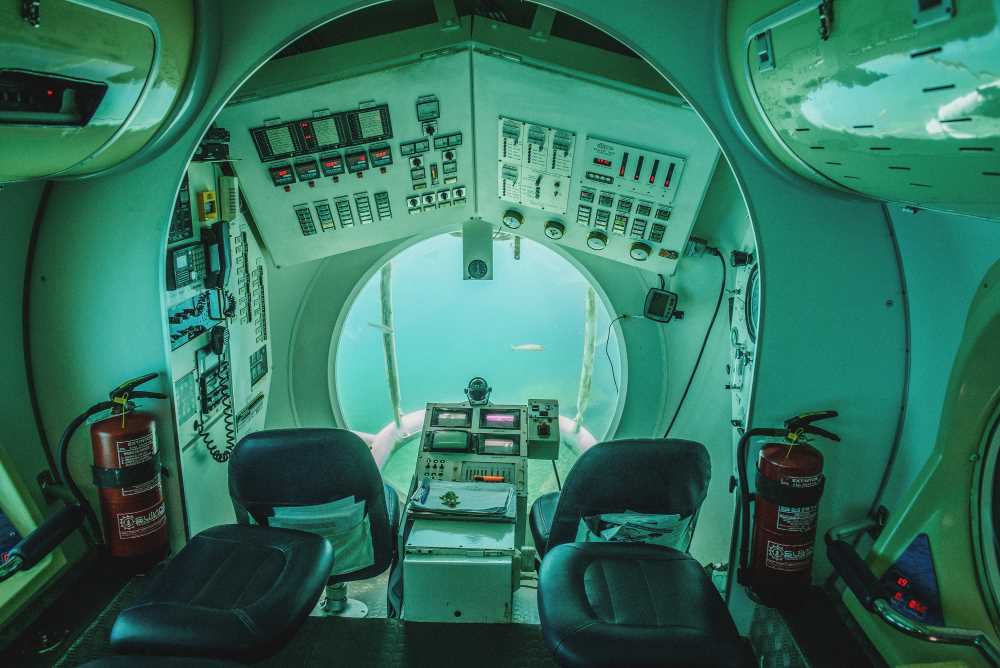
For China securing its energy supply lines and deploying its for operational purposes and anti-piracy missions in Indian Ocean region(IOR) has been a recurrent phenomenon. It has also started to explore possibility of undertaking surveillan...
The recent deployment of Chinese underwater drones (otherwise known as Unmanned Underwater Vehicles (UUV)) in the Indian Ocean possess a unique threat to stability in Asia[1]. This is just another step by the Chinese to establish naval supremacy on par with the United States. Given that this is happening India’s backyard, the Indian government and the defence establishment must be wary of its own limitations.
The Chinese gliders or UUVs were reportedly gathering oceanography data. Sensors measured seawater temperature, salinity, turbidity, chlorophyll, and oxygen levels. This information was transmitted back to the mother ship via the aerial in the tail. Although the aerial points directly backwards, it swings up above the surface as the glider noses down for another dive. This is the sort of information which sounds innocuous but is commonly gathered for naval intelligence purposes. In particular, it is relevant to submarine warfare. For example, salinity levels can affect the distance that a submarine can be heard from and it may be possible to detect submarines if they disturb chlorophyll[2]. This data collection is a precursor for any war planning, and it gives them an edge. It must be made an imperative to try and meet the Chinese in such plans and prepare countermeasures.
The Chinese with their propensity for military and industrial espionage are bound to continue to produce copies of US variants and develop new weapons. The recently deployed ‘Sea Wing’ gliders bear a striking resemblance with the US Littoral Battlespace Sensing-Glider (LBS-G) but it is not a literal copy. Some of the other UUVs such as HSU-001 unveiled at the 70th anniversary of CCP. The actual efficiency of Chinese UUVs are contested when compared with US systems [3] but it is a clear threat to Indian security as the UUV program is still in the initial stages. [4]
The continuous dependence on the United States and Israel regarding technological transfer is not going to help India as they do not sell the most relevant hardware as to maintain their power. The Indian and US governments have been cooperating in the recent years at multiple levels and the signing of the two out of three foundational agreements with US i.e., Logistics Support Agreement (LSA) also called as LEMOA (Logistics Exchange Memorandum of Agreement) and Communications Interoperability and Security Memorandum of Agreement (CISMOA)[5]. These agreements along with Malabar exercise later this year is a welcome step in containing Chinese hegemony in the Indian Ocean Region. However, it is vital to develop, procure and maintain independent naval power as the US government support tends to ebb with its political mood.
India’s defence spending is the 3rd largest in the world and has been increasing. However, India’s spending as a percentage of GDP has been on the decline the past decade. With the recent budget making considerable cuts in the defence spending, the modernisation plans have been shelved [6].The recent defence budget allocation has also caused serious constraints on the Indian Navy, the projected expenditure has been underfunded nearly by Rs.22,000 crores[7] .This goes to the lack of seeing maritime interests as a serious agenda. This budget cut down has gone to impact the acquisition of early warning systems and AWACS such P8-I reconnaissance aircrafts which were decreased from ten to six.

Sources: Union Budget 2010-20, Central Statistics Office; PRS.
Note: Figures for 2020-21 are Budget Estimates and for 2019-20 are Revised Estimates.
In the recent years there has been a steady rise in the budget allocation for DRDO [8] but it is nowhere near the spending of the United States and Chinese on research and development. Indian defence research funding has been unimpressive compared to the US and China. The allocation is an increase of 9% over the revised estimates of 2019-20. For 2020-21, the expenditure on defence research and development is Rs 19,327 crore, which constitutes 4% of the total defence budget (6% of defence budget excluding pensions).
The meagre allocation will also affect the navy, which had earlier approached the government for additional funds amid a severe financial crunch that is forcing it to rationalise and reduce its requirements. Due to the low budget, the navy has had to rework its plan of having 200 warships by 2027. The navy has been pushing to get its share of the defence budget back to the 18 percent it was 2012-13 from 13 percent for the current financial year. The navy has also had to cut down on the numbers planned to be acquired in some projects such as Mine Counter Measure Vessels and maritime reconnaissance aircrafts. In view of the committed liabilities from past years the allocated budget will fall short of the armed forces’ requirements. The budget is also unlikely to cater to inflation and GST rates.[9]
The allocation is an increase of 9% over the revised estimates of 2019-20. However, the Standing Committee (2019) noted that India's expenditure on defence research and development is much lower compared to countries such as USA and China which spend 12% and 20% of their defence budget on research and development, respectively [10].
Although India has been spending record amounts on acquisition of new conventional weapons. We cannot continue a path of acquisition of new-generation weapons such as drones, anti-submarine warfare aircrafts such as US- made Poseidon P-8I and AWACS. In line with the spirit of Atmanirbhar and other new developments such as the change in FDI policy in defence industry and competitions like Dare to Dream 2.0 are the right step in this direction and must be continued. The newly announced National Education Policy which calls for multi-disciplinary approach to education must also nurture innovation at the school and university level which might eventually lead to indigenous technological power.
The idea of playing catch up with possible belligerents has been the bane of the Indian defence research and development. The nation can longer go on a steady path of modernisation, but it has to be exponential in nature. This can only be done with a disproportionate spending in research in the decade even though it may be a burden on the government exchequer. Hiring and training of scientists must be also increased. It has been a well-documented phenomenon in both the United States and Israel that scientists working in defence research organisations eventually went onto establish major companies which strengthened their respective capabilities in terms of might, production, and efficiency.
The concept of naval power is not fully understood among the layman and rightly so as deep waters have only been ventured by a few. The number of complexities involved in operating in high seas is only understood by those who have worked extensively in the high seas. Given the Chinese expansionist goals, building a navy along with a modern army is a must for India. There is also a need to increase our intelligence capabilities to detect the Chinese as the intrusion in Galwan Valley shows us that they do not care if the world is going through one of the worst crises since the Second World War.
For India to become $5 trillion economy, blue economy is bound to play a key role. Establishing and maintaining stability in the power dynamics in the region is vital. The actual efficiency of the naval forces might not play a huge rule in power projection in this case. Perceived power is sometimes a more powerful deterrent in the 21st century where all major powers are equipped with nuclear weapons and full-front warfare among nations is a matter of the bygone era. Therefore, a sudden increase in research especially in naval research is a must for maritime security planning of India.
[1] Sutton, H I. 2020. China Deployed 12 Underwater Drones In Indian Ocean. 22 March .https://www.forbes.com/sites/hisutton/2020/03/22/china-deployed-underwater-drones-in-indian-ocean/#554644dc6693.
[2] Ibid.
[3] Ioanes, Ellen. 2019. China just unveiled an underwater drone that could one day even the odds against the US and its top allies. 2 October . https://www.businessinsider.in/defense/news/china-just-unveiled-an-underwater-drone-that-could-one-day-even-the-odds-against-the-us-and-its-top-allies/articleshow/71401659.cms.
[4] Siddiqui, Huma. 2020. Indian Navy set to go unmanned in the future with Remotely Operated Vehicle. 03 March. https://www.financialexpress.com/defence/indian-navy-set-to-go-unmanned-in-the-future-with-remotely-operated-vehicle/1887951/.
[5] ANI. 2019. Indian Navy benefits from strategic logistics pacts with US, France. 16 June . https://economictimes.indiatimes.com/news/defence/indian-navy-benefits-from-strategic-logistics-pacts-with-us-france/articleshow/69811862.cms?from=mdr.
[6] Bedi, Rahul. 2020. India’s low defence budget for FY 2020/21 to hit military modernisation. 03 February. https://www.janes.com/article/94060/india-s-low-defence-budget-for-fy-2020-21-to-hit-military-modernisation.
[7] Pubby, Manu. 2020. Indian Navy cutting down on procurement due to Budget cuts. 16 January . https://economictimes.indiatimes.com/news/defence/indian-navy-trims-acquisition-list-due-to-budget-cuts/articleshow/73281243.cms.
[8] Outlook India. 2019. Steady rise in budget allocation for DRDO. 11 27. https://www.outlookindia.com/newsscroll/steady-rise-in-budget-allocation-for-drdo/1672152.
[9] Pubby, Manu. 2020. Indian Navy cutting down on procurement due to Budget cuts. 16 January . https://economictimes.indiatimes.com/news/defence/indian-navy-trims-acquisition-list-due-to-budget-cuts/articleshow/73281243.cms.
[10] PRS India. 2020. PRS India. 05. https://www.prsindia.org/parliamenttrack/budgets/demand-grants-2020-21-analysis-defence#_edn20.
Pic courtesy- Michal Mrozek at unsplash.com
(The views expressed are personal)

Hussainpur Sai Charan is pursuing MA (Diplomacy, Law and Business) with a specialisation in Defence and National Security Studies at the Jindal School of International Affairs. His research interest is on home-grown radicalisation and methods to combat it, and drug trafficking in the India. He is research assistant at the Centre for Security Studies at the Jindal Global University. Sai also hold online certifications from the Georgetown University, University of Maryland and UNODC e-Learning.He did bachelor’s degree in mathematics, physics, and computer sciences. He has been researching on online radicalisation across various platforms such as Twitter, Telegram, and newly emerging platforms such Hoop Messenger and Rocket.im. He is working as Research Intern with CESCUBE.