Envisaging the interconnectedness between Southeast Asia and Japan: Connectivity as a key factor in the Mekong Region
The world today is all about a ‘network of networks’ whether through land, sea or air and most countries are looking for better ways of communication and interconnectedness. The Indo-Pacific is one such way of interconnectedness and here, t...
Hard Connectivity
The countries focused on hard connectivity and while doing so, they aimed at the need to strengthen cooperation in enhancing connectivity by the promotion of quality infrastructure which would in accordance with the international standards along with recognising the values and principles of openness, transparency, economic efficiency and debt sustainability and all these are stated in the G20 Principles for Quality Infrastructure Investment which were further endorsed in the 2019, G20 Osaka Summit.[1]
The Japan-ASEAN Connectivity Initiative was newly launched by Japan so as to strengthen the connectivity in the region of Mekong with special focus on East-West and Southern Economic Corridor.[2] Further, steady progress has been made in several projects like:
· Cambodia-The Sihanoukville Port New Container Terminal, the Improvement of National Road No.5 and expansion of transmission lines and build sub- stations in the city of Phnom Penh.
· Vietnam- Ho Chi Minh City Urban Railway (Ben Thanh-Suoi Tien: Line 2 and Construction of Long Thanh International Airport.
· Thailand-Mass Transit System (Red Line) and the facilitation of cross-border electricity flows and power exchanges.
· Myanmar-East-West Economic Corridor (New Bago-Kyaiko Highway Section), New hanthawaddy International Airport and increase in transmission capacity and improve the system reliability.
· Laos-Power Sector Development Project through a series of technical cooperation.
There are certain shortcomings in this domain as the timing of the completion of each project is a cause of concern and also, the internal conditions of each of the country is important as with the military takeover of Myanmar, several projects could miss the deadline due to the internal clashes in the country.
Soft Connectivity
The domain of soft connectivity is aimed at the Information and Communications Technology (ICT) which further focuses on several projects funded by Japan like the Asia-Pacific Telecommunity and communication infrastructure development through mobile network business.[3] There is a need to understand that digital cooperation covers the aspects of smart city, digital infrastructure and postal services which need to be modernised and further, enhance technical cooperation for capacity building measures for trade facilitation.[4] Due to the coming of the COVID-19 Pandemic, the e-commerce market has boomed to the highest possible level and so, with digital cooperation, the e-commerce market facilities in these countries can be improved.
There are several projects which focus on Soft Connectivity, they are as follows:
· East-West and Southern Corridor aims at a well structured cum planned master plan of introducing the electronic system based on customs, immigration and port data abilities.
· The modernisation of the Customs System in Myanmar which would be possible through the electronification.
· Port Sector Master plan in Cambodia and Myanmar.
· Vientiane International Airport in Laos through technical cooperation.
Though, there are certain challenges that the soft connectivity domain faces as the data and digital economy. There is a major issue with the facilitation of free data flow but there is a need to comply with the domestic laws and the international legal frameworks and regulations. Further, there is a need to create new rules with regard to the COVID-19 situation in each of the countries and complying with them can be a major issue too.
Industry Connectivity
The Industry Connectivity has been endorsed through the Mekong Industrial Development Vision 2.0 (MIDV2.0) Work Programme which was discussed in the Mekong-Japan Economic Ministers Meeting which took place in August 2020 and they aimed at improving the border logistics, acceleration of digital transformation along with coping with social issues in the region of Mekong.[5] There are certain platforms aimed for the promotion of regional supply chains and industrial linkages like:
· Mekong-Japan Industrial Government Dialogue
· Forum for the Promotion of Public-Private Cooperation in the region of Mekong
· ACMECS Business Council
· ASEAN-Japan Economic Resilience Action Plan
Though, these forums try to cover various solutions but still, there are challenges like 4th Industrial Revolution which aims at industry connectivity and emphasis on the digital economy.
Policy Formulations
There is a need to enhance connectivity between the countries and to do so, there is a need for certain policy formulations. There is a need for interactions between the people of each of the countries and heavy emphasis must be put on the people-to-people connectivity where greater focus is on the exchanges between student exchange programmes and further, working and collaborating with students on multiple job opportunities. Since, each of the countries would need better skilled labourers, there is a need to focus on skill development measures and this would also lead to the creation of skill labour hubs where countries could set up skill development centres. With greater interactions between the people of the countries, there would be an increase in the social interactions which would also open the way for cross-cultural marriages.
Japan and the Southeast Asian countries need to work on boosting their human resource connectivity and together, they can collaborate on a region based technical and digital cooperation which can further be used to bolster ties in the domain of cyber security on issues related to critical infrastructure development and this would also help benefit the defence relations and also tackle some concerns like China’s growing expansionism. Also, there is a need for defence connectivity, where these countries can work together on capacity building projects and measures along with focus on humanitarian assistance, disaster relief action and management, military medicine and health assistance, search and rescue operations along with working on the United Nations Peace Keeping Operations.
Further, with the growth of the digital cooperation, the domain can be opened up for the promotion of supply-chain risk management as the Southeast Asian countries are at the heart of the supply chain connectivity centre of the trade route. This would also pave the way for financial connectivity which would further help in providing technical assistance to financial regulators and also the Central Banks to the Mekong countries.
There is a need to work on the COVID-19 connectivity where the countries can focus more on the COVID-19 ASEAN Response Fund and Japan with its excellent medical equipment can help these nations. Also, with the increase in the disaster related issues, more focus needs to be given to disaster risk management, environmental preparedness and also focus on the issues of maritime security especially the need to protect the marine flora and fauna.
Conclusion
It needs to be understood that 2019 marked the tenth anniversary of the relations between Mekong-Japan Exchange Year since 2009.There is a need to aim for continued efforts between these countries as these countries have an interlinking of several connectivity projects and also being regional partners, their focus on joint efforts is the need of the hour as the Dragon (China) is looming in the same region and has been creating issues for many of the Southeast Asian countries and Japan.
Notes
[1] Ministry of Foreign Affairs (MOFA).” Joint Statement of the 12th Mekong-Japan Summit” dated 13 November 2020. https://www.mofa.go.jp/files/100115097.pdf accessed on 17 November 2021
[2] Ibid.
[3] Ministry of Foreign Affairs (MOFA).” Joint Statement of the 12th Mekong-Japan Summit” dated 13 November 2020. https://www.mofa.go.jp/files/100115097.pdf accessed on 17 November 2021
[4] Ibid.
[5] Ibid.
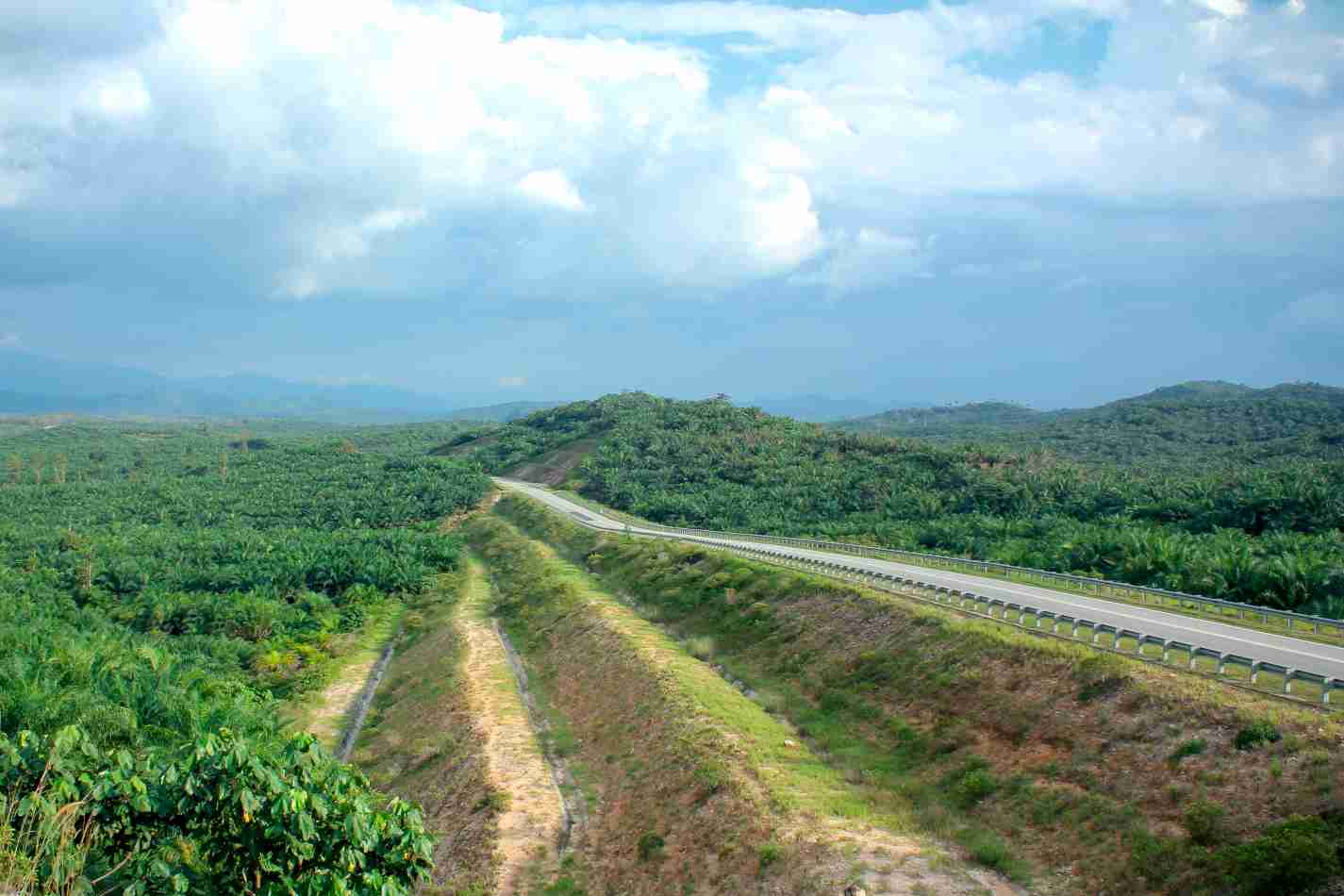
Pic Courtesy-Afdhal N at unsplash.com
(The views expressed are those of the author and do not represent views of CESCUBE.)

Gitanjali Sinha Roy is Assiatnt Professor at O P Jindla Global University and is a Ph.D. scholar at the Department of East Asian Studies, University of Delhi with specialisation in Japanese Studies. At present, she is a visiting Monbukagakusho (MEXT) Scholar at the University of Tokyo. Her M.Phil dissertation was Role of Female Labour Force in Japanese Economic Development: A Case Study of Womenomics in Abe's Reform Strategy. Gitanjali is a graduate in Political Science (Hons) from Miranda House and completed her post-graduation from Lady Shri Ram College of Commerce in Political Science as well. Her interest areas comprise of India and Japan's Foreign Policy, Security Strategy and Diplomacy, India-Japan Relations: Maritime Security and Strategy in the Indo-Pacific and Southeast Asian and South Asian Politics, Security Strategy and Diplomacy. Ms Roy had worked working with Centre for Land Warfare Studies(CLAWS) as a research assistant. Gitanjali Sinha Roy is a Research Associate at the Centre for Security and Security Studies (CESCUBE) and apart from this, she is a Fellow at the Japan Division at CESCUBE