Eurasian Economic Union and India: Exploring possibilities for enhanced engagement
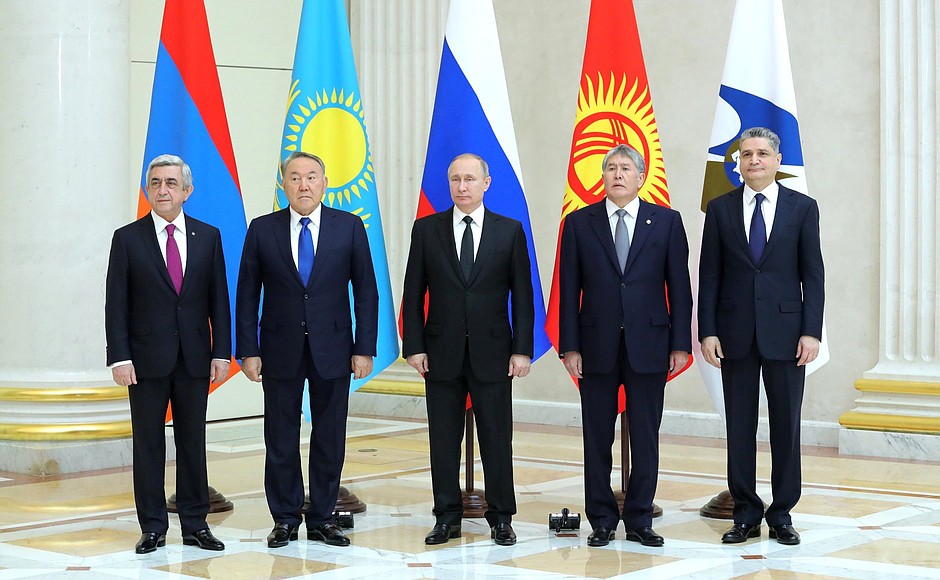
In December 2019, the Russian Ambassador to India stated that Moscow hopes that the New Delhi and Eurasian Economic Union would sign a free trade agreement in 2020. In January 2020, ahead of Foreign Minister Sergey Lavrov’s visit to India, ...
Eurasian Economic Union was formed in 2015 with the aim to create a free trading bloc between the five countries - Russia, Armenia, Belarus, Kazakhstan, and Kyrgyzstan. It evolved after a series of failed attempts at integrating the post-Soviet countries. EU aims to ensure free movement of goods, services, capital and labour and smooth functioning of the custom union. It has been agreed upon the organisation would solely work on the economic matters and be as apolitical as possible. Started as a small economic union between Russia, Belarus, and Kazakhstan, one of the first steps taken was to lift the custom controls at the shared borders between the countries. In December 2009, the three countries signed an agreement to create Common Economic Spaces which would form a common market for goods, capital, labour, coordinated tax, fiscal and trade policies; and unified transport, energy, and IT networks. In 2015, The Treaty on Eurasian Economic Union was signed on 29 May 2014 and the organisation came into being in 2015 and two new members acceded the organisation - Kyrgyzstan and Armenia.
India has been in talks with Russia to enter into a Free Trade Agreement or a Comprehensive Economic Partnership Agreement with EAU since its inception in 2015. While India has economic relationships with the individual member states of EAEU, India's Central Asia Policy has proved to be a useful tool in strengthening the relationship between India and the EAEU countries. India has increased its interest and presence in the Central Asian Region by promoting and supporting connectivity projects like Turkmenistan-Afghanistan-Pakistan-India (TAPI) pipeline project, the International North-South Transport Corridor (INSTC), and the Chabahar Port project. It has tried to provide infrastructural support by helping set up hospitals, IT centres, and universities; signing joint commercial ventures; investing in scientific research and development.
Kazakhstan has been a vital trading partner of India both in the spheres of energy and defence. At the same time, Russia and India have historically been close and have cooperated in the areas of defence, science and technology and nuclear energy. India also has security interests in Tajikistan, which according to reports, is soon going to gain membership to the EAEU. This is ample proof that the Central Asian region is of importance to India, both economically and strategically. Hence, India has many benefits in signing an FTA with the EAEU.
EAEU has vast number of natural resources comprising oil, gas, electric power, mineral fertilizers, iron, steel, coal amongst others, which has emerged as a vital component of trade in a globalised economy. The market for these natural resources has not been harnessed and explored fully and an FTA with EAEU gives India the benefit of having access to these resources.
India has a huge market and is a trustworthy partner for all the EAEU members. While bilateral trade between India and EAEU has gained significant momentum, the trade has still been considerably low. According to the information released by the Directorate General of the Foreign Trade, India's export to the five EEU member states value at $1.5 billion, while imports were approximately $5.75 billion, proving that the Eurasian market holds high potential for Indian goods. However, a major weakness for New Delhi in its economic linkages with the CAR and CIS countries is a lack of direct and regulated access to the region’s markets, which an FTA would immediately resolve.
Indian pharmaceuticals currently face non-tariff barriers in Russia, and issues of implementation, registration and confirmation by the Russian officials delay the supply of products. Indian healthcare and pharmaceuticals have gained prominence even in the Central Asian countries and an FTA would help India increase its export market and help in increasing economic potential for both India and EAEU. Duty incentives would also benefit the textile industry, especially the knitwear exporters from India as their products would enter a cost-competitive economy where demand for products is high. Exporters of cattle or bovine sector also face restrictions in the Russian market, while still contributing most to India's export to the region. Since the EAEU formation, the export of non-basmati rice and oilseeds from India to Russia has been permitted, Indian economy has benefitted from this. An FTA would just make this more economically profitable for India.
India is seen as a promising market for EAEU members, as products like vehicles, industrial equipment, chemical products, fertilizers, and mining equipment from Russia are in huge demand. Experts are of the opinion that an increase in investments from abroad, especially from the Central Asian region in the spheres of defence, infrastructure, and connectivity, would usher in economic relief in the current economic slowdown due to the pandemic. While the government is relaxing its FDI regulations, an FTA would become vital for India as it would help India's self-reliance initiatives like Make in India. In December 2019, Putin offered to outsource the construction of one of its most advanced helicopters in India. Such agreements also help India in building is production and supply capacity for defence goods.
While trade and economic activities would surely boost the relationship between EAEU and India in various sectors, one of the sectors which have not been explored fully is that of tourism. The tourism sector in India is a vibrant engine for economic growth, employment generation and cultural exchanges. While the Indian national departures to Central Asian countries has increased over the years, there is potential for more such tourist exchanges. For the same, both EAEU countries and India need to collaborate on Ease of travelling, promotion of safety of tourists and establishing a tourism wing which helps in marketing and development of India-EAEU tourism aspects. Another sector where there can be convergence is that of education and student exchanges.
The growing engagement between Central Asian countries and India is also key to counter the growing influence of China. China through its massive investments and loans has deeply penetrated the region, especially through its One Belt One Road Initiative Project. A growing presence of India in the EAEU would also help curb the future expansion of China. A cooperation with Russia leading to an alliance bloc would also send a strong message to Washington, which has imposed tariffs on a wide range of Indian products.
Strategically, given the close ties between Russia and India, and the economic advantage of EAEU region makes it a good deal for both India and EAEU to deepen their ties. Close investment in EAEU is of vital importance not only economically, but also strategically to counter the Chinese influence in the region. However, India will have to work simultaneously towards maintaining its relationship with Moscow as well as the four other members of the bloc.
Pic Courtesy- The President of Russia website
(The views expressed are personal.)
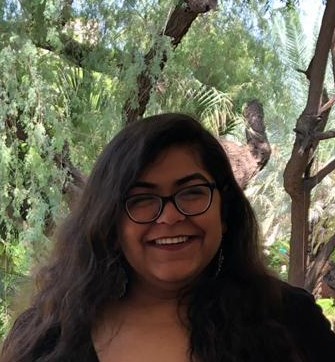
Krupa Vasani is a current Scholar at The Vedica’s Scholar Program, New Delhi and is pursuing her MBA in Management and Leadership. An undergraduate from O. P Jindal Global University, Krupa holds a bachelors in International Relations. Over the course of three years as an undergraduate, Krupa has developed an interest in the Security and Strategic Studies and Development Sector. Indian Foreign Policy, South South Cooperation and the Strategy in Indo-Pacific and South Asian Politics and the emerging Quadrilateral Diplomacy are some of her areas of interest. She is currently associated with CESCUBE as part time researcher.