European Union enlargement and reforms in Migration
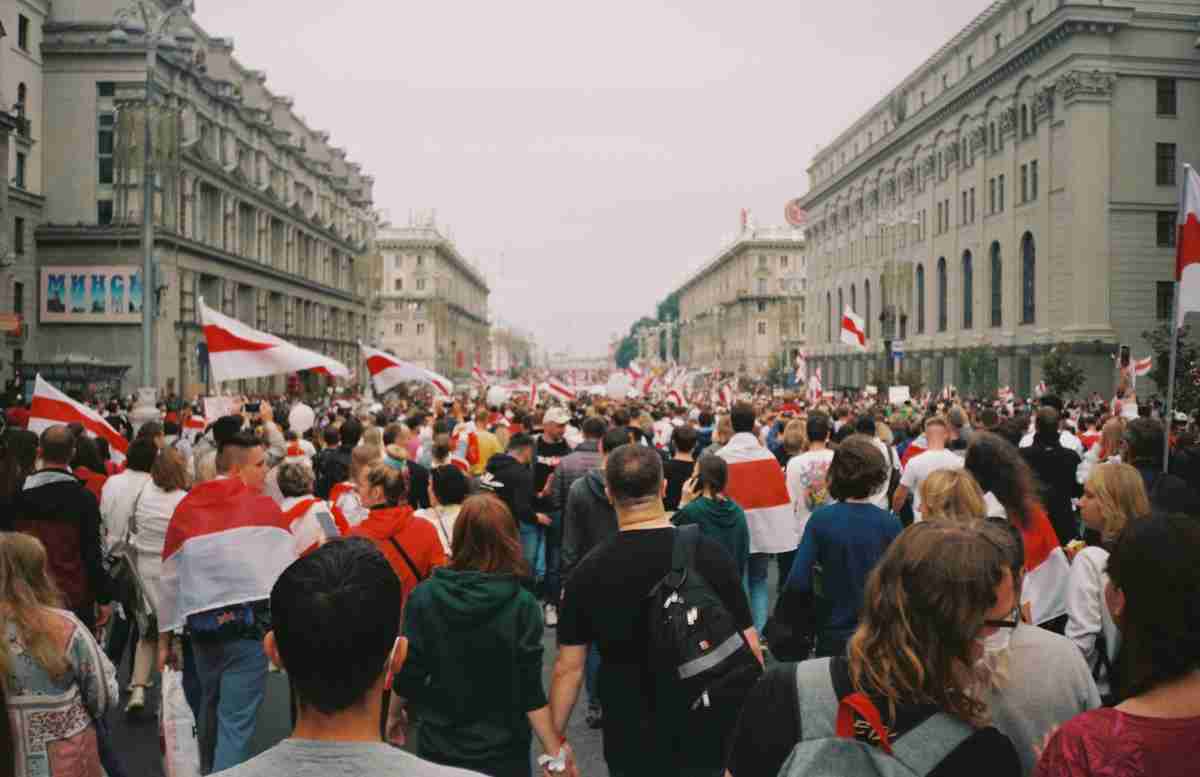
The European Union's 27 national leaders gathered on 06 October in Granada, Spain, to discuss the path to this enlargement, and long-term goals for increasing the EU's strategic autonomy while highlighting accomplishments so far. They adopt...
This is a strategy that will be outlined and approved by EU leaders, giving the EU broad political direction [1]. The Granada Declaration from the meeting states the key areas discussed included building resilience, enhancing security and defence, increasing competitiveness in the EU Single Market, commitment to multilateralism, enlargement, and migration [2].
While the conflict in Ukraine has created imperatives and, in a way, pushed European states towards building resilience and commitment to multilateralism, the discussions around enlargement and migration have somewhat been difficult due to disagreements and different positions of states.
Enlargement:
Upon satisfying several requirements, the EU integrates new members through the enlargement process. The procedure promotes better stability and prosperity in Europe by encouraging political and economic reforms in nations aspiring to join the EU. Any European country that respects and is dedicated to advancing EU democratic values is eligible to aspire for membership. Two factors determine the inclusion of members into the EU. Firstly, the Copenhagen criteria or the accession criteria i.e., the prerequisites that each candidate nation must fulfil to join the EU, and the second factor is the EU's capacity to expand while keeping the pace of European integration [3].
After filing an application, the formal accession negotiations are launched, requiring consensus among all EU member states. The terms and conditions for admission, including potential safeguard provisions and transitional procedures, are integrated into an accession treaty once discussions on all policy areas are finished and the EU is ready for enlargement in terms of absorption capacity. After the approval from the European Parliament and a unanimous vote in favor of the accession, all EU member states and the candidate country sign the accession treaty. The candidate becomes an EU member on the date specified in the accession treaty after all the contracting parties have accepted it in accordance with their own constitutional laws [4]. The Granada Declaration from the meeting on 06 October 2023 has mentioned the EU’s enlargement and absorption capacity as a “geo-strategic investment” aimed at peace and stability [5].
Challenges to enlargement:
The Russian invasion of Ukraine acted as the catalyst for the accelerated process of admitting Ukraine into the EU with a candidate status and started increased discussions around reforms and the EU as a geopolitical actor. Several member states have rethought their approaches to the EU because of the conflict in Ukraine. The European community's agreement to grant Ukraine and Moldova candidate status does not, however, automatically translate into agreement on the EU's ability to accept new members. There are still a few issues with the impending expansion. "Enlargement fatigue" is a recognized issue that asserts that as the EU grows, governance will become increasingly challenging since countries' levels of economic development and institutional quality will differ greatly. It further implies that the recent inclusion of states has not been adequately absorbed by the EU [6]. Moreover, despite the pressure brought on by the conflict in Ukraine, the EU is unable to accept any more members from the Western Balkans, much less from Eastern Europe. Furthermore, no potential candidate nation appears ready to comply with the EU's accession criteria or to ensure that there will not be any democratic backsliding in the manner of Hungary and Poland if membership is attained. In these conditions, the suitable way forward for the EU is to integrate in sectors like energy, climate change, as well as digital transition. A plan like this would benefit all parties economically without boosting expectations too high and increasing the possibility of a significant letdown [7].
The Granada meeting failed to lay out a schedule for enlargement which suggests possible internal disagreements on the issue, as some leaders contend that a larger membership will increase the EU's geopolitical clout while others advise against expansion of the EU that is already challenging to rule [8]. Currently, few obstacles stand in the way of EU enlargement. The EU is growing rapidly, and the democratic reversals of Poland and Hungary have caused other members to be cautious of further enlargement. Furthermore, the EU has identified its purpose as a provider of external security, but this has not led to any reforms in this regard [9]. Additionally, it is argued that increased membership dilutes the influence of current members and resistance intensifies if it comes at a financial expense [10].
Migration:
Another major development from the summit included the issue of long-pending migration reforms. As the summit in Granada came to an end, the far-right leaders of Hungary and Poland rejected a collective declaration on irregular immigration. Viktor Orban, the Prime Minister of Hungary, and Mateusz Morawiecki, the Prime Minister of Poland, rejected a proposed statement for inclusion in a declaration on the summit's conclusion [11]. On the other hand, the presidents of France and Germany indicated the legislative process would go as scheduled and the European Council President Charles Michel released a statement in his own name separately regarding asylum law and border security. Furthermore, Spanish Prime Minister Pedro Sanchez, who hosted the summit, dismissed concerns about the conflict stating that the agreement on crisis regulation reached by the interior ministers, is the most essential development and relevant in political terms [12]. This development occurred after a positive development on the issue of migration prior to the Granada summit.
In order to remove a major barrier to a larger agreement on the EU's asylum and migration regulations by the end of the year, EU members agreed on a number of new processes to handle irregular immigration during periods of significant arrivals. A settlement on "crisis regulation" was achieved on 04 October with more discussions and a push to have the measures made legally enforceable before the EU elections the following year [13].
For a long time, Europe has witnessed trends like militarization of borders and deportations, and while the deterrent measures have been severely criticized, it did not prevent right-wing parties in nations like Hungary and Poland from leveraging anti-immigration sentiments and embracing rhetoric that labels migrants as "invaders" and criminals [14]. Poland and Hungary cannot block the new migration agreement, and their protest can be deemed merely symbolic, however, their decision raises concerns about the EU's ability to carry out an agreement. The bloc's unity has been weakened by disputes and disagreements over migration for years, and the disagreement in Granada underlines that this is far from resolved [15].
Conclusion:
The issues discussed in the EU meeting in Granada were primarily driven by the need to build the EU’s resilience amidst growing geopolitical tensions. The EU recognizes that the COVID-19 pandemic and Russia’s war in Ukraine has somewhat fragmented the international rules-based world order aimed at peace and stability, therefore, the primary objectives ahead for the EU are influenced by the need for better security, cooperation, and resilience.
In this light, the issues of enlargement and migration naturally take center stage. EU’s resilience was tested after the Russian invasion of Ukraine. The invasion did not only push the EU to commit to Ukraine’s assistance during the war but also to diversify the energy sources for Europe to escape the leverage that Russia had. Amidst these developments, the EU’s position as a geopolitical actor puts the long-due issue of enlargement back into discussion. However, arguments over a possible dilution of the power of existing members and its greater role in contemporary geopolitical dynamics clash, and the process of enlargement largely remains at an impasse. While the arguments against enlargement are justifiable on the grounds of overall EU performance and efficiency, the disagreement over migration is largely driven by domestic political rhetoric and anti-immigration sentiment. However, the latest developments regarding disagreement on migration are largely symbolic and the actual reforms are likely to be driven by a majority.
Endnotes:
1. Informal meeting of heads of state or government, Granada, European Council, 06 October 2023 https://www.consilium.europa.eu/en/meetings/european-council/2023/10/06/?utm_source=facebook.com&utm_medium=social&utm_campaign=20231005-euco-curtain-raiser&utm_content=video
2. The Granada declaration, European Council, 06 October 2023 https://www.consilium.europa.eu/en/press/press-releases/2023/10/06/granada-declaration/
3. EU enlargement policy, European Council https://www.consilium.europa.eu/en/policies/enlargement/
4. EU enlargement policy, European Council https://www.consilium.europa.eu/en/policies/enlargement/
5. The Granada declaration, European Council, 06 October 2023 https://www.consilium.europa.eu/en/press/press-releases/2023/10/06/granada-declaration/
6. Jiffer Bourguignon, Maria Demertzis & Ekaterina Sprenger, EU Enlargement: Expanding the Union and Its Potential, Intereconomics, 2022 https://www.intereconomics.eu/contents/year/2022/number/4/article/eu-enlargement-expanding-the-union-and-its-potential.html
7. Judy Dempsey, Is the EU Ready for Further Enlargement? Carnegie Europe, 04 May 2023 https://carnegieeurope.eu/strategiceurope/89678
8. Adriano Bosoni, The Future of EU Enlargement, Stratfor, 16 October 2023 https://worldview.stratfor.com/article/future-eu-enlargement
9. Luke Johnson, What Europe Thinks … About EU Enlargement, Internationale Politik Quarterly, 28 September 2023 https://ip-quarterly.com/en/what-europe-thinks-about-eu-enlargement
10. Nathalie Tocci, How the EU can enlarge, Politico, 24 July 2023 https://www.politico.eu/article/european-union-membership-enlargement-turkey-albania-north-macedonia-montenegro-ukraine-moldova/
11. Poland and Hungary clash with EU leaders over migration reform, Al Jazeera, 06 October 2023 https://www.aljazeera.com/news/2023/10/6/poland-and-hungary-clash-with-eu-leaders-over-migration-reform
12. Poland and Hungary reject EU plan for migration reform, France 24, 06 October 2023 https://www.france24.com/en/live-news/20231006-migration-clash-as-eu-leaders-gather-in-spain
13. EU member states reach deal on migration policy, Al Jazeera, 04 October 2023 https://www.aljazeera.com/news/2023/10/4/eu-member-states-reach-deal-on-migration-policy
14. Poland and Hungary clash with EU leaders over migration reform, Al Jazeera, 06 October 2023 https://www.aljazeera.com/news/2023/10/6/poland-and-hungary-clash-with-eu-leaders-over-migration-reform
15. Gabriela Baczynska & Inti Landauro, Poland, Hungary stand alone in opposing EU migration reform, Reuters, 07 October 2023 https://www.reuters.com/world/europe/eu-looks-future-summit-migration-enlargement-2023-10-06/
Pic Courtesy-Ang Bob at unsplash.com
(The views expressed are those of the author and do not represent views of CESCUBE.)
Ridipt Singh is currently pursuing MA. International Studies from Symbiosis School of International Studies, Symbiosis International University, Pune, Maharashtra (2021-23)