Expanding BRICS- Possibilities and Challenges
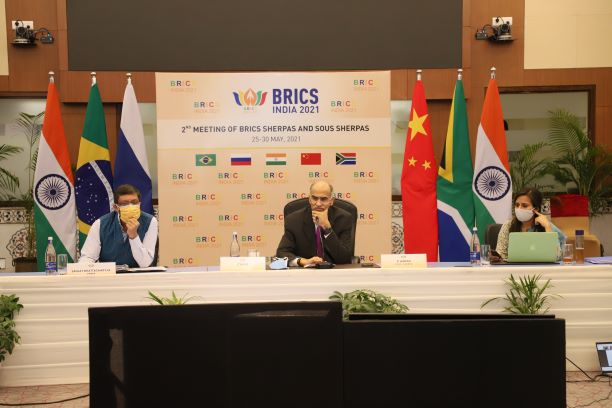
The year 2021 marked two decades since the term "BRICS" was first used by former Goldman Sachs economist Jim O'Neill in the early 2000s to refer to the four rapidly developing nations that appeared most likely to start catching up to the We...
In a decade of its existence, BRICS has had many accolades including giving a voice and space to emerging and like-minded economies. Apart from shaping geopolitical outcomes, BRICS is also leaving footprints in the geo-economic space. The five nations have a combined population of 3.23 billion and their combined GDP is more than $23 trillion. The New Development Bank (NDB), founded in 2014 as an alternative to support infrastructure and sustainable development efforts in BRICS and other underserved economies. It has partnered with Asian Infrastructure and Investment Bank (AIIB) and the World Bank and enjoys a credible credit rating of A++. NDB further aims to expand into social infrastructure and support health, education and housing. In 2018, the NDB also received observer status in the United Nations General Assembly, laying ground for active cooperation with the UN.
BRICS and the War
The 14th summit took place amid major shifts in geopolitics. While the world was crafting plans to deal with the aftershocks of the pandemic, one of the member-states of BRICS, Russia, invaded Ukraine and began an active conflict at the eastern borders of Europe. During the BRICS summit, Russian President Putin interacted with heads of states for the first time since the conflict with Ukraine. The members endorsed a dialogue between Kyiv and Moscow while commenting upon the worsening humanitarian situation [2].
The response to the war can be understood from the support or abstentions in the United Nations General Assembly and Security Council by member-states.India, South Africa, and Brazil have attempted to tread a diplomatic fine line over the conflict, whilst China has been more forthright in its support for Russia. They have supported discussions to end the war but have refrained from directly criticizing Russia. In one of the earliest resolutions condemning the aggression and demanding a stop to the offensive and along with withdrawal of all troops, India, China and South Africa abstained while Brazil voted in favour. In a resolution called for suspension of Russia from the Human Rights Council (HRC), all of the BRICS member-states except China and Russia abstained from the vote as both of them voted against the resolution [3].
India also imported record oil from Russia since western sanctions on its exports plummeted the demand and hence pulled down the price, despite the pressure of US and the allies to join the sanctions regime against Russia. Moscow became the top supplier of oil in October 2022, surpassing Saudi Arabia and Iraq [4].
Expanding BRICS
The issue of expansion of BRICS has been the topic of discussion in foreign policy circles. China has actively supported the expansion of the group with the development of BRICS Plus. In the 14th summit as well, President Xi pushed for a security alliance criticizing the “dark clouds of Cold War mentality”, a reference made to the U.S.-led western allies. He also did not mince his words while saying that some countries politicize and marginalize the development issue, built ‘a small yard with high fences’, imposed maximum sanctions, and stoked division and confrontation [5].
According to analysts, Russia and China want to strengthen the bloc's financial organization so that it can support developing nations and continue to be relevant in the geopolitical environment that is fast changing. The attempts are also seen as a challenge to the western global order, and China is leaving no stone unturned to provide an alternative to the world. After an unsuccessful proposal to set a security alliance with Pacific island countries, Beijing proposed to operationalise the Global Security Initiative (GSI), a security alliance between the BRICS partners. The GSI aims to be an Asian security framework that replaces “confrontation, alliance and a zero-sum approach with dialogue, partnership and win-win results” [6].
Amidst a push by China to include new members to BRICS, India can be seen trying to prevent BRICS from becoming an anti-West bloc and tread a cautious path. Reports highlighted that India is not yet ready to expand BRICS and accept new members [7]. Modi’s government seems to delay China’s effort to expand the BRICS grouping by pushing the organization to decide on criteria for adding new members. Michael Kugelman, deputy director at the Wilson Center think-tank in Washington argued that India was likely to push back against expansion in a group where China plays a dominant role as New Delhi will fear more Chinese influence. These concerns are not unfounded. Iran and Argentina have sounded their willingness to join BRICS. They were among the 13 countries invited for an outreach event on the sidelines of the virtual BRICS summit. Other countries were Algeria, Egypt, Indonesia, Kazakhstan, Senegal, Uzbekistan, Cambodia, Ethiopia, Fiji, Malaysia and Thailand. Inclusion of Iran and Argentina as prime candidates for the BRICS membership is a result of China's active engagement with Iran and Argentina and concerns over continued expansion of NATO. Iran inked a 25-year strategic agreement and that Argentina became a signatory to China's Belt and Road programme this February 2022. The latter also signed a $5 billion currency swap programme with China last month. A Global Times editorial highlighted how Argentina saw its future in the New South, represented by the BRICS and with its core in the Asia-Pacific, rather than in Old Europe or the North Atlantic [8].
Similarly, there were reports that Saudi Arabia has shown interest in joining the group. South African President, Cyril Ramaphosa, said after an official visit to Riyadh tha Saudi Crown Prince, Mohammed Bin Salman Al Saud, had expressed the kingdom's desire to be part of BRICS [9]. Indonesia, UAE, Nigeria, and Senegal could also be prospective members given how BRICS is seen as a grouping of emerging economies and any group that specialize in serving the needs of emerging economies must uphold inclusiveness and the rule of law.
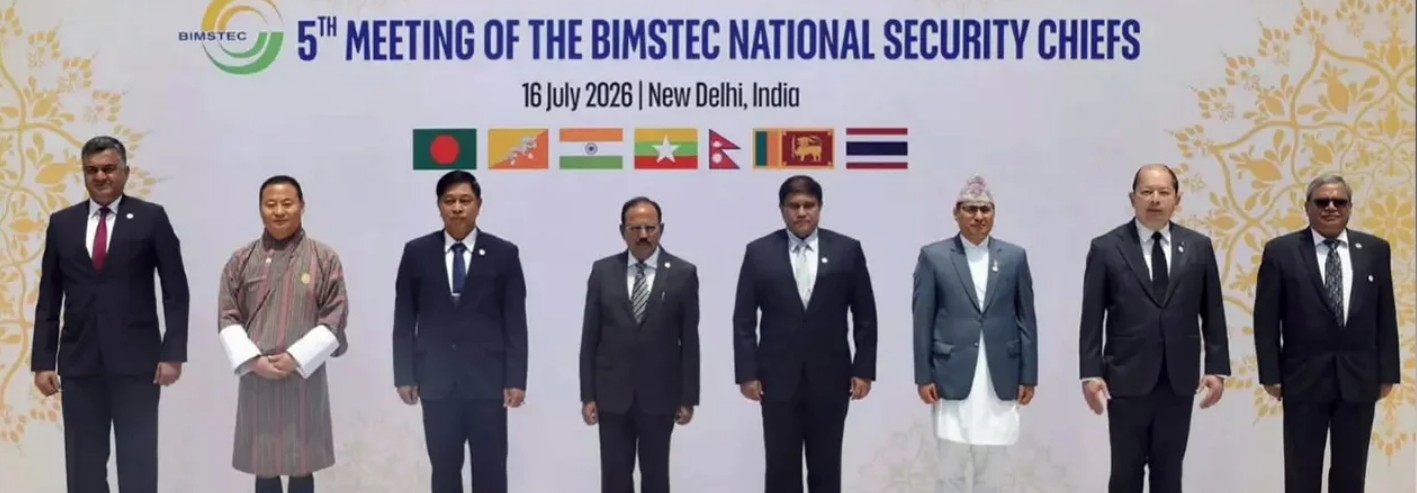
India’s stand was explicitly expressed in the Beijing Declaration mentioning “We support promoting discussions among BRICS members on the BRICS expansion process. We stress the need to clarify the guiding principles, standards, criteria and procedures for this expansion process through Sherpas’ channel on the basis of full consultation and consensus” [10]. New Delhi meanwhile should shift its focus to other trilateral and multilateral forums where it has a primary role in shaping the outcomes. India, Brazil, South Africa Dialogue Forum (IBSA) initiative and BIMSTEC — the Bangladesh, Bhutan, India, Myanmar, Nepal, Sri Lanka, Thailand — could be alternatives to limit Chinese influence. India has championed the cause of developing countries since independence and continues to command respect in the sphere of leadership.
Emergence of BRICS Plus seems a distant future depending upon the geopolitical dynamics and relationship between India and China in coming times. Successive summits will decide on the criteria on whom to include and exclude from the 'emerging economies' bloc.
References:
[1]https://www.goldmansachs.com/insights/archive/archive-pdfs/build-better-brics.pdf
[2] https://www.bbc.com/news/world-asia-india-61894760
[3] https://news.un.org/en/story/2022/04/1115782
[5] https://www.chinadaily.com.cn/world/special_coverage/62b187fea310fd2b29e67aad
[8] https://www.globaltimes.cn/page/202206/1268903.shtml
[10]https://www.mea.gov.in/bilateral-documents.htm?dtl/35435/XIV+BRICS+Summit+Beijing+Declaration
Pic Courtsey-Ministry of External Affairs, India
(The views expressed are those of the author and do not represent views of CESCUBE.)

Apoorva Jain is a graduate in political science from Delhi University. Her interest in politics, governance and international relations led her to pursue a master's degree in Politics and International Studies from Jawaharlal Nehru University. Her research interests include Diplomacy, Indian Foreign Policy and Indo-Pacific Affairs. She is presently research intern with CESCUBE.