Five Years of India – Vietnam Comprehensive Strategic Partnership and the visit of the Chairman of the National Assembly of Vietnam
Prime Minister Modi signed the comprehensive strategic partnership agreement with Vietnam in September 2016 and it showcased the trust and confidence that the countries have with each other. At the political level, the two countries have de...
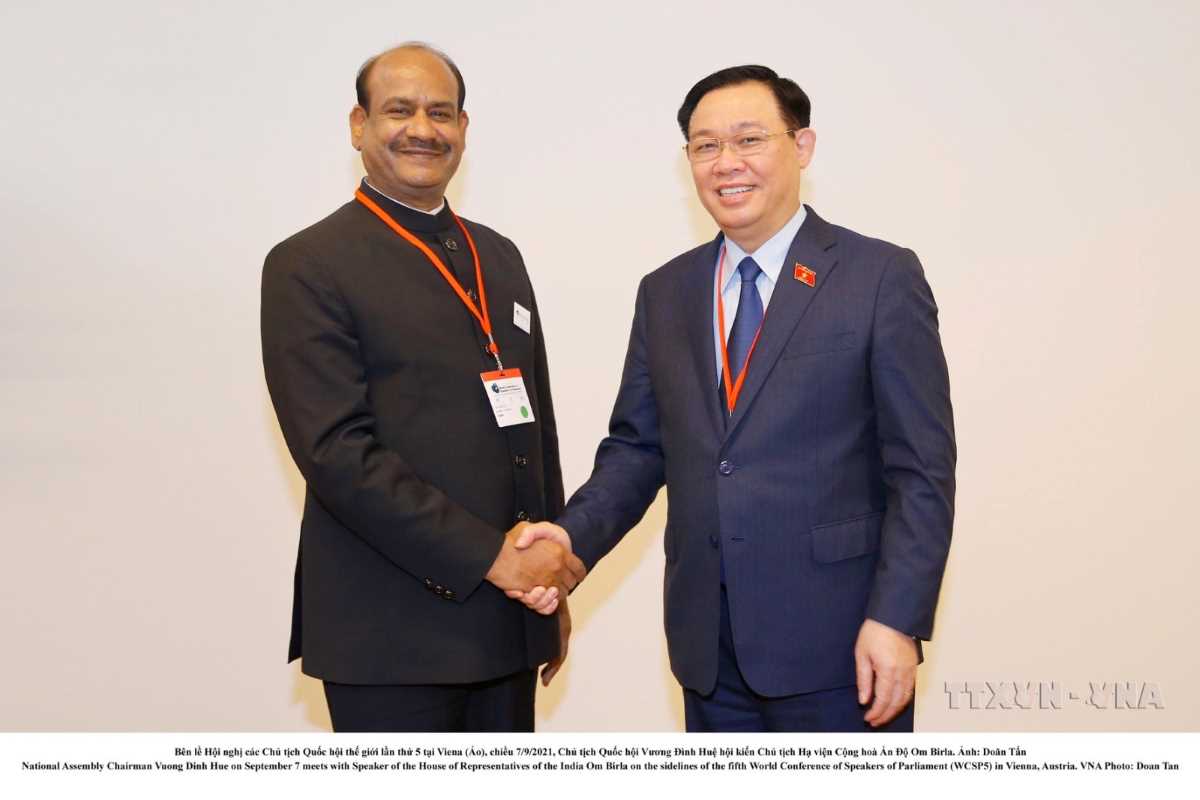
The visit of the Vuong Dinh Hue Chairman of the 15th National Assembly of Vietnam to India is a reflection of the importance that Vietnam accords to India with regard to its friendly relations with the country and the need for the two countries to share expertise, develop cultural ties, promote tourism, cooperate in transformation brought about under Fourth Industrial Revolution and also sharing best practices in developing the necessary acumen for new kind of technologies.
In terms of economic relationship while the trade has increased multifold since the year 2010 but investments still need impetus from both sides. This can be attributed to the lack of business interest between Indians and Vietnamese businessmen as well as deficit in awareness of each other’s markets. Among one of the products which India imports from Vietnam is polyester spun yarn when India has imported more than 60,810 tonnes of the yarn from countries like Indonesia, China and Vietnam; with Vietnam being one of the largest exporters. The increase in imports of polyester yarn from Vietnam has increased by nearly 90 per cent in the last few years. This shows the potential of diversified trade and exploring new areas for trade.
Vietnam has been very mature with regard to tackling its relations with China despite the fact that the Chinese aggression in South China Sea has not been very conducive for Vietnam’s strategic interests. Vietnam has proposed that the East Sea issue should be resolved with dialogue and consultations among the claimant countries. Under Vietnam chairmanship of ASEAN in 2020 it was also proposed that the country should maintain status quo and also work together to finalise the code of conduct in the South China Sea.
Vietnam and India are celebrating five years of comprehensive strategic partnership which has manifested itself in growing relations in different domains including strategic and defence partnership. It is expected that following the celebration of fifty years of diplomatic ties the pathways for further cooperation would be highlighted next year in January. In terms of synergies ASEAN outlook towards Indo Pacific and India’s Indo Pacific Oceans Initiative (IPOI) are seen as converging in areas such as maritime security, information sharing and developing maritime domain awareness. India has always buttressed the need for ASEAN centrality and has always supported initiatives undertaken by the regional organisation.
India’s ‘Act East Policy’ has also outlined the need for developing better understanding in areas such as security, science and technology cooperation and promoting connectivity. The visit of the Chairman of the 15th National Assembly of Vietnam Vuong Dinh Hue is seen as an effort to enhance cooperation between the legislative bodies of the two countries which includes visit of parliamentarians/legislators, visit of high-level delegations, and undertaking exchange of ideas particularly in the context of legislative reforms and removing structural bottlenecks. As it has been seen that there are immense challenges which are emerging particularly in relation to governance and countering corruption. The two countries have shared best practises particularly in areas such as E-governance, digitisation of documentation, public private partnership, and ease of access for public utilities.
For both India and Vietnam, public health and addressing pandemics has been a major area of concern. The two countries need to work together to evaluate the efficacy of the various kinds of vaccines and also develop vaccines for children between age group of 5-12 years. In India COVAXIN has already started third phase of trials for these vaccines. The community transmission and bringing about mass immunity against pandemics requires serious research and innovation. The outreach which has been initiated by Vuong Dinh Hue Chairman of the National Assembly of Vietnam in terms of foreign affairs and bringing in symbiotic relationship between domestic and foreign policies of the party and the country showcases different levels of engagement between the two countries.In the case of India, the deepening of the comprehensive strategic partnership and its active participation in the affairs of Southeast Asia particularly supporting Vietnam’s initiative related to addressing contentious issues such as South China Sea, and Chinese dams on Mekong.
In the year 2020 under the Vietnam chairmanship of ASEAN it has been found that there has been international mobilisation on the issue of extended continental shelf in South China Sea which has been duly supported by countries such as the US, Japan, Germany, France, Australia and there has been international condemnation of Chinese activities in South China Sea particularly demarcating the no-fly zone and the fishing ban for three months. Vietnam has taken a serious note of hyper activism by China but has clearly stated that international agencies should collaborate with regional organisations to address issues such as maritime security. It has been seen as a rational measure for countries to participate in promoting development, security, prosperity and stability in the region and the freedom of navigation, aviation and maritime trade and commerce should be protected. Vietnam has earnestly stated that all the relevant parties to the South China Sea dispute should strictly and fully implement the declaration of code of conduct in South China Sea which is also known as East Sea.
The visit of the Vuong Dinh Hue would usher in a series of dialogues and discussion celebrating establishment of 50 years of diplomatic relationship between the two countries. At this juncture it is prudent to acknowledge the fact that the relationship has weathered the different geopolitical compulsions and even Cold War. Given the fact that the two countries are growing economies in South and Southeast Asia respectively, the leadership of the two countries can work on establishing sister cities network, smart cities projects, joint research initiatives, student exchange programme, knowledge partnership, new innovation ideas, storage technologies, composite materials, space initiatives and developing a secure cyber system. With regard to defence also the cooperation is going to diversify in areas such as high-tech radio communications, electronic warfare, early warning and control systems, underwater systems, training and capacity building, establishment of new defence industrial complexes, and working on futuristic soldier.
Continued cooperation between the legislative bodies of Vietnam and India is one of the important pillars in the Vietnam-India Comprehensive Strategic Partnership. The two countries are also members of multilateral parliamentary forums. Over the years, the parliamentary interaction and sharing of best procedures between the two countries have developed well both on the bilateral and multilateral levels. The visit of National Assembly Chairman Vuong Dinh Hue gains salience because he has been invited by jointly by Speaker of Lok Sabha, and President of Rajya Sabha (vice president of India). In particular, the visit is of prodigious significance in the context that the two countries are actively preparing to celebrate the 50th anniversary of the establishment of diplomatic relations and the 5th anniversary of the establishment of the Comprehensive Strategic Partnership. Emphasizing that Indian leaders consider the visit of National Assembly Chairman Vuong Dinh Hue to be an important step forward and a new beginning for the two countries' relations in the context of the "new normal", the visit continues to promote the relationship between the two countries and laid the foundation for the stronger development of India-Vietnam relations in the coming time.
The Chairman of the National Assembly is a seasoned and mature politician and has reformed multiple functions and procedures within National Assembly of Vietnam. He has successfully presided over the 2nd session of the 15th National Assembly with high expectations for Vietnam's development under the leadership of the Government and the National Assembly. With the determination to innovate, the spirit of urgency, positivity and careful preparation, from a far, the National Assembly highly agreed on the contents, time, programme as well as how to organize the session. He ushered flexibility and creativity in the organization of National Assembly meetings. A number of proposals for reforming the way the session is held in the online form were approved by the National Assembly. This is also an unprecedented issue (concentrated in person meetings and still has 1 online meeting), demonstrating the sensitivity, flexibility, creativity, sense of responsibility in the organization and operation of the National Assembly. The working atmosphere of the National Assembly has been lively despite the overshadowing effect of the pandemic. Under Vuong Dinh Hue, the National Assembly deputies raised their sense of responsibility, contributed many enthusiastic and intellectual ideas to the contents of the meeting agenda. the chairman has infused a sense of responsibility and commitment to the national cause.
While exchanges between political leadership and the counterparts from India might be resonating in future and this visit would usher in that era of cooperation and collaboration for the development and interests of the people of two countries as well as contributing to peace, stability, and law-based order building in the region as well as in the world.
Pic Courtsey-Vietnam News Agency
(The views expressed are those of the author and do not represent views of CESCUBE.)
Senior Research Fellow at Centre for Security & Strategic Studies.