French Submarine fleet: Past, present, and future
The AUKUS cooperation between the US, the UK, and Australia is already showering us with statecraft, strategy, and political lessons. The most difficult lessons learned by France, that strategic alliances are established on shared interests...
The history of French submarines dates to 1863, when Paris constructed the first submarines without human propulsion for the French imperial navy, the Plongeur. France's naval force grew quickly, and until the First World War, it was one of the first to have a significant submarine force, including the Gymnote, Morse, and Narval. During WWII, France boasted of a large submarine fleet, with 77 submarines, 47 of which were launched in the previous ten years. Since 1970, the French submarine fleet has consisted of four Arethuse-class submarines and six Narval-class submarines, all of which were built between 1957 and 1960. Between 1964 and 1969, nine Daphné-class submarines were deployed, All of them were diesel-powered attack submarines.
Following the commissioning of French nuclear ballistic missile submarines in the French Navy in 1970, the Rubis class of nuclear attack submarines was developed. The nuclear-powered submarines were eventually identified as Provence-class after going through many designations. These submarines were one of the world's smallest nuclear attack submarines with reactor integration. The first was delivered in 1983, after construction began in 1976. Six were finally put into service, with the latest one being in 1993. The submarines' nuclear power and speed enable them to be despatched in complete secrecy to the Eastern Mediterranean, Western Africa, the Antilles, the Persian Gulf, the Pacific Ocean, and other oceans.
All six of France's Le Redoutable-class SSBNs were gradually decommissioned beginning in 1991, with the sixth vessel, L'Inflexible, deactivated in 2008. Starting in 1997, these submarines were replaced by the Triomphant class. Six nuclear-powered attack submarines (SSNs) of the Rubis and Améthyste classes are currently on active duty in France. The present Rubis- and Améthyste-class attack submarines will be gradually replaced by the new Barracuda-class attack submarines, the first of which, the Suffren, was commissioned on November 6, 2020, and is slated to enter service. The main mission of the attack boats is to provide anti-submarine and anti-surface warfare protection to France's SSBN force and carrier group. The attack submarines are charged with Special Forces deployment, surveillance and intelligence gathering, and missions against piracy, narcotics, and human trafficking, in addition to typical sea control and sea denial operations.
After all, France is a submarine superpower that does not import submarines but exports them in great quantities. Naval Group (previously DCNS), a French firm, is the French Navy's major naval shipyard and one of the world's leading naval suppliers. Naval Group is a government-owned company that provides a full spectrum of conventional and nuclear-powered submarines and surface boats, as well as maintenance and logistical support. In addition, in collaboration with Thales Naval France, the company provides integrated command and control and combat systems for its warships. Naval Group primarily exports two submarines: the Scorpène-class diesel-electric submarine with optional AIP and the Shortfin Barracuda Block 1A, a conventionally powered derivative of the Barracuda-class nuclear-powered submarines. Submarines for Brazil, Malaysia, India, and Chile are part of the first batch.
Three Agosta 90B diesel-electric attack submarines (SSKs) were sold to Pakistan by Naval Group in 1994. The third ship, which was commissioned in 2008, was the first to be outfitted with Naval Group's AIP system, MESMA, which is based on a closed-cycle steam turbine and can be upgraded during a major overhaul via a plug-in extension. The first of the new Scorpène-class warships was delivered to Chile in 1997, and the second was delivered in 2007. India and Brazil have now placed orders for six Scorpène-class warships with Naval Group. In 2005, the Mazagon Docks Limited (MDL) in Mumbai commenced construction of six Scorpène-class derivatives (Kalvari-class) for the Ministry of Defence's Project 75, with significant technology transfer from Naval Group. In January 2018, the third boat in the Project 75 programme set off from Mumbai. Naval Group was awarded a contract to supply four diesel-electric Scorpène-class vessels to Brazil in 2008. The hull for Brazil's first nuclear-powered submarine will be provided by Naval Group, although it will not deliver any nuclear components. Naval Group was awarded a contract to replace Australia's Collins-class submarines with twelve Shortfin Barracuda-class submarines in 2016. That was abrupted by the AUKUS deal that announce to provides Australia with the nuclear submarine technology.
France has modernized plans that emphasized on the retiring old submarines while inducting new modernised hulls. Four Le Triomphant-class strategic missile submarines (SSBNs) are now stationed at Brest's Ile Longue. Beginning in 2035, the Le Triomphant-class submarines will be gradually replaced by a third generation of modern submarines. Six new Barracuda-class SSNs, which have been in development since 2002, are included in France's draught military budget for 2019-2025. The new Barracuda-class, which will be built by Naval Group, will have greater communication capabilities and a force-projection capacity based on cruise missiles.
Notes
1. "France: Nuclear weapons," Global Security Website, www.globalsecurity.org; "Visite virtuelle sous-marin SNLE – Presentation," French Navy, www.defense.gouv.fr.
2. Norris, Robert S., and Hans M. Kristensen, “French Nuclear Forces, 2008,” Bulletin of the Atomic Scientists, 64, no. 4, September 2008, p. 52–57.
3. "Le Sous-marin d'Attaque Futur Barracuda [The Barracuda Future Attack Submarine]," Ministry of Defense, 9 June 2011, www.defense.gouv.fr.;
4. “FS Suffren represents the lead-ship of the Barracuda-class of the modern French Navy- commissioning is scheduled for sometime in 2018,” Military Factory, 10 October 2017, www.militaryfactory.com;
5. Zachary Keck, “France Is Building a New Nuclear-Powered Submarine. Here Is What It Can Do,” The National Interest, 12 May 12 2018, nationalinterest.org”;
6. Naval Group Suffren Barracuda-class new nuclear-powered attack submarine for the French Navy,” Navy Recognition, 7 November 2020, www.navyrecognition.com.
7. "The Naval Shipbuilding Directorate (DCN)," Military Technology, August 1998, Vol. 22, No. 8, pp. S26-28; in ProQuest Information and Learning Company, http://proquest.umi.com.
8. "Amethyste Class," ForecastInternational, March 1998, www.forecastinternational.com.
9. "Product portfolio," DCN Website, www.dcn.fr; "Through-life support, submarines," Service Portfolio, DCN Website, www.dcn.fr.
10. Allen Cone, “Thales to develop sonar system for new French sub,” UPI, 8 February 2018, www.upi.com.
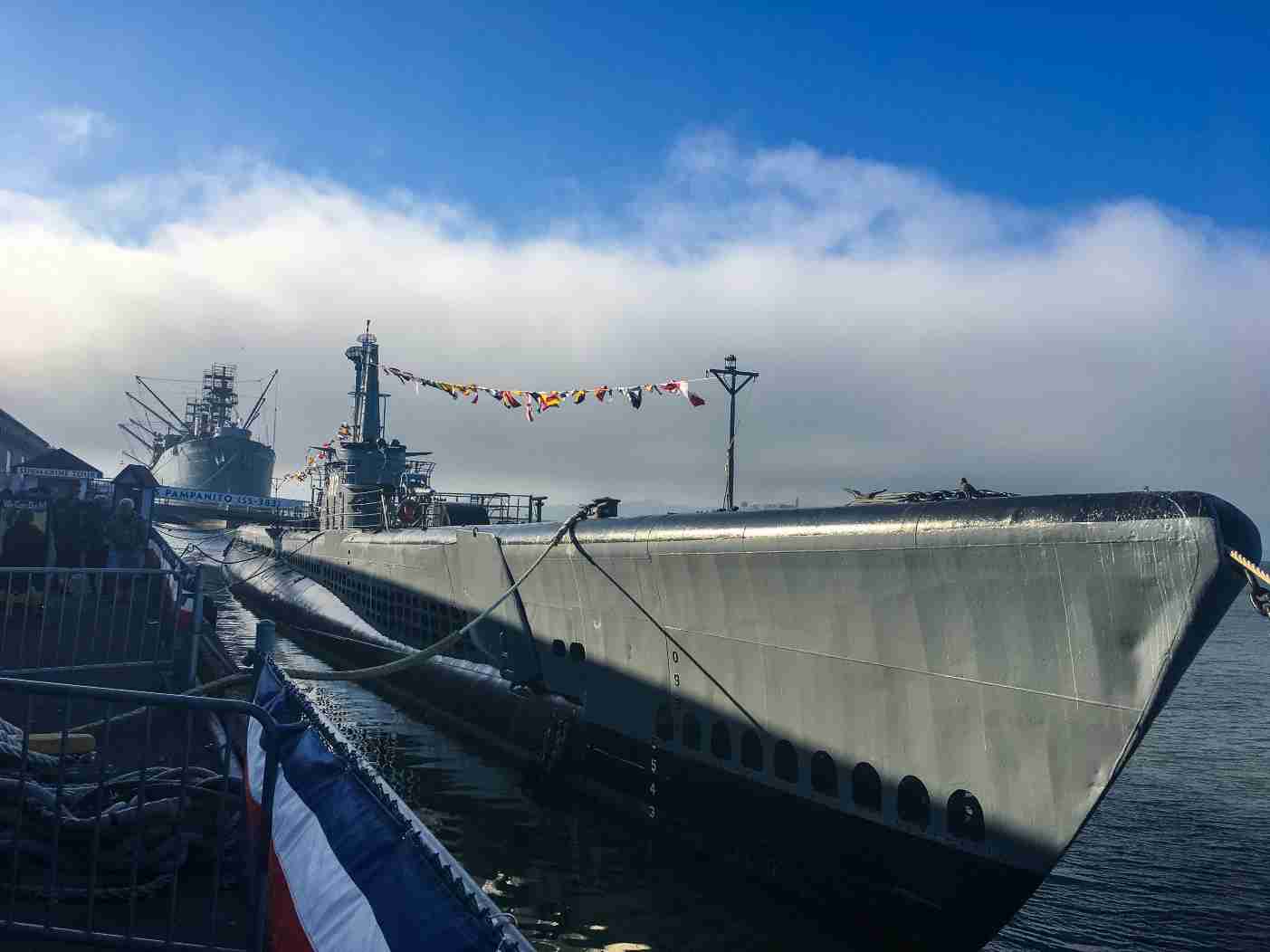
Pic Courtesy-Thomas Haas at unsplash.com
(The views expressed are those of the author and do not represent views of CESCUBE.)

Gaurav Sen is a graduate from Delhi University. He is currently doing his Masters in International relations from Jawaharlal Nehru University, New Delhi. His research area includes IR theories, Great Power competition in Indo-Pacific, Maritime Security, Emerging Warfare Concepts, and Military Strategies.