Geo-political significance of Wakhan Corridor
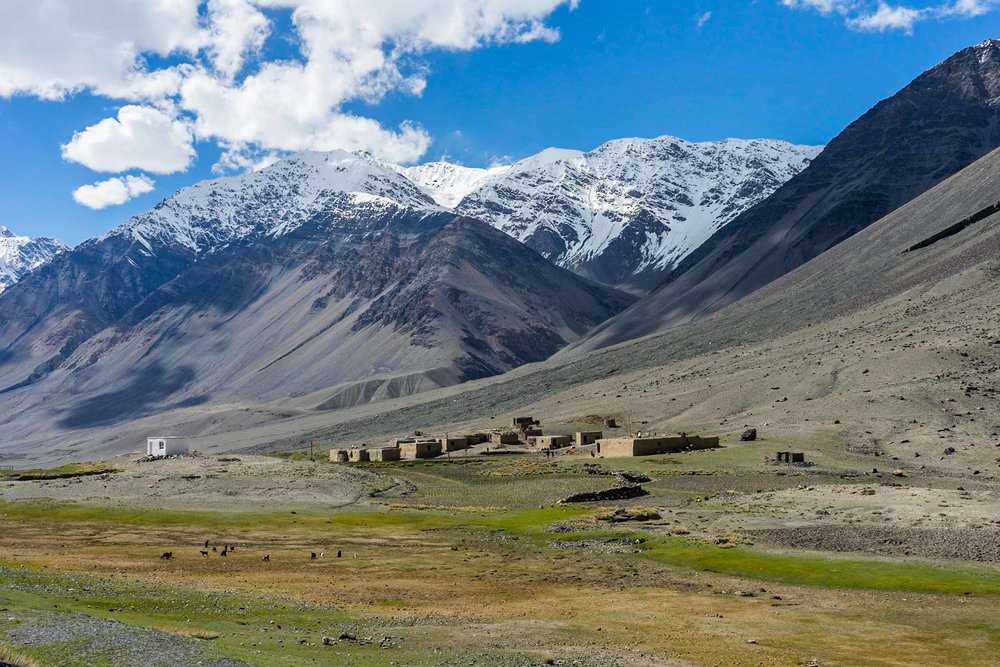
The Wakhan Corridor, that has acted as a confluence point of the Silk Route, is a protruding strip of narrow land of eastern Afghanistan adjoined by Tajikistan in the north and Pakistan Occupied Kashmir(PoK) in the south stretching till Chi...
Historically, Wakhjir Pass at the end of the corridor has acted as a significant channel on the Silk Road. Chinese decision to construct a road through Wakhjir Pass complicates the region’s geopolitical situation. The construction of road would help connecting Afghanistan’s road network to the Karakoram Highway joining Kashgar in Xinjiang to Islamabad. China would definitely benefit from this project and hence it has been successful in keeping the project unnoticed by its geopolitical opponents. There are hardly any reports on it by media outlets.
The road passing through the Wakhjir Pass accomplishes two Chinese geopolitical goals: developing trade with Central Asia in the north and growing network with its newly developed port at Gwadar in Pakistan in the south. Even considering the region’s geographical complexity, the road still serves as the cheapest route between China and Central Asia and its construction would give China the upper hand in increasing economic and military dominance in the region. The connectivity of this corridor with the energy rich Caspian region and the establishment of means of energy transportation to China like gas and oil pipelines would increase Chinese energy security while contributing to Central Asia’s economy. The mountainous Wakhan Corridor, evidently, would not become a transportation hub overnight. However, its construction has a number of geopolitical consequences for the region, particularly because it will provide China with another option for advancing its Belt and Road projects in Central Asia.
Furthermore, the construction of the road would gather new opportunities for Afghanistan to get familiar with Chinese market and inversely would make possibilities for Chinese goods to invade the Afghan market. Massive investments of about hundreds of millions of dollars have already been made in Afghan natural resources by China. According to data by the Afghan Central Statistic Organization, bilateral trade between China and Afghanistan has surged from $432 million in 2008-09 to $1.09 billion in 2016-17, an increase of 153%. The Wakhan Corridor would also be used by China for its new fiber optic project according to the earlier announcement. Similarly, Pakistan and Tajikistan have close economic and trade ties with each other and also with Afghanistan. Due to the north-south expansion of the corridor landlocked Tajikistan would be able to approach the Pakistan’s ports, in return allowing Pakistan to reach the resource rich Central Asia by passing over Afghanistan through shortest possible route. The Wakhan corridor would act as the cheapest trade route between China, Afghanistan, Pakistan and Tajikistan. This land buffer may act as a bridge between them if compelled by all.
The Wakhan region has a very limited population of around 12,000 people, the majority of whom are Wakhis and Kyrgzs. The Wakhan inhabitants have been residing here for centuries. They are oblivious to not only common amenities but also to basic human needs. Absence of educational institutions and infrastructural developments has kept them behind the world. The most significant benefit of constructing infrastructure in this area will be to change the lives and livelihoods of the local population. Their access to markets and cities would enable them to sell their products, obtain an education, and find alternative sources of income. Regional infrastructure and trade investments would provide locals with stable employment opportunities, reinvigorating their historical connections to the ancient Silk Road. More stability and security in the region would be achieved by connecting bordering countries and encouraging economic integration through improved infrastructure. Better customs controls and border guard deployment, as well as control of illegal cross-border trafficking, will promote legal trade and economic cooperation.
Officials in the United States should be concerned about the road's progress because of its military consequences. China recently established a military base in Tajikistan, indicating a willingness to extend its military superiority in an area where the United States has a significant military presence. China will no longer have to linger around the Afghan border once the road is completed. Instead, it will be able to quickly and easily deploy troops. Increased Chinese military presence, on the other hand, would help to reduce terrorism, and enhanced legitimate trade along the corridor would help to reduce its reputation as a drug smuggling passage. The US has repeatedly requested that China open Wakhjir Pass as an alternative supply route for its troops in Afghanistan, but China has refused, and it is uncertain whether China will permit US troops personnel to pass through the road. China is becoming a more serious alternative to the American presence in Afghanistan, posing a threat to American geopolitical interests.
Officials in India should be concerned about the road's progress as well, but for different reasons. India stridently opposes the Belt and Road Initiative because Pakistan-administered Kashmir, through which the CPEC passes, is a disputed area between India and Pakistan, and it has hindered India from gaining direct access to Afghanistan and Central Asia. In order to compete with the CPEC, India has invested in the trilateral Chabahar project with Iran and Afghanistan. More significantly, India may be worried that the opening of Wakhjir pass, as well as the already-opened Khunjarab pass, would give China the high ground in the region, reinforcing its geopolitical and economic dominance. Increased trade through the Wakhan Corridor to the port of Gwadar will tremendously benefit Pakistan, India's current geopolitical adversary, both economically and diplomatically. Lastly, improved trilateral relations between Afghanistan, Pakistan, and China as a result of the road's commerce would undermine India's geopolitical position, particularly since Afghanistan is increasingly turning to China rather than India. As a result, stronger Chinese ties with Pakistan would diminish Pakistan's willingness to make strategic agreements to India.
Although geographical complexity has not hindered the development of Wakhan's infrastructure, security issues and regional political maneuvering appear to be the main obstacles to Wakhan's growth. Economic growth and regional stability should not be hampered by political stumbling blocks or security concerns. More projects like CPEC and Chabahar, which focus on regional integration and economic cooperation, will be favourable to the region as a whole. These megaprojects, if coupled together in good faith, have the potential to strengthen and promote regional trade at the minimum cost and with various advantages. The Wakhan Corridor has the potential to become a transit route for trade with Central Asian countries rich in minerals, opening up new opportunities for stability and development.
Pic Courtesy-dumbthings.co
(The views expressed are personal.)

Mahima Chouhan is a Postgraduate student of Politics with Specialization in International Studies at Jawaharlal Nehru University. Her area of interest lies in the cultural and political aspects of West Asia, Central Asia and the challenges of Internally Displaced people and refugees.