Growing defence cooperation between India and the Philippines
India and Philippines have signed the defence cooperation agreement in the year 2006. Since then there have been regular interactions between armed forces personnel, and also liaison visits by the high-ranking officials, and naval ships.&nb...
India and Philippines have instituted the Joint Commission on bilateral cooperation and the last meeting was held very recently in November 2020. The two countries have worked with regard to developing understanding related to defence cooperation particularly in field such as capacity building, training as well as regular liaison visits by the navies and the Coast Guard ships. India has been engaging with Vietnam and Philippines, the two major players in the South China Sea dispute, and after a series of Malabar exercises (2007,2016 and 2018) which were held in the Philippines Sea, closer to Southern coast of Japan; the importance of Philippines have increased. Further Philippines have been participating in the Defence Expo (2018) organised by India in the past, and the officers of the two-armed forces have been visiting each other’s National Defence colleges. The sharing of intelligence between the two sides have intensified with the INTELLEX meetings which has been a regular affair.
Following the signing of the defence cooperation agreement in 2006, nearly six years later in 2012 the Joint Defence Cooperation Committee was established. Issues related to strategic developments and higher defence management were discussed in the Committee meetings. Indian Air Force dispatched its C-130 Super Hercules aircraft in providing relief material during the Super Typhoon Haiyan in 2013, and also during the October 2013 earthquake in Bohol in Philippines. India provided relief material such as sanitisation chemicals, lifesaving drugs, medicines, tarpaulin tents, and blankets, as well as limited funding support.
Within Philippines it has been acknowledged that better relations with India would booster their defence preparedness and also engage India, an Indian Ocean power in diversified aspects such as maritime domain awareness, counter terrorism, defence science and technology cooperation as well as training in UN peacekeeping operations. When President Kovind visited Philippines in 2019, there was an understanding to enhance engagement in maritime security and defence fields. Philippines has signed an agreement with India on sharing white shipping information. Similar kind of agreement has been signed by India with Singapore, Vietnam, Indonesia and few other countries in the Indian Ocean region. For India, this kind of information helps in identifying rogue ships and identifying suspicious cargo.
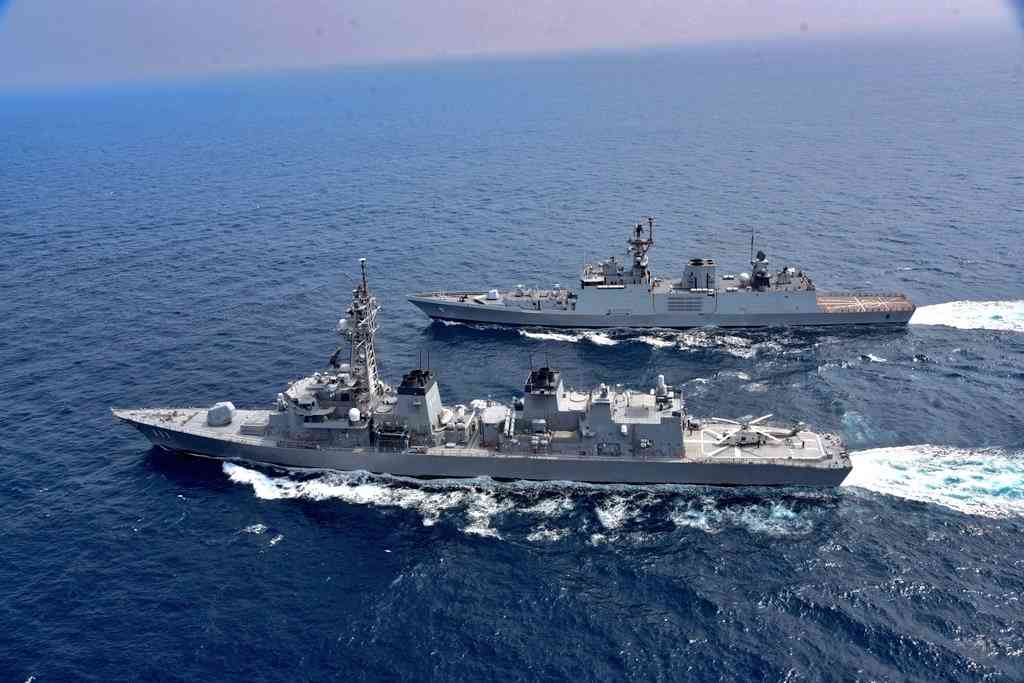
The Philippines has been trying hard to modernise its armed forces and also procure weapon systems from other sources. Majority of the weapon system that Philippines has been using has been of the US origin and it is trying to procure submarine and underwater systems so as to counter China's increasing influence and surveillance activities in and around those islands which are controlled by Philippines in South China Sea. Philippines has been seeking India's active role in joint multiple nation sail exercises as well as providing logistical support to the participating countries. During one of the joint sails in SCS which was undertaken by countries such Japan, the US, and Philippines, India has dispatched a tanker and a destroyer for the joint sail. The US has been conducting Freedom of Navigation Operations (FONOPS) in SCS which India has been supporting.
The Russian Deputy Chief of Mission Roman Babushkin has stated (Nov 12) that India will be sending its first batch of Brahmos missile to the Philippines. During December 2019 the defence secretary of Philippines have announced that Philippines was keen to purchase two batteries of Brahmos missiles. Many countries in Southeast Asia particularly Malaysia, Indonesia, and Vietnam have been trying hard to procure the Brahmos missile systems but India has been slightly apprehensive that the sale of the Brahmos missile would escalate tensions in the South China Sea. For India, it is critical that in case of its deployment closer to the Japanese waters, it needs logistical support from Japan as well as Philippines so as to sustain its operations in the Philippines Seas well as adjoining areas during Malabar exercises.
India has been trying to formulate its defence export policy so as to cultivate those countries which might be interested in procuring low cost weapon systems from India on a deferred payment or under Lines of Credit mechanisms with India. In the year 2018 Garden Reach Shipbuilders and Engineers have successfully bid for providing two light frigates/corvettes to the Philippines Navy as the lowest bidder. This was seen as the largest contract for any government owned defence PSU but because of the government shipyard’s inability to clear financial assessment tests, the tender was not given to the Garden Reach Ship Builders.
For India, the interest in Philippines is also because of the fact that one of the agent provocateurs of the Islamic State named Karen Aisha Hamidon was arrested by the Philippines authorities. The National Investigation Agency sleuths visited Philippines in 2018, and upon her interrogation several facts were unearthed, and Daesh links within India were investigated. The woman was involved in encouraging Indian youth to join Islamic state between 2014-2015. In response to this gesture India has given an aid of 500,000 US dollars to Philippines during Marawi seize so as to support Philippines in its counter-terrorism activities. India also provided cyber security training to the Philippines security personnel.
In the June 2020, the Indian Navy has provided logistic support and repairs to one of the Philippine Navy ships BRP Ramon Alcaraz which was passing through Indian Ocean when it caught fire. Two sailors were injured and were hospitalised. This gesture was appreciated by Giovanni Carlo J. Bacordo, the Philippine Navy chief. As a result of which Philippines has been looking for a logistics support agreement with India and developing joint support mechanisms as well as exploring possibility of exercises with India on the side-lines of the Malabar exercises. India’s posting of Shambhu Kumaran as the Ambassador to Philippines hints to the possibility of long-term defence cooperation as the person had served for a while as Joint Secretary of Planning International Cooperation (PIC) in Ministry of Defence.
India has formed strategic partnership with the number of Southeast Asian countries but the Philippines has been only exception. It is a known fact that Manila has been facing problems with regard to China and therefore has been looking for upgrading its Navy in terms of procuring fast attack crafts, and corvettes from other destinations which will empower its Navy as well as give a varied experience on different platforms.
In the year 2019, Philippines has ordered two coastal defence systems primarily comprising of anti-ship surface to surface missiles but had not formally signed the import agreement. The Philippines have only 300,000 military personal and has no fighter aircrafts (there are few light attack aircrafts and rotary wings assets) while it has only two frigates and one corvette. It doesn't have any submarine and has limited mine warfare countermeasures. It does have patrol crafts which are just enough to patrol its large Exclusive Economic Zone (EEZ). With defence budget of 4.3 billion dollars( for the year 2021) it needs to enhance its military through procurement of new weapon systems and providing better platforms for enhanced C4ISR.
Philippines has also been revisiting its capabilities plan has been trying to procure advanced aircraft and develop combat ship capabilities. One of the areas where India would be keen to support Philippines has been developing the coastal radar systems as well as flatbed radars which India has developed indigenously. Rajendra I which is a flatbed radar will be very instrumental in developing coastal warning systems and can be integrated with the anti-ship missiles in future. Philippines has also been looking into purchasing short range light combat fighter aircrafts so as to protect its maritime zones as well as thwart any intimidating tactics by China. In this regard India’s light combat aircraft Tejas which has been developed indigenously can provide the structural support for the Philippine Air Force.
The possibility of defence cooperation between the two is immense, and the Philippines is also keen on military modernisation. India is looking for exploring markets for its defence exports. In case sale of Brahmos missiles happens between India and the Philippines it would mark a quantum jump in the defence ties.
Pic Courtesy – twitter account @spokespersonindianavy
(The views expressed are personal.)
Senior Research Fellow at Centre for Security & Strategic Studies.