Havoc in Hong Kong- Can China Sustain?
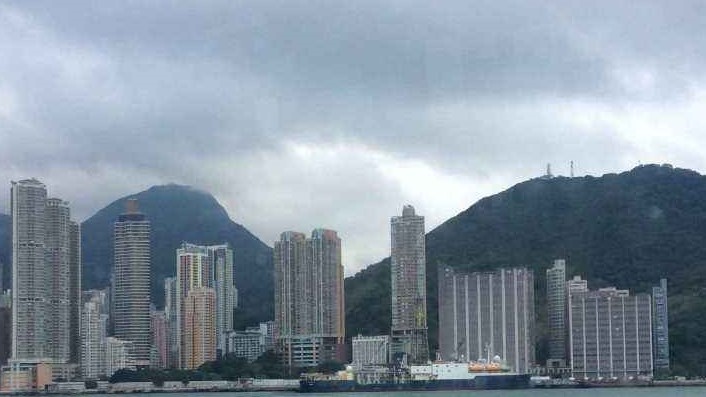
Business will not be the same in the city as institutions would have to be wary of not toeing the line. This will naturally dissuade investors, especially foreign investors who do not wish to get caught up in the political and legal crossfi...
The repercussions of such statements and actions are already making their impact felt on the Chinese economy. On May 22nd this year, Hong Kong’s stock market plunged by 5 per cent. This was considered to be one of the biggest falls since 2015. The property sector sub-index too fell by 7.7 per cent, worse than the 2008 crisis. Companies like Sun Hung Kai Properties lost 7.1 per cent and New World Development dropped 8.1 per cent, while Wharf Real Estate Investment shed 8.7 per cent. Hong Kong has also experienced a contraction of 8.9 per cent , as a result of the combined effects of the COVID-19 pandemic, protests and the US-China tensions. In response to the stock market plunge in May, the Hong Kong market saw an inflow of money from the mainland, as many Chinese state owned firms bought up the Hong Kong stocks. But this does not change the fact that ever since last year, the city has been experiencing major dips in its finances. One of the best indicators of its economic distress is the fall in Hong Kong's FDI. FDI for 2019, was $53.17 billion which is a decline by 45.2 per cent since 2018. Additionally, Hong Kong's GDP in the second half of 2019, also fell by 1.2 per cent. As per UNCTAD’s officials, the city was met with disinvestments worth $48 billion.
But China is not unaware of Hong Kong's falling figures, and is desperately yet subtly trying to grapple with the issue. To understand how China is dealing with a possible economic and legal recoil, one needs to take a look at its recent policies and actions. A day before the declaration of the national security law, China launched the “Wealth Management Connect” on June 29, 2020, as a response to the flailing economy of Hong Kong. This was done with a motive of better integrating all of China's territories together and also to turn the greater bay area including Hong Kong, Macau and nine cities in Southern Guangdong province into a financial hub by 2030. According to this initiative, residents in the area will be allowed to buy wealth management products that are available in each other’s markets. This will allow for better investments with the regions, under the PRC’s supervision. However, the success rate of such an initiative is highly debatable as a global recession might be in order due to the pandemic.
The Wealth Management Concept was just one aspect of the deal, Beijing now seeks to tax its diaspora to make up for its tax revenues. The income tax regulations were amended in January 2019, however, expatriates are feeling the burden of its enforcement since the past two months. The ones that are severely affected due to this change are the Chinese mainlanders who reside in Hong Kong. Many SOE’s are informing their employees to declare their 2019 income, so that they can start paying taxes that contribute to their homeland. The tax rate that was previously 15 per cent has been increased to 45 per cent. While the Chinese diaspora cope with such high tax rates and the living expenses of Hong Kong, many analysts speculate that the city might experience a brain drain. As of 2019, around 29,200 people have been reported to leave the territory. Even though Hong Kong does not publish high frequency immigration reports, there has been a 50 per cent increase in the applications for good citizenship cards, which are averaged to be around 2,935 as of June, 2019. The increasing taxes clubbed with the fear of protests, might lead to a wave of emigration from the region, thereby reducing the remunerative nature of Hong Kong and negatively affecting China’s economy.
China is also looking towards the global market to reap some profits despite a lumbering economy. This also includes its relations with the united states. Trump and Xi Jinping have been engaged in a trade war for the most part of their presidencies. However, in light of the pandemic and the upcoming US presidential elections, this war seems to have been heated more than ever. As of February 2020, the US debt was estimated to be around $22 trillion. Out of which China owned $1.1 trillion, this amounted to 21% of the US debt held overseas and 7.2% of the US’s total debt load. But in the past three months alone, these figures have changed as China has increased its holdings of US treasury securities by USD 10.9 billion. This sudden spike in buying US debt amidst a trade war, appears to be slightly out of place. Buying of treasury bonds is a common practice in the global market, this enables a country to anchor their currency at a certain amount. China’s sudden purchase of treasury bonds, could possibly mean that it is attempting to peg its currency to that of the US dollars. Another possible outcome could be that China might sell off these bonds at a higher rate in the future, so as to significantly damage the US economy. However, as per some Chinese sources, this shall be considered as a “nuclear move” on the part of the Chinese. As per another Chinese source, China Power, the nation bought these treasury bonds in order to manage the exchange rate of the Chinese Yuan, and such a trade does not give the nation an edge over the US. Despite whatever narrative that China wishes to bring to the table, it cannot be denied that its sudden interest in purchasing its rival’s treasury bonds and taxing its own diaspora might be an indication of a bigger issue.
Today China is running out of economic allies, and this is visible in the way most nations have reacted to the national security law, imposed on Hong Kong. Canadian Prime Minister, Justin Trudeau has already termed the law to be a “grave concern” and has sought to suspend its extradition treaties with Hong Kong. Australia too has followed suit. And the pressure to suspend treaties with Hong Kong only seems to mount up as even the The Inter-Parliamentary Alliance on China (IPAC), has called on its members to do the same. Considering the vague terms that are laid down under the national security law, small enterprises, journalists to even nation states fear getting caught up in the technicalities. But it is evident through the kind of international attention that the Hong Kong protests have experienced, that China has strained its foreign relations to a great extent.
It is evident china is steadily losing its grip its foreign relation due to its aggressive nature. But considering the recent events and the consequences of the coronavirus pandemic, China could be attempting to cover up a major economic breakdown within its system. Earlier this year, a Chinese company was accused of depositing a “ghost collateral”. A private owned Chinese company, Wuhan Kingold Jewelry Inc., which owed many Chinese financial institutions and trust companies a loan of 20 billion Yuan ($2.8 billion) in the form of pure gold as a collateral, turned out to be fake. This company’s Chairman is Jia Zhihong, an ex- military man who defaulted on paying his investors. When 83 tonnes of Chinese gold turns out to be gilded copper, it does not paint a very good picture for the Chinese economy. Many could pass this incident off as the default of the Kingold, but there is more than what meets the eye. China’s hasty enforcement of policies over its own territories and its apparently stable economy after suffering a major pandemic, whilst battling over issues of commerce with multiple nations, simply does not add up. In all probability, China could be heading towards an economic downfall and is still choosing to keep a tight lipped approach about it. The question is what are the broken secrets that china hides behind its walls?
(The views expressed are personal.)
Kritika Subrato Karmakar is research assistant with Centre for Security and Strategy Studies at cescube.com