Impact of COVID lockdown on Chinese Economy
The Covid-19 lockdown in Shanghai has raised concerns about China's economic outlook for the rest of this year. This week's release of first-quarter gross domestic growth data will provide a clearer indication of how policymakers in Beijing...
Economists polled by Reuters are expecting China's gross domestic product to grow at a rate of 4.4 percent in the first quarter. However, this is expected to be slower than the previous year's growth of 5 percent. According to some analysts, the slowdown in the first quarter was mainly due to the implementation of the country's zero-Covid strategy.
The implementation of the zero-Covid strategy has also led to the emergence of the pandemic in Shanghai. This has raised concerns about the country's growth outlook. According to economists at ANZ [Australia and New Zealand Bank (China) Company Limited], China's economic growth will continue to slow down this year due to the ongoing outbreak. It's estimated that the country's annual GDP growth rate will be lowered to around 5%. If China’s slowdown turns out to be deeper, it will force a relook at the growth outlook for the region’s economies.
For the past 15 years, the growth rate of China has been around 1 percentage point lower than the growth rate of the rest of Asia. With the region's central banks now having to deal with rising inflation, they will be more sensitive to the impact of a slowdown in China's economic activity.
Due to the ongoing outbreak, China's economy has been struggling to cope with the effects of the country's various lockdowns. Many economists have also revised their estimates for the country's growth rate. The public also fears that the government might implement more lockdowns in response to the growing number of cases. Despite the number of cases in Beijing, the city has avoided a full lockdown. Although it has implemented various measures to prevent the spread of the disease, some analysts have questioned the way the city's cases are described. For instance, only around 10 percent of the cases in the city are considered to be asymptomatic.
Russia’s war in Ukraine affecting China:
The outbreak and the global pressures caused by Russia's war in Ukraine have also affected China's economy. In addition, the rising number of young people without jobs has raised concerns about the country's political situation. Leaders in Beijing have noted that the country's unemployed young people played a significant role in the so-called color revolutions that occurred in the former Soviet Union. Although the country's overall unemployment rate is relatively low at 5.8 percent, the situation for the people who have jobs is worse. Due to the lack of labor laws, Chinese companies are forced to pass their economic problems on to their employees.
The question is whether the economic problems will continue to worsen after the implementation of the zero-COVID policy. Before the outbreak, China's political actions had already damaged the country's growth. These actions, which included the government's efforts to restrict the growth of the technology sector, suggested that the ruling Communist Party has little appetite for economic reforms.
The World Bank in China:
The World Bank's lending will decline over the next CPF period as it focuses on supporting China's efforts to contribute to global public goods. It will also continue to support the country's private sector by investing in projects that promote high standards and environmental benefits. The IFC will also continue to support China's private sector by investing in companies that produce goods and services that meet high social and environmental standards.
The CPF aims to help China address its development challenges, notably the transition to more environmentally sustainable growth, the strengthening of key Chinese institutions engaged in economic and social development, and the reduction of inequality in lagging regions.
The CPF has three broad areas of engagement:
1. The World Bank's goal is to help China's private sector and improve the country's environment for competition and economic development. It will also support the country's efforts to improve its infrastructure and fiscal management.
2. The World Bank will also support the country's efforts to reduce its greenhouse gas emissions and improve the management of its natural resources. It will also help cities and regions adopt low-carbon transport and energy sources.
3. The World Bank will also help China's government boost the country's growth by improving the quality of its social services and health care.
Whereas, the Bank Group's CPF is informed by the publication of its systematic country diagnostic in early 2018, as well as studies on China's new drivers of growth. At the end of the CPF, the Bank Group will review the progress of the program.
China's partnership with the Bank began in 1980, shortly after it started its reforms. It became a donor and a member of the Bank Group's Fund for the Poor in 2007, and it became the third-largest shareholder of the organization in 2010. In 2010, China's participation in the Bank Group's capital increase was approved. Bank's activities in China have evolved over time as the country's needs and development have changed. During the early years of its partnership, the Bank provided China with advice and technical support to improve the country's economic reforms. It also helped the government manage its projects. The relationship between the Bank and China has evolved over time as the country's needs and development have changed. Through its expertise, the Bank can help address the country's key development challenges. Its experience in helping other developing countries also enhances the Bank's capacity to help them.
Conclusion:
For all that China is still far from a recession, its economy is already experiencing its worst economic situation since the 1990s. The country's manufacturing hub in the northeast has already lost its status as the country's manufacturing center. Due to the region's economic decline, the population in the area has dropped by around 10 percent since 2016.
The rapid emergence and growth of China's economy during the past decade has changed the way people make financial decisions. For instance, many people in the country started to leave their jobs due to the belief that the housing market would only go up. As a result, they became more risk-averse. Despite the country's high savings rate, many people still believed that the government would step in and rescue them if their projects went bust. This attitude is similar to the idea that China was being brought back to its natural place in the world. In his speech at the opening of the National People's Congress, Chinese President Xi Jinping talked about the country's potential to become a moderately prosperous society. However, some economists, such as Hong Hao, have also seen their online presence disappear. Despite the positive effects of the zero-COVID policy, China's President is still in a no-win situation. Since the government has already recommitted itself to the strategy, going back on it could cause severe political repercussions. Doing so would also put long-term economic goals out of reach.
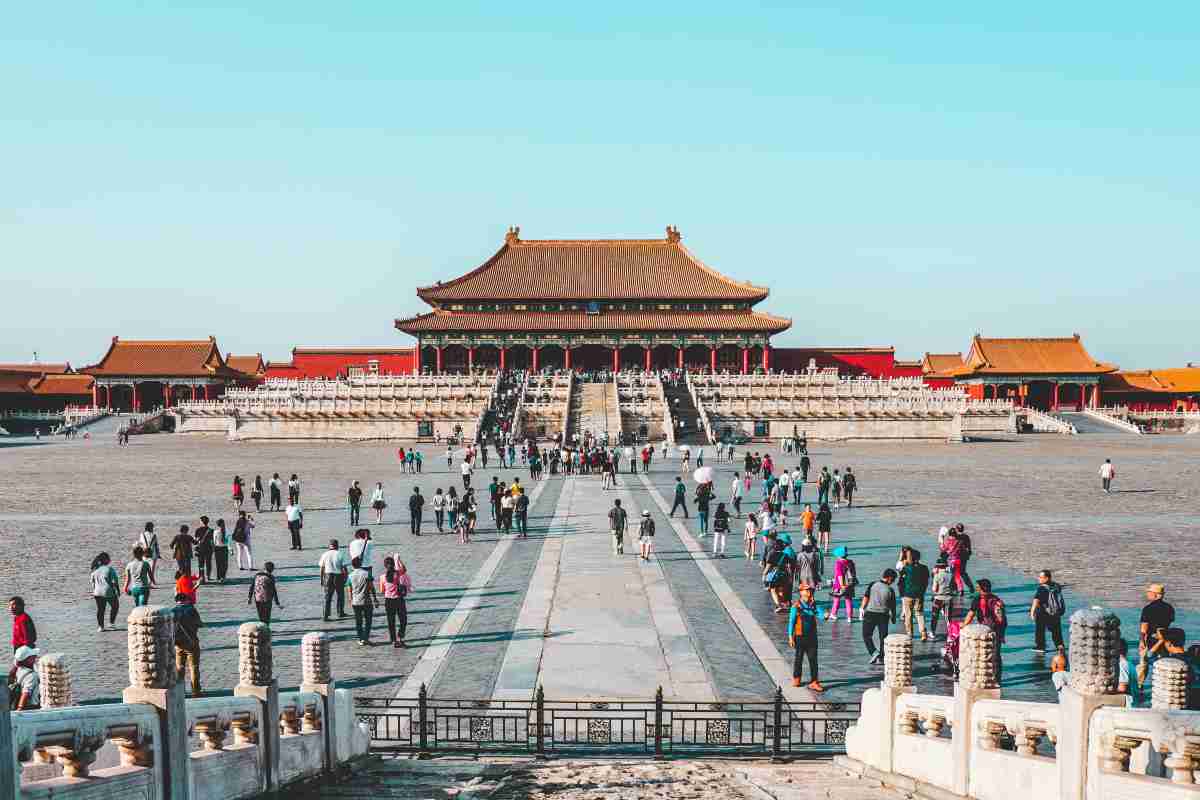
Pic Courtsey- Ling Tang at unsplash.com
(The views expressed are those of the author and do not represent views of CESCUBE.)
Vaibhav Tomar is pursuing his MA in Environment and politics , and done his MBA from Narsee Monjee Institute of Management Studies, Mumbai. His Key interest areas are International relations, maritime security, defence strategies, foreign policies etc. Email: vtomar866@gmail.com