Increasing Islamic reactionism in Western Africa
Islamic militants and terror outbreaks have increased in the past decade. For instance, terrorist outbreaks began in north-east Nigeria in 2009, three years later in northern Mali. In addition, central Niger and Burkina Faso have also witne...
Analyzing the political spectrum:

To come to terms with Islamic extremism, we need to grasp the meaning of a radical and a reactionary actor. “A radical actor can be defined as a person who is extremely dissatisfied with society as it is and is therefore impatient with less extreme proposals for changing it. Hence, radicals favour an immediate and fundamental change in the society”. They desire progressive change in the society.
“The reactionary actor proposes retrogressive change implying they would like to see society return to a previous status, condition or value system.
Islamic reactionaries are the ones who sought to disrupt the existing political order through violent measures for example ISIS leader Abu Bakr l-Baghdadi declared the captured areas of northern Iraq and eastern Syria as Islamic state, with him being the caliph. The organization also changed its name to Islamic state in the hope of becoming one true state for all Muslims in the region. So, herein the Islamic state group are considered a reactionary actor as they seek to return to the previous political system wherein religion that is Sharia law was the basis of political organization.
Rise in violent extremism:
The region has seen more numbers of violent terrorist attacks in recent years. For instance, the Islamic state conducted an attack in Niger in December 2019. Burkina Faso which was known for being a peaceful country in a volatile region has witnessed violent attacks on its soil for example out of the 4,000 lives lost in 2019, about 1800 were in Burkina Faso alone. The attacks did not reduce during the pandemic as 8422 fatalities were reported in west Africa from 1st January 2020 to 23rd June 2020.
Mali
Mali has been reeling from violent attacks which began in January 2012 because of armed rebellion against the government. The rebellion turned into a violent extremist insurgency as various extremist groups utilized the crisis to further their stronghold in northern Mali where the government has struggled to maintain power. Tuareg separatist group, the leader of the national movement for the liberation of Azawad (MNLA), rebelled against the government. It allied with militant groups such as Ansar al-Dine, al-Qaeda in the Islamic Maghreb (AQIM). Two months later, in March 2012, President Amadou Toumani was overthrown in a military coup leading to a power vacuum which was exploited by the militants. The non-state actors were able to capitalize and have spread across the Sahel region into Burkina Faso, Chad, Mali, Mauritania, Niger.
Ansar al-Dine (AAD) and AQIM pushed for imposition of sharia law in the controlled territories which led to a fallout with MNLA. They asserted control over Timbuktu which lies on the southern edge of Niger river, and Gao which is on the eastern bank of the Niger river. French military intervened on behalf of the Malian government in January 2013, deployed troops on the ground and organized air assault to constrain the militants.
The attacks across the north have continued with al-Qaeda affiliated outfits carrying out violence. For example, 32 dogon-civilians, 5 peacekeepers as well as hundreds of security personnel were killed by armed Islamist groups with links to al-Qaeda and Islamic state. The collapse in security situation led to more than 500,000 people being displaced, nearly half of the 1.2 million population living in the north have fled to the south.
Burkina Faso
Terrorist groups which were able to capture key areas in northern Mali began to expand to neighboring countries with an attack taking place in the center of capital Ouagadougou in early 2016 which left 28 fatalities and 56 people injured. Next year, in 2016 armed fighters not only attacked schools but also burnt them down. Violent attacks have increased at an alarming rate for example in 2015 only three attacks were reported, while in mid 2019-2020 period a whopping 516 took place.
State’s authority is eroding in rural areas where jihadist with links to AQIM as well as Islamic state in the greater Sahara exercising monopoly over violence. Homegrown terrorist such as Ansarul Islam have also arisen, they proclaim themselves as defenders of those who do not have anything. The terrorist groups control many rural areas in the north and east of the country. The borders with Mali are controlled by terrorist as there is no sign of state control in those areas with no police or defence forces to defend sovereign land.
Attacks on civilians have increased over the years as 35 people were mutilated in a village in December 2019, a church was attacked in February 2020 in which 24 fatalities were reported, 43 villagers were gunned down in March 2020. These events showcase how security has deteriorated since 2015. Security situation in once peaceful country has deteriorated to such an extent that official records showcase about 800,000 people fleeing their home as of 29 February 2020. The actual numbers could be much higher since not everyone is registered by aid agencies and state authorities.
Methods utilized by non-state actors:
Mali
In Mali, terrorist groups such as AQIM, AAD utilized the power vacuum created in the north due to Tuareg tribe’s rebellion to further their own influence by fighting alongside Tuareg separatist. However, once they attained control over significant territory in the north, they broke the alliance with Tuareg separatists and expelled them from the region. The goal of all the Islamist terrorist groups is to form an Islamic state and expel western forces from the region. These groups have orchestrated kidnappings to attain ransom as well as conduct drug and human trafficking operations.
The non-state actors have exploited the economic needs of Malians for example children were bought from parents at a price of $1000 to $1200 per month. In addition, they recruit by proclaiming themselves to be the rightful defenders of Islam, making use of ethnic divisions as AAD whose leader was of Tuareg tribe used his identity to draft people into their ranks.
Burkina Faso
The rise is violent incidents in the country arose due to worsening security situation in neighbouring Mali. The research done by Augustin Loada and Peter Romanuik demonstrates that violent attacks have increased in the past 6 years but there is no evidence to conclude that there is systematic home-grown recruitment set-up in the country. The jihadists have sought to utilize inequality among the youth, as well as targeted specific populations for recruitment. For instance, jihadists targeted Fulani ethnic group who are nomadic Muslims in the Sahel region, a minority in the country.
Ansar-ul-Islam lil-Ichad wal Jihad stoked religious tensions by attacking non-Fulani villages and in return the military as well as ethnic militias ambushed Fulani villages due to their association with the Islamist extremist group. So, violent extremism has arisen due to non-state actors crossing the border of Mali and expanding their network in Burkina Faso, as well as rise of local groups.
Conclusion:
The west African region is suffering from violent extremism wherein militant Islamist groups seek to gain power through terror attacks. The focus has here been on Mali and Burkina Faso which share a border. Increase in violent attacks arose due to a rebellion conducted by Tuareg tribe which desired an independent state in the north which was taken advantage of by Islamist militants such as AQIM, AAD etc.
The militants were able to establish their authority in northern Mali and sought to implement their interpretation of the sharia law. Moreover, they expanded across the border to Burkina Faso which had been a peaceful country. Both the countries suffer from rising violent extremism which has not only negatively impacted their economy but also induced a humanitarian crisis as large number of people have been displaced from their home. The non-state actors are a threat to the common people as well as the government whose monopoly over violence has been thwarted because of their rise.
End Notes
1) https://blogs.lse.ac.uk/internationaldevelopment/2020/01/21/who-shall-overcome-islamic-extremism-in-northern-nigeria/
2) https://www.tandfonline.com/doi/full/10.1080/23311886.2018.1463815
3) https://www.justice.gov/eoir/page/file/1308976/download
4) https://theglobalobservatory.org/2021/02/how-did-extremism-violence-become-dangerous-reality-burkina-faso/
5) https://www.lepoint.fr/afrique/negocier-avec-les-djihadistes-une-solution-pour-le-mali-08-12-2020-2404709_3826.php
6) https://www.cfr.org/global-conflict-tracker/conflict/destabilization-mali
7) https://www.hrw.org/world-report/2021/country-chapters/mali
8) https://www.theguardian.com/global-development/2020/mar/16/we-dont-know-whos-in-control-900000-flee-violence-in-burkina-faso
9) https://link.springer.com/chapter/10.1007/978-3-030-25120-8_4
10) https://www.counterextremism.com/countries/burkina-faso
11) https://www.counterextremism.com/countries/mali
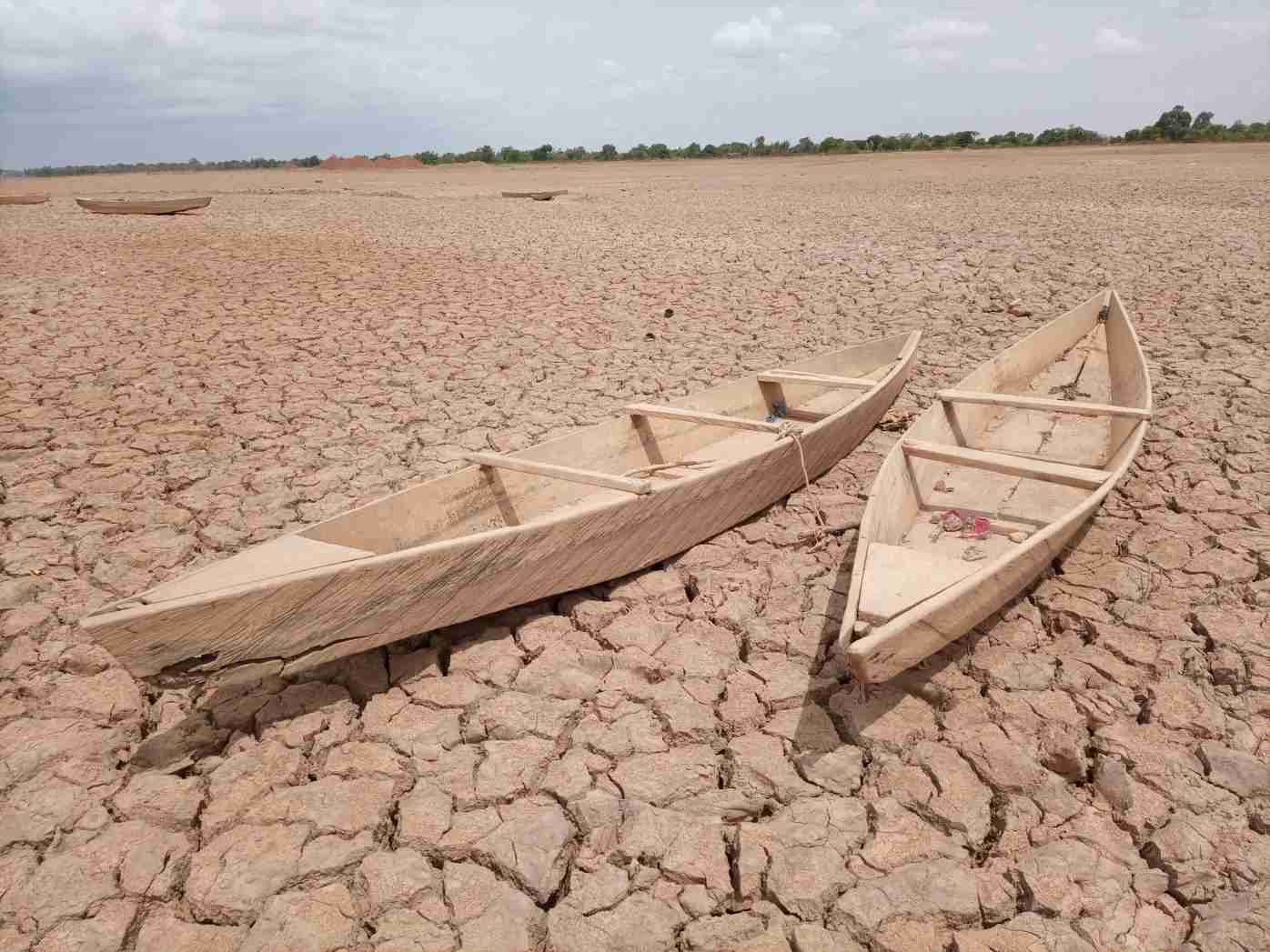
Pic Courtesy-Yoda Adaman at unsplash.com
(The views expressed are those of the author and do not represent views of CESCUBE.)
Abhijeet Nehra is a M.A. International Relations from University of Sheffield and has done his graduation in Global Affairs from Jindal School of International Affairs, O P Jindal Global University . He was research associate with CESCUBE.