India purchasing Rafale Marine jets for the Indian Navy
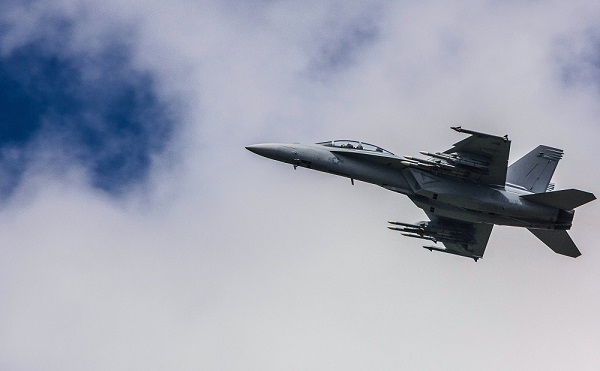
The Ministry of Defence (MoD) recently announced the purchase of 26 more Rafale-M i.e., the marine variant of the Rafale fighters from France in addition to 3 Scorpene class conventional submarines [1]. The MoD had been presented with the d...
As per the proposals, theIndian Navy will be receiving 22 single-seat Rafale Marine aircraft in addition to4 trainer aircraft. It further stated that the Indian Navy had pushed for the acquisition of these aircraft and submarines because they were in need due to security challenges for the nation. The aircraft carriers INS Vikramaditya and INS Vikrant have already been using MiG-29s, however, both these carriers require the Rafale-Maircraft for operations.The Navy will purchase the three Scorpene class submarines under the repeat clause as part of Project 75, and they would be constructed at Mumbai's Mazagon Dockyards Limited. The deals are expected to be worth more than Rs 90,000 crore, but the precise price will not be known until after the contract negotiations [2].
Procurement of Rafale-M Fighter Jets:
In a meeting chaired by Minister of Defence Rajnath Singh, the Defence Acquisition Council (DAC) approved the proposals for the procurement of these systems. The Rafale-M jets will include auxiliary gear like weaponry, a simulator, replacement parts, documentation, crew training, and logistic support. The procurement of these fighters and submarines is to take place under an Intergovernmental Agreement (IGA) whichgoverns their purchasing from the French government. In this regard, the DAC has approved the Acceptance of Necessity (AoN) for the purchase which is the first step in the long procurement process. Later after due negotiation, the contract agreements will include the integration of equipment with Indian design and the creation of an MRO Hub for a variety of systems. According to the Ministry, purchasing additional submarines with a higher percentage of domestic components would not only help the Navy maintain the necessary force level and operational readiness but will also generate a considerable amount of job opportunities in the domestic market [3]. The proposal to establish rules for obtaining the appropriate indigenous content in all types of capital acquisition cases was also approved by the DAC [4].
Details of the Rafale-M fighter jets:
The Dassault Rafale was created to be the first omnirole combat aircraft. It is capable of carrying out a variety of complicated combat missions within a single sortie, including ground attack, air-to-air combat beyond visual range (BVR), and interceptions [5]. There are three variations of the aircraft available, namely, the Rafale-M single-seater for carrier operations, the Rafale-C single-seater flown from land bases, and the Rafale-B two-seater. While all three types share the same airframe and mission system, the principal changes between the naval and land versions are the undercarriage and the arresting hook[6].
In conjunction with the debut of the 'Made-In-India' aircraft carrier Vikrant, India is seeking to update its naval fighter fleet. The F/A-18 Super Hornet Block III from Boeing and the Rafale M from Dassault Aviation emerged as the leading candidates for the Navy'ssearch for modern naval fighters. In 2017, the Navy announced a tender for57 fighter aircraft valued at $6.6 million at the time.In order to demonstrate its ability to operate from Indian aircraft carriers, the Rafale-M successfully completed a ski jump demonstration, whichis an essential take-off capability needed to operate from Indian aircraft carriers, in January 2022 from the shore-based test facility (SBTF) at INS Hansa, in Goa. The Navy clarified that this was not a trial but a mere demonstration of capabilities [7]. Here, it should be noted that although both aircraft have made successful demonstrations, the Indian Air Force (IAF) already operates Rafale. In this regard, some airpower analysts hold the view that the procurement decision therefore has favoured the Rafale-M [8].
As per Abhijit Iyer Mitra, a Senior Fellow from the Institute of Peace and Conflict Studies (IPCS), despite the F/A 18 Super Hornet being equipped with a powerful electronic warfare component alongside a broader array of weapons to choose from, the Rafale-M was approved for the following reasons. Firstly, its air-to-air missile called AMRAAM, does not have the standoff kill capabilitythat theRafale’s Meteorhas. Second, the American counterpart would not permit the Super Hornet to be equipped with any nuclear payload delivery system. Lastly, adding a second fighter would have required creating a completely new training, maintenance, and logistics supply chain, in addition to a drawn-out negotiation process made more difficult by the price of developing modifications specifically for India [9]. He further added, despite the systemic problems with the procurement process, the naval Rafale acquisition is a big plus for India's need for security in the Indo-Pacific and that the advantages greatly exceed the drawbacks.
The weight of the French jet is one factor that has received much attention. Compared to the F/A-18, the Rafale-M is heavier. The weight is crucial because there is a small runway on a carrier with a ski jump. This limits the aircraft's total weight, which means that a heavier aircraft will be less able to carry the ordnance payload. To fit into the INS Vikrant's hangar lift, the jet will also need to have its wings modified[10]. Due to the several benefitsit offers, the Rafale-M is still favoured despite these drawbacks. Furthermore, when it comes to combat effectiveness, the jet is rated higher.
Indigenisation and Modernisation:
The 1956 policy kept the private sector away from defence production and put all aspects of armament under the scope and responsibility of the Ordnance Factory Board (OFB) and other Public Sector Undertakings (PSUs). What followed was total dependence on exports for armament, maintenance as well as spare parts of equipment. Taking cognizance of this vulnerability, the government in response put a 26% FDI cap on defence industries in 2001. This was later raised to 49% in 2014 and was further raised to 74% in 2020 [11].Under the “Make in India” banner, the present government has focused on indigenous defence production. However, two things must be kept in mind considering the present scenario. First, even though the government has prioritized domestic production, operational deployment of equipment takes time. Second, given concerns about Chinese assertiveness and security challenges in the Indo-Pacific, India needs to maintain a strong maritime arsenal. In this regard, the government can be seen bulking up its maritime prowess and simultaneously creating space and opportunities for domestic defence production and development.
The Indian Navy intends to achieve total self-reliance by the year 2047 in capabilities of ships and submarine manufacture, spare parts and armament alongside inducting 75 indigenously developed technology into service. In pursuit of this objective, the Government of India (GoI) formulated the Indian Naval Indigenisation Plan (INIP) 2015-30 to develop advanced systems for its platforms. INIP also intended towards encouraging a public-private partnership by engaging with all sectors of industry to participate and contribute to the indigenisation drive [12].
Latest developments:
The eagerly anticipated procurement of 26 Rafale-M for India's indigenous Vikrant carrier was not mentioned in any of the three public announcements made in light ofPrime Minister Modi's visit to France. Instead, a lot of space has been devoted to "Building sovereign defence capabilities together," such as the collaboration between Safran Helicopter Engine, France, and the Indian Multi-Role Helicopter [IMRH] programme on the development of a combat aircraft engine and the motorization of heavy-lift helicopters [13].
An MoU between the Naval Group of France and Mazagon Dock Shipbuilders Limited of India for the construction of three additional submarines was mentionedin an online joint statement that was released following the meeting between PM Modi and President Macron in Paris. However, it was later replaced by a newer version,which was confirmed to be approved by both sides, that made no mention of the MoU but acknowledged the success of bilateral cooperation in the construction of six diesel-electric Kalvari-class submarines for the Indian Navy as part of New Delhi's acquisition programme "Project 75." It further stated that India and France were prepared to investigate more ambitious projects to enhance the performance of the Indian Navy's submarine force [14].
Since defence cooperation has been an important pillar in keeping the India-France bilateral ties strong, it is likely that the purchase of Rafale-M is yet to go through further negotiations. However, on the bright side, the rhetoric on defence cooperation between the two countries and indigenisation remains strong.
Endnotes:
1. “India to buy Rafale-M: How navy fighters differ from air force jets”, India Today, 11 July 2023 https://www.indiatoday.in/india/story/naval-land-based-fighter-jets-rafale-pm-modi-france-visit-indian-air-force-navy-2404955-2023-07-11
2. “India to buy 26 more Rafale jets, 3 Scorpene submarines from France: Report”, Business Today, 10 July 2023 https://www.businesstoday.in/latest/story/india-to-buy-26-more-rafale-jets-3-scorpene-submarines-from-france-report-389076-2023-07-10
3. Amrita Nayak Dutta, “Connection deepens: Govt clears 26 Rafale jets, 3 Scorpene subs”, Indian Express, 14 July 2023 https://indianexpress.com/article/india/india-big-ticket-procurement-26-rafale-jets-3-scorpene-submarines-navy-8834326/
4. Ajay Banerjee, “MoD clears proposal to purchase 26 Rafale Marine jets, 3 Scorpene subs”, The Tribune. 13 July 2023 https://www.tribuneindia.com/news/nation/mod-clears-proposal-to-purchase-26-rafale-marine-jets-3-scorpene-subs-525375
5. Air Marshal (Retd) B.K. Pandey, Rafale – A Fighter Pilot’s Dream, SP’s Aviation, July 2011 https://www.sps-aviation.com/story/?id=758
6. “A Fully Optimized Airframe”, Dassault Aviation, https://www.dassault-aviation.com/en/defense/rafale/a-fully-optimized-airframe/
7. Snehesh Alex Philip, “Mega deal in mind, Rafale M takes off from Navy’s Goa test range, Boeing F/A 18 next”, The Print, 10 January 2022 https://theprint.in/defence/mega-deal-in-mind-rafale-m-takes-off-from-navys-goa-test-range-boeing-f-a-18-next/800083/
8. Joseph P Chacko, “Boeing’s F/A-18 vs Dassault Rafale M: Which wins the Indian Navy’s fighter contract?”, Frontier India, 22 January 2023 https://frontierindia.com/boeings-f-a-18-vs-dassault-rafale-m-which-wins-the-indian-navys-fighter-contract/?expand_article=1
9. Abhijit Iyer Mitra, “Why India chose Rafale-M over F/A-18 Super Hornet”, India Today, 17 July 2023 https://www.indiatoday.in/opinion-columns/story/why-india-chose-rafale-m-over-fa-18-super-hornet-2406014-2023-07-13
10. Joseph P Chacko, “Boeing’s F/A-18 vs Dassault Rafale M: Which wins the Indian Navy’s fighter contract?”, Frontier India, 22 January 2023https://frontierindia.com/boeings-f-a-18-vs-dassault-rafale-m-which-wins-the-indian-navys-fighter-contract/?expand_article=1
11. Maj. Gen. Harsha Kakar, “Atmanirbhar Bharat in Defence”, Indian Defence Review, 01 February 2022 http://www.indiandefencereview.com/spotlights/atmanirbhar-bharat-in-defence/
12. “Indian Navy: Full steam ahead on modernisation, indigenisation”,Aeromag, Nov-Dec, 2022 https://issuu.com/aeromagasia/docs/aeromag_-_nov_-_dec_2022_low_res/s/17920978
13. Prakash Nanda, “Rafale Fighters ‘Go Missing’ In Official Statements Of Both India & France; Is Indian Navy Really Getting Rafale-M?”, The Eurasian Times, 15 July 2023 https://www.eurasiantimes.com/rafale-fighters-go-missing-in-official-statements-of-both/
14. Anirban Bhaumik, “India, France put on hold announcements on Rafale Marine jets, submarines; negotiations to continue”, Deccan Herald, 15 July 2023https://www.deccanherald.com/national/india-france-put-on-hold-announcements-on-rafale-marine-jets-submarines-negotiations-to-continue-1237325.html
Pic Courtsey-Cibi Chakravarthi at unsplash.com
(The views expressed are those of the author and do not represent views of CESCUBE.)
Ridipt Singh is currently pursuing MA. International Studies from Symbiosis School of International Studies, Symbiosis International University, Pune, Maharashtra (2021-23)