India's Act East Policy and its Impact on Vietnam: A Vietnamese Perspective
India’s relationship with Southeast Asia spans centuries. Under Prime Minister Narendra Modi, India's interest in this region is even more evident through the adjustment of the Look East Policy into the Act East Policy. This adjustment aims...
Vietnam is the gateway in Southeast Asia and an important member of ASEAN, so India's foreign policy adjustment towards Southeast Asia has direct and indirect impacts, intertwined bringing Vietnam both opportunities and challenges:
Firstly, contributing to enhancing the role and position of Vietnam in the region
As a regional power, that India emphasizes on Vietnam's pivotal role in its Act East Policy, an affirmation of Vietnam's importance in the region and in the contemporary international politics. Along with the adjustment in policy towards Southeast Asia in general, India also adjusted its policy towards Vietnam. The transition from the Look East Policy to the Act East Policy has emphasized the importance of Vietnam in the relation between India and ASEAN, creating favorable conditions for upgrading the relation between Vietnam and India to the level of Comprehensive Strategic Partner.
Second, contributing to strengthening the comprehensive power of Vietnam
This comes from many reasons: Economically, as a large, recently emerging country with a developed economy and a large market, India is one of the five countries of the “BRICS” group bringing many opportunities for the economic development cooperation with Vietnam through initiatives such as Made in India, Digital India, contributing to promoting Vietnam's integration into the world economy. Vietnam and India have many comparative advantages, so the Indian economy can complement the Vietnamese one, especially in pharmaceuticals and information technology. In terms of connectivity, being the gateway to South Asia as well as a player with a traditional role and influence in the South Asia/Indian Ocean region, through the infrastructure connectivity policies to Southeast Asia, India becomes the bridge connecting Vietnam with the potential South Asian market, and the Indian Ocean region has important geopolitical significance. Regarding security and defense, according to the ranking of the global military strength index of Global Firepower by the beginning of 2018, the rankings of specific countries are as follows: (1) the US, (2) Russia, (3) China; (4) India; (5) Dharma; (6) England; (7) Japan…[1] India is not only one of the five major military powers but also one of the countries possessing nuclear weapons and having the second strongest military force in the world[2]. India is also regarded a regional power that has capacity of contributing to shaping the situation not only of South Asia but also of Southeast Asia[3]. Therefore, the security - defense relation with India helps Vietnam reduce pressure from the competition of major countries in the region, including China. Finally, Vietnam has always received support and assistance from India in many aspects. This is the most important and significant impact on the development of Vietnam.
Third, Vietnam has one more partner in solving the East Sea issue
The increase of India's engagement in Southeast Asia contributes to further "internationalization" of the East Sea issue and this benefits Vietnam. The consensus in favor of the East Sea issues in compliance with international law between India and Vietnam helps Vietnam to have an additional partner in solving the East Sea issue. At present, India shares the same view with Southeast Asian countries on the importance of protecting freedom of navigation at sea and in the air, and peaceful settlement of disputes based on the United Nations Convention on the Law of the Sea (UNCLOS). UNCLOCS). This is completely in line with Vietnam's approach and interests. In addition, India also supports the push for an early conclusion of the Code of Conduct in the East Sea issue. In addition, India and Vietnam are both having territorial conflicts with China; the potential formation of "informal alliances" between Vietnam and India with countries having territorial disputes with China in Southeast Asia such as the Philippines, Malaysia, Brunei, Indonesia is very clear. And this is an opportunity to strengthen Vietnam's power in dealing with China.
Fourth, the impact on the regional context and ASEAN consensus mechanism
In the context of India implementing policies to increase engagement and presence in Southeast Asia, ASEAN can become a "manipulative subject" of both India and China. While India is expanding bilateral relations with Southeast Asian countries and tightening multilateral ties with ASEAN, on the contrary, China is seeking to entice ASEAN including "night out” with each country of ASEAN through economic diplomacy. This greatly affects the solidarity and consensus mechanism of ASEAN and has a negative impact on Vietnam in the East Sea issue. Currently, from the issue of national interests, ASEAN countries do not have a common voice in the East Sea issue. For example, the Joint Statement of the 49th ASEAN Foreign Ministers' Meeting in Laos (July 2016) did not mention the award of the Permanent Court of Arbitration (PCA). This is completely detrimental to Vietnam in taking advantage of ASEAN as a regional mechanism to put pressure on China and use it as a basis for a legal fight over sovereignty over seas and islands in the East Sea with China.
Fifth, the impact on Vietnam's foreign policy choice and implementation
In the context that New Delhi has increased the involvement and influence of Southeast Asia, China is certainly uncomfortable about this. This leaves Southeast Asia in a political arena of competition for influence between New Delhi and Beijing. As both India and China are important partners, Vietnam needs to choose a foreign policy of "great power balance" on the principle of strategic autonomy so as not to be too dependent or heavily influenced by this country or another. Specifically, Vietnam's foreign policy needs to balance its relations with both India and China. Accordingly, Vietnam enlists India in terms of politics and security but does not let the Vietnam - India relation be used by China as an excuse to cause difficulties with Vietnam. Therefore, pursuing a foreign policy of large-country balance and multilateralism is the optimal choice to ensure Vietnam's national interests..
Notes
[1] 2018 Military Strength Ranking, https://www.globalfirepower.com/countries-listing.asp/
[2]Nguyen Thi Hong Mai (2018), Developing India-Vietnam relations in the fields of economy, trade, defense and security in the context of the Indo-Pacific, in the Proceedings of the International Conference Vietnam - India cooperation in the fields of economy, defense and security in the context of the Indo-Pacific: freedom and openness, Hanoi, p. 85.
[3] Ton Sinh Thanh (2019),The impact of the Indian factor on the planning and implementation of the US Indo-Pacific strategy under President Donald Trump, in the Proceedings of the International Conference on Vietnam - India Cooperation in the field of economy, defense and security in the context of the Indo-Pacific: freedom and openness, Hanoi, p. 83.
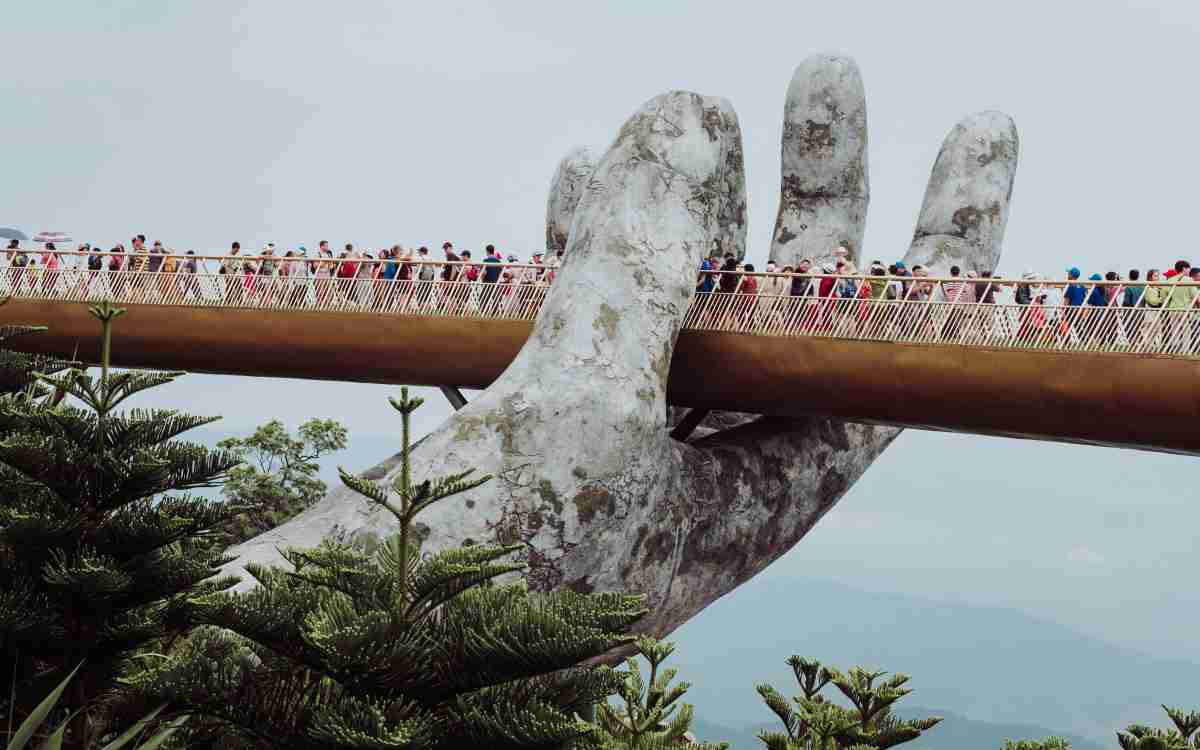
Pic Courtesy- Andreea Popa
(The views expressed are those of the author and do not represent views of CESCUBE.)

Quach Thi Hue is researcher in international relations. she has been working as a lecturer in the Institute of International Relations at Ho Chi Minh National Academy of Politics, VietNam since 2015. Up to now, she has had a series of scientific studies published in Vietnam, in which she is an author and co-author of more than 30 scientific articles published in specialized journals with ISSN index, some speeches for international scientific conferences with ISBN index. She has also participated in writing many books and conference proceedings domestically and internationally, including one specialized book, which she is a co-editor published in India with ISBN index that named “Vietnam – A New Middle Power in Asia”.