India’s Defence Exports and a possibility of exploring new markets
The defence exports industry in India is something that has been growing at a fast-paced rate for the last few years, it has been one of the underreported economic sources as well. One of the main objectives of India when it comes to defenc...
According to the Stockholm International Peace Research Institute (SIPRI), India was in 23rd position out of the 25 largest defence exporters in the world, between 2017-21. Achieving the capability of India’s current targets requires establishing new academic and research institutions. and only producing to meet domestic needs cannot provide enough resources to develop the capabilities to be self-reliant and produce indigenized technology. To fix that the Indian government has taken many policy decisions which are aiding its goals of self-reliance by providing capital through exports. To establish a sustainable defence export industry the country needs to master research and development, engineering, manufacturing, and servicing.
According to the Additional Secretary in the Department of Defence Production (DDP) Sanjay Jaju, India has recorded Rs13,000 crores in defence exports which is the highest ever export number recorded in Indian defence history. He also said that 70% of the contributions in the exports came from the private sector and the remaining 30% came from the public sector. But the majority of these exports consist of parts and components. They include items like missiles, offshore patrol vessels, advanced light helicopters, surveillance systems, personal protective gear, tear gas launchers, simulators, loading mechanisms for aircraft, torpedoes, night vision binoculars, fire control systems for armoured vehicles, high-frequency radios, weapon locating radars, and coastal radar systems. The main exports in the last financial year are to the United States followed by the Philippines. India exported defence equipment to a total of 84 countries. India accounted for 0.2% of defence exports in the world between 2017-21.
Currently, the defence exports from India by private players are limited to Munitions and parts. The List provided by the government has 6 categories of Special Chemicals, Organisms, Materials, Equipment and Technologies (SCOMET). For exports of the above-listed items, the government came up with a series of policies for the promotion and support of domestic production by private players.
Under India's goal to achieve Rs 35,000 cores in defence exports by 2025 India is implementing a scheme for the promotion of defence exports under Defence Exports & Make-in-India. Currently, the value of Indian defence exports is somewhere around 3000-5000 crores annually. The private sector did make some significant gains after the liberalization in 2001. The Indian government has been promoting defence exports through various methods and policies. One of the efforts to promote domestic made defence equipment is to certify them with “Fit for Indian Military Use” certificates and the title of DoD.
To reach its goals India has made some crucial decisions till now, In 2020 December India decided to give go-ahead to the export of Akash surface-to-air missile systems to friendly foreign countries. The government has created a high-powered panel to fast-track the export approvals,
India has notified lists of systems and weapons that cannot be imported, these lists include missile destroyers, light transport aircraft, light combat aircraft, long-range land-attack cruise missiles, multi-barrel rocket launchers, mini-UAVs, next-generation corvettes, artillery guns, specified types of helicopters, airborne early warning and Control (AEW&C) systems, assault rifles, sniper rifles. India is going to update this list with more items. India has a lot of potential in exporting light combat aircraft, Akash surface-to-air missile systems, Astra beyond visual range air-to-air missile systems, tanks, sonars and radars.
India also established a Defence Exports Steering Committee (DESC), an export promotion body, export financing and other incentives, issuing of NOCs and online & timebound clearance. The Defence Production and Export Promotion Policy (DPEPP) is made for providing a focused thrust to the production capabilities of defence, aerospace and naval shipbuilding sectors. Even with these policies, the Indian domestic sector is still short of leading to the top with limited government funding and the time-consuming acquisition process. The incoming revenue from the recent exports can give a boost to the sector for further growth.
There have been many new avenues opening up for defence exports in India, The defence minister Rajnath Singh said, “So far, Indian defence exports included parts/components, etc. The export of big platforms was minimal. This decision by the Cabinet would help the country to improve its defence products and make them globally competitive.” For India to rise as a key player in the defence export market the domestic companies should bridge the technology gap between India and its international peers. According to the estimations of Indian defence minister Rajnath Singh around 4,00,000 crores rupees worth of contracts will flow towards companies in India.
The Brahmos missile deal with the Philippines can be an example of the growing strength of Indian defence exports capability but India still has a long way to go to compete with the key players in the market like the United States, France and Israel etc. the recent Brahmos deal is valued around $375 billion which included three batteries of the BrahMos cruise missiles. India is also looking into the possibility of exporting the Advanced Light Helicopters Mark III to the Philippines. Vietnam and Indonesia also expressed their interest in BrahMos missiles.
Six countries including the USA, Australia(the tender has closed), Argentina, Egypt, Indonesia and the Philippines showed interest in buying the indigenously developed light combat aircraft (LCA) Tejas. Malaysia already placed an order for procuring 18 Tejas twin-seater variant fighter jets, the initial Request for Information( RFI) was sent by Royal Malaysian Air Force (RMAF) to Hindustan Aeronautics Limited (HAL) in 2019, and they responded to the information in 2021.
A quantum jump in the exports is only possible if the list of manufacturing and export items by the private sector increases, as we can see most of the private sector exports are parts and ammunition for big platform weapons and equipment and some other miscellaneous items. But to see a quantum jump in the exports the private sector in India also has to be able to manufacture and export more weapons, aircraft, missiles, vessels and vehicles, which can help India reach its targets. A quantum jump in exports is needed to secure the resources to modernize the Indian forces amid the regular tensions with Pakistan and China. With the ongoing conflict between Ukraine and Russia and the west imposing a series of sanctions on Russia, which is one of the largest exporters of defence equipment, many of its regular buyers are going to look for alternatives to meet their defence needs, this can open up a huge gap in the defence market and India can fill a part of it.
The increase in exports and R&D can also solve the crisis the armed forces are currently facing with the old weapon systems. India noticed a surge in the number of UAV startups between August 2021 and February 2022. Recently India conducted the Aeronautical test range in Karnataka's Chitradurga only a few advanced bombers of the United States have similar technological capability. India needs to capitalize on the attention received by these achievements and the BrahMos deal. Defence Public Sector Undertakings (DPSUs) should use the Free Trade Agreements and Preferential Trade Agreements to their fullest capacity. It also needs to capitalize on the Defence Lines of Credit. We can see that there is a paradigm shift in India’s defence exports. India needs to strategically increase the list of items that cannot be imported and augment the R&D and manufacturing infrastructure in the country for development, trial and testing and production.
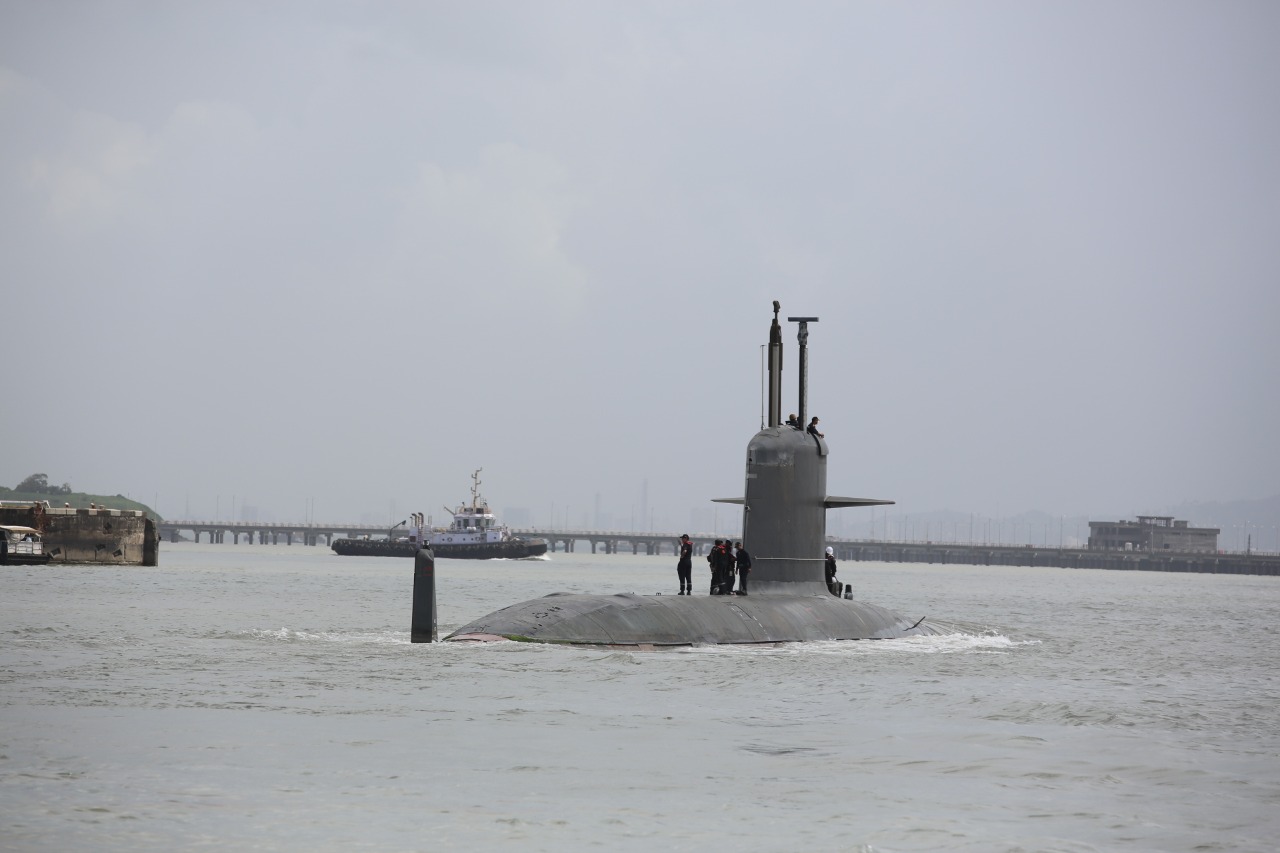
Pic Courstey-Indian Navy
(the views expressed are those of the author and do not represent views of CESCUBE.)

Sharath Kumar Kolipaka is doing a masters degree at Jindal School of International affairs, specializing in national security and peace and conflict studies.